
 Worksheets
10chem BM1 Review
Total questions: 112
Worksheet time: 1hrs 24mins
The Law of Conservation of Mass says that matter can neither be __________ or __________.
created; destroyed
recycled; renewed
subtracted; added
joined; separated

A student pours 5.49 g hydrochloric acid (HCl) into an open beaker that contains a piece of magnesium (Mg). The Total mass of the product is 5.73 g. What was the mass of the magnesium?
5.71 g
11.22 g
0.24 g
2H2 + O2 --> 2H2O
How much H2O will be produced if we react 4g of H2 and 32g of O2?
A neutron has what charge?
Positive
Negative
It has no charge (it is neutral)
A proton has what charge?
Positive
Negative
It has no charge (it is neutral)
An electron has what charge?
Positive
Negative
It has no charge (it is neutral)
Which particles are found in the nucleus of an atom?
protons only
neutrons only
protons & electrons
protons & neutrons

What subatomic particles are coloured green in this image?
protons
neutrons
electrons
What two subatomic particles have approximately the same mass?
electrons & neutrons
protons & electrons
neutrons & protons
What is the lightest subatomic particle?
proton
neutron
electron

What is the atomic mass of Neon?
10
20.18
10.18
20


What is the atomic mass of Copper?
63.546
29
29.546
92


What is the atomic mass of Gold?
79
196.97
79.97
275

Bromine has how many Neutrons?
35
80
45
8
What is at the center of every atom?
An electron
A compound
A molecule
A nucleus

How many neutrons are in Tungsten
110
74
183
258


How many neutrons are in Phosphorus?
16
15
31
46

How many protons are in Chlorine?
35
18
17
52
What is a valence shell?
Inner most shell of an atom
Outer most shell of an atom
Middle shell of an atom
None of them
The atomic number is equal to _.
the number of protons and electrons
the number of protons only
the total number of protons and neutrons
the number of electrons only
When an atom loses an electron, it becomes a
positive ion
negative ion
neutral ion
neutral atom
An atom has 10 protons and 12 neutrons. What is the mass number?
(a)
What is the net charge of an atom with 15 protons and 12 electrons?
(a)
What is the net charge of an atom with 7 protons and 8 electrons?
(a)
An atom of oxygen has a - 2 charge, how many electrons does it have?
8
10
6
An atom of fluorine has a -1 charge, how many protons does it have?
10
8
9
What did Rutherford discover in his experiment?
nucleus
electrons
neutrons
protons
In which model are atoms imagined as tiny balls?
Dalton
Thomson
Rutherford
Bohr
Who proposed a model with electrons moving in specific layers?
Dalton
Rutherford
Bohr
Thomson
What did Thomson's atomic theory model look like?
A ring with gold foil in the middle.
Electrons orbiting the nucleus like the planets around the sun.
A cloud of electrons floating around the nucleus.
A scoop of chocolate chip ice cream. It had electrons scattered within a ball of positive charge.
What is the mass of a proton?
1840 amus
1 amu
1/1840 amus
It has no mass.
Who first came up with the idea of an atom and called them "atomos"?
o Democritus
o Thomson
o Rutherford
o Bohr


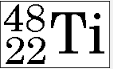
Copper-92

What charge does an atom have when it GAINS electrons?
Positive
Negative
Neutral
What subatomic particle changes in an ion?
The number of electrons
The number of protons
The number of neutrons
If an atom gains electrons, the charge will be positive.
true
false

Cations are...
Positive
Negative
Neutral

Anions are...
Positive
Negative
Neutral
Who discover the electron?
Dalton
Rutherford
Thomson
Bohr
Rutherford's "gold-foil" experiment using alpha particle scattering concluded that
the center of the atom is empty
atomic mass is spread over the whole atom
the center of the atom has a negative charge
most of the atom is empty
What experiment was used to discover the nucleus?
Cathode Ray Tube
Gold Foil
Chromatography
Gel Electrophorese
Dalton had 4 points about an atom, which is NOT one?
Atoms combine in whole ratios
An atom of one element will never turn into an atom of another
Electrons have a set size and path
Atoms are indivisible
Which one of these is Dalton's Model?


Which model was created after the discovery of the nucleus?
Dalton's
Rutherford's
Quantum Mechanical
Plum Pudding
Which model was created after the discovery of the electron cloud?
Dalton's
Rutherford's
Quantum Mechanical
Plum Pudding
Who discovered the nucleus?
Rutherford
Bohr
J.J. Thompson
Democritus
What experiment was used to discover electrons?
Cathode Ray Tube
Gold Foil
Chromatography
Gel Electrophorese
Who discovered electrons?
Rutherford
Bohr
J.J. Thompson
Democritus
Which model was created after the discovery of electrons?
Dalton's
Rutherford's
Quantum Mechanical Model
Plum Pudding
Fe3+
Element
Ion
Mg2+
Element
Ion
Cl-
Element
Ion
Cl
Element
Ion
H+
Element
Ion
C
Element
Ion

How many neutrons does this bromine atom have?
35
45
80

What is the mass number of this Neon atom?
10
11
21
20

What does it happen to this atom?
It LOSES electrons
It GAINS electrons
It GAINS protons
It LOSES protons

What charge will result if Nitrogen gains 3 electrons?
+3
+1
-3
-2
All atoms can become stable by...
losing or gaining electrons to obtain a full valence (outer) shell
losing or gaining protons to obtain a full valence (outer) shell
losing or gaining neutrons to obtain a full valence (outer) shell

What charge will the ion have?
+1
-1
+8
-8

What element has this orbital notation?
lithium
beryllium
boron
carbon

What element has this electron configuration?
helium
lithium
beryllium
boron

What element has this electron configuration?
boron
carbon
nitrogen
oxygen

Which element is represented by this electron configuration?
neon
sodium
magnesium
aluminum

Which element is represented by this orbital notation?
carbon
nitrogen
oxygen
fluorine

Which element is represented by this orbital notation?
neon
sodium
magnesium
aluminum
Which of the following is the electron configuration for Fluorine


Which of the following is the electron configuration for neon?


Which of the following is the electron configuration for silicon?


Which of the following is the orbital notation for oxygen?


What is the element?
Neon
Chlorine
Aluminum
Argon
What is the element?
Neon
Chlorine
Aluminum
Argon

What is the element?
sulfur
chlorine
phosphorus
silicon
Which is the electron configuration for beryllium?


What element has the electron configuration
Nitrogen
Oxygen
Magnessium
Carbon

Which orbital is displayed correctly?
A
B
C
D


Which are the four energy sublevels?
s,p,d,f
a,b,c,d
s,t,e,p
d,r,o,f
What is the noble gas configuration for silicon?
[Ne] 3s2 3p1
[Ar] 4s1
[Kr] 5s1
[Ne] 3s2 3p2
The electron configuration 1s2 2s22p6 3s23p6 represents which noble gas?
neon
argon
helium
krypton
Why do electrons enter the 4s orbital before entering the 3d orbital?
because the 3d orbital is at a lower energy level
because both the 4s and 3d orbitals are at the same energy level
because the 4s orbital is at a lower energy level
because the 4s orbital is at a higher energy level
Why do you think are there different colors emitted?
Because of the absorption of heat from the flame
Because heat is released
Because of the absorption of light
What is the state when electrons move to a higher energy level upon absorption of energy?
active
inactive
excited
ground
Which is the electron configuration of an aluminum atom (13Al) in the excited state?
1s2 2s2 2p6 3s2 3p1
1s2 2s2 2p6 3s2 3p2
1s2 2s2 2p6 3s2 4s1
1s2 2s2 2p6 3s2 3p3
Light of a specific frequency is emitted when...
an electron absorbs energy
an electron moves down an energy level
when an electron gets excited
all of these are true
Atoms only emit light of certain frequencies because...
electrons move continuously
electrons move up energy levels
electrons can only have certain energies
all of these are true

