
Font size
 Worksheets
electricity
Total questions: 115
Worksheet time: 2hrs 47mins
Materials that electrons do NOT flow through such as cloth, rubber, plastic
conductors
insulators
chargers
electrodes
Materials through which electrons flow easily
conductors
insulators
electrodes
chargers
Which material would be most likely to COLLECT electrons and produce static electricity?
wool
carpet
rubber
Static electricity is...
very dangerous
a sudden, single transfer of electrons
a steady flow of current through a wire
Which insulator would most likely GIVE UP electrons in the process of producing static electrcity?
carpet
rubber balloons
show soles
The positive terminal on a battery is called the
anode
collector
cathode
electrolyte
The negative terminal on a battery is called the
anode
cathode
collector
electrolyte
This is inside a battery & provides a way for electrons to leave it
electrodes
collector
electrolyte
Moving electrons in a stream is better known as
a current flowing through a circuit
the oxidation-reduction process
static electricity discharge
TRUE / FALSE: A battery does not generate electricity, it converts it from chemical potential energy.
TRUE
FALSE
A steady flow of electrons
circuit
current
discharge
oxidation
Who built the first battery?
Sir Humphry Davy
Mrs. Brooks
Alessandro Volta
Luigi Galvani
Who built the mega-battery that was larger than our classroom?
Luigi Galvani
Alessandro Volta
Sir Humphry Davy
Which two elements were electrodes in the "voltaic pile" battery?
sodium and zinc
sodium and potassium
copper and potassium
copper and zinc
A device containing an electric cell (or a series of electric cells) storing energy that can be converted into electric power
capacitor
battery
resisitor
ammeter
A continuous conducting path for current.
electrode
circuit
voltaic pile
axon
The net movement of electrons through a conductor; measured with an ammeter
current
static electricity
electric discharge
A metal plate or rod in a battery that acquires a positive or negative charge
separator
collector
electrode
An instrument, or measuring device, that measures electric current
voltmeter
charger
ammeter
grounder
An ampere is
a unit of resistance
a unit of force
a unit of electric current
all matter is made of
Why do electricians always wrap wires in plastic?
Plastic comes in many different colors
Plastic is a good electrical conductor
Plastic makes the wires easy to bend
Plastic is a good electrical insulator
Which of these materials is a good conductor of electricity?
Rubber
Metal
Newspaper
Glass
Which of the following items would conduct electricity?
Aluminum ladder
Metal screwdriver
Wooden baseball bat
Rubber flip flops
How can it be explained that someone's hair can stick to a balloon?
There is static electricity
There is too much dust in the air
A parallel circuit was too long
The person needs to wash his hair
What contribution did Thomas Edison make toward the study of electricity?
He invented the light bulb
He invented a generator that would produce electricity
He discovered the nucleus of an atom
He discovered that lightning is a form of electricity
A science class was completing an experiment on electrical circuits. Why did the bulb go out each time the switch was opened?
Opening the switch broke the circuit
The battery was probably going flat
There was too much electricity flowing
Opening the switch closed the circuit
Many electrical wires are wrapped with a plastic coating because plastic is -
More dense than copper
Able to keep its shape
Less expensive than steel
A good insulator
What force causes two metals to repel or attract?
Friction
Gravity
Magnetism
Electricity
Which contribution toward understanding electricity was made by Michael Faraday?
Created the first electric power generator
Discovered that lightning carried electricity
Concentrated on mass-producing long-lasting light bulbs
Improved the telegraph system

Tasha made this model. In her model the bulb is not lit.
Which of these statements best explains why the bulb is not lit?
The wires are connected to the wrong battery terminals.
The bulb is burned out.
The switch is open.
A wire is missing.

Annie classified some materials as insulators or as conductors. Which of the following materials did she list in the wrong column?
air
glass
rubber
saltwater

Opposite charges _______________.
attract
repel
nothing changes

Like charges _______________.
attract
repel
nothing changes

What electricity component is this?
cell or battery
switch
wires
bulb

What is the use of the batteries in this circuit?
connected all component
turn on or off electricity
supply electricity
Which of these objects use batteries?


Which of these objects use mains electricity?


Which of these objects uses a buzzer?


What is the use of the wires in this circuit?
to turn on or off electricity
connected all components
supply electricity
Which of these electrical components is used to turn on or turn off electricity?


What will you do to make the bulb light on?
add the switch to the circuit
add cells or batteries to the circuit
add more bulbs to the circuit
add more wire to the circuit

What will happen to this light bulb?
The bulb light on
The bulb light off

What will happen to this light bulb?
The bulb light on
The bulb light off
Name an appliance that runs on electricity.
notepad
kettle
pen
headphones
Which of these components would you need to make an electrical circuit?
elephant & tiger
wires & pen
wires, cell & bulb
bulb & paper
Which of these would you NOT find in an electrical circuit?
wire
buzzer
bulb
teddy
A circuit needs to be ________ for the bulb to light.
complete
broken
full of bulbs
wireless
Which component in an electrical circuit makes a sound?
bulb
crocodile clip
buzzer
motor
Which component in an electrical circuit produces movement?
bulb
motor
cell
wire
What component powers an electrical circuit?
bulb
wire
buzzer
cell
What happens which the switch is open?
The bulb will not light.
The bulb will light.
The bulb will be dim.
The bulb will be bright.
Which of these materials is an electrical conductor?
paper
plastic
steel
cardboard
Which of these materials is an electrical insulator?
iron
wood
steel
brass
Which device or devices could be removed without breaking an electric circuit?
only the lightbulb
only the switch
the battery and they switch
the lightbulb and the switch
The shock you sometimes feel when you touch a metal doorknob on a dry day is electric _______.
circuit
current
discharge
resistance
Which of the following is an example of an insulator?
rubber
copper
silver
gold
Which of the following is an example of a conductor?
copper
rubber
glass
plastic
Which of the following is the BEST insulator?
copper
iron
plastic
steel
Which of the following is a circuit that has only ONE path for electricity?
parallel circuit
series circuit
open circuit
closed circuit
Which of the following is a circuit that has MORE than one path for electricity?
parallel circuit
series circuit
open circuit
closed circiut
A closed pathway through which electrons are conducted is called:
electricity
circuit
insulator
conductor
Materials that allow electric current to flow through easily are called:
electricity
circuit
insulator
conductor
A form of energy from moving electrons is called:
electricity
circuit
insulator
conductor
A material that stops current from flowing is called:
electricity
circuit
insulator
conductor
When electrons quickly move, it is called:
conductor
friction
static electricity
electric discharge
When two objects rub against each other, it is called:
conductor
friction
static electricity
electric discharge
The build up of an electric charge on an object is called:
conductor
friction
static electricity
electric discharge
Which of the following is an example of human harnessed electricity?
lightning
electric generator
static electricity
Which of the following is NOT an example of natural electricity?
lightning
static electricity
electric generator
Which of the following is needed to make an electric circuit work? Choose ALL that apply.
switch
lightbulb
wire
battery
plastic block

battery
main electricity
This cleaning machine uses electricity to clean the floor.


make light
make sound
make things move
heat things up
Use a damaged wire.
Yes
No
Don't put your finger in sockets.
Yes
No
You cannot use electronics near water.
Yes
No
Fly kites or climb trees near power lines.
Yes
No
Touch things that uses electronic with metal.
Yes
No
Touch electronical equipment with wet hand.
Yes
No

heat things up
make things move
cool things down
Choose the correct answer to find the area of a circle
πr2
2πr2
2πr
Find the volume of a right circular cylinder if r = 7 cm and h = 14 cm.
1112 cu cm
512 cu cm
1078 cu cm
2156 cu cm


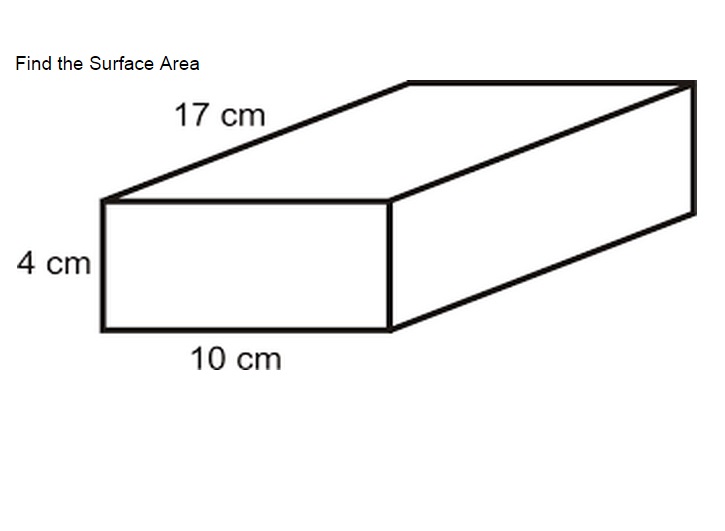
In finding "quantity of water inside a bottle" which of the following can be calculated ?
Volume
Area
Perimeter
None.
The dimensions of a water tank are 5m × 4m × 3m
then it's Volume=___________ cubic meters
60
20
70
50
Area of 4 walls of a room is given by
2h(l+b)
2(l+b)
2(lb+bh+hl)
lbh

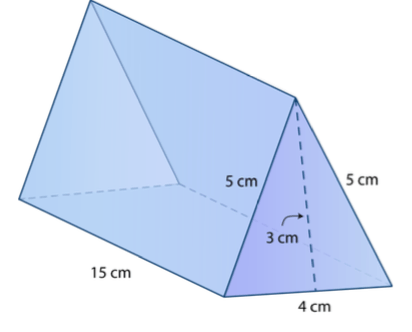
What is the total surface area of this figure?
(a)

Soda is sold in aluminum cans whose area of the base is 30 cm2 and height is 6 cm, how many mili litres of soda will 1 can contain ?
(a)

Find the Total Surface Area of the cylinder.
(a)
The total surface area of a cube whose area of the front face is a2 is ————-
4a2
6a2
5a2
3a2
The side of die whose volume is 125 cm3 is
(a)

What is the difference in volume, in cm3 , between M and N
(a)
If the dimensions of a cuboid are 3 cm, 4 cm and 10 cm, then the volume of the cuboid is (a)
If the radius of a cylinder is 4 cm and height is 10 cm, then the total surface area of a cylinder is:
(a)
The curved surface area of a right circular cylinder of height 14 cm is 88 sq cm. The diameter of the base is:
(a)
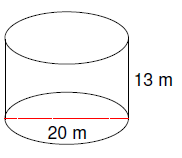
How many litres of water can be stored in a cylindrical tank having the following dimensions?
(a)
How many faces does a cuboid have?
12
10
6
8
Which of these is a 3D shape?
Square
Rectangle
Circle
Cube

If a cuboid has length = 5 cm, breadth= 4 cm and height = 3 cm, then its base area is equal to?
12 sq cm
15 sq cm
20 sq cm
60 sq cm
Which faces of cuboid have the same area?
top and bottom
front and back
side faces
all of these
Shape of all the faces of cube are
square
rectangle
trapezium
rhombus

The given net when folded will give us which 3D Shape?
cuboid
cylinder
cube
sphere

The given net when folded will result in which 3D shape
Sphere
Cube
Cuboid
Cylinder
Area of circle is equal to
πr2
2πr
πr3
4πr
Area of parallelogram is equal to
length x breadth
1/2(base)(height)
side x side
base x height
Shape of all faces of cuboid are
squares
rectangles
parallelograms
Perimeter of circle is equal to
πr2
πr
2πr
4πr

