
 Worksheets
Ionic Covalent Dot Diagram Quiz Review #JayChem
Total questions: 101
Worksheet time: 17hrs 50mins
What is the goal of the Lewis Dot Structure?
To determine the electron position.
To show the element's valence electrons & bonding capabilities.
To find the atomic mass of an element.
To search for the number of electrons in an individual atom.
How many valence electrons should Lithium have in its Lewis dot model?
1
2
3
4
How many valence electrons should Oxygen have in its Lewis dot model?
5
6
7
8
How many valence electrons should Magnesium have in its Lewis dot model?
1
2
3
4
How many electrons should Boron have around its Lewis dot model?
1
2
3
4


(Top picture is A, bottom picture is D.)



What type of bonding does this picture show?
Ionic
Covalent

What type of bonding does this picture show?
Ionic
Covalent
Generally low melting and boiling points
Ionic compounds
Covalent compounds
Generally high melting & boiling points
Ionic compounds
Covalent compounds
Valence electrons are shared
Ionic bonds
Covalent bonds
Valence electrons are transferred
Ionic bonds
Covalent bonds
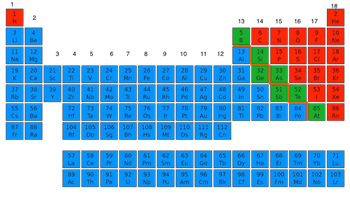
The chemical bond between a non-metal and another non-metal will be a ________ bond.
metal
ionic
covalent
polar
The chemical bond between a metal and a non-metal will be a _____ bond.
metal
ionic
covalent
polar
Sodium and Bromine will make a _____ bond.
ionic
covalent
metallic
Carbon and Oxygen will make a ___________ bond.
ionic
covalent
metallic
MgO
ionic
covalent
metallic
NaCl
ionic
covalent
metallic
If two fluorine atoms bond they will make a _____ bond.
ionic
covalent
metallic
Which of the following elements LOSES 1 electron in order to have a full outer shell of electrons?
potassium
calcium
helium
boron
fluorine
Which of the following elements LOSES 1 electron in order to have a full outer shell of electrons?
potassium
calcium
helium
boron
fluorine
Which of the following elements GAINS 1 electron in order to have a full outer shell of electrons?
sodium
calcium
helium
boron
chlorine
Which of the following elements LOSES 2 electrons in order to have a full outer shell of electrons?
lithium
magnesium
helium
sulfur
bromine
Generally, atoms form bonds so that _______________.
Each atom loses its electrons
Each atom has an electron configuration similar to a noble gas.
Each atom has an unstable electron configuration
Each atom gains electrons
Mg and Cl create...
Ca and N create...
Li and P create...
Na and Cl create...
Na2Cl
NaCl2
Na2Cl2
NaCl
Mg and O will bond to make...
Mg2O3
MgO2
MgO
Mg2O
If Ca and F bond together to form a stable, binary ionic compound, the formula will be...
Ca2F2
Ca3F
CaF2
Ca2F
Al and P create...
Al3P
AlP3
AlP
Al2P
Ba and Cl will combine to form which compound
Ba2Cl
BaCl2
Ba2Cl2
BaCl
A Li atom and a P atom will create and ionic bond. To be stable they must combine in which of the following combinations?
Which of the following elements LOSES 2 electrons in order to have a full outer shell of electrons?
lithium
magnesium
helium
sulfur
bromine
Mg and Cl create...
Ca and N create...
Li and P create...
Na and Cl create...
Na2Cl
NaCl2
Na2Cl2
NaCl
Mg and O will bond to make...
Mg2O3
MgO2
MgO
Mg2O
If Ca and F bond together to form a stable, binary ionic compound, the formula will be...
Ca2F2
Ca3F
CaF2
Ca2F
Al and P create...
Al3P
AlP3
AlP
Al2P
Ba and Cl will combine to form which compound
Ba2Cl
BaCl2
Ba2Cl2
BaCl
The name of FeCl₂ is
iron chloride
iron (II) chloride
iron (I) chloride
iron dichloride
LiBr is called
lithium bromine
lithium (I) bromine
lithium bromide
lithuim (I) bromide
Name the ionic compound SnSe2
Tin diselenide
Tin (IV) Selenide
Tin selenide
Tin (II) triselenide
Name the following ionic compound: BeCl2
beryllium chlorine
beryllium II chloride
beryllium chloride
beryllium dichloride
Name the following ionic compound: Cs2S
cesium sulfide
cesium sulfate
cesium II sulfate
cesium II sulfide
When naming ionic compounds with transition metals you need to include roman numerals to show the _____ of the metal..
atomic number
mass number
charge
ionization energy
When naming a compound, which of these is written first?
Metal
Nonmetal
Anion
Cation
When naming a compound, what must the last part be?
the element with "ide" at the end
the element with the ending "ite"
the name of the element
the element with "ide" at the end, unless its a polyatomic ion
What is the name of the compound Na2(SO4)?
Sodium sulfate
Sodium sulfide
Sodium sulfite
Sodium sulfuroxide
dinitrogen pentoxide
N2O5
NO5
N5O2
N2O6
P₄S₁₀
tetrapotassium decasulfide
phosphorus decasulfide
tetraphosphorus decasulfide
phosphorus (X) sulfide
SO₃
sulfate
sulfur oxide
sulfur trioxide
monosulfur trioxide
tetraphosphorus heptoxide
K₄O₁₀
P₄O7
KO
P₁₀O₄
chlorine dioxide
ClO2
ClO
ClO3
HClO2

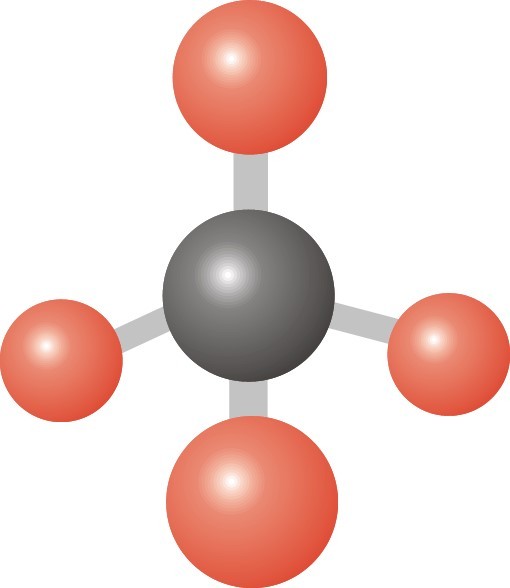

What would be the bond angle between atoms in this molecule?
180
120
90
109.5
What would be the bond angle between atoms in this molecule?
109.5
120
180
90

What is the name of this molecule's shape?
Bent
Linear
Tetrahedral
Trigonal pyramidal

What is the name of this molecular shape?
trigonal pyramid
tetrahedral
bent
trigonal planar

What would be the bond angle between atoms in this molecule?
90
120
180
109.5
Which Lewis Dot Model drawing correctly shows an O2 molecule?


The electrons in a POLAR covalent bond are shared...
Evenly
Unevenly
Electrons are not shared
None of the Above
The electrons in a NONPOLAR covalent bond are shared...
Evenly
Unevenly
Electrons are not shared
None of the Above

What type of bond is depicted in the image?
Nonpolar Covalent
Polar Covalent
Ionic
Electronegativity is...
The ability for an atom to ATTRACT electrons
the ability of an atom to LOSE electrons
the energy required to remove an electron from an atom
how easy it is to make friends.

What is the difference in electronegativity for HBr?
0.7
1.9
2.0
2.8

HBr has a difference in electronegativity of 0.7. Based on the table, what kind of bond is HF?
Nonpolar covalent
Polar covalent
Ionic
H2O has a difference in electronegativity of 1.4. Based on the table, what kind of bond is
H2O ?Nonpolar covalent
Polar covalent
Ionic
NH3 is a polar covalent compound. Which atom, N or H, will electrons spend MORE time with?
N
H

