wayground logo

Free Printable Worksheets

Font size

S
M
L
XL
Worksheets

Term III midterm assignment 2022

Total questions: 148

Worksheet time: 2hrs 33mins

Name
Class
Date
1.

4. Which biomolecules transport oxygen and other substances and also form part of most organelles?

a)

Lipids

b)

Carbohydrates

c)

Proteins

d)

Nucleic Acids

2.

6. The monomer of carbohydrates is known as _______.

a)

Amino Acid

b)

Fatty Acid

c)

Nucleotide

d)

Saccharide

3.

Which of the following is a term that refers to the building blocks of all cells?

a)

Macromolecules

b)

Micromolecules

c)

Molecules

d)

DNA

4.

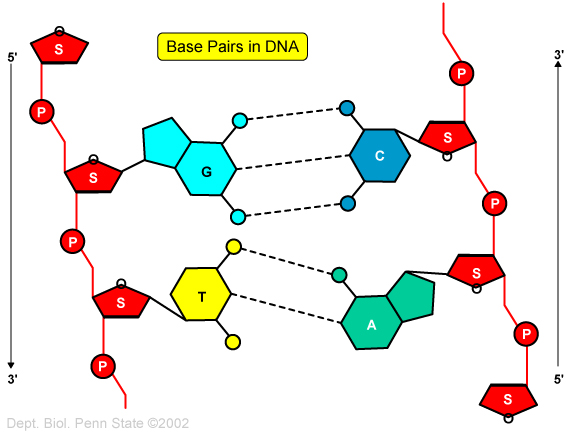
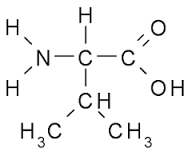
Which form of glucose is stored in the human liver and muscle?

a)

Cellulose

b)

Glycogen

c)

Lipids

d)

Starch

5.

Lipids are insoluble in water because lipid molecules are _________?

a)

hydophilic

b)

hydrophobic

c)

neutral

6.

Which of the following term refers to the combination of two types of monosaccharides?

a)

Monosaccharide

b)

Disaccharide

c)

Polysaccharide

7.

Which of the following is a term that refers to an energy source obtained from plants?

a)

Cellulose

b)

Glycogen

c)

Lipids

d)

Starch

8.
Which biomolecule is made of nucleotides and contain you DNA?
a)
Carbohydrate
b)
Lipids
c)
Protein
d)
Nucleic Acid
9.
Which biomolecule helps form muscles?
a)
Nucleic Acid
b)
Carbohydrate
c)
Protein
d)
Lipids
10.
Which 2 molecules form the sides (backbone) of the DNA ladder?
a)
deoxyribose sugar and adenine
b)
deoxyribose sugar and a hydrogen bond
c)
deoxyribose sugar and the nucleus
d)
deoxyribose sugar and phosphate
11.
Guanine bonds with ______________.
a)
Adenine
b)
Guanine
c)
Cytosine
d)
Thymine
12.
Nitrogenous bases are joined by which type of bond?
a)
polar bonds
b)
ionic bonds
c)
covalent bonds
d)
hydrogen bonds
13.
Why does DNA replicate?
a)
To create another copy for the new cell
b)
To create a duplicate copy in case the original gets damaged
c)
To create a new copy to replace the damaged original
14.
Which of the following units are repeatedly joined together to form a strand of DNA?
a)
amino acids
b)
nucleotides
c)
fatty acids
d)
polysaccharides
15.

Which of the following is found on RNA but not DNA?

a)

Deoxyribose

b)

Uracil

c)

Phosphate

d)

Adenine

16.

What is the Shape of DNA

a)

Spring

b)

Double Helix

c)

Single Helix

d)

A twist knot thing

17.

What are monosaccharides?

a)

double sugar

b)

single sugar

c)

protein

d)

nucleic acid

18.

What type of biomolecule is glucose?

a)

monosaccharide

b)

disaccharide

c)

polysaccharide

19.

What type of biomolecule is fructose?

a)

monosaccharide

b)

disaccharide

c)

polysaccharide

20.

What type of biomolecule is maltose?

a)

monosaccharide

b)

disaccharide

c)

polysaccharide

21.

What type of biomolecule is sucrose?

a)

monosaccharide

b)

disaccharide

c)

polysaccharide

22.

How many types of biomolecules are there in the body?

a)

1

b)

2

c)

3

d)

4

23.

The carbon, hydrogen, and oxygen atoms from sugar molecules in the cracker you ate were rearranged in your body during digestion.

a)

True

b)

False

24.

Match the following

a)
1.

carbohydrate

b)
2.

amino acid

c)
3.

nucleotide

d)
4.

ATP (adenosine triphosphate)

e)
5.

triglyceride

25.

Match the following monomers with their biomolecule

a)
1.

nucleic acids

b)
2.

proteins

c)
3.

carbohydrates

d)
4.

lipids (fats)

26.

Most common elements in living things include:

a)

carbon

b)

oxygen

c)

nitrogen

d)

hydrogen

27.

What best describes the picture?

a)

How water is formed

b)

Chemical formula for how water is formed

c)

Elements found in water

d)

Elements and compounds

28.

Why is carbon the basis of most molecules?

a)

it has four valence electrons and can bond with four other elements

b)

it can form several structures

c)

it can form single, double, and triple bonds

d)

it always bonds with oxygen needed for life

29.

Why does it take longer for your body to break down complex carbohydrates than simple carbohydrates?

a)

simple carbohydrates can be broken down quickly and absorbed by the body

b)

complex carbohydrates are made up of longer chains of molecules and broken down more slowly

c)

complex carbohydrates are often rich in cellulose which is not broken down by our digestive system

d)

it doesn't take long to break down complex carbohydrates, just sayin

30.

LINEAR CHAINS OF AMINO ACIDS ARE LINKED BY

a)

HYDROGEN BOND

b)

PHOSPHODIESTER BOND

c)

GLYCOSIDIC BOND

d)

PEPTIDE BOND

31.

WHICH OF FOLLOWING ARE MADE UP OF CELLULOSE

a)

PLANT CELL WALL

b)

PLANT PULP

c)

COTTON FIBRE

d)

ALL OF THE ABOVE

32.

STRUCTURE OF DEOXYRIBOSE SUGAR

a)
b)
33.

STRUCTURE OF RIBOSE SUGAR

a)
b)
34.

ESTER BONDS FORMS IN

a)

PROTEINS

b)

LIPIDS

c)

NUCLEIC ACIDS

d)

CARBOHYDRATES

35.

WHAT DOES THE FORMATION OF PEPTIDE BOND ELIMINATE

a)

O2

b)

CO2

c)

H2O

d)

NH2

36.

PEPTIDE BOND FORMS BY

a)

BINDING OF INDIVIDUAL MONOSACCHARIDE

b)

CARBOXY GROUP OF ONE AMINO ACID REACTS WITH AMINO GROUP OF NEXT AMINO ACID

c)

3-"C" OF ONE SUGAR OF NUCLEOTIDE LINKS TO 5-"C" OF SUGAR OF SUCCEEDING NUCLEOTIDE

d)

NONE OF THE ABOVE

37.

GLYCOSIDIC BOND IS FORMED BY

a)

HYDRATION

b)

CARBOXYLATION

c)

DEHYDRATION

d)

PRECIPITATION

38.

Amino Acids are the monomers of __________.

a)

Nucleic Acids

b)

Proteins

c)

Carbohydrates

d)

Lipids

39.

The monomer of carbohydrates are known as _______.

a)

Amino Acid

b)

Fatty Acid

c)

Nucleotide

d)

Saccharide

40.

Glycerol and fatty acids are the monomers of _________.

a)

Lipids

b)

Carbohydrates

c)

Proteins

d)

Nucleic Acids

41.

The monomers of Nucleic Acids are known as _________.

a)

Amino Acid

b)

Fatty Acid

c)

Nucleotide

d)

Saccharide

42.

The four most common elements found in biomolecules are __________.

a)

Sulfur, Phosphorus, Carbon, Oxygen

b)

Carbon, Oxygen, Nitrogen, Hydrogen

c)

Sulfur, Nitrogen, Carbon, Iron

d)

Carbon, Nitrogen, Hydrogen, Sulfur

43.
Carbon, Hydrogen, Oxygen and Nitrogen are elements in what biomolecule?
a)
Carbohydrate
b)
Lipid
c)
Protein
d)
Nucleic acid
44.

Which biomolecule sometimes contains sulfur?

a)

Carbs

b)

Lipids

c)

Proteins

d)

Nucleic Acids

45.

The molecule presented is an example of a _____

a)

Nucleic Acid

b)

Carb

c)

Lipid

d)

Protein

46.

The molecule presented is an example of a _____

a)

Nucleic Acid

b)

Carb

c)

Lipid

d)

Protein

47.

The molecule presented is an example of a _____

a)

Nucleic Acid

b)

Carb

c)

Lipid

d)

Protein

48.

The molecule presented is an example of a _____

a)

Nucleotide

b)

Monosaccharide

c)

Amino Acid

d)

Polysaccharide

49.

Which of the following best describes the polarity of the R-group?

a)

Unpolar

b)

Nonpolar

c)

Expolar

d)

Polar

50.

Which best describes the middle fatty acid chain in the structure?

a)

Saturated

b)

Unsaturated

c)

Equal

d)

Neutral

51.

A __________ consists of many monomers bonded together.

a)

monomer

b)

hydrocarbon

c)

peptide

d)

polymer

52.

Which biomolecule includes fats, oils, waxes, and steroids (cholesterol); insoluble in water; provides energy storage, insulation, part of cell membrane, and hormones 

a)
Nucleic Acid
b)
Lipids
c)
Carbohydrate
d)
Protein
53.
Which biomolecule is important source of energy for humans; glucose for human cells, tissues, and organs; provides fiber, sugar, and starches; provides structural support, cell wall, and cell membrane maker?
a)
Nucleic Acid
b)
Lipid
c)
Carbohydrate
d)
Protein
54.
Which of the following answers links a biomolecule with one of its proper functions?
a)
Lipids - Store genetic information
b)
Carbohydrates - short term energy storage
c)
Nucleic Acids - Catalyze reactions
d)
Proteins - long term energy storage
55.

The human body is capable of digesting the complex polymer starch into simpler subunits. This digestive process requires the presence of water and the enzyme amylase in order to break down starch into maltose. This is depicted below. Which of the following statements best describes the digestion of starch into maltose?

a)

This is a hydrolysis reaction that requires water to break down a complex polymer into simpler subunits.

b)

This is a dehydration synthesis reaction that produces water when forming a complex polymer from simpler subunits.

c)

This is a dehydration synthesis reaction that requires water to form a complex polymer from simpler subunits.

d)

This is a hydrolysis reaction that forms water by breaking down a complex polymer into simpler subunits.

56.

In the reaction below, two glucose monomers combine to form the dimer maltose. Which of the following best explains the process of this reaction?

a)

To form a covalent bond, the monomers underwent a hydrolysis reaction.

b)

An ionic bond forms through dehydration synthesis, which combines the two glucose monomers and forms the maltose dimer.

c)

Water is added to the reaction to promote the formation of a covalent bond between the glucose monomers.

d)

A covalent bond forms through dehydration synthesis, which results in the formation of maltose and water.

57.
What molecule is this?
a)
this is a monosaccharide
b)
this is a polysaccharide
c)
this is a protein
d)
this is a lipid
58.

Which of the following statements is/are true with regard to a polymer of 6 glucose molecules?

I. The chemical formula is C36H72O36

II. The chemical formula is C36H62O31

III. The monomers of glucose were joined via hydrolysis

IV. The monomers of glucose were joined via dehydration synthesis

a)

I only

b)

II only

c)

IV only

d)

I and III only

e)

II and IV only

59.

Based the information provided, which of the following statements best describes why starch and cellulose provide different functions in plants?

a)

The differences in the assembly and organization of the monomers of these two polymers result in different chemical properties.

b)

Since starch and cellulose are composed of identical monomers, the cellular environment where they are located controls their function.

c)

The monomers of cellulose are connected by covalent bonds, making it idea for structural support.

d)

The monomers of starch are connected by ionic bonds, making it ideal for energy storage for plants.

60.

Which polysaccharide is used by plants to store glucose?

a)

glycogen

b)

cellulose

c)

starch

d)

chitin

61.

What is the polysaccharide used by animals to store glucose?

a)

glycogen

b)

fructose

c)

starch

d)

cellulose

62.
Sugars all end with what three letter ending?
a)
-ote
b)
-ate
c)
-ase
d)
-ose
63.
What type of carbohydrate is this?
a)
polysaccharide
b)
disaccharide
c)
monosaccharide
d)
it isn't a carbohydrate
64.
What type of carbohydrate is this?
a)
polysaccharide
b)
disaccharide
c)
monosaccharide
d)
it isn't a carbohydrate
65.
How many sugar units make up monosaccharides?
a)
one
b)
two
c)
three
d)
zero
66.
How do the number of H atoms compare to the number of O atoms in a carbohydrate?
a)
There are TWICE as many H
b)
They are the same amount
c)
There are THREE times as many H
d)
There are TWICE as many O
67.
Which is not a chemical element needed to build sugars?
a)
Carbon
b)
Oxygen
c)
Nitrogen
d)
Hydrogen
68.

Enzymes that make or break down ATP are called____________.

a)

isomerases

b)

polymerases

c)

kinases

d)

chimases

69.
Where does glycolysis take place in cells?
a)
Cytoplasm
b)
Mitochondrion
c)
Endoplasmic Reticulum
d)
Ribosomes
70.
Glycolysis results in the net gain of:
a)
2 ATP
b)
4 ATP
c)
4 NADH
d)
2 Acetyl CoA
71.
Glycolysis results in the total production of:
a)
2 ATP
b)
4 ATP
c)
4 NADH
d)
2 Acetyl CoA
72.
Which of the following is not a requirement for glycolysis?
a)
Oxygen
b)
ATP
c)
NAD+
d)
Glucose
73.
The first step in getting energy in the cell by breaking down glucose is known as
a)
the Krebs cycle
b)
electron transport
c)
fermentation
d)
glycolysis
74.
What is the starting molecule for glycolysis?
a)
Glucose
b)
ADP
c)
Oxygen
d)
Pyruvic Acid
75.
Glycolysis requires
a)
ATP
b)
Oxygen
c)
sunlight
d)
NADP+
76.
In glycolysis, glucose is converted into two molecules of _____. 
a)
citric acid
b)
oxaloacetic acid
c)
pyruvic acid
d)
Acetyl CoA
77.
What is Anaerobic Respiration?
a)
process of producing energy without oxygen.
b)
process of producing energy with oxygen.
78.
This molecule contains three phosphate groups
a)
ADP
b)
ATP
c)
Mitochondria
d)
Nucleus
79.
This molecule contains two phosphate groups
a)
ADP
b)
ATP
c)
Mitochondria
d)
Nucleus
80.

In glycolysis, how many molecules of NADH are formed?

a)

1

b)

2

c)

3

d)

4

81.
Glucose is broken down into pyruvate in a process known as 
a)
glycolysis
b)
electron transport
c)
the Krebs cycle
d)
phosphorylation
82.
Most of the COproduced during cellular respiration is released during
a)
the citric acid cycle
b)
the electron transport chain
c)
glycolysis
d)
chemiosmosis
83.
Most of a cell's ATP is produced during this stage of cellular respiration.
a)
oxidative phosphorylation
b)
glycolysis
c)
the citric acid cycle
d)
fermentation
84.
Most of a cell's ATP is produced during this stage of cellular respiration.
a)
oxidative phosphorylation
b)
glycolysis
c)
the citric acid cycle
d)
fermentation
85.
Pyruvate must be "groomed" in the cytoplasm to form this 2-carbon compound.
a)
acteyl CoA
b)
malate
c)
lactic acid
d)
FAD
86.
At the start of the the citric acid cycle acetyl CoA joins with this 4-carbon compound to create citrate.
a)
oxaloacetate
b)
FADH2
c)
carbon monoxide
d)
glucose
87.
The role of oxygen in cellular respiration is to
a)
accept electrons
b)
produce ATP
c)
groom pyruvate
d)
release ions
88.
This term refers to the production of ATP without oxygen being present.
a)
anaerobic
b)
prokaryotic
c)
biogenic
d)
organic
89.
Fermentation occurs in the cell's 
a)
cytoplasm
b)
nucleus
c)
cell membrane
d)
cristae
90.
Which of the following is NOT a waste product produced during fermentation processes?
a)
NADH
b)
ethanol
c)
lactate
d)
CO2
91.
To make large amounts of energy, an eukaryotic cell must use oxygen and 
a)
glucose
b)
water
c)
carbon dioxide
d)
light
92.
Which of these is NOT an anaerobic process?
a)
electron transport chain
b)
glycolysis
c)
citric acid cycle
d)
fermentation
93.
The movement of Hions down a concentration gradient to release large amounts of ATP is 
a)
chemiosmosis
b)
phosphorylation
c)
anaerobic respiration
d)
pyruvate grooming
94.
In order to create NADH and FADH2 , NAD and FAD must be 
a)
reduced
b)
oxidized
c)
replaced
d)
ionized
95.
The waste products of alcoholic fermentation are ethanol and 
a)
CO2
b)
pyruvate
c)
citrate
d)
ADP
96.
The citric acid cycle and glycolysis can both yield _____ molecules of ATP.
a)
2
b)
4
c)
3
d)
5
97.
The waste product _______ is formed during the electron transport chain when Hunite with O2 molecules.
a)
water
b)
glucose
c)
carbon dioxide
d)
lactate
98.
This molecule contains three phosphate groups
a)
ADP
b)
ATP
c)
Mitochondria
d)
Nucleus
99.
This molecule contains two phosphate groups
a)
ADP
b)
ATP
c)
Mitochondria
d)
Nucleus
100.
This process releases chemical energy from sugars and other carbon-based molecules to make ATP when oxygen is present.
a)
photosynthesis
b)
light-independent reaction
c)
cellular respiration
d)
light-dependent reaction
101.
What is the net gain of ATP during glycolysis?
a)
1
b)
2
c)
3
d)
4
102.
Glycolysis 
a)
does not need oxygen
b)
does need oxygen
103.
Glycolysis takes place in the 
a)
mitochondria
b)
cell membrane
c)
cytoplasm
d)
nucleus
104.
This is the first step of cellular respiration
a)
Glycolysis
b)
Lactic Acid Fermentation
c)
Alcoholic Fermentation
d)
Aerobic Respiration
105.
Which is not a waste product of cellular respiration?
a)
Water
b)
Heat
c)
Carbon Dioxide
d)
Oxygen
106.
This process does not make ATP alone, but it allows glycolysis to continue making ATP when oxygen is unavailable for cellular respiration.
a)
Fermentation
b)
Electron Transport Chain
c)
Glycolysis
d)
Kreb's cycle
107.
This means that oxygen is needed
a)
anaerobic 
b)
aerobic
108.
What is one of the reactants of cellular respiration?
a)
energy
b)
glucose
c)
carbon dioxide
d)
water
109.
______________ produces the most ATP.
a)
photosnthesis
b)
aerobic respiration
c)
anaerobic respiration
d)
glycolysis
110.
What are the products of aerobic respiration?
a)
Glucose and oxygen
b)
Carbon dioxide and water
c)
Lactic acid
d)
Carbon monoxide
111.
The mitochondria is responsible for ...
a)
photosynthesis
b)
anaerobic respiration
c)
aerobic respiration
d)
fermentation
112.
How many ATP are produced in aerobic respiration?
a)
2
b)
33
c)
4
d)
36
113.
In which way are photosynthesis and cellular respiration different?
a)
Cellular respiration stores ATP, while photosynthesis releases ATP.
b)
Cellular respiration produces oxygen, while photosynthesis uses oxygen.
c)
Photosynthesis releases energy, while cellular respiration stores energy.
d)
Photosynthesis used carbon dioxide, while cellular respiration produces carbon dioxide.
114.
What is the correct equation for cellular respiration?
a)
6O2 + C6H12O6 -> 6CO2 + 6H2O + Energy
b)
6O2 + C6H12O6 + Energy -> 6CO2 + 6H2O
c)
6CO2 + 6H2O -> 6O2 + C6H12O6 + Energy
d)
6CO2 + 6H2O + Energy -> 6O2 + C6H12O6
115.
Where does the Krebs Cycle take place?
a)
mitochondria
b)
chloroplast
c)
cytoplasm
d)
nucleus
116.
Cellular Respiration's goal is to
a)
make water
b)
make ATP
c)
make glucose
d)
make  oxygen
117.
Which molecule isn't an energy carrier?
a)
FADH2
b)
NADH
c)
oxygen
d)
ATP
118.
 The expression "feel the burn" means that a person exercising is doing 
a)
lactic acid fermentation
b)
alcoholic fermentation
c)
photosynthesis
d)
aerobic respiration
119.
ATP becomes ADP when it
a)
loses a phosphate
b)
is exposed to sunlight
c)
gains a phosphate
d)
gains energy
120.
Which is a product of the Krebs Cycle?
a)
glucose
b)
carbon dioxide
c)
water
d)
pyruvate
121.
Which is a product of the electron transport chain?
a)
glucose
b)
carbon dioxide
c)
water
d)
oxygen
122.
When a bond is made
a)
energy is stored
b)
energy is released
123.
When a bond is broken
a)
energy is stored
b)
energy is released
124.
Where do the electrons from the energy carriers in the ETC go to?
a)
ATP
b)
ADP
c)
NADH
d)
Oxygen
125.
Where does the energy created in the Krebs cycle go?
a)
cytoplasm
b)
mitochondrial matrix
c)
ETC
d)
stroma
126.
Lactic acid fermentation occurs in your muscles after a workout because your cells are struggling to get...
a)
Glucose
b)
Sunlight
c)
Oxygen
d)
Water
127.
The process carried out by yeast that causes bread to rise is
a)
alcoholic fermentation
b)
lactic acid fermentation
c)
cellular respiration
d)
yeast mitosis
128.
Fermentation is:
a)
Cellular Respiration 
b)
Photosynthesis
c)
Aerobic
d)
Anaerobic
129.
What is a disadvantage of fermentation as a process? 
a)
It produces too much ATP
b)
It only produces 2 ATP
c)
It occurs in the absence of oxygen
d)
It is only for quick bursts of energy
130.
How are lactic acid and alcoholic fermentation similar?
a)
They have the same products
b)
They have the same reactants
c)
They both require oxygen
d)
They occur in the same organisms
131.
Fermentation occurs in the cell's 
a)
cytoplasm
b)
nucleus
c)
cell membrane
d)
cristae
132.
Which of the following is NOT a stage of cellular respiration?
a)
fermentation
b)
electron transport
c)
glycolysis
d)
Krebs cycle
133.

Which pathway is common to both fermentation and cellular respiration?

a)

Krebs cycle

b)

electron transport chain

c)

glycolysis

d)

formation of Acetyl CoA

134.

Where does the Krebs Cycle takes place?

a)

Cytoplasm of the cell

b)

Matrix of the mitochondrion

c)

Inner membrane of the mitochondrion

d)

Outer membrane of the mitochondrion

135.

Where does the electron transport chain take place?

a)

Cytoplasm of the cell

b)

Matrix of the mitochondrion

c)

Inner membrane of the mitochondrion

d)

Outer membrane of the mitochondrion

136.

What is produced during glycolysis? Check all that apply.

a)

2 NET ATP

b)

4 TOTAL ATP

c)

2 NADH

d)

2 pyruvate molecules

137.

What do the energy carrying molecules made in the Kreb's cycle do? Choose all that apply.

a)

Go to the inner membrane to power the electron transport chain.

b)

Go to the inner membrane to be oxidized.

c)

Recycle back to the Kreb's cycle when they have been oxidized.

d)

Go to the inner membrane to be reduced.

138.

The reduced form of NAD+ is

a)

NADH

b)

NADPH

c)

FADH2

d)

ATP

139.

Which molecules are oxidized to release electrons to power the pumping of H+ in the electron transport chain? Check all that apply.

a)

NADH

b)

FADH2

c)

ATP

d)

ADP

140.

What must happen to ADP to form ATP? Check all that apply.

a)

ADP must be reduced.

b)

ADP must be oxidized.

c)

Energy is used to form a bond.

d)

ADP must be phosphorylated.

141.
For every molecule of glucose, how many molecules of FADH2 are produced by the Krebs Cycle?
a)
1
b)
2
c)
4
d)
6
142.
The ETC makes water.  To make this water, where do the hydrogen atoms come from?
a)
glucose
b)
pyruvate
c)
NADH and FADH2
d)
oxygen
143.
NAD and FAD are _________ in the Krebs cycle.
a)
oxidized
b)
reduced
c)
carboxylated
d)
phosphorylated
144.
In the ETC, what is the last electron acceptor?
a)
water
b)
oxygen
c)
NAD
d)
FAD
145.
Hydrogen ions moving from the intermembrane space into the mitochondrial matrix is called
a)
chemiosmosis
b)
phosphorylation
c)
oxidation
d)
reduction
146.

The outer membrane of the mitochondrion on the photo

a)

A

b)

B

c)

C

d)

D

147.

Matrix of the mitochondrion

a)

A

b)

B

c)

C

d)

D

148.

The inner membrane of the mitochondrion

a)

A

b)

B

c)

C

d)

D