
 Worksheets
Yr9 Living World
Total questions: 126
Worksheet time: 2hrs 31mins

Pelicans are birds that live in many water environments. They can live in large lakes, in marshy wetlands, and along beaches near the ocean. The picture shows a pelican. What does the pouch on its bill most likely help the pelican do?
Catch fish
Store water
Attack other animals
Balance when it walks

Water lilies live in lakes and ponds. The lilies have very long stems. The picture shows a water lily in a pond. How do long stems help water lilies live in ponds?
They absorb food for the plant.
They absorb water from the pond.
They enable the pads and flower to reach sunlight.
They prevent the plant from floating away.

The picture shows flowers with an unusual shape. Which beak shape would best allow a bird to reach the nectar inside the flower?
Long and thin
Short and thick
Short and thin
Long and thick
Pelicans are birds that live in many water environments. They can live in large lakes, in marshy wetlands, and along beaches near the ocean. The picture shows a pelican. What does the pouch on its bill most likely help the pelican do?
Catch fish
Store water
Attack other animals
Balance when it walks
Rivers are home to many kinds of birds. Which foot is most likely the adaptation of a bird that swims in water to find food?


In the fall, a ground squirrel will store the energy from food as a thick layer of fat. What is most likely the reason for this adaptation?
It keeps the animal from being exposed to diseases in winter.
It keeps the animal from being eaten by predators that hunt during winter.
It helps the animal get exercise during winter when it is snowing.
It helps the animal survive a cold winter when there is very little food.

Tom sketched this picture of an epiphyte from a book about tropical forests. How is this plant adapted to the ecosystem in which it lives?
It has a trunk tall enough to reach above nearby trees and compete for sunlight.
It has long roots that reach deep enough into the dry soil to reach underground water.
It has roots that attach to trees so that it can reach sunlight that is scarce on the forest floor.
It has leaves that capture and digest insects, which it needs for nutrients missing from soil.
It is estimated that fewer than 100 Florida panthers are still living. Florida now has a protected habitat for the panther. How will the protected habitat affect the panthers?
The panthers will probably become extinct.
Panthers will no longer be adapted to living in Florida.
The Florida panther population will decrease in the near future.
The panther population may increase now that they are being conserved in a protected habitat.
The state reptile of Florida is the American alligator. Reptiles rely on the environment to maintain their body temperature. Which behavioral adaptation below allows the alligator to control its body temperature?
Alligators mate in April and May.
The alligator basks in the sunlight.
Alligators lay between 20 and 50 eggs at one time.
The alligator eats turtles, small mammals, and birds.
The state reptile of Florida is the American alligator. Reptiles rely on the environment to maintain their body temperature. Which behavioral adaptation below allows the alligator to control its body temperature?
Alligators mate in April and May.
The alligator basks in the sunlight.
Alligators lay between 20 and 50 eggs at one time.
The alligator eats turtles, small mammals, and birds.
Plants have various adaptations for survival. Some adaptations protect plants by discouraging animals from eating the flowers. Which of these is an adaptation that protects a rose from animals?
Tall stems
Sharp thorns
Large leaves
Soft flower petals
Physical characteristics that help an organism survive are called:
Habitats
Extinction.
Adaptations.
Learned behaviors.

The apple snail lives in ponds, lakes, and rivers. The apple snail is the largest snail found in the freshwaters of North America. The illustration shows an apple snail. How is the structure labeled X an adaptation for the apple snail?
The apple snail uses this structure to find food.
The apple snail uses this structure to reproduce.
The apple snail uses this structure to digest its prey.
The apple snail uses this structure to protect itself from predators.
Plankton are tiny organisms that live in the ocean. Some kinds of plankton live near the surface of the ocean where there is sunlight during the day. At night, they travel deeper into the ocean where it is safer to live. Which of the following is the plankton's behavior most similar to?
Some bats hibernate in winter
Some rabbits shed their thick fur in summer
Some birds migrate during spring and summer
Some plants produce poisonous chemical substances


What do plants need to survive?
sunlight, water, air, and nutrients
sunlight, winter, fall, and nutrients
swamps, bees, leaves, and nutrients
Some plants have brightly colored flowers to attract bees, birds, and butterflies.
False
True
What are the 4 types of animal adaptations?
Defense, Color, Food, Shelter
camouflage, Getting Resources, Locomotive, and Defense
Camouflage, Speed, Plants, and Vision
Getting Resources, Speed, Vision, and Locomotive

The sharp teeth of lions are what type of adaptation?
Structural
Physilogical
Behavioral

A bird uses its beak to take food
Structural
Physilogical
Behavioral

When food is scarce ( not much available), bears hibernate.What type of adaptation is this?
Structural and Behavioral
Physiological and Behavioral
Physiological and Structural

A giraffe has a long neck to obtain food.
Structural
Physilogical
Behavioral

Some kinds of birds migrate to the warmer places in the winter
Structural
Physilogical
Behavioral

The wings of a butterfly look like snake heads
Camouflage
Webbed Feet
Pretend Play
Mimicry

Octopus changes its own colors to blend in with the sand
Camouflage
Webbed Feet
Pretend Play
Mimicry

Skunk releases and sprays odor at predator
Structural
Behavioral
Physiological

Some animals pretend to be dead to protect themselves from predators
Structural
Behavioral
Physiological

Frogs use webbed feet to swim in water
Structural
Physilogical
Behavioral

Snake produces venom
Structural Adaptation
Behavioral Adaptation
Physiological Adaptation
Mimicry
Octopus changes its own colors to blend in with the sand
Behavioral Adaptation
Physiological and Structural
Structural and Behavioral

The stripes of a zebra
Camouflage
Webbed Feet
Pretend Play
Mimicry
Which of these describes the things that an organism DOES in order to survive?
Physical Adaptation
Behavioral Adaptation
An example of a behavioral adaptation is
the long neck of a giraffe.
a camel's hump used to store water.
a polar bear's white fur used for camouflage.
a squirrel storing nuts for the winter.
This is an example of what type of adaptation:
A skunk spraying its predator
a migration adaptation
an adaptation to find food
an adaptation to hide (camouflage)
a defense adaptation
What is the word to describe an animal traveling to find food and water.
For example, birds flying south for the winter
Camouflage
Migration
Hibernation
Predator

What do animals do when they migrate?
They sleep all winter.
They live in a pond.
They move from one place to another.
They study birds.
Which is an example of a behavioral adaptation?
a black bear hibernating during the winter
a snail's shell protecting it from predators

Which is a behavioral adaptation of penguins?
Penguins have a layer of blubber to stay warm.
Penguins huddle together to stay warm.

Possums play dead to trick their predators.
Is this a behavioral adaptation or a physical adaptation?
Which is a behavioral adaptation?
tall neck
camouflage
nocturnal/hunting at night
body covering
Which is a behavioral adaptation of birds?
webbed feet
warning sounds
long beak
hollow bones

How do adaptations help animals?
To escape animals
to hunt for food
to survive in their habitats
All of these are correct

Why do animals use camouflage?
To look pretty
To stay safe
To play Hide and Go Seek
To eat food

Traveling done by an animal to find food and water.
Adaption: birds flying south for the winter
Camouflage
Migration
Hibernation
Locomotion

The raccoon has hands and feet. Why would the raccoon need this adaptation?
to fight
to help them find and pick up food
to hang from trees
to dig a tunnel

An example of a structual adaptation is...
a turtle hiding inside its shell
The spikes on a porcupine fish
a rabbit burrowing underground
a viper biting when threatened


Plants grow towards sunlight to help them acquire as much sunlight as possible.
behavioral
structural

_______ is to go into a deep sleep-like state during winter.
hibernate
migrate
camouflage
adaptation

Bees dance to tell each other where to find food.
Structural/Physical Adaptation
Behavioral Adaptation

A kangaroo has a pouch to protect its young.
Structural/Physical Adaptation
Behavioral Adaptation

A snake's fangs
structural
physiological
behavioral

Gills on a fish
structural
physiological
behavioral

When threatened, some animals make warning sounds to help other animals escape a predator.
Behavioral Adaptation
Structural Adaptation

The polar bear's white fur allows it to hide in the cold arctic. This adaptation is called________________.
White on white
Camouflage
Color matching
behavioral adaptation

A resting state through the winter.
Adaptation: Bear sleeping in a cave during the winter months
Locomotion
Hibernation
Migration
Defense

Xylem tubes transport substances..
From the roots to the stem and leaves
From the leaves to the rest of the plant

Select the correct term for the following definition:
"The water transport system in plants."
Villi
Bronchi
Bolus
Xylem

Why do birds need the adaptation of hollow bones?
to fly
to live
to reproduce
to run

What type of adaptation allows a tiger to hide in tall grass?
locomotion
camouflage
obtaining resources
defense
The physical features of an organism that help it survive.
Behavioral Adaptations
Structural Adaptations
What is the shape, color, and pattern of an animal that lets it blend in or hide?
Camouflage
Adaptation
Mimicry
Poisonous
What are the traits that helps a living thing survive in its environment?
Camouflage
Adaptation
Mimicry
Poisonous

Birds have different beaks to help them survive in their habitat, which is a type of ___________ adaptation.
behavioral
structural
learned
migration
What is the smallest unit said to be alive?
organism
cell
animal
What does multi- mean?
many
one
What does uni- mean?
many
one
Check all that are considered nonliving.
rock
sun
grass
air
What is a living thing made up one or more cells?
non-living thing
cell
organism
What is a living thing made up of ONE cell?
unicellular organism
multicellular organism
What is a living thing made up of MORE than one cell?
unicellular organism
multicellular organism
What does the M stand for in MRSGREN?
Movement
Missing
Maybe
What does the N stand for in MRSGREN?
Nothing
Nutrients
Nutella
What does the R stand for in MRSGREN?
Reason
Response
Respiration
What does the S stand for in MRSGREN?
Stimulus
Stop
Swim
What does the G stand for in MRSGREN?
Give
Grow
Gift
What does the E stand for in MRSGREN?
Ecosystem
Environment
Eliminates Waste
What does the R stand for in MRSGREN?
Respond
Reproduce
Recycle
Organelles are.....
small structures in cytoplasm with special jobs to do.
living organisms.
made up of cells.
What must cells do to make new cells?
Divide
Nothing
How do you determine if something is living or non-living?
Is it on earth?
Is it made up of cells?
What does it look like?
What are some organelles/structures that Eukaryotic and Prokaryotic cells have in common?
cytoplasm
nucleus
genetic material
ribosomes
1. The name given to an organism with ONE cell is
multicellular
unicellular
An amoeba is made of one cell only. Which of the organelles will be missing from its cell?
nucleus
cytoplasm
cell membrane
chlorophyll
A colony of cyanobacteria, a type of algae, live in water and make their own food through photosynthesis. Each cyanobacterium is made up of one cell. What kind of organisms are cyanobacteria?
Unicellular and Consumer
Multicellular and Consumer
Unicellular and Producer
Multicellular and Producer
Jellyfish are marine organisms that don't have brains. They are made up of many cells so would be
Unicellular
Multicellular
Which is the best definition of 'movement'?
The whole organism must be able to move
All or part of the organism is able to move
The organism is able to change its location
Which is the best definition of 'growth'?
The organism produces offspring
The organism becomes less complex over time
The organism increases in size over time
Which is the best definition for the life process of 'reproduction'?
The organism becomes less complex over time
The organism produces offspring
The organism becomes more complex over time
"Living and non-living things can both move"
Identify the option that best describes how movement is different in living things compared to non-living things.
Living things can move their whole bodies, while non-living things can only move parts of themselves
Living things can move on their own, while non-living things require an outside force to move
Non- living things can move on their own, while living things require an outside force to move
"Arthropods are animals which have a hard outer skeleton called an exoskeleton".
Identify how arthropods grow:
They shed their exoskeleton when they become too big for it, and regrow another one
They only grow to the size of their exoskeleton and then stop
Their exoskeleton expands as they grow
Identify which of the following is the best definition for the life process of "respiration":
The process of breathing in oxygen
The chemical process of turning food and oxygen into energy
The process by which organisms take in food
What type of cell does cell respiration happen in?
Plant cells
Animal cells
Both

What organelle does cell respiration occur in?
Golgi body
nucleus
ribosome
mitochondria
Which of the following is a PRODUCT of cell respiration?
glucose
ATP (energy)
oxygen
water

Photosynthesis takes place in this organelle.
Mitochondria
Golgi Body
Chloroplast
Cell Wall
Which of these is a PRODUCT of photosynthesis?
Glucose
Water
Sunlight
Carbon Dioxide
Which of the following is NOT a reactant of photosynthesis?
carbon dioxide
oxygen
water
sun energy
What organelle uses light energy to make glucose during photosynthesis?
chloroplast
mitochondria
What organelle breaks down glucose using oxygen to create energy in cell respiration?
chloroplast
mitochondria
Which of these do you NOT need to do before looking at a slide under a microscope?
Turn on the microscope
Make sure it's set to the lowest power lenses
Set the stage to it's lowest position
Make sure it's set to the highest power lenses

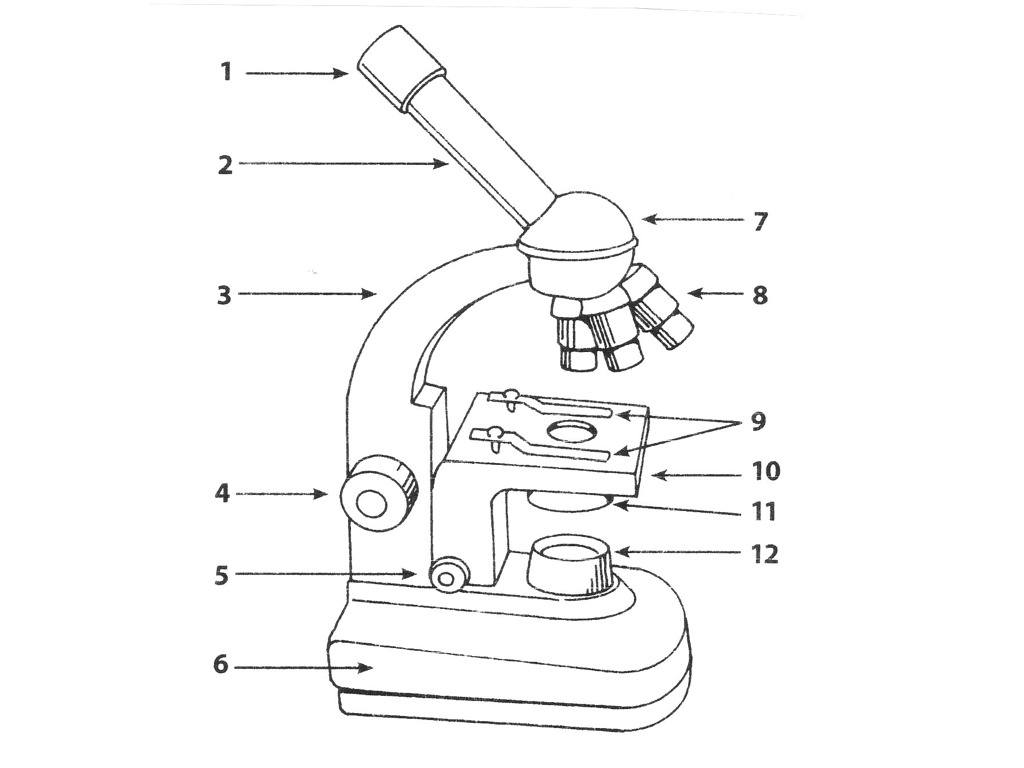

A thin flat piece of glass used to hold objects for examination is called a ___
sheet
slide
cover slip
objective

These are used to hold the slide in place:
rotating nosepiece
objective lenses
stage clips
adjustment knobs

When is it okay to go to a higher magnification and use the fine focus?
First thing when you get the slide.
After you have located the cell using lower magnification and coarse focus.
When you are done looking at the slide.
Why is it important to not let the lenses touch the slide/stage?
It doesn't look as cool.
Ms. Pereira said so.
It can be hard to see the slide.
It could break the glass slide.

What piece is a larger knob usually found on either the body tube or the arm and it is used to focus the image under low power?
Aperture
Fine Adjustment Knob
Diaphragm
Course Adjustment Know
What piece is the smaller knob, found near the course adjustment knob, and is used to focus the image under low and high power?
Aperture
Fine Adjustment Knob
Diaphragm
Course Adjustment Know
True of False: If the adjustment knobs are not turning, you should force them to turn.
True
False
True of False: You should always store microscopes covered.
True
False


What organelles are visible in these cells?
nucleus and chloroplasts
nucleus and cell membrane
cell wall and nucleus
cell wall and chloroplasts

What type of cells are these?
Plant cells
Animal cells
Bacterial Cells
Protist Cells

