
 Worksheets
Weather Climate and Energy
Total questions: 127
Worksheet time: 3hrs 11mins

What causes wind to blow?
Animal movement
Ocean currents
Similar air temperatures
Differences in air temperatures

Water flowing in a continuous path through the ocean is called
the Coriolis Effect
an ocean highway
an ocean current
an ocean river

The warm, strong current off the coast of Florida is the
North Equatorial Current
East Australian Current
Gulf Stream
California Current
Brazil Current

The Coriolis Effect changes a current's path due to Earth's
rotation
winds
tides
temperature differences

Heat transfer is really neat! It always goes from
hot to cold
cold to hot
top to bottom
bottom to top

Warm water is _____ dense and _____ than cold water
more; heavier
more; lighter
less; heavier
less; lighter

Ocean currents move energy in the form of
salt
heat
oxygen
nutrients

The main human activity that releases greenhouse gases is
riding bicycles
burning fossil fuels
texting on cellphones
eating meat

Land closer to the equator is
colder.
warmer.
dry.
Which of the following best describes weather?
day to day conditions of the atmosphere at a place in regards to heat, dryness, sunshine, wind, rain, etc.
long-term conditions (months/years) of the atmosphere at a place in regards to heat, dryness, sunshine, wind, rain, etc.


Which part of our planet receives the most direct sunlight?
near the poles.
near the equator
the bottom half
the core
Which of these is NOT a factor that affects the climate
Distance from the equator
Distance from the sea
Distance from the mountains
Altitude
Describe the climate for the polar zone.
Very cold
Very hot
Different seasons (hot, cold, warm, cool)

The higher the altitude of a city, the _______________ the temperatures are.
hotter
colder
more consistent
weirder
The average kinetic energy of the particles in a sample
heat
temperature
convection
density
What are a circular system of currents in the Earth's major oceans?
ocean current
gyre
upwelling
conveyor belt

Ocean currents affect climates around the world. Based on the map, which area MOST likely has a warmer climate than expected?
1
2
3
4


What heats the Earth's oceans?
People
Boats
a heater
sun
True or false: Ocean currents have no effect on air temperature
True
False
If the ocean water is 24 degrees and the air is 38, energy will -
transfer from the ocean to the air
remain in the ocean
transfer from the air to the ocean
remain in the air
If the air temperature is 25 and the ocean temperature is 29 -
energy will transfer from the ocean to the air
energy will transfer from the air to the ocean
no energy will be transferred
Which of the following best describes the difference between weather and climate?
Weather happens in your state, and climate happens in your country.
Weather includes the wind and rainfall, whereas climate only describes the temperature.
Weather can be predicted but climate cannot.
Weather describes conditions such as wind and rain at a particular time, whereas climate describes typical seasonal conditions.
What is the main cause of deepwater ocean currents?
freshwater rivers and streams flowing into the ocean.
wind, caused by variations in air pressure, blowing on water.
differences in water density because of variations in water temperature and salt concentration.
the Coriolis effect: Earth's rotation causing the water in the oceans to move.
What substances make up most of the atmosphere?
nothing except sometimes clouds
gases such as nitrogen, oxygen, argon, and water vapor
tiny particles of pollution from cars and other machines
greenhouse gases such as carbon dioxide and methane
Which one of the following statements about Earth's atmosphere is TRUE?
The temperature in the atmosphere increases as it gets closer to the Sun.
The air pressure increases as you go up in the atmosphere.
The atmosphere has different temperatures and pressures at different altitudes.
The atmosphere has the same temperature and pressure at all altitudes.
Approximately what percentage of Earth's surface is covered with water?
30%
50%
70%
90%
What type of instrument is used to measure wind speed?
wind vane
speedometer
the Beaufort scale
anemometer
Which of the following scientists studies the distribution and movement of Earth's water?
climatologist
hydrologist
meteorologist
atmospheric scientist

Which location has the driest climate?
Location A
Location B
Location C
Location D

Use the table to answer which location has the wettest climate?
Location A
Location B
Location C
Location D

Use the table to answer the question. Each location has an average annual temperature above 18ºC (64ºF). Which location is most likely to have a tropical climate?
Location A
Location B
Location C
Location D


What type of weather would you associate with a low pressure system?
cold and sunny
cold and clear
warm and clear
cloudy with a chance of precipitation
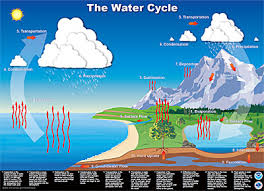
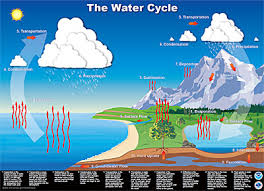
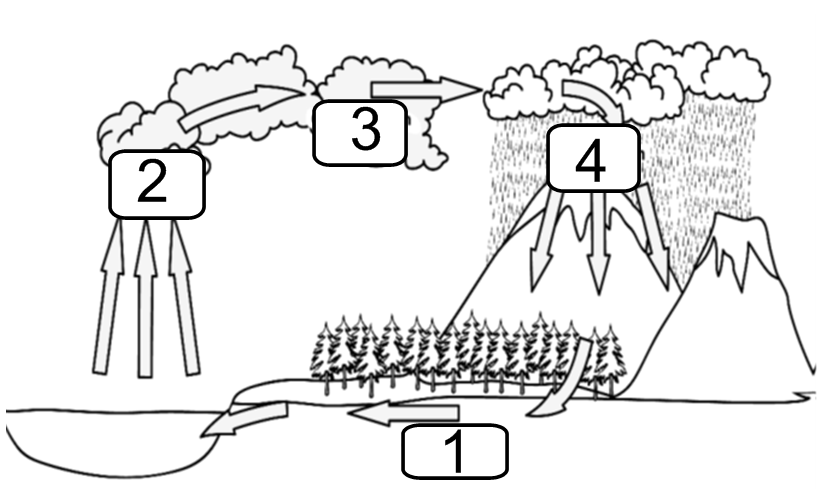
Which water cycle processes are directly related to cloud formation?
melting and freezing
precipitation and evaporation
evaporation and condensation
What is humidity?
Water, in liquid or solid form, that falls from the atmosphere.
The atmospheric conditions, along with short-term changes, of a certain place at a certain time.
The amount of water vapor in the air.
The force that a column of air applies on the air or a surface below it.
________________ is the pressure that a column of air exerts on the surface below it.
Air pressure
Dew point
Precipitation
Condensation
Which instrument is used to measure air pressure?
Thermometer
Anemometer
Graduated cylinder
Barometer
the name of the instrument used to measure wind speed
meter stick
anemometer
barometer
water in it's liquid or solid form, that falls from the atmosphere
rain
precipitation
air
clouds
What are the different types of precipitation?
rain, ice, ocean
sleet, rain, snow, hail
snow, thunderstorms, tornados
earthquake, hail, sleet

An area of low rainfall on the downwind slope of a mountain is called what?
climate
the Gulf stream
a microclimate
a rain shadow
Which can influence the climate of an area?
latitude
large bodies of water
the Moon
mountains
buildings and concrete
Height above sea level:
latitude
longitude
altitude
attitude

How does latitude affect the climate of an area?
The higher the latitude, the warmer the temperature.
The higher the latitude, the lower the temperature.
The higher the latitude, the more precipitation.
The higher the latitude the less precipitation.
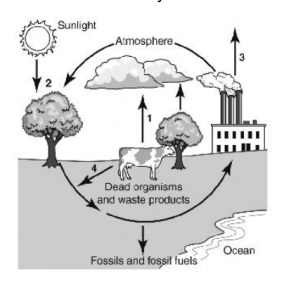

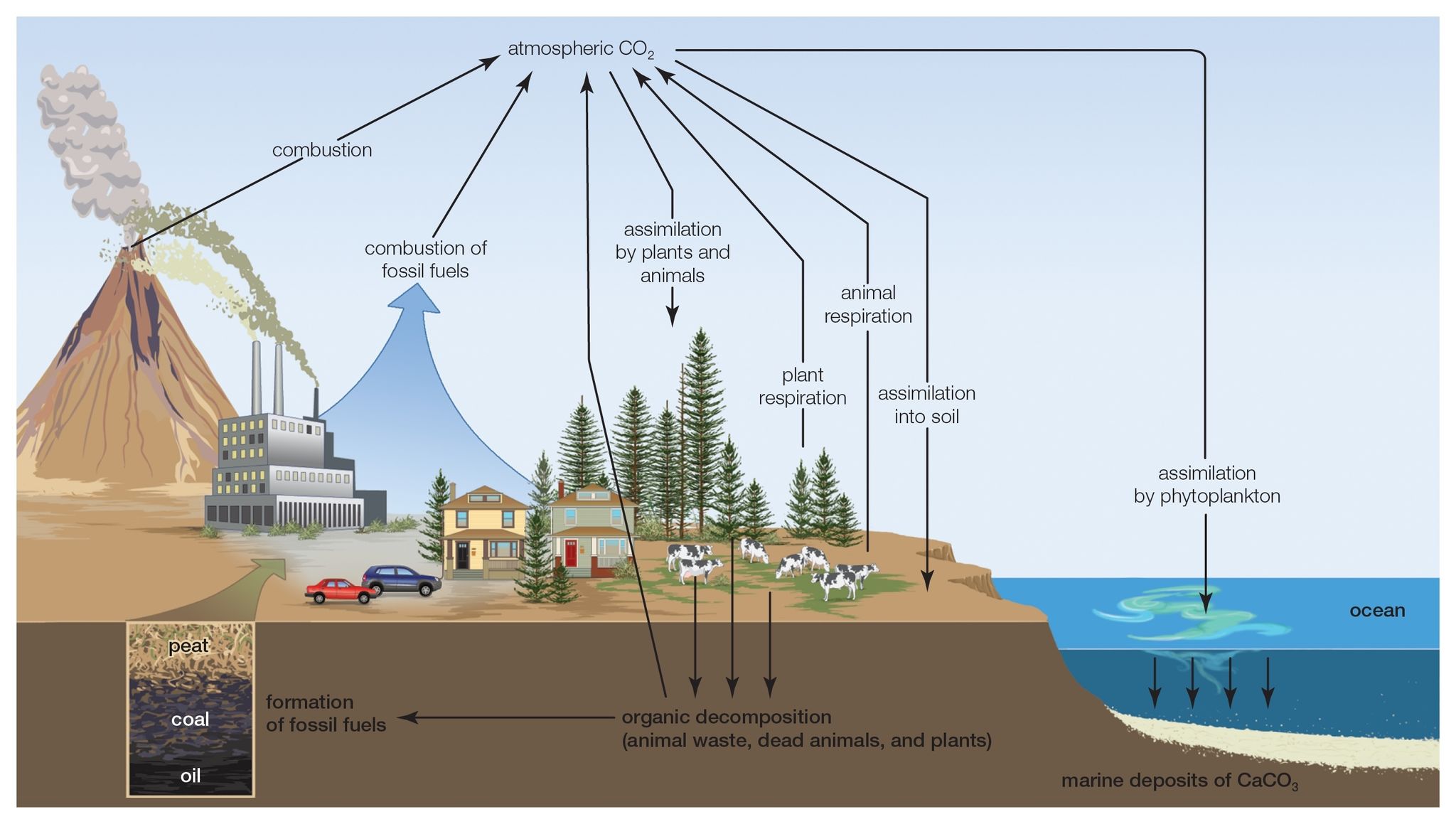
With the help of the Sun, through the process of photosynthesis, carbon dioxide is pulled from the air to make plant________
leaves
food
roots
nutrients
Which process contributes carbon dioxide to the atmosphere?
respiration
photosynthesis
tree farms

Autotroph or heterotroph?
Heterotroph
Autotroph
What are the reactants of photosynthesis?
Water and Oxygen
Glucose and Oxygen
Glucose and Carbon Dioxide
Water and Carbon Dioxide
What are the products of photosynthesis?
Water and Oxygen
Glucose and Oxygen
Glucose and Carbon Dioxide
Water and Carbon Dioxide
oxygen is a gas produced by _____ and used by ________
plants and animals
photosynthesis and carbon dioxide
animals and plants
carbon dioxide and photosynthesis
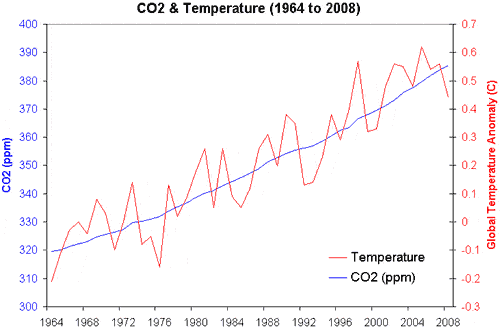
The graph below shows CO2 emissions and temperatures from 1909 to 1949. What conclusion is best supported by the graph?
There is no relationship between carbon dioxide concentrations and temperatures
As carbon dioxide concentrations increase, temperatures increase
As carbon dioxide concentrations increase, temperatures decrease
As carbon dioxide concentrations decrease, temperatures increase


The diagram shows the movement of carbon. Which statement best describes what is being shown by the diagram?
Carbon is created in the atmosphere.
Carbon is destroyed by decomposers.
Carbon is found in the same form in all organisms.
Carbon is cycled through an ecosystem.

Which of the following is not a source of carbon dioxide in the atmosphere?
animals
factories
plants
sunlight

In evaporation, water _______
turns from a liquid state to vapor (gas)
falls from the sky like rain or snow
forms clouds
gets locked into ice
______________ forms when water vapor cools and condenses around particles of dust and smoke to make tiny water droplets that gather together.
Clouds
Fog
Ice Crystals
Water Vapor
Which best explains why it is important for people to be able to identify cumulonimbus clouds?
Cumulonimbus clouds can cause mild showers
Cumulonimbus clouds can cause severe thunderstorms
Cumulonimbus clouds can form near the Earth's surface, causing fog
Cumulonimbus clouds form when the temperature is below freezing.

Which two conditions are required
for cloud formation?
high humidity and warm temperatures
high humidity and cool temperatures
warm temperatures and the presence
of particles
cool temperatures and the presence
of particles

What is the dew point?
the temperature at which condensation
begins
the temperature at which frost turns
to dew
the temperature present in a cloud
the temperature present when a
storm begins

______________________ clouds form in low, flat layers.
cirrus
cumulus
stratus

Clouds that look like fluffy, rounded piles of cotton are ______________________ clouds.
cirrus
cumulus
stratus

The sky is mostly blue, with some
high, thin, feathery clouds. Which type
of weather is most likely to occur?
fair weather
heavy precipitation
thunderstorms
light drizzle

Which type of cloud often indicates
that a storm is on the way?
nimbostratus
cirrocumulus
cirrus
stratus

Cumulonimbus clouds usually result in ______________________.
thunderstorms
sunny weather
fair weather

Clouds that form very near the ground are called ______________________.
altostratus
cirrus
fog
cumulonimbus

What is the type?
Stratus
Cirrus
Cumulus
Nimbus

When molten (melted) rock cools and becomes a solid, a _____ rock forms.
Igneous
Sedimentary
Metamorphic
Mineral
Sedimentary rocks are made up of
large rocks.
hard rocks.
mostly igneous rocks
small particles of sediment.

According to the diagram, how does a sedimentary rock become a metamorphic rock?
Weathering and Erosion
Heat and Pressure
Compaction and Cementation
Melting

When pieces of older rocks, plants, and other loose material gets pressed or cemented together, a _____ rock forms.
Igneous
Sedimentary
Metamorphic
Mineral
Fossils are more likely to form in which type of rock?
Sedimentary rocks form in layers which help keep fossils from being destroyed.
Metamorphic rocks form by being exposed to a lot of heat and pressure and this keeps the fossils from being destroyed.
Igneous rocks form when lava or magma cools and this keeps the fossils from being destroyed
Fossils only form in igneous rocks.
This type of igneous rock remains inside the Earth.
Intrusive
Extrusive
Topside
Lower
This type of igneous rock can be found on the crust.
Intrusive
Extrusive
Topside
Lower

When heat or pressure causes one rock to change into a new type of rock, we call these rocks _____.
Igneous
Sedimentary
Metamorphic
Mineral
Thinking about sedimentary rock, the oldest layers are found
on the top most layer
in the middle of other layers
all layers are the same age
towards the bottom
Metamorphic rocks form through
added pressure
added temperature
added pressure and temperature
none of the above


Marble, formed deep underground through heat and pressure, is an example of...
Igneous
Sedimentary
Metamorphic

Which are the main causes of crack growth in rocks over time?
plant roots and ice wedging
ice wedging and wind abrasion
animal burrowing and plant roots
animal burrowing and wind abrasion

Leaves release acids into the soil as they decay. How could the decaying leaves affect the rocks in the soil underneath them?
They could increase the amount of physical weathering.
They could decrease the amount of physical weathering.
They could increase the amount of chemical weathering.
They could decrease the amount of chemical weathering.
Changing temperatures cause the rock to ________ or__________.
Break / Contract
Grow / Shrink
Expand / Contract
Expand / Shatter
______________ weathering is the process of rock breaking down into smaller and smaller pieces.
Chemical
Physical
Complete
Shared
What happens to a rock when it is weathered?
It is broken into smaller pieces.
It is moved by wind, air, or water.
It is built up as material is deposited.
It is changed into another type of rock.

______________ occurs when water seeps into the cracks of rocks and expands when it freezes.
Icing
Wedging
Expansion
Ice Wedging

_____________ weathering is the breaking down of rocks by chemical reactions.
Chemical
Physical
Deposition
Erosion
Wind, water and gravity are NOT examples of which type of weathering?
Chemical
Mechanical
Physical
Both B and C

