Worksheets
Cells and Categorization
Total questions: 132
Worksheet time: 4hrs 21mins
What are the three main components of the cell theory?
Cell is the basic unit of life, all living organisms are composed of one or more cells, and all cells come from pre-existing cells
Cells can spontaneously generate from non-living matter
All living organisms are composed of non-living material
Cell is not the basic unit of life
Who is credited with the discovery of the cell?
Isaac Newton
Robert Hooke
Charles Darwin
Marie Curie
Explain the first component of the cell theory.
All living organisms are composed of atoms
All living organisms are composed of energy
All living organisms are composed of tissues
All living organisms are composed of one or more cells
What is the significance of the second component of the cell theory?
The second component is the identification of cell membranes
All living organisms are composed of one or more cells
The second component is the understanding of cell division
The second component is the discovery of the nucleus in cells
Describe the third component of the cell theory.
All cells come from pre-existing cells
Cells can only come from non-living matter
Cells can only come from sunlight
Cells can only come from water
What are the limitations of the cell theory?
The limitations of the cell theory include the inability to explain the structure of DNA
The limitations of the cell theory include the inability to explain the process of photosynthesis
The limitations of the cell theory include the inability to explain the origin of the first cell, the existence of viruses, and the presence of organelles in eukaryotic cells.
The limitations of the cell theory include the inability to explain the theory of evolution
Explain the concept of spontaneous generation and its relation to the cell theory.
Spontaneous generation is the belief that living organisms can arise from other living organisms, which supports the cell theory.
Spontaneous generation is the belief that living organisms can arise from non-living matter, which contradicts the cell theory that states all living organisms are composed of cells and arise from pre-existing cells.
Spontaneous generation is the idea that cells can only come from pre-existing cells, which contradicts the cell theory.
Spontaneous generation is the process of cells dividing to form new organisms, which is in line with the cell theory.
How has the cell theory contributed to our understanding of biology?
It has provided the foundation for understanding the structure, function, and organization of all living organisms.
It has no impact on our understanding of biology
It has only focused on non-living organisms
It has led to the discovery of new species
Discuss the impact of technological advancements on the development of the cell theory.
Technological advancements such as televisions
Technological advancements such as refrigerators
Technological advancements such as bicycles
Technological advancements such as microscopes
What are some modern applications of the cell theory in scientific research and medicine?
Cell biology, genetics, regenerative medicine, and cancer research
Archaeology, anthropology, and history
Cooking, gardening, and interior design
Astronomy, geology, and meteorology

The 3 parts of the Cell Theory are...?
All living things are composed of cells
Cells are the basic units of structure and function in living things
All cells are produced from other cells
All living things are composed of cells
Cells are the basic units of dance and vibes in living things
All cells are destroyed from other aliens
All living things are composed of Jell-O
Cells are the basic units of structure and function in living things
All cells are produced from factories in Canada
All living things are composed of cells
Cells do karate and practice eating whole pies in their free time
All cells are produced from other cells
Bacteria, Archea,Protozoa, and Algae are all example of
Multicellular organisms
Unicellular organisms
Types of cells
Strands of DNA
Specialized Cells such as nerve cells, brain cells, and muscle cells, are all characteristics of
Unicellular Organisms
Tiny organisms
nonhuman organisms
Multicellular Organisms
What does the statement “All cells result from the division of previously existing living cell” mean?
All cells are made from other cells
All cells are good at math (division)
All cells come from different places
No cell is the same
What do you think homeostasis is?
Keeping your body systems stable
Staying at home
Making body systems unstable
What is the perfect internal body temperature for a person?
102 degrees F
98.2 degrees F
75 degrees F

The cell theory applies to all organisms, including the five shown. Which of the following statements describes how these organisms are an example of the cell theory?
The organisms have cells that lack a nucleus.
The organisms are made of one or more cells.
The cells of the organisms undergo photosynthesis.
The cells of the organisms are identical to each other.

The cell theory applies to all organisms, including the two shown below. Which of the following statements describes how these organisms are examples of the cell theory?
The organisms are made up of cells that make their own food.
The cells of the organisms come from other living cells.
The organisms are made up of more than one cell.
The cells of the organisms have cell walls.
What is any living thing?
Nucleus
Organism
Cell
Cell Theory
What is the smallest living unit of an organism?
Nucleus
Atom
Molecule
Cell
What does a Scientific Theory consist of?
the natural world
being able to be repeatedly tested and verified
observation
meaurement and evaluation
The (a) part of cell theory states that every (b) thing is made up of (c) or more (d)
How many cells are bacteria made of?
one
two
three
none
Which are examples of things made up of cells?
Bacteria
A Flower
Sand
Grass
A Dog
The (a) part of cell thory states that all (b) come from (c) ones.
A pre-existing cell is one that is
already alive
Not alive
Newly created
divided
The process where older cells divide into two new cells is a process called
cell division
cell multiplication
generating
cell adding
The (a) part of the cell theory states that the (b) (c) of life is the (d)
What are the two ways cells divide in humans?
Osmosis
Mitosis
Meiosis
Reverse Osmosis
Put the components of Cell Theory in their investigative order:
all organisms are composed of cells
all cells come from pre-existing cells
cells are the basic unit of life
Humans are multicellular organisms
True
False
Uses sunlight to create glucose sugar
Chloroplast
Breaks down waste using Digestive Enzymes
Lysosome
Converts glucose into usable energy
Mitochondria
Modifies, sorts, and packages proteins
Golgi Apparatus Body
A transportation system within the cell
Endoplasmic Reticulum
Builds Proteins
Ribosome
Manages the Actions of a the cell
Nucleus
The smallest unit of an organism, it is enclosed by a membrane and performs life functions
cell
nucleus
mitochondria
cytoplasm
Most bacteria are unicellular organisms
True
False
a protective layer that surrounds a cell or organelle the controls what may enter or leave
cell
nucleus
cell membrane
cytoplasm
Eukaryotic cells can include ______________. *Select all that apply.
plants
animals
fungi
Structures in cells that perform specific functions and are found in all Eukaryotic cells and some Prokaryotic cells.
cell
organelle
cell membrane
cytoplasm
Offers Support and structure to the cell
Cell Wall
Controls what may enter or leave the cell
Cell Membrane
Storage site of water and nutrients
Vacuole
A gel-like fluid that fills empty space in the cell
Cytoplasm
Prokaryotic Cells include animals, plants and fungi
True
False
Eukaryotic Cells have a nucleus
True
False
Plant and Animal cells are both __________________ and _________________. SELECT ALL THAT APPLY.
Eukaryotic
Prokaryotic
Multicellular
Unicellular
The _____________ holds the DNA, and controls the functions of eukaryotic cells.
Nucleus
Nuclear Membrane
Mitochondria
Chloroplast
What can only be found in plant cells?
Cell membrane
Vacuole
Chloroplast
Mitochondria

This is the brain or control center of the cell.
Cytoplasm
Nucleus
Cell membrane
This cell part is in ALL cells. It is the gel-like fluid that fills empty space in the cell.
Chloroplasts
Cell membrane
Cytoplasm
Nucleus

What is this structure?
Mitochondria
Nucleus
Chloroplast
Vacuole
What is the function of this structure?
Breaks down glucose to make usable energy (ATP)
Does photosynthesis to make glucose
Controls what goes in and out of the cell
Stores DNA and directs the cell's processes

What is this structure?
Mitochondria
Nucleus
Chloroplast
Vacuole

What is the function of this structure?
Breaks down glucose to make usable energy (ATP)
Does photosynthesis to make glucose
Controls what goes in and out of the cell
Stores water, chemicals, and wastes

What is this structure?
Cell membrane
Cytoplasm
Cell wall
Chloroplast

What is the function of this structure?
Protects the cell and helps give it shape
Stores water, chemicals, and wastes
Controls what goes in and out of the cell
Stores DNA and directs the cell's processes

What is this structure?
Cell membrane
Cytoplasm
Mitochondria
Vacuole

What is the function of this structure?
Protects the cell and helps give it shape
Stores water, chemicals, and wastes
Controls what goes in and out of the cell
Gel-like substance that supports the organelles

What is this structure?
Chloroplast
Cytoplasm
Mitochondria
Vacuole

What is the function of this structure?
Breaks down glucose to make usable energy (ATP)
Stores water, chemicals, and wastes
Conducts photosynthesis to make glucose
Gel-like substance that supports the organelles

What is this structure?
Cytoplasm
Cell membrane
Nucleus
Vacuole

What is the function of this structure?
Makes glucose during photosynthesis
Stores water, chemicals, and wastes
Controls what goes in and out of the cell
Stores DNA and directs the cell's processes

What is this structure?
Chloroplast
Nucleus
Mitochondria
Vacuole

What is the function of this structure?
Breaks down glucose to make usable energy (ATP)
Stores water, chemicals, and wastes
Conducts photosynthesis to make glucose
Gel-like substance that supports the organelles
Organisms whose cells do not have a nucleus are called...
Eukaryotes
Prokaryotes
Unicellular
Multicellular
An organism made up of only a single cell is called...
Eukaryotic
Prokaryotic
Unicellular
Multicellular
The densely packed area of a cell that stores the DNA and manages cellular activities is called a...
Chloroplast
Golgi Apparatus
Nucleus
Mitochondria
When an organism has cells where every one contains a nucleus they are called...
Archaea
Prokaryotes
Eukaryotes
Bacteria
What is the smallest structural unit of an organism?
Chloroplast
Organelle
Organ
Cell
Organisms made up of many cells all with specialized functions are called...
Multicellular
Prokaryotic
Eukaryotic
Unicellular
The outermost layer of a cell that is made up of a double-thick layer of lipids is called the...
Golgi Apparatus
Cell Wall
Cell Membrane
Cytoplasm
The barrier holds in the cytoplasm of a cell and controls what enters and leaves a cell is called the...
Cell Membrane
Cell Wall
Cellophane
Cellulose
The water nutrient filled fluid that is found inside of cells that holds the organelles is called...
Blood
Plasma
Cytoplasm
Chlorine
The organelle that converts sugars in food into energy (ATP) for cells to use is the...
Ribosome
Mitochondria
Nucleus
Nucleolus
The tiny organelles found in prokaryotes and eukaryotes that assembles proteins out of amino acids are called...
Lipids
Carbohydrates
Nucleic Acids
Ribosomes
The organelle found in autotrophs that converts sunlight and CO2 into sugars used by the organism is called a...
Mitochondria
Chloroplast
Vacuole
Nucleus
The organelle (large in plant cells and smaller in animal cells) that is used as storage for water and nutrients is called a...
Vacuole
Cell Wall
Cell
Ribosome
Which of the following is NOT a part of the cell theory?
Cells must contain DNA.
Cells only come from other cells.
All living things are made of cells.
Cells are the basic unit of life.
Small structures found inside of cells that have specific functions are called...
Animalcules
Organelles
Tissues
Organs
What piece of technology was essential for developing the cell theory?
Microwaves
Antibiotics
Telescopes
Microscopes
Photosynthesis occurs in plants and other autotrophs in organelles called...
Chloroplasts
Nuclei
Glucose
Mitochondria
The name of the process where sugar is turned into ATP is...
Photosynthesis
Oxygen
Cellular Respiration
The Krebs Cycle
The process that occurs in chloroplasts that turns sunlight and CO2 into sugars is called...
ATP
Photosynthesis
Transmission
Cellular Respiration
A byproduct of photosynthesis that many organisms on Earth need to survive is...
Water
O2
CO2
Sugar
Plants cells need both _____ and _____ to make the sugars they need to survive and then to break them down to make energy.
Ribosomes
Mitochondria
Chloroplasts
Golgi Apparatus
The shipping center of the cell, this organelle is responsible for packaging and shipping out products produced by the cell.
Endoplasmic Reticulum
Smooth Endoplasmic Reticulum
Ribosomes
Golgi Apparatus
While it's primary function is to make lipids for the cell to use, because of the ribosomes attached to it, this organelle also creates proteins for the cell.
Ribosomes
Rough Endoplasmic Reticulum
Smooth Endoplasmic Reticulum
Lysosomes
This organelle is responsible for breaking down old organelles, wastes, and toxins inside a plant cell.
Lysosome
Peroxisome
Nucleus
Ribosome
This organelle is responsible for breaking down old organelle and dealing with wastes in an animal cell.
Ribosome
Nucleus
Lysosome
Peroxisome
what organelles are present in both animal and plants? (select all that apply)
nucleus
chloroplast
cell wall
vacuole
This organelle is in both plants and animals. It is a barrier between the cell and the environment. It controls what goes in and out of a cell.
cell wall
cell membrane
vacuole
mitochondria
A storage structure- in an animal cell there are many small ones, but in a plant cell there is just one large one.
vacuole
ribosomes
chloroplast
mitochondria

Look at the image. This is where organisms break down food. which of the following is true about the organelle shown in the image?
only found in plants
only found in animals.
found in both plants and animals.
Which organelle is the reason why plant cells are more rectangular than animal cells?
cell wall
cell membrane
vacuoles
Lucia was looking at cells with a microscope. She knows the cells are classified as either plant cells or animal cells. How can she tell if these cells are plant cells?
She should look for a large nucleus in the center of the cells.
She should look for cytoplasm that is filled with organelles
She should look for a cell membrane surrounding the entire cell.
She should look for a cell wall outside of the cell membrane.

Ms. Roque is examining a cell under a microscope. She has identified a cell wall, a nucleus, and a chloroplast.
What organism does this cell most likely belong too?
a sunflower
a mushroom
a rabbit
a bacteria

Does this picture show a plant or an animal cell?
Plant Cell
Animal Cell
Plant and animal cells are eukaryotic.
True
False

What is the function of the cell membrane?
Produces ATP
Produces proteins and lipids
Keep the organelles in place
Control what enters and leaves the cell

All __________ are made of cells.
plants
bacteria
living organisms
All of the above
animals

A storage area for food, water and waste.
vacuole
chloroplasts
cell wall
cell membrane


Number 1 is a (the) -
Golgi Bodies
Mitochondria
Ribosome
Nucleus
The organelle that makes energy for the cell is the....
nucleus
lysosomes
mitochondria
vacuole
What are organelles?
Parts that come together to make an organ system.
A group of similar cells that perform similar functions.
A group of organs that perform similar functions
Tiny structures within a cell that allow the cell to live, grow, and reproduce.
The jelly like substance in the cell is called --
cytoplasm
lysosomes
chromosomes
cytokinesis
Which structures are unique only to plant cells? (Choose two)
Cell Membrane
Cell Wall
Mitochondria
Chloroplast
Which cell structure acts like the brain of the cell?
Cell Membrane
Cell Wall
Nucleus
Mitochondria
What are the two main types of cells?
plant and animal cells
prokaryotic and eukaryotic cells
animal and skin cells
all things are made of cells
Which of the following is NOT found in prokaryotic cells?
Cell membrance
Cytoplasm
Nuclear material
Nucleus
What are the small parts inside a cell called?
small parts
organs
organelles
cell membrane
What does cell theory state?
Non-living things are made of cells.
ALL LIVING things are made of cells.
Only people are made of cells.
Rocks are made of cells.
Joe tells Gabby his theory about why sea turtles nest on the beach instead of in the ocean. He says, “The turtle eggs would sink to the bottom of the ocean, and the baby turtle would drown. I know this because my uncle is a fisherman, and he told me this information. Gabby tells Joe that his theory is not scientific. Why does Joe’s idea not meet the requirements to be a scientific theory?
Joe’s idea is already a scientific law.
Joe’s idea is not supported by scientific evidence.
Joe’s idea is a good guess that can be tested by experiments.
Joe and his uncle are not scientists.
In 1897, Joseph Thomson discovered that atoms contained electrons. He proposed a change in the atomic theory of that time, and the theory was modified because of his discovery. Since Thomson’s discovery, atomic theory has been further modified. What is the best explanation for why scientific theories are modified?
Theories more than ten years old are usually out of date.
Scientists want to prove that the work of other scientists is wrong.
New evidence that supports a change prompts scientists to modify earlier theories.
So much information is available today that it is harder to focus research and disprove theories.
The law of universal gravitation states that both mass and distance of objects affect the gravitational force between them. Gravitational force increases as the mass of the objects increase. Gravitational force decreases as distance between the objects increases. Why are these statements considered scientific law, and not scientific theory?
The statements tells what happens, and not why it happens.
The statements involve mass and distance measurements.
The statements explain the attractive force between two objects.
The statements predict what will happen under certain conditions.
Lilly was trying to explain to her friend the difference between a theory and a law in science. She used the theory of plate tectonics and the law of superposition as examples. Lilli explained the difference by using non-scientific language. Which statement could Lilly use to correctly describe the difference between a theory and a law in science?
A theory describes a natural event, while a law explains it.
A theory explains a natural event, while a law predicts it.
A theory explains a natural event, while a law describes it.
A theory predicts a natural event, while a law explains it.
Which of these can change when new evidence is presented?
theory
law
Which of these explain how a natural phenomenon works or happens?
theory
law
Which of these describes a natural phenomenon or relationship that always occurs under specific conditions
theory
law
Which of these can be represented mathematically and provide no explanation why a phenomenon occurs?
theory
law
Scientists create both scientific theories and scientific laws as they make observations and conduct experiments about the natural world. Which of the following statements most accurately compares the difference between scientific theories and scientific laws
science laws are based on evidence while science theories are not
science theories involve only biology, while laws involve all types of science
science theories involve mathematical equations, while science laws are based on observations
science theories are ideas that explain natural events, while science laws predict what will happen in a natural event.
To maintain life, cells need to maintain a stable inner environment. Which of these is an example of remaining internally stable?
Using water and drying up
producing and using energy
building and repairing structures
taking in energy and removing waste produt
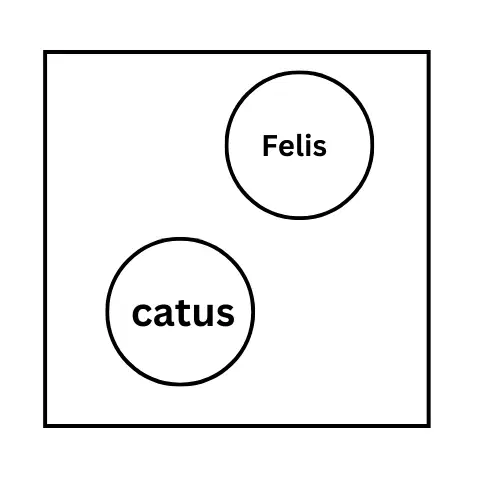
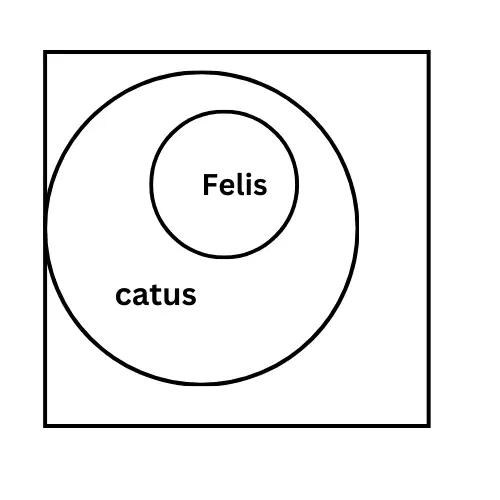
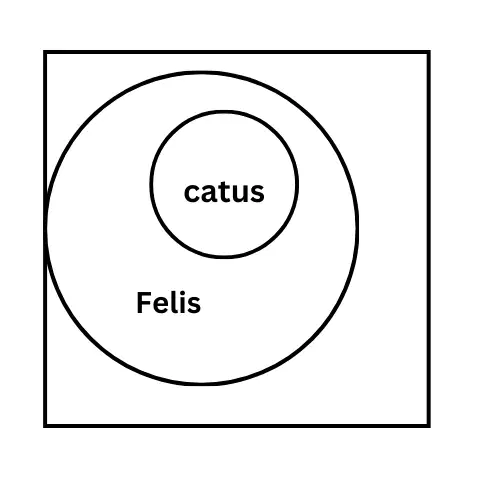
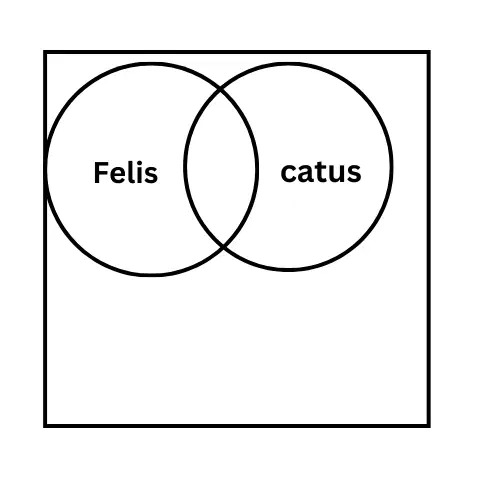
Felis catis is the scientific name for the house cat. In the diagrams below, the circles labeled Felis represent all the members of the genus Felis. The circles labeled catis represent all the members of the species catis. Which of the diagrams most accurately represents the relationship between the genus and species of the brown bear?