
Font size
 Worksheets
2022-23 Chemistry T1 Final Units 1-4
Total questions: 125
Worksheet time: 3hrs 38mins
The SI unit for temperature is __?__.
degree fahrenheit (° F)
degree celsius (° C)
kelvin (K)
degree centigrade (°C)
The metric prefix "kilo" means __?__.
one tenth (0.1)
one thousandth (0.001)
one hundred (100)
one thousand (1,000)
How many minutes are in 17 years?
5,256,000min
525,600min
8,935,200min
31,536,000min
In order to convert to Kelvin, you add ______ to the Celsius measurement.
372
273
237
732
compound
element
heterogeneous mixture
solution (homogeneous mixture)
What is oxidation number (charge) of Fe in FeO ?
+2
-2
0
+1


Bond breaking releases energy.
true
false
The name of FeCl₂ is
iron chloride
iron (II) chloride
iron (I) chloride
iron dichloride
LiBr is called
lithium bromine
lithium (I) bromine
lithium bromide
lithuim (I) bromide
What is the name of the compound Na2(SO4)?
Sodium sulfate
Sodium sulfide
Sodium sulfite
Sodium sulfuroxide
Which of these combinations is an ionic compound made of?
Metal and Metal
Nonmetal and Nonmetal
Metal and Nonmetal
Cation and Cation
What is the little number after an element in a chemical formula called. Example: H2
Coefficient
Subscript
Atom
Equation
All of the following are physical properties of matter EXCEPT ____.
mass
color
melting point
ability to rust
The chemical symbol for iron is ____.
fe
FE
Fe
Ir
Which of the following is a chemical property?
color
hardness
freezing point
ability to react with oxygen
All of the following changes to a metal are physical changes EXCEPT ____.
bending
melting
rusting
polishing
The smallest particle of an element that retains the properties of that element is a(n) ____.
atom
electron
proton
neutron
Which of the following is true about subatomic particles?
Electrons are negatively charged and are the heaviest subatomic particle.
Protons are positively charged and the lightest subatomic particle.
Neutrons have no charge and are the lightest subatomic particle.
The mass of a neutron nearly equals the mass of a proton.
What is the relative mass of an electron?
1/1840 the mass of a hydrogen atom
1/1840 the mass of a neutron + proton
1/1840 the mass of a C-12 atom
1/1840 the mass of an alpha particle
All atoms are ____.
positively charged, with the number of protons exceeding the number of electrons
negatively charged, with the number of electrons exceeding the number of protons
neutral, with the number of protons equaling the number of electrons
neutral, with the number of protons equaling the number of electrons, which is equal to
the number of neutrons
The nucleus of an atom is ____.
the central core and is composed of protons and neutrons
positively charged and has more protons than neutrons
negatively charged and has a high density
negatively charged and has a low density
The atomic number of an element is the total number of which particles in the nucleus?
neutrons
protons
electrons
protons and electrons
Isotopes of the same element have different ____.
numbers of neutrons
numbers of protons
numbers of electrons
atomic numbers
An element has an atomic number of 76. The number of protons and electrons in a neutral atom of the
element are ____.
152 protons and 76 electrons
76 protons and 0 electrons
38 protons and 38 electrons
76 protons and 76 electrons
The mass number of an element is equal to ____.
the total number of electrons in the nucleus
the total number of protons and neutrons in the nucleus
less than twice the atomic number
constant number for the lighter elements
How many protons, electrons, and neutrons does an atom with atomic number 50 and mass number 125 contain?
50 protons, 50 electrons, 75 neutrons
75 electrons, 50 protons, 50 neutrons
120 neutrons, 50 protons, 75 electrons
70 neutrons, 75 protons, 50 electrons
What is the number of electrons in the outermost energy level of an oxygen atom?
2
4
6
8
The modern periodic table is arranged in order of increasing atomic ____.
mass
charge
number
radius
Of the elements Pt, V, Li, and Kr, which is a nonmetal?
Pt
V
Li
Kr
Which of the following elements is a transition metal?
cesium
copper
tellurium
tin
The metals in Groups 1A, 2A, and 3A ____.
gain electrons when they form ions
all form ions with a negative charge
all have ions with a 1+ charge
lose electrons when they form ions
106.00
705000
Convert the following to scientific notation.
0.000480
4.8 x 10⁻⁴
4.80 x 10⁻⁴
48 x 10-5
4.80 x 10⁴

What step does every scientific experiment begin with?
hypothesis
question/problem
procedures
conclusion
24.567 + 0.04478 =
4.627 / 0.00371 =
Convert 72⁰F to Celsius (5/9 x (0F - 32))
2.2⁰C
222⁰C
22.2⁰C
161.6⁰C
Convert 35⁰F to Celsius (5/9 x (0F - 32))
1.6⁰
1.7⁰C
2.0⁰
16.6⁰C
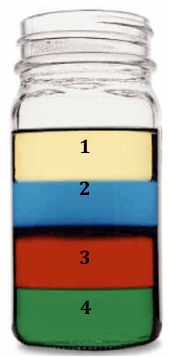

What is its speed in m/s?
(1 km = 1000 m)
Convert 70,000 quarts/year to pints/day
383.6 pints/day
767.1 pints/day
1,534.2 pints/day
191.8 pints/day

The branch of science that studies what "Stuff" is made of and how it interacts with other "Stuff".
STEM
Biology
Chemistry
Engineering
We see chemistry in action in our lives when we...
Bake cookies
Take medicine
Wash our clothes
All of the above
The name of FeCl₂ is
iron chloride
iron (II) chloride
iron (I) chloride
iron dichloride
What is the name of the compound Na2(SO4)?
Sodium sulfate
Sodium sulfide
Sodium sulfite
Sodium sulfuroxide
How many valence electrons do elements in Group 13 have?
13
5
3
What is the charge, or oxidation number, for elements in Group 17?
+ 1
-7
-1

The following footwear is the best in the laboratory
sandals
open-toed shoes
closed-toe shoes
shoes appropriate for the weather

Approved eye protection devices (such as goggles) are worn in the laboratory
to avoid eye strain
to improve your vision
so that you look super cool
any time chemicals, heat or glassware are used
Which of the following will have a higher electronegativity than arsenic (As)?
Carbon (C)
Neon (Ne)
Antimony (Sb)
Germanium (Ge)

Which of the following halogens has the greatest electronegativity?
Chlorine (Cl)
Bromine (Br)
Iodine (I)
Astatine (At)

What is the amount of energy required to remove an electron from an atom?
atomic energy
ionization energy
ionic energy
electron energy

What is a measure of the tendency of an atom to attract a bonding pair of electrons when the atom is in a compound?
ionization energy
electropositivity
electronegativity
electron energy

What is one-half the distance between the nuclei of identical atoms that are bonded together?
atomic radius
atomic diameter
atomic width
atomic length

What is a vertical (up and down) column in the periodic table?
group or family
period
periodic law
octet rule


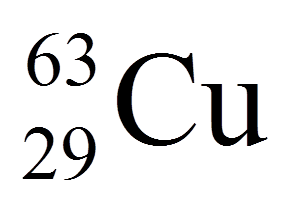
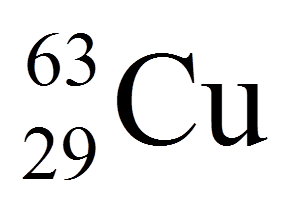
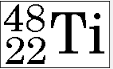
There are several elements that this could be. One of them is listed below. Pick it!
Mg
O
F
Be
What ion will this form?
1+
1-
7+
7-
What ion will K form?
1+
2+
1-
2-
What ion will a atom with 5 valence electrons form?
3+
3-
5+
5-
What is the correct Lewis Dot Structure for ammonia NH3


Which is the correct molecular structure for carbon dioxide?


3. Which is a correct Lewis structure for hydrogen cyanide, HCN?


Carbonate (CO32-) has how many double bonds?
0
1
2
3
Since covalent compounds do not have free charges, they are
good conductors
poor conductors
ionic
metallic
Which interaction from below needs the most energy to be broken?
Ionic bond
Induced dipole
Permanent dipole
Which of the following are properties of ionic compounds? Choose all correct answers.
high melting and boiling points
can be solids, liquids, or gases at room temperature
tend to be highly flammable
form crystalline structures
can conduct electricity when dissolved or melted
How many valence electrons does perchlorate (ClO4-) have?
26
28
30
32
Most atoms are most stable when their outer shell is complete with 8 electrons.
true
false
Breaking a bond is always
Endothermic (requires energy)
Exothermic (releases energy)

Predict the bond that will form between Se and Cl
Ionic-bond
Covalent-bond
Metallic-bond
Hydrogen-bond

Predict the bond formed between Be and F
Covalent-bond
Ionic-bond
Metallic-bond
Hydrogen-bond
Why don't noble gases form bonds?
Noble gases do form bonds
They all have a full octet
They only bond with each other
What type of bond (intramolecular force) is made between to atoms of almost equal electronegativities?
non-polar covalent
polar covalent
ionic
What type of bond (intramolecular force) is made between to atoms of slightly different electronegativities where they differ between .4 and 1.7?
non-polar covalent
polar covalent
ionic
Which of the following not a Diatomic gas/element?
N2
O2
I2
H2
They are all Diatomic gases/elements
Which of the following types of bonding results in materials which are generally insoluble in water?
ionic bonding
metallic bonding
covalent bonding

