Worksheets
Environmental Science Unit 2 Review
Total questions: 85
Worksheet time: 1hrs 5mins
High biodiversity is important because...
it means that the ecosystem is more able to recover from disturbances.
it means that the ecosystem is less able to recover from disturbances.
it means that organisms are healthier and have more opportunities.
it means that organisms are less healthy and have less opportunities.

Click the image to enlarge it. Which community has higher biodiversity RICHNESS?
Community 1
Community 2
They are the same
Click the image to enlarge it. Which community has higher biodiversity EVENNESS?
Community 1
Community 2
They are the same
If a natural disturbance occurs and a species undergoes a bottleneck effect, the resulting genetic diversity will be....
increased
decreased
Higher biodiversity =
higher ecosystem resilience
lower ecosystem resilience
Tourism in Yellowstone National Park would be considered what type of ecosystem service?
Provisioning
Regulating
Supporting
Cultural
Bees pollinating our crops would be considered what type of ecosystem service?
Provisioning
Regulating
Supporting
Cultural
A forest that naturally purifies our air would be considered what type of ecosystem service?
Provisioning
Regulating
Supporting
Cultural
A river that naturally filters drinking water would be considered what type of ecosystem service?
Provisioning
Regulating
Supporting
Cultural
Obtaining lumber from a forest would be considered what type of ecosystem service?
Provisioning
Regulating
Supporting
Cultural
Obtaining coal from the earth would be considered what type of ecosystem service?
Provisioning
Regulating
Supporting
Cultural

Click the image to enlarge it. Would island 1 or 2 likely have higher biodiversity?
1
2
Organisms can tolerate any range of temperature, salinity, and pH. True or false?
True
False

Which fish would survive best in a pond that is kept at 23 degrees Celsius?
Brook Trout
Carp
Which fish would survive best in a pond that is kept at 16 degrees Celsius?
Brook Trout
Carp
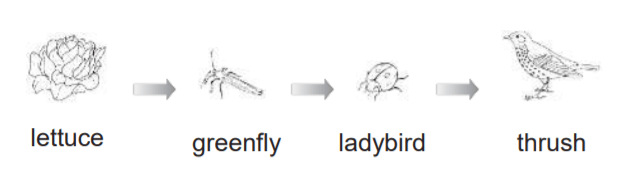
Who is the producer?
lettuce
greenfly
ladybird
thrush

A connection of food chains with many food energy paths in an ecosystem is a ____________
ecosystem
food web
environment

If the hawk population decreases, what will happen to the snakes and rabbits?
Snakes and rabbits will increase
Snakes and rabbits will decrease
Snakes will decrease, rabbits will increase
Snakes will increase, rabbits will decrease
What will happen if the snake population is DOUBLED?
The other populations will increase too
The other populations will decrease
Rabbits and hawks will decrease, grass will increase
Grass and hawks will increase, rabbits will decrease

Water pollution has killed about half the hawk population. What will happen to the other populations?
Snakes and grass will increase at first
Rabbits will decrease at first
The ecosystem will reach equilibrium
All of these

The grass is on which trophic level?
1st
2nd
3rd
4th

The snake is what type of consumer?
Primary
Secondary
Tertiary
Primary consumers eat...
producers
secondary consumers
tertiary consumers
quaternary
consumers
If a person eats a vegetable, the person is acting as a...
producer
primary consumer
secondary consumer
tertiary consumer
A person who eats a chicken that ate grain is a...
primary consumer
secondary consumer
tertiary consumer
quaternary consumer
As nutritional energy passes trough the food chain, energy...
is lost as heat
is gained as heat
remains constant
increases, then decreases
Autotrophs...
make their own food
are the base of the food chain
are producers
all of the above
A heterotroph...
has to find its food
eats other organisms
is a consumer
all of the above
There are more tertiary consumers than there are...
primary consumers
secondary consumers
quaternary consumers
all of the above
A top predator...
has no natural enemies
is a meat eater
is a heterotroph
all of the above
If a natural disturbance occurs and a species undergoes a bottleneck effect, the resulting genetic diversity will be....
increased
decreased
Higher biodiversity =
higher ecosystem resilience
lower ecosystem resilience
If a species is close to extinction it is
Overpopulated
Abiotic
Endangered
Growing
Biotic means...
Living
nonliving
Biotic and abiotic factors working together
Organisms competing for the same resources
Abiotic means....
Living
squirrels
nonliving
Adaptations
Biological competition is....
Organisms competing for different resources.
Organisms competing for the same resources
living things
nonliving things
During primary succession,
the rate of succession is much faster, and climax is reached more quickly.
the rate of succession is very slow.
A pioneer species invades a barren area not colonised before.
Both B & C.
A climax community is
in equilibrium with the environment
stable, but is replaced soon during succession
characterised by presence of decreased capacity of biomass production
one of the seral community
If 10,000 J of energy is present at the T1 level, then what is the energy available at the T2 level?
1000 J
10 J
100 J
1J
Which of the following is the available biomass for the consumption to heterotrophs?
Secondary productivity
Ecological efficiency
Net primary productivity
Gross primary productivity
All of the carbon in existence is continually recycled in the carbon cycle.
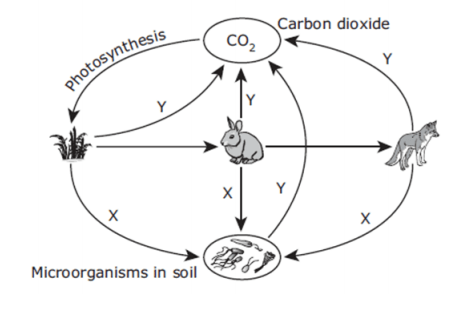
Y : Predation
Y : Decomposition
Y : Nitrogen Fixation
Y : Respiration
C6H12O6 is also known as glucose (sugar). Where is it found?
Plants
Animals
Both plants and animals
Neither plants or animals
How do animals get carbon?
By eating plants and or other animals.
They absorb it from the atmosphere.
From the ground
They do not get carbon from anywhere.
What are fossil fuels made from?
Plants and animals that are buried underground for millions of years.
They absorb it from the atmosphere.
Water
Wind
What is CO2?
Carbon Monoxide
Carbon Trioxide
Carbon Dioxide
Oxygen
Which of the following are fossil fuels?
Coal, water, oil
Oxygen, coal, oil
Coal, Oil, Natural Gas
None of the above

The ______ biome is the largest on Earth, characterized by low temperatures, thin, young soil, and limited plant species.
deciduous forest
tropical rainforest
taiga
desert

The greatest biodiversity on earth is found in the __________ biome.
taiga
deciduous forest
grasslands
tropical rainforest

In which state would you most likely find a biome that is known for its large herbivores, few trees, and fire-dependent ecology?
South Florida
California
Arizona
Alaska

Temperature and moisture are key factors in determining where each of the major terrestrial _______________ occur.
ecosystems
biosphere
biomes
niches

Cone-bearing trees (like pines, spruce, and fir) grow best in areas where winters are long and cold. Large mammals like moose, elk, and bear also live and thrive in these cold areas known collectively as the ________________ biome
taiga
temperate deciduous forest
desert
temperate grasslands

Many evergreen trees produce seed-bearing cones and have needle-like leaves that are coated in a thick, waxy substance that helps minimize moisture loss
coniferous
deciduous
succulents
epiphytes


If farmers use a controlled burn to prevent forest fires, what would most likely be the first plants to return?
trees
shrubs
mosses
grasses
Breaking News! A new island has formed off of Hawaii! What must occur for it to become an ecosystem?
Secondary Succession
Aquatic succession
Primary Succession
Ferns must grow
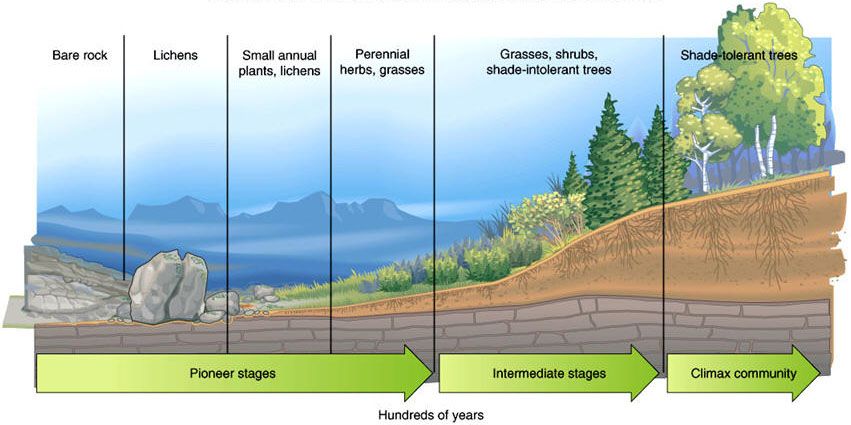
The picture shows what type of succession?
primary
secondary
tertiary
quadanary
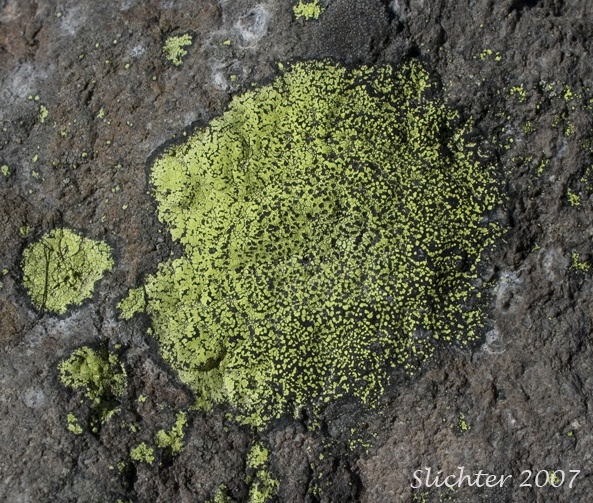
the variety of species in an ecosystem is called
biogeography
biodiversity
resilience
resistance
the number of different types of species in an ecosystem
richness
evenness
hot spot
biodiversity
the abundance of each species in an area is called
richness
evenness
biodiversity
random distribution
an ecological hotspot is
an area where temperatures reach at least 120 degrees F
an area of very high biodiversity
an area where almost no species can be found
a species that is only found in one part of the world
Where does most air pollution come from?
Human activities
Wildfires
Volcanic eruptions
Allergens
The number one reason for deforestation?
Logging
Agriculture
Urban development
To increase biodiversity
A species that is not supposed to be in an ecosystem (non-native) and has no competition
invasive species
fossil fuels
direct harvesting
indicator species