
 Worksheets
Chapter 6 Test Review
Total questions: 92
Worksheet time: 8hrs 40mins
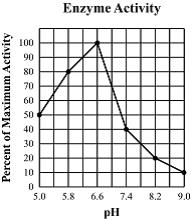



Which of the following denatures an enzyme?
High Temperatures
Incorrect pH
Both

Without proper enzyme regulation you would die
true
false

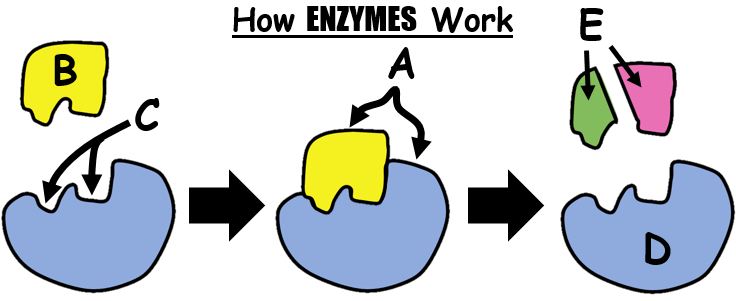
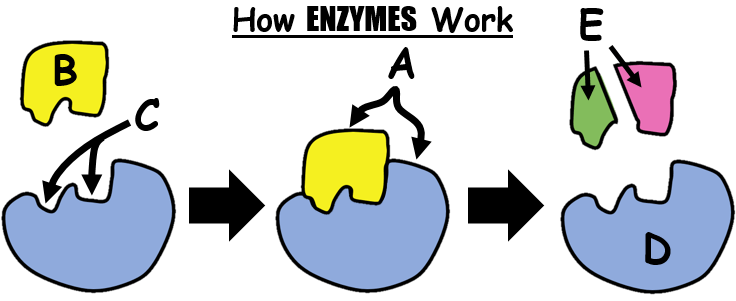
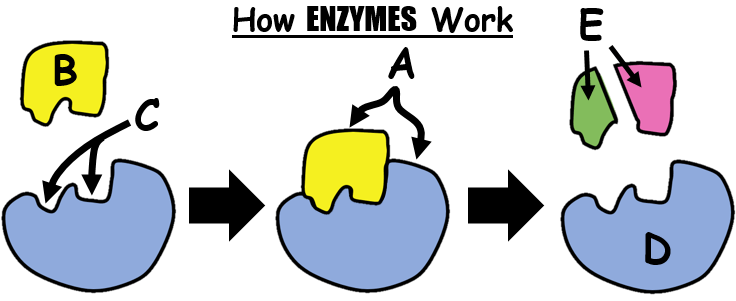
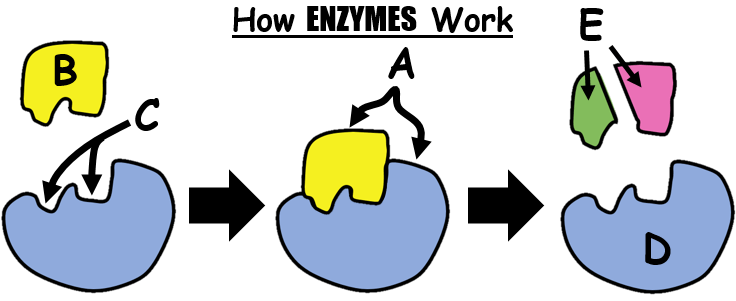
A is the
substrate
enzyme-substrate complex
products
B is the
substrate
enzyme-substrate complex
products
C is the
substrate
enzyme-substrate complex
products
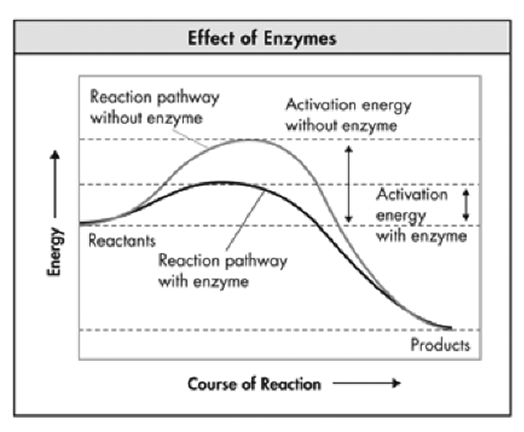
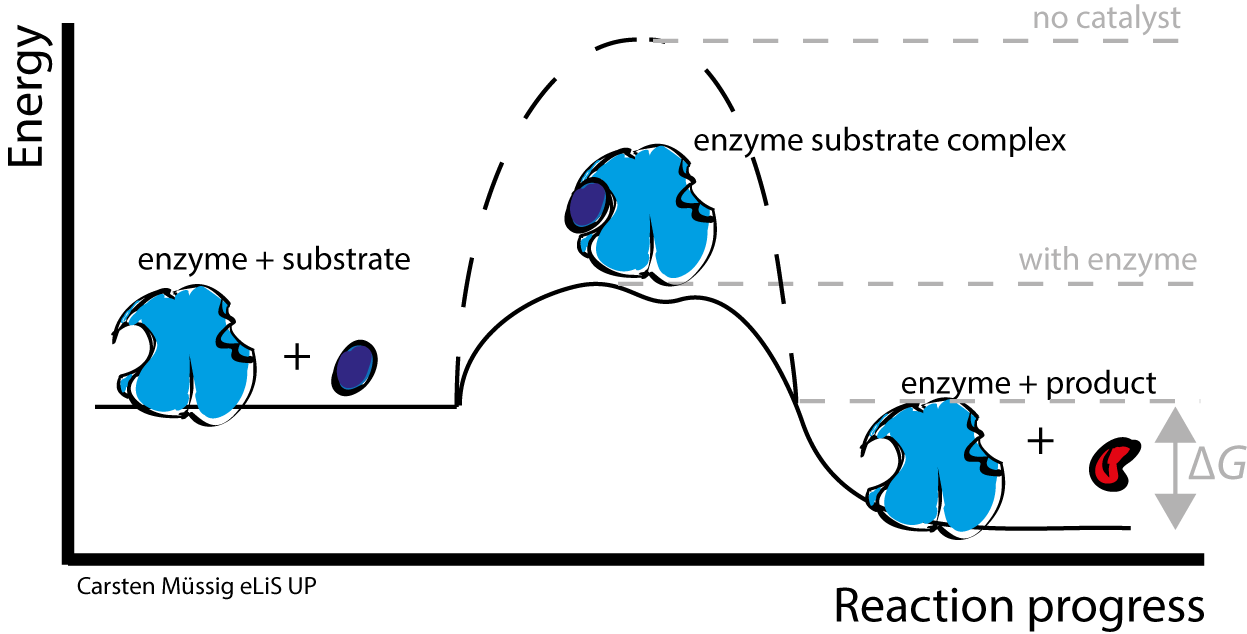
An enzyme ________ the activation energy needed for a reaction to occur.
decreases
increases
does nothing to
increases then decreases
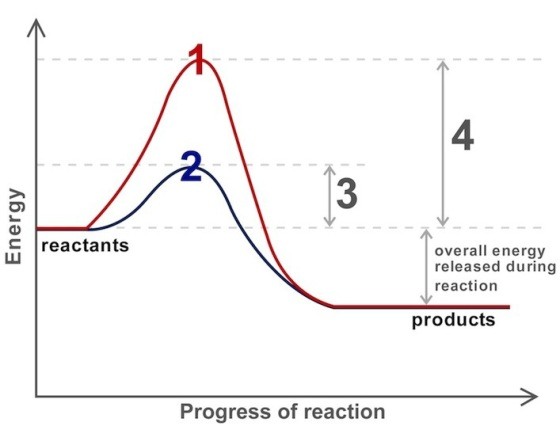
Which color line represent a reaction with an enzyme present?
Blue
Red
Both
Neither
The enzyme and substrates have
adverse shapes
complementary shapes
contrary shapes
similar shapes
The loss of enzyme shape is called
denaturation.
stress.
random movement.
alignment.
After an enzyme is denatured, the substrate can ______ to the active site.
bind
no longer bind
The induced fit model differs to the lock and key model in that...
The induced fit model states that the active site of the enzyme changes shape slight to fit the shape of the substrate
The induced fit model states that the active site of the substrate changes shape slight to fit the shape of the enzyme
The induced fit model states that the allosteric site of the enzyme changes shape slight to fit the shape of the substrate
The induced fit model states that the allosteric site of the substrate changes shape slight to fit the shape of the enzyme
What is the enzyme that aides the reaction shown here?
2H2O2 ➡ 2H2O + O2
Water
Liver
Catalase
Peroxide
Oxygen

The reaction that is shown is an example of...
anabolism
catabolism

The reaction that is shown is an example of...
anabolism
catabolism

The reaction that is shown is an example of...
anabolism
catabolism

The reaction that is shown is an example of...
hydrolysis
dehydration synthesis

The reaction that is shown is an example of...
hydrolysis
dehydration synthesis
Which of the following best explains why cellular respiration is a metabolic pathway?
Water is involved during all of the reactions.
Energy will be released during the reaction.
It starts with reactants and ends with products.
It is a series of reactions (not just one) that are driven by enzymes.
What does the second law of thermodynamics state about disorder?
Every reaction increases the entropy
Every reaction decreases the entropy
Every reaction increases the entropy of the universe…
First law of thermodynamics
Second law of thermodynamics
Third law of thermodynamics
Energy cannot be created or destroyed, but transferred or transformed…
First law of thermodynamics
Second law of thermodynamics
Third law of thermodynamics
What molecule is responsible for powering cellular processes?
ATP
Glucose
Membrane Potential
Sucrose
All of the chemical reactions that occur within a living organism are called?
Anabolic reactions
Metabolism
Catabolic reactions
Energy
Pathways that release energy by breaking down complex molecules into simple molecules are
Catabolic
Metabolic
Anabolic
Hydrolysis
Pathways that consume energy to build complex molecules are
Catabolic
Anabolic
Metabolic
Exergonic
Entropy means a state of order or organization
True
False
Potential energy is:
A type of kinetic energy
A fuel
Associated with movement
Stored energy

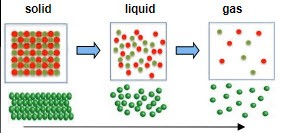
Systems in nature tend to undergo changes toward
lower energy and less disorder
lower energy and more disorder
higher energy and less disorder
higher energy and more disorder
What is a spontaneous process ?
slow process
fast process
process that needs an external intervention to occur
process that does not need external intervention to occur / keep happening

What type of reaction does this free energy diagram show?
Endergonic
Exergonic

What types of reactions are likely shown?
Exergonic
Endergonic
Catabolic
Anabolic
What does Gibbs Free Energy tell us?
How much energy is given off by a reaction.
The tendency of a reaction to become "random"
How spontaneous a reaction is.
Which represents a decrease in entropy?
sublimation of CO2
boiling water
condensation of steam on cold glass
NaCl dissolving in water
Which sample has the lowest entropy?
HINT - Look at the phase of each chemical....
1 mole of KNO3(l)
1 mole of KNO3(s)
1 mole of H2O(l)
1 mole of H2O(g)
Which phase change represents a decrease in entropy?
solid to liquid
gas to liquid
liquid to gas
solid to gas
Choose the correct correlation between Gibbs free energy and feasibility.
a reaction to be feasible, ΔG has to be negative.
a reaction to be feasible, ΔG has to be positive.
a reaction to be feasible, ΔG has to be zero
no correlation between ΔG and feasibility
Systems in nature tend to undergo changes toward
lower energy and less disorder
lower energy and more disorder
higher energy and less disorder
higher energy and more disorder


Which carbon-based molecule is most commonly broken down to make ATP?
proteins
carbohydrates
lipids
nucleic acids
The allosteric inhibitor of an enzyme
Causes the enzyme to work faster
Binds to the active site
Participates in feedback regulation
Denatures the enzyme
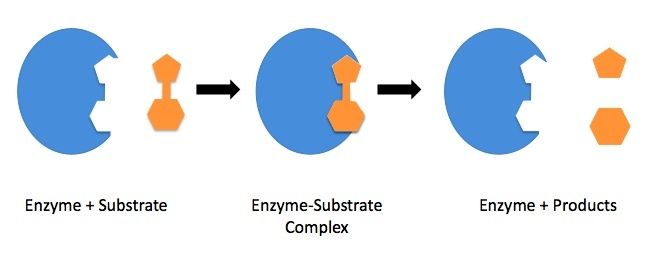
A receptor site that a molecule can bind to that changes the shape of the active site is called a(n):
Allosteric Site
Active Site
Activation site
Reactant site
How does a noncompetitive inhibitor decrease reaction rates?
Binds to the active site
Binds to the allosteric site
Increases the free energy
Increases the substrate concentration
Describes the process by which an enzyme's function at the active site may be either activated or inhibited by the binding of a regulatory molecule at a separate site.
Allosteric Interactions
Feedback Inhibition
Competitive Inhibition
Noncompetitive Inhibition
Key metabolic enzymes are often inhibited by the end product of the pathway they control.
Competitive inhibition
Non-competitive inhibition
Feedback inhibition
Cofactors
This best describes positive cooperativity of hemoglobin
As 1 O2 binds to a heme group, it causes a sudden shift of polarity, attracting more O2
As 1 O2 binds to a heme group, a conformational change occurs, making it more likely for additional O2 to bind
As 1 O2 binds to a heme group, hemoglobin becomes slightly less hydrophilic
As 1 O2 binds to a globin group, the binding site of O2 within the molecule becomes more exposed

