
 Worksheets
Revision - IGCSE Edexcel Chemistry G10
Total questions: 150
Worksheet time: 2hrs 11mins
What is the name of the alkane with two carbon atoms?
Ethane
Methane
Butane
Propane
What chemicals are found in crude oil?
Methane only
A mixture of compounds, which are mostly hydrocarbons
A mixture of elements
Carbon only
What is the definition of a hydrocarbon?
A compound made of hydrogen and carbon only
A compound that includes hydrogen or carbon
A mixture that includes hydrogen and carbon
A mixture of hydrogen and carbon only

Q.
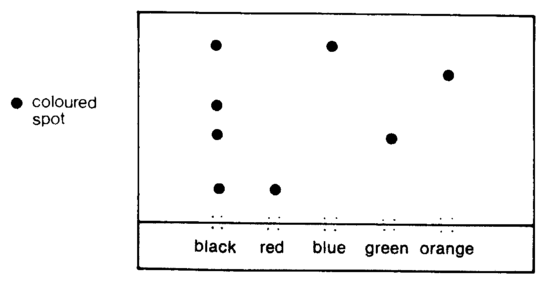
ink can be separated by a method of --------------------------------------------
distillation
sedimentation
chromatography
filtration

Which of the dyes was a pure substance?
1
2
3
4

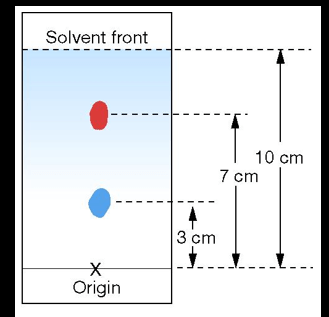
Calculate the Rf value
(a)
(a) can be used to separate an insoluble solid from a soluble liquid.
solute + solvent =
solution
equation
Saturated solution is
A solution which contains the maximum amount of solute that can be dissolved in the solvent. If any more solute is added, it will not dissolve in the solution.
A solution that contains a huge amount of solute that can be dissolved in the solvent. It can still dissolve more
A solution that contains a small amount of solute that can be dissolved in the solvent. It can still dissolve more
is a fed up solution
Subatomic particles with a negative charge
Electrons
Neutrons
Protons
Quarks
A pure substance boils at a
Sharp temperature
range of temperature
What is empirical formula?
True formula
Smallest whole-number ratio of atoms present in a molecule
Total number of atoms present in one molecule
All of the above
The number of electrons for an ion A2-, is 18. Calculate the number of proton in the ion.
16
18
20
22
Calculate the number of atoms in 1 g of He.
1.5 x 10²³
0.25
4
4.15 x 10⁻²⁵
The molecular weight of phosphorus oxide is 283.886 g/mol. Determinethe molecular formula of the phosphorus oxide if the empirical formula is P2O5.
P6O15
P8O20
P4O10
P10O25
an element from Group 7

Anions ____ electrons, becoming _____ charged.
Gain; positively (+)
Gain; negatively (-)
Lose; positively (+)
Lose; negatively (-)

Write the chemical formula for Na and S (sodium sulfide).
NaS
S2S2
Na2S
NaS2

Nonmetals (like Cl) typically ____ electrons when they form ionic bonds.
Gain
Lose
Keep the same
Melting point: -196⁰C
Boling point: -152⁰C
Conductivity: Does not conduct
Ionic
Simple covalent
Giant covalent
Metallic
Melting point: 732⁰C
Boling point: 1037⁰C
Conductivity: Not as a solid but does conduct when molten
Ionic
Simple covalent
Giant covalent
Metallic
Melting point: 1984⁰C
Boling point: 2510⁰C
Conductivity: Does not conduct
Ionic
Simple covalent
Giant covalent
Metallic
Melting point: 1083⁰C
Boling point: 2595⁰C
Conductivity: Conducts as both a solid and when molten
Ionic
Simple covalent
Giant covalent
Metallic
Melting point: 3652⁰C
Boling point: 4827⁰C
Conductivity: Conducts as a solid. This substance does not melt.
Ionic
Simple covalent
Giant covalent
Metallic
2.Which product is formed when calcium carbonate undergoes thermal decomposition?
calcium
calcium hydroxide
calcium oxide
calcium silicate
3. Which process does not produce carbon dioxide?
combustion of a hydrocarbon
photosynthesis
reaction between an acid and a metal carbonate
respiration
Calculate the molar mass for Al(OH)3
78.0 g/mol
72 g/mol
28 g/mol
25 g/mol
In the modern day atmosphere, what is the approximate percentage of nitrogen?
0.04%
21%
78%
1%
As you move down the group, halogens' reactivity...
increases
decreases
doesn't change
shows no trend.
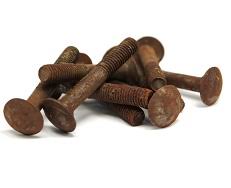
What are the two conditions that caused iron to rust ?
Air and Oxygen
Oxygen and Water
Water and Carbon dioxide
Carbon dioxide and Air
Halogens exist as .....
atoms
ions
diatomic molecules
triatomic molecules
In which group of the periodic table is alkali metals found?
group 2
group 7
group 10
group 1
Which of the following is the most reactive in water?
Rubidium
Potassium
Caesium
Sodium

Which of the following indicators show the pH value of a substances?
A. I and II
B. III and IV
C. II and III
D. I and IV
A Brønsted-Lowry acid is defined as a ____ and a Brønsted-Lowry base is defined as a ____.
proton acceptor, proton donor
proton donor, proton donor
proton acceptor, proton acceptor
proton donor, proton acceptor
Ammonium nitrate
soluble in water
insoluble in water
almost insoluble (slightly soluble)
Barium sulfate
soluble in water
insoluble in water
almost insoluble (slightly soluble)
Calcium chloride
soluble in water
insoluble in water
almost insoluble (slightly soluble)
Calcium carbonate
soluble in water
insoluble in water
almost insoluble (slightly soluble)
Copper(II) sulfate
soluble in water
insoluble in water
almost insoluble (slightly soluble)
Silver carbonate
soluble in water
insoluble in water
almost insoluble (slightly soluble)
A solution of one salt was made and some dilute nitric acid was added. Drops of silver nitrate solution were added. A yellow precipitate formed. This test shows the anion in the salt is
bromide, Br-
chloride, Cl-
iodide, I-
sulfate, SO42-
Solid C is dissolved in water. When sodium hydroxide solution is added to the solution of C, a red-brown precipitate is formed. This test shows that the ion present in solid C is
copper, Cu2+
iron (II), Fe2+
iron (III), Fe3+
sodium, Na+
If a flame test is carried out on copper chloride, the colour in the flame is
red-brown
yellow
lilac
blue-green
What colour does litmus paper turn in the presence of chlorine?
Red
Blue
Red then White
Yellow
The test for chloride ions was carried out on a solution. Dilute nitric acid was added to the solution, followed by a few drops of silver nitrate solution. A white precipitate formed. Why is it necessary to add dilute nitric acid in this test?
To neutralise the solution
Nitrate ions are needed for the test to work
To make sure that no carbonate ions are present
The test only work in alkaline conditions
What is the best test for sulfate ions?
add hydrochloric acid followed by barium chloride solution
add sodium hydroxide followed by barium chloride solution
add barium chloride solution
add barium sulfate solution
What physical property allows Fractional Distillation to separate different fractions of crude oil?
Melting point
Boiling point
Diffusion rate
Condensation rate
For surfacing roads and roofs
petrol
bitumen
fuel oil
kerosene

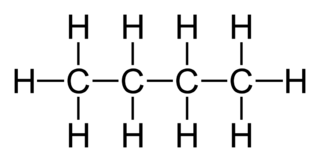
Check all that apply: Which of the following molecules are ISOMERS?
A and B
A and C
C and D
B and D

What is the IUPAC name of this organic molecule?
3-chlorobutane
2-chlorobutane
3-chloropentane
2-chloropentane

This reaction is an example of which type of organic reaction?
addition
fermentation
polymerization
substitution
Large molecules made up of small monomers are called
polymers
monomer
allotrope
functional group

What is fractional distillation?
a process used to separate crude oil
a process used to burn up fuels
a way to make different products
how oil is extracted from the ground

Is this hydrocarbon saturated or unsaturated? HINT: Look at the bonds.
Complete the equation C16H34 ---> __________ + C2H4
C16H34
C2H30
C10H20
C14H30
CH4 + O2 --> CO + 2H2O
complete combustion
incomplete combustion
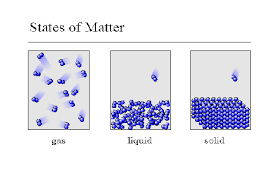

Particles in a ______________________ move quickly and are far apart.
gas
solid
liquid

Particles of a liquid
are tightly packed together and stay in a fixed position.
are free to move around one another but still touch.
What is condensation?
gas to solid
gas to liquid
liquid to solid

Phase change from solid to gas is called:
Freezing
Condensation
Vaporization
Sublimation
How many grams of NaCl are in 450 g
of water at 30∘C if the solubility is 39 g
per 100 g of water?
8.67 g
39 g
100 g
175.5 g
A saturated solution is______
No more solute can be dissolved
The solvent and solution
More solute can be dissolved
The separation of a mixture of two miscible liquids such as ethanol and water takes placed by
Distillation
Evaporation
Fractional distillation
Crystallization
The process of fractional distillation depends on a difference in the
Rate of evaporation of two liquids
Boiling points of two liquids at the same pressure
Solubilities of two solids in the same solvents
Densities of two substances at the same temperature

In the distillation apparatus shown, what are the parts labelled A and B?
A = funnel, B = thermometer
A = thermometer, B = funnel
A = condenser, B = flask
A = condenser, B = thermometer

Which one of the following is the name for separation technique in the picture below
evaporation
seiving
decanting
distillation

What kind of elements are shown in red?
Metal
Nonmetal
Metaloid
When reacting Na with Cl2, we calculated that the theoretical yield should be 13 grams. Our actual yield was 12.5 grams. What is the percent yield?
90.4%
104%
96.15%
1.04%
Actual yield = 62g
Calculate the percent yield.
CaC₂(s) + H₂O(l) --> C₂H₂(g) + Ca(OH)₂(aq)
Fe2O3(s) + 3H2(g) → 2Fe(s) + 3H2O(l)
How many moles of iron can be made from 6 moles H2?
Actual yield = 62g
Calculate the percent yield.
Reactant and products might adhere to containers causing actual yield to be less than theoretical yield.
true
false
Competing reactions might occur forming other products causing your actual yield to be less than your theoretical yield.
true
false
Some product may be lost during filtering causing your actual yield to be less than your theoretical yield.
true
false

Percent yield=(________)÷(________)×100%


In the image, which reactant is limiting?
The white molecules, because there are extra.
The black atoms, because they are completely used up.
The white molecules, because they are completely used up.
The black atoms, because there are extra.
Al3+ O2-
What two types of atoms make a covalent bond?
2 non-metals
1 metal and 1 non-metal
2 metals
A Cation is an ion with a __________ charge.
positive
negative
neutral
An Anion is an ion with a ________ charge.
positve
negative
neutral

How does Lithium become an ion?
Lose 1 electron
Gain 7 electrons
Lose 3 electrons
Gain 1 electron

How does Fluorine become an ion?
Gain 1 electron
Lose 1 electron
Lose 7 electrons
Lose 2 electrons
In Metallic bond, electrons _______________ between atoms.
are shared
are transferred
flow freely

Atom 2 has a full outer shell.
True
False
Which of the following is true about Ionic Bonds? (select ALL TRUE options)
High melting point
Low melting point
Can dissolve in water
Cannot dissolve in water
Can conduct electricity
Which of the following is true about Covalent (non-polar) bonds? (select ALL true options)
High melting point
Low melting point
Can dissolve in water
Cannot dissolve in water
Can conduct electricity
Potassium Chloride is...
Ionic
Covalent
Ammonium (NH4) is...
Ionic
Covalent
What happens to limewater when carbon dioxide is bubbled through it?
Turns from white to blue.
Turns from colourless to milky.
The carbon dioxide bubbles give a squeaky pop sound.
It freezes.
What colour does sulfur burn in oxygen?
Blue
White
Orange
Lilac
Which gas makes up approximately 0.9% of dry, unpolluted air?
Carbon dioxide
Neon
Hydrogen
Argon
What is the appearance of copper oxide?
White solid
Colourless gas
Blue-green liquid
Black solid
Which of the following has basic character?
Nitrogen oxide
Sulfur dioxide
Magnesium oxide
Carbon dioxide
How do we solve for the percentage change?
original quantity - new quantity
increase ÷ original quantity
decrease ÷ original quantity
change ÷ original quantity
Which of the following does not prevent rusting of iron?
Painting , Oiling , Galvinising
Attach to a piece of copper
connect to a piece of magnesium with wire
cover entirely with copper
What is the chemical name given to Rust ?
Iron II oxide
Iron III oxide
Steel dioxide
Carbon dioxide
Magnesium + hydrochloric acid-->
Magnesium chloride + water
Magnesium chloride + hydrogen
Magnesium hydrochloride + hydrogen
Magnesium chloride + water + carbon dioxide
Calcium carbonate + hydrochloric acid -->
Calcium chloride + hydrogen
Calcium choride + water
Calcium chloride + carbon dioxide + water
Calcium sulfate + carbon dioxide + water
Sulphur dioxide causes which environmental problem
global warming
acid rain
eutrophication
ozone layer depletion
What is the volume of 5 moles of oxygen gas at
room temperature and pressure?
12 dm3
22.4 dm3
120 dm3
24 dm3
How many moles of methane gas (CH4), are in 12 dm3 of methane
at room temperature and pressure?
312 moles
0.5 moles
2 moles
24 moles
What type of reaction produced an insoluble salt?
Neutralisation reaction
Precipitation reaction
Titration reaction
Insoluble reaction
When a soluble salt is formed from an acid and an insoluble base, how do you know when an excess of a base has been added?
When bubbles of gas appear
When the reactant all dissolves
When some of the reactant is left unreacted/undissolved
When a colour change happens
Why do you add excess of the insoluble reactant when making a soluble salt?
To make sure all the acid is used up
To separate the solid from the solution
To make sure a reaction occurs
To have the reaction happen faster
How do you separate an excess insoluble reactant from a solution?
Filtration
Precipitation
Crystalisation
Evaporation
When producing a soluble salt in a reaction between an acid and an alkali, how can you prepare dry solid crystals from the solution?
Filtration
Neutralisation
Condensation
Evaporation/crystallisation
A substance that changes colour when mixed with an acid or base is a(n) ___.
indicator
neutraliser
corrosive
electricity
When carrying out a titration, what is the name of the equipment used to add incremental amounts of acid to the conical flask?
glass pipette
measuring cylinder
separating funnel
burette
What is the colour change observed with phenolphthalein when adding acid to alkali?
pink --> colourless
blue --> red
orange --> pink
green --> yellow

