
 Worksheets
Chemistry Midterm 1
Total questions: 150
Worksheet time: 1hrs 15mins
What do you fill a wash bottle that has a blue stem with?
Distilled water
Tap water
Ethanol
Hydrochloric acid
What should you do with lab equipment that is still hot and you want to clean up?
Leave it on the lab bench to cool before handling
Immerse it immediately in cold water
Return it to storage while hot
Pass it to another student to speed cleanup
If you obtain too much of a chemical, what should you do with it?
Ask the instructor what to do
Return it to the original stock container
Pour it down the sink
Give it to another student
If you break glassware during a lab, what should you do?
Notify the instructor and place broken glass in the designated container
Hide the breakage to avoid losing points
Pick up the shards with bare hands and throw them in regular trash
Leave the area without telling anyone
How do you properly heat a liquid in a test tube?
Hold the test tube at an angle, move it back and forth, and keep the mouth pointed away from people
Hold the test tube upright directly in the flame
Cap the test tube while heating to avoid splashing
Point the opening toward yourself to observe changes closely
During a lab, you accidentally spill a chemical on your hand. What should you do?
Immediately wash with soap and water and notify the instructor
Ignore it and continue working
Wipe it off with a dry paper towel only
Neutralize it by adding another random chemical
What piece of equipment is the most accurate way to measure volume?
Graduated cylinder
Beaker
Erlenmeyer flask
Test tube
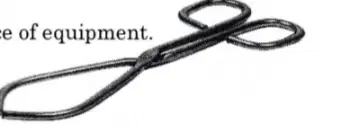
Identify the following piece of equipment.
Glassware forceps
Glassware tongs
Beaker tongs
Beaker forceps
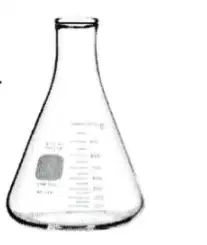
Identify the following piece of equipment.
Florence flask
Erlenmeyer flask
Beaker flask
Triangle flask
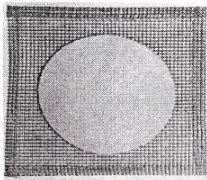
Identify the following piece of equipment.
Heating element
Wire gauze
Wire square
Heating square
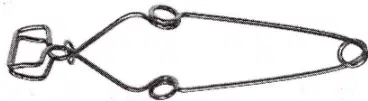
Identify the following piece of equipment.
Test tube holder
Test tube clamp
Test tube forceps
Test tube tongs
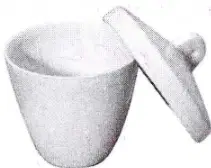
Identify the following piece of equipment.
Crucible & lid
Crucible & cover
Evaporating dish & cover
Evaporating bowl & cover
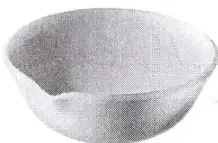
Identify the following piece of equipment.
Crucible
Porcelain dish
Evaporating dish
Evaporating bowl
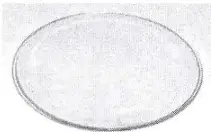
Identify the following piece of equipment.
Crucible
Watch glass
Glass plate
Glass bowl
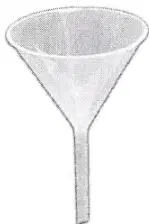
Identify the following piece of equipment.
Plastic Filter
Funnel
Filtrate
Plastic pourer
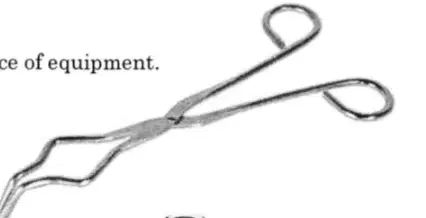
Identify the following piece of equipment.
Glassware tongs
Beaker forceps
Beaker tongs
Glassware forceps
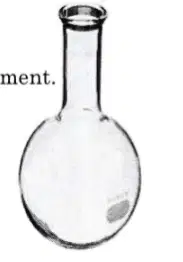
Identify the following piece of equipment.
Florence flask
Erlenmeyer flask
Round bottom flask
Beaker flask
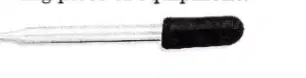
Identify the following piece of equipment.
Bulbed straw
Pipet
Eye dropper
Dropper
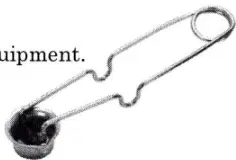
Identify the following piece of equipment.
Lighter
Flint sparker
Striker
Fire maker
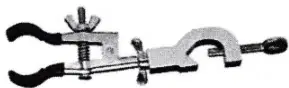
Identify the following piece of equipment.
Test tube holder
Test tube ring
Test tube clamp
Test tube catcher
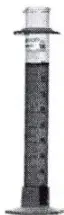
Identify the following piece of equipment.
Beaker
Test tube
Graduated cylinder
Erlenmeyer flask
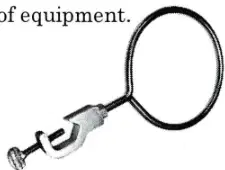
Identify the following piece of equipment.
Circle clamp
Beaker clamp
Ring clamp
Stand clamp
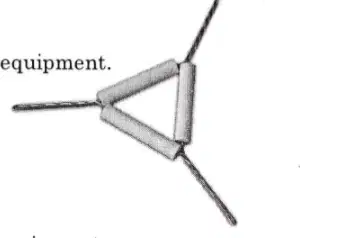
Identify the following piece of equipment.
Triangle
Porcelain holder
Crucible stand
Crucible clamp

Identify the following piece of equipment.
Watch glass
Glass plate
Glass square
Watch plate
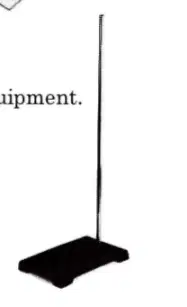
Identify the following piece of equipment.
Bunsen burner stand
Ring stand
Heating apparatus
Heating stand
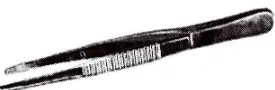
Identify the following piece of equipment.
Glassware tongs
Chemical forceps
Chemical tongs
Tweezers
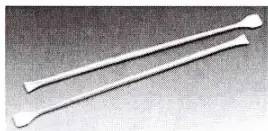
Identify the following piece of equipment.
Stirring rods
Stirring sticks
Stirrers
Mixing sticks
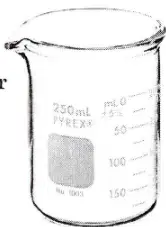
Identify the following piece of equipment.
Test tube
Florence flask
Beaker
Erlenmeyer beaker
Select all indicators of a chemical reaction.
Heat and/or light produced
Color change
A precipitate forms
Gas production (bubbles or smoke)
Change in state without new substance
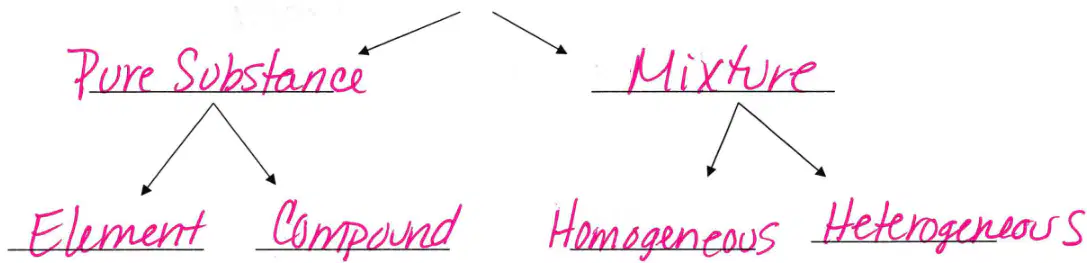
In the flow chart shown, identify the two top‑level categories used to classify matter.
Pure substance and mixture
Element and compound
Homogeneous and heterogeneous
Solid and liquid
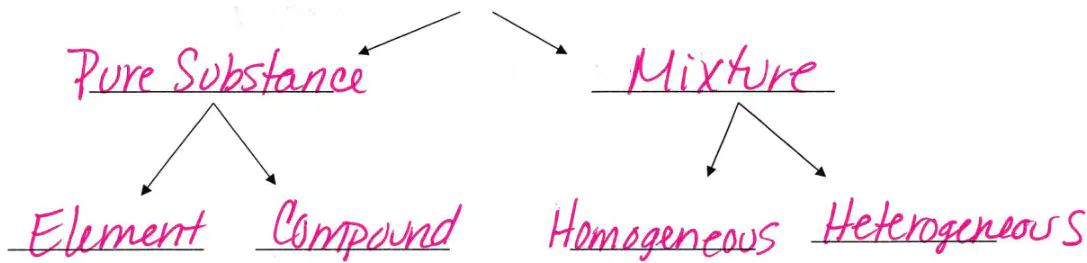
According to the flow chart, which pair correctly completes the classification under Pure Substance?
Element and compound
Homogeneous and heterogeneous
Atom and molecule
Solution and suspension
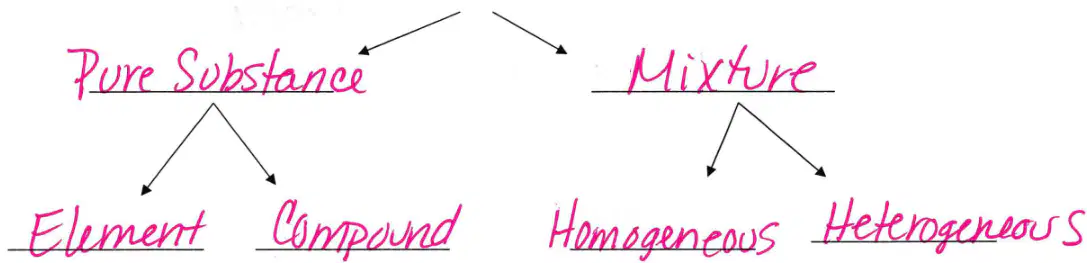
According to the flow chart, which pair correctly completes the classification under Mixture?
Homogeneous and heterogeneous
Element and compound
Solid and liquid
Solute and solvent
Classify the property: Flammability. Choose the correct column.
Physical property
Chemical property
Classify the property: Density. Choose the correct column.
Physical property
Chemical property
Classify the property: Evaporation. Choose the correct column.
Physical property
Chemical property
Classify the property: Reacts with acid to form H2 . Choose the correct column.
Physical property
Chemical property
Classify the property: Color. Choose the correct column.
Physical property
Chemical property
Classify the type of matter: Zinc.
Element
Compound
Homogeneous mixture
Heterogeneous mixture
Classify the type of matter: Trail mix.
Element
Compound
Homogeneous mixture
Heterogeneous mixture
Classify the type of matter: Water.
Element
Compound
Homogeneous mixture
Heterogeneous mixture
Classify the type of matter: Oil and water.
Element
Compound
Homogeneous mixture
Heterogeneous mixture
Classify the type of matter: Table salt (NaCl).
Element
Compound
Homogeneous mixture
Heterogeneous mixture
Identify the type of change: Burning a piece of paper.
Physical change
Chemical change
Identify the type of change: Metal dissolving in acid.
Physical change
Chemical change
Identify the type of change: Table salt dissolving in water.
Physical change
Chemical change
Identify the type of change: A balloon is inflated with air.
Physical change
Chemical change
Identify the type of change: Ice melting.
Physical change
Chemical change
Identify the type of change: Water is heated and changed to steam.
Physical change
Chemical change
In the reaction CH4+2O2→CO2+2H2O , which list contains only the reactants?
CH4 and 2O2
CO2 and 2H2O
CH4 and CO2
2O2 and 2H2O
What is the difference between an endothermic and an exothermic energy change?
Endothermic absorbs energy; exothermic releases energy
Endothermic releases energy; exothermic absorbs energy
Both absorb energy
Both release energy
How would you know an endothermic change took place?
The surroundings feel cold to the touch
The surroundings feel hot to the touch
Light is produced
A precipitate forms
How would you know an exothermic change took place?
The surroundings feel hot to the touch
The surroundings feel cold to the touch
No temperature change occurs
A gas is absorbed
Which statement correctly distinguishes qualitative from quantitative, and identifies an example of each?
Qualitative is descriptive (e.g., fast); quantitative uses numbers (e.g., 3 seconds)
Qualitative uses numbers (e.g., 3 seconds); quantitative is descriptive (e.g., fast)
Both are descriptive only; examples: color and texture
Both are numerical only; examples: mass and time
How do you correctly read the volume of water in a graduated cylinder? Select all that apply.
View at eye level
Read the bottom of the meniscus
Hold the cylinder above your head
Read the top of the meniscus
Which choice correctly describes accuracy and precision?
Accuracy is closeness to the accepted value; precision is closeness of repeated measurements to one another
Accuracy is repetition consistency; precision is closeness to the accepted value
Accuracy and precision are identical concepts
Accuracy is the number of significant figures; precision is the unit used
What method would you use to find the volume of a penny?
Water displacement
Length × width × height
Measure temperature change
Convert mass to volume using density of air
Sam measured a mass of 6.58 g for copper; the actual mass was 7.89 g. What is the percent error?
16.6%
1.7%
19.5%
12.3%
A sample of iron has a mass of 19.5 g and a volume of 12.3 cm3 . What is its density?
1.6 g/cm3
12.3 g/cm3
0.63 g/cm3
19.5 g/cm3
Graphite has a density of 2.26 g/cm3 . What is the mass of a 1.23 cm3 sample of graphite?
2.8 g
0.54 g
1.23 g
2.26 g
A scientist collects 32.8 g of zinc. Given the density of zinc is 7.14 g/mL , what volume is this sample?
4.6 mL
7.14 mL
0.22 mL
32.8 mL
How many yards are in 58,256 inches? Use 1 yd=36 in .
1,618.2 yd
5,280 yd
1,620 yd
162.0 yd
How many pints are in 6.32 gal? Use 1 gal=8 pt .
50.56 pt
6.32 pt
25.28 pt
40.0 pt
How many miles are in 789 inches? Use 12 in=1 ft and 5280 ft=1 mi .
0.012 mi
0.12 mi
0.0012 mi
0.052 mi
How many ounces are in 325.94 grams? Use 453.59 g=1 lb and 16 oz=1 lb .
11.5 oz
7.14 oz
32.6 oz
4.6 oz
Write 83,500 km in scientific notation.
8.35×10⁴ km
8.35×10⁵ km
8.350×10³ km
8.35×10³ km
Write 0.000685 mg in scientific notation.
6.85×10⁻⁴ mg
6.85×10⁻⁵ mg
6.85×10⁴ mg
6.85×10⁻⁶ mg
Write 732,000,000,000 kg in scientific notation.
7.32×10¹¹ kg
7.32×10¹⁰ kg
7.32×10¹² kg
7.32×10⁹ kg
Write 0.000066757 mm in scientific notation.
6.6757×10⁻⁵ mm
6.6757×10⁻⁶ mm
6.6757×105 mm
6.6757×10⁻⁴ mm
Write each number in ordinary notation: 2.3×10⁸ km.
230,000,000 km
23,000,000 km
2,300,000 km
2,300 km
Write each number in ordinary notation: 8.27×105 mm.
0.0000827 mm
.82700 mm
8,270 mm
8,270,000 mm
Write each number in ordinary notation: 6.52×10⁻² mL.
0.0652 mL
0.652 mL
0.00652 mL
6.52 mL
Write each number in ordinary notation: 3.73×10⁹ L.
3,730,000,000 L
373,000,000 L
37,300,000 L
3,730,000 L
Try these conversions using the ladder method: Write out the metric prefix conversion chart in order from kilo to milli.
kilo, hecto, deka, base unit, deci, centi, milli
milli, centi, deci, base unit, deka, hecto, kilo
base unit, kilo, hecto, deka, deci, centi, milli
kilo, deka, hecto, base unit, centi, deci, milli
Try these conversions using the ladder method: 255 mL = ___ dL.
2.55 dL
25.5 dL
0.255 dL
0.0255 dL
Try these conversions using the ladder method: 63 mg = ___ hg.
6.3 × 10^{-5} hg
6.3 × 10^{-3} hg
6.3 × 10^-2 hg
6.3 × 10^{-1} hg
Try these conversions using the ladder method: 6.7 kg = ___ dag.
67 dag
0.67 dag
670 dag
6.7 dag
Try these conversions using the ladder method: 42 cm = ___ m.
0.42 m
4.2 m
0.042 m
0.0042 m
Try these conversions using the ladder method: 8.3 L = ___ dL.
83 dL
8.3 dL
0.83 dL
0.083 dL
Unit 3 – Atomic Structure: _____ was the first person to come up with the idea of an atom.
Democritus
Aristotle
Niels Bohr
Marie Curie
Unit 3 – Atomic Structure: _____ is known as the "Father of the Modern Atomic Theory".
John Dalton
Ernest Rutherford
J. J. Thomson
Erwin Schrödinger
Unit 3 – Atomic Structure: _____ discovered the neutron.
James Chadwick
J. J. Thomson
Ernest Rutherford
Robert Millikan
Unit 3 – Atomic Structure: _____ discovered electrons.
J. J. Thomson
Ernest Rutherford
Niels Bohr
Henry Moseley
Unit 3 – Atomic Structure: _____ discovered the nucleus.
Ernest Rutherford
James Chadwick
J. J. Thomson
John Dalton
Unit 3 – Atomic Structure: What is the name of Thomson’s model of the atom?
Plum pudding model
Nuclear model
Planetary model
Quantum mechanical model
Unit 3 – Atomic Structure: What is the name of Rutherford’s model of the atom?
Nuclear model
Plum pudding model
Bohr model
Thomson model
Unit 3 – Atomic Structure: Identify the subatomic particle described as found in the nucleus with positive charge.
Proton
Neutron
Electron
Positron
Unit 3 – Atomic Structure: Identify the subatomic particle described as found in the nucleus with neutral charge.
Neutron
Proton
Electron
Alpha particle
Unit 3 – Atomic Structure: Identify the subatomic particle described as found in the electron clouds with negative charge.
Electron
Proton
Neutron
Beta particle
Unit 3 – Atomic Structure: How are atoms electrically neutral?
The number of protons equals the number of electrons
The number of neutrons equals the number of electrons
Atoms have no charged particles
Protons equal neutrons
Unit 3 – Atomic Structure: Atoms of the same element with different numbers of neutrons are called _____.
Isotopes
Ions
Allotropes
Isomers
What are isotopes named by?
Mass number
Atomic number
Number of electrons
Charge
The sum of protons and neutrons in an atom equals the _____.
Mass number
Atomic number
Avogadro’s number
Molar mass
The SI unit for an amount of a substance is the _____.
mole
gram
liter
kelvin
_____ is the mass of one mole of atoms or molecules and is measured in grams.
Molar mass
Atomic number
Mass number
Density
What is the conversion factor between moles and grams?
1 mol = molar mass (in grams)
1 mol = 6.02×10²³ particles
1 mol = 22.4 L at STP
1 mol = atomic number (in grams)
What is the conversion factor between moles and atoms?
1 mol = 6.02×10²³ atoms
1 mol = molar mass (in grams)
1 mol = 22.4 L at STP
1 mol = 6.02×10²⁰ atoms
What is the mass in grams of 2.56 mol of Li?
17.92 g Li
25.6 g Li
13.9 g Li
2.56 g Li
How many moles of Br are equivalent to 7.45×10¹⁶ atoms?
1.24×10⁻⁷ mol
7.45×10⁻¹⁶ mol
6.02×10⁻²³ mol
2.45×10⁻⁶ mol
How many moles of Ag are contained in 325.8 grams of Ag?
3.02 mol
0.325 mol
1.08 mol
2.02 mol
How many atoms of Ca are equivalent to 0.55 mol?
3.31×10²³ atoms
6.02×10²³ atoms
1.10×10²³ atoms
2.20×10²² atoms
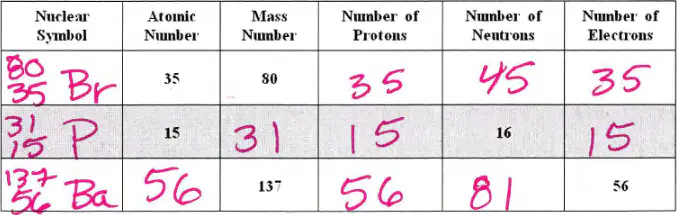
Complete the following table: For 35Br with mass number 80, what is the number of neutrons?
45
35
80
55
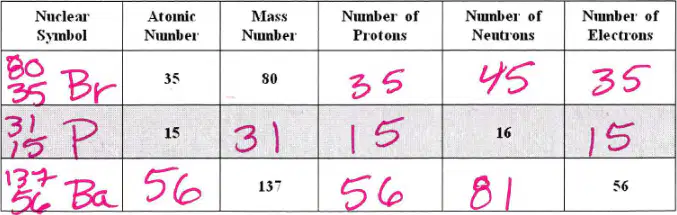
Complete the following table: For 31P (atomic number 15, mass number 31), what is the number of neutrons?
16
15
31
14
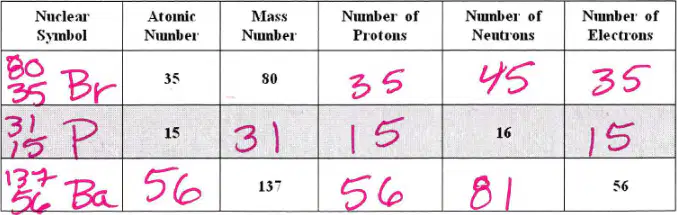
Complete the following table: For 137Ba (atomic number 56, mass number 137), what is the number of electrons in a neutral atom?
56
81
137
75
Unit 4 – Electrons & Notations: Who came up with the quantum mechanical model of the atom, which is the current model of the atom?
Erwin Schrödinger
Niels Bohr
J. J. Thomson
Werner Heisenberg
Unit 4 – Electrons & Notations: An _____ is a three-dimensional region around the nucleus that indicates the probable location of an electron.
orbital
energy level
nucleus
quantum
Unit 4 – Electrons & Notations: _____ specify the properties of the atomic orbitals and the properties of electrons in those orbitals.
Quantum numbers
Electron configurations
Sublevels
Spectral lines
Unit 4 – Electrons & Notations: How many quantum numbers is each electron given?
4
2
3
5
Unit 4 – Electrons & Notations: Principal quantum number indicates the main energy level.
Main energy level
Spatial orientation
Shape of orbital
Electron spin
Unit 4 – Electrons & Notations: Angular momentum quantum number indicates the shape of the orbital.
Shape of orbital
Main energy level
Spatial orientation
Electron spin
Unit 4 – Electrons & Notations: Magnetic quantum number indicates the spatial orientation of the orbital.
Spatial orientation
Main energy level
Shape of orbital
Electron spin
Unit 4 – Electrons & Notations: Spin quantum number indicates the spin of the electron on its own axis.
Electron spin
Main energy level
Shape of orbital
Spatial orientation
Unit 4 – Electrons & Notations: What is the lowest value for the principal quantum number n?
1
0
2
7
Unit 4 – Electrons & Notations: What is a typical highest principal quantum number used for ground-state atoms in the periodic table?
7
5
3
2
Unit 4 – Electrons & Notations: What rule states that orbitals of equal energy are each occupied by one electron before any orbital is occupied by a second electron, and all electrons in singly occupied orbitals must have the same spin?
Hund’s rule
Pauli exclusion principle
Aufbau principle
Heisenberg uncertainty principle
Unit 4 – Electrons & Notations: Identify the element with electron configuration 1s22s22p3 .
Nitrogen (N)
Oxygen (O)
Carbon (C)
Fluorine (F)
Unit 4 – Electrons & Notations: Identify the element with electron configuration 1s22s22p63s23p5 .
Chlorine (Cl)
Sodium (Na)
Phosphorus (P)
Argon (Ar)
Unit 4 – Electrons & Notations: Identify the element with electron configuration 1s22s22p63s23p64s23d104p65s24d105p6 .
Xenon (Xe)
Krypton (Kr)
Bromine (Br)
Tellurium (Te)
Unit 4 – Electrons & Notations: What is the maximum number of electrons contained in an orbital?
2
1
4
6
Unit 4 – Electrons & Notations: What is the maximum number of electrons contained in a p sublevel?
6
2
4
10
Unit 4 – Electrons & Notations: What is the maximum number of electrons contained in an s sublevel?
2
6
10
14
Unit 4 – Electrons & Notations: What is the maximum number of electrons contained in a d sublevel?
10
14
6
2
Unit 4 – Electrons & Notations: True or False — An electron can be described as both a wave and a particle.
True
False
Unit 5 – The Periodic Table of Elements: What is the difference between a group and a period? List the number of groups and periods on the periodic table.
Groups are columns; periods are rows; 18 groups and 7 periods
Groups are rows; periods are columns; 7 groups and 18 periods
Groups are diagonal lines; periods are blocks; 8 groups and 4 periods
Groups are shells; periods are families; 7 groups and 7 periods
Unit 5 – The Periodic Table of Elements: Circle where you would find elements with similar properties: group or period.
Group
Period
Diagonal across the table
Random distribution
Unit 5 – The Periodic Table of Elements: What is the name given to Group 1 on the periodic table?
Alkali metals
Alkaline earth metals
Transition metals
Halogens
Noble gases
Unit 5 – The Periodic Table of Elements: What is the name given to Group 2 on the periodic table?
Alkali metals
Alkaline earth metals
Transition metals
Halogens
Noble gases
Unit 5 – The Periodic Table of Elements: What is the name given to Groups 3–12 on the periodic table?
Alkali metals
Alkaline earth metals
Transition metals
Halogens
Noble gases
Unit 5 – The Periodic Table of Elements: What is the name given to Group 17 on the periodic table?
Alkali metals
Alkaline earth metals
Transition metals
Halogens
Noble gases
Unit 5 – The Periodic Table of Elements: What is the name given to Group 18 on the periodic table?
Alkali metals
Alkaline earth metals
Transition metals
Halogens
Noble gases
Unit 5 – The Periodic Table of Elements: How are the elements arranged on the periodic table today?
Increasing atomic number
Increasing atomic mass
Alphabetical by element name
By discovery date
Unit 5 – The Periodic Table of Elements: What is the difference between anions and cations, and how are they formed?
Anions are negatively charged ions formed when atoms gain electrons; cations are positively charged ions formed when atoms lose electrons
Anions are positively charged ions formed when atoms gain protons; cations are negatively charged ions formed when atoms lose protons
Anions are neutral atoms that share electrons; cations are atoms that share protons
Anions and cations are both neutral and form by sharing electrons
Unit 5 – The Periodic Table of Elements: Suppose lithium formed an ion. How many electrons and protons does a lithium ion have? (Hint: consider the typical charge of a lithium ion.)
3 protons and 3 electrons
3 protons and 2 electrons
2 protons and 3 electrons
3 protons and 4 electrons
Unit 5 – The Periodic Table of Elements: Suppose nitrogen formed an ion. How many electrons and protons does a nitride ion have? (Hint: consider the typical charge of a nitride ion.)
7 protons and 7 electrons
7 protons and 8 electrons
7 protons and 10 electrons
8 protons and 10 electrons
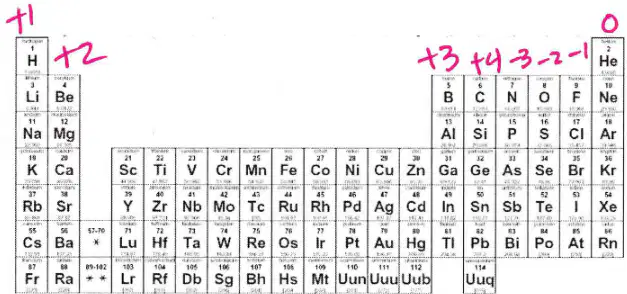
Unit 5 – The Periodic Table of Elements: Place the ionic charge for Group 1 elements on the periodic table.
+1
+2
−1
0
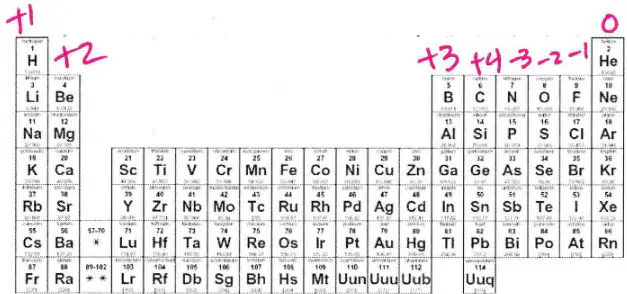
Unit 5 – The Periodic Table of Elements: Place the ionic charge for Group 2 elements on the periodic table.
+1
+2
−2
0
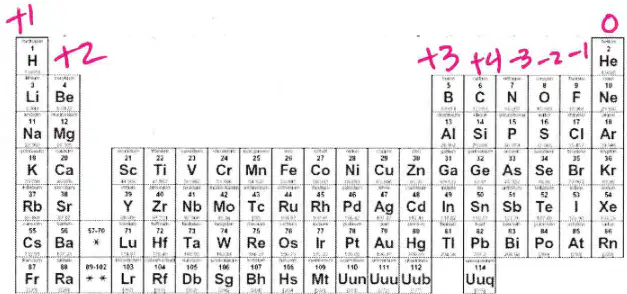
Unit 5 – The Periodic Table of Elements: Place the ionic charge for Group 13 elements on the periodic table.
+3
+4
−3
0
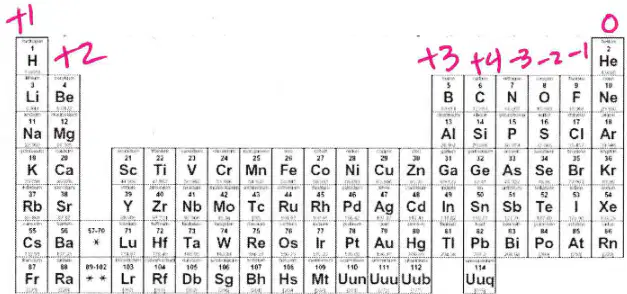
Unit 5 – The Periodic Table of Elements: Place the ionic charge for Group 14 elements on the periodic table.
Typically +4 or −4
Always +2
Always −2
Always 0
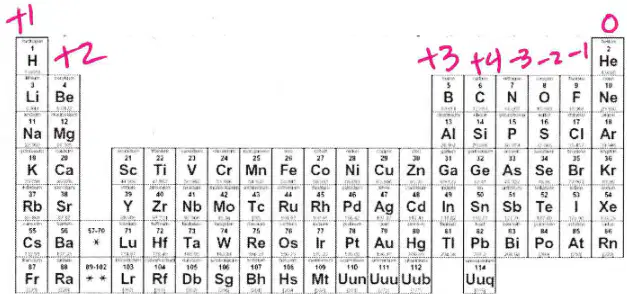
Unit 5 – The Periodic Table of Elements: Place the ionic charge for Group 15 elements on the periodic table.
−3
+3
+1
0
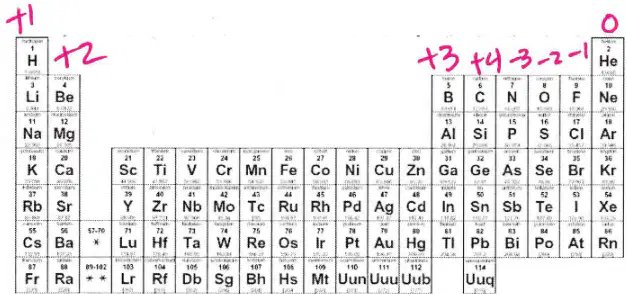
Unit 5 – The Periodic Table of Elements: Place the ionic charge for Group 16 elements on the periodic table.
−2
+2
+1
0
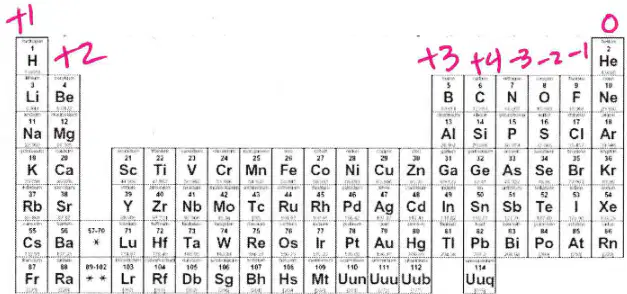
Unit 5 – The Periodic Table of Elements: Place the ionic charge for Group 17 elements on the periodic table.
−1
+1
+2
0
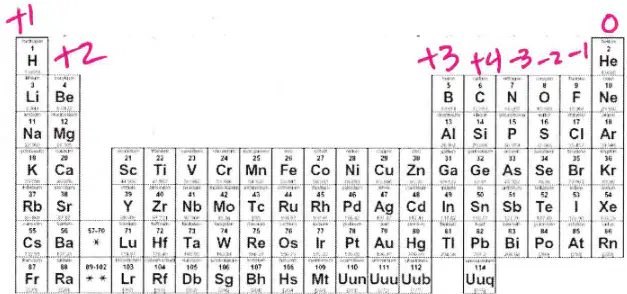
Unit 5 – The Periodic Table of Elements: Place the ionic charge for Group 18 elements on the periodic table.
0
+1
−1
+2
Arrange the following set of elements in order of DECREASING electronegativity (start with the highest and go to the lowest): Li, N, B, Be.
N, B, Be, Li
B, N, Li, Be
Li, Be, B, N
Be, B, N, Li
Arrange the following set of elements in order of DECREASING electronegativity (start with the highest and go to the lowest): Te, S, O, F.
F, O, S, Te
O, S, F, Te
S, F, O, Te
Te, S, O, F
Arrange the following set of elements in order of DECREASING electronegativity (start with the highest and go to the lowest): Sr, Be, Mg, C.
C, Be, Mg, Sr
Be, C, Mg, Sr
Mg, Be, C, Sr
Sr, Mg, Be, C
Arrange the following set of elements in order of DECREASING first ionization energy (start with the highest and go to the lowest): F, Ga, C, N.
F, N, C, Ga
F, C, N, Ga
N, F, C, Ga
Ga, C, N, F
Arrange the following set of elements in order of DECREASING first ionization energy (start with the highest and go to the lowest): K, Rb, Mg, Al.
Mg, Al, K, Rb
Al, Mg, K, Rb
K, Rb, Mg, Al
Rb, K, Al, Mg
Arrange the following set of elements in order of DECREASING first ionization energy (start with the highest and go to the lowest): S, O, Se, Te.
O, S, Se, Te
S, O, Te, Se
Se, Te, S, O
Te, Se, S, O
Arrange the following set of elements in order of DECREASING atomic radius (start with the highest and go to the lowest): Li, Na, K, Be.
K, Na, Li, Be
Na, K, Li, Be
Li, Na, K, Be
Be, Li, Na, K
Arrange the following set of elements in order of DECREASING atomic radius (start with the highest and go to the lowest): B, C, O, F.
B, C, O, F
F, O, C, B
O, F, C, B
C, B, O, F
Arrange the following set of elements in order of DECREASING atomic radius (start with the highest and go to the lowest): B, Ga, Al, In.
In, Ga, Al, B
In, Al, Ga, B
Ga, In, Al, B
B, Al, Ga, In

