
 Worksheets
Photosynthesis
Total questions: 128
Worksheet time: 1hrs 21mins
Which organelle performs photosynthesis?
Chloroplast
Mitochondria
Nucleus
Endoplasmic reticulum
What process occurs when light energy is captured in autotrophs and converted into sugar?
Photosynthesis
Cellular respiration
Anaerobic respiration
Carbon fixation
Which molecules from the light-dependent reactions are used to power the Calvin Cycle?
ADP and H2O
oxygen and glucose
NADPH and ATP
light and carbon dioxide
Plants need ________ as the source of inorganic carbon in the Calvin Cycle (or the light-independent reactions).
oxygen
soil
carbon dioxide
sugar
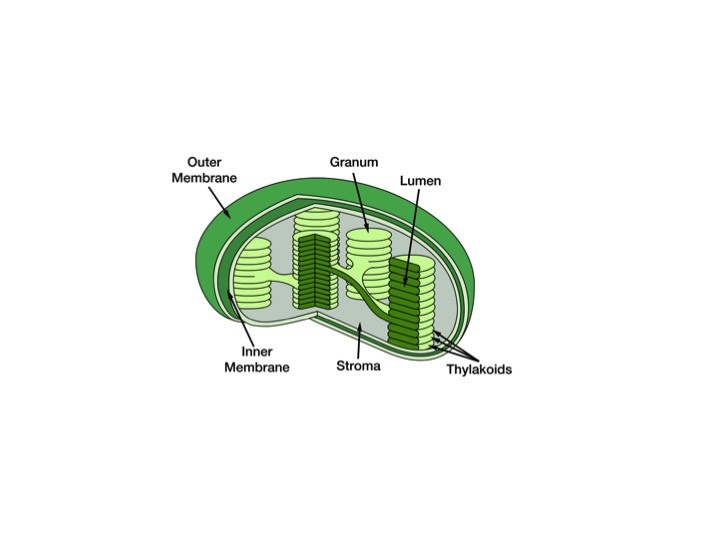
Chloroplasts are...
Structures of animal cells to produce ATP
Organelles where lipids are elaborated
Specialized structures of plants where sugar is made
Waste organelle of plants
Oxygen gas is released as a byproduct after
Carbon fixation occurs in the Calvin Cycle.
Water is split into H+ and O2 gas after water donates electrons to the ETC.
NADP+ is reduced to NADPH at the end of the light-dependent reactions.
ATP is used to power the Calvin Cycle.

Where do the light-dependent reactions occur within a plant cell?
The membranes of the thylakoid
The stomata of the leaves
The cytoplasm of the plant cellt
The stroma of the chloroplast

A stack of thylakoids is called
A stroma
A granum
A matrix
ATP synthase
Which of the following statements about the light-dependent reactions is FALSE?
Water donates electrons to the electron transport chain.
They produce NADPH to power the Calvin cycle.
They produce ATP to power the Calvin cycle.
They occur in the stroma of the chloroplast.
During this reaction, glucose and other carbohydrates are produced.
In the light-dependent reactions
In the Krebs cycle
In the Calvin Cycle
The movement of H+ ions down their concentration gradient powers this enzyme to make ATP during the light-dependent reactions.
Photosystem I
ATP synthase
Photosystem II
RuBP

________ donates electrons in the electron transport chain in the light-dependent reactions and _______ energizes those electrons.
Water, light
NADH, oxygen
Water, ATP
FADH2, light

________ removes electrons from the electron transport chain in photosynthesis and becomes _________.
NADP+, ATP
Oxygen gas, water
ADP, ATP
NADP+, NADPH
ATP is synthesized at ATP synthase. This synthesis is driven by
The movement of H+ ions from low to high.
The movement of H+ ions from high to low.
Attaching ADP to a free H+ ion.
Synthesizing glucose.
Chlorophyll in most plant leaves does not absorb this color; it reflects it.
Purple
Blue
Green
Red
Where is ATP synthesized?
light reaction
light independent reaction
chlorophyll
Calvin cycle
The Calvin cycle takes place in?
stroma
thylakoids
photosystems
chlorophyll molecules
The light dependent reactions take place where?
in the thylakoid membranes
stroma
outside the chloroplast
mitochondria
Which of the following is NOT a product of the Calvin Cycle?
NADP+
NADPH
ADP
G3P (to form glucose)
Which gas is removed from the atmosphere during photosynthesis?
hydrogen
nitrogen
oxygen
carbon dioxide
Which molecules from the light-dependent reactions are used to power the Calvin cycle?
ADP and H2O
NADPH and ATP
oxygen and glucose
light and carbon dioxide
Oxygen gas is released as a byproduct after
carbon fixation occurs in the Calvin cycle.
NADP+ is reduced to NADPH at the end of the light-dependent reactions.
water is split into H+ and O2 gas after water donates electrons to the ETC.
ATP is used to power the Calvin cycle.
Where do the light-dependent reactions occur within a plant cell?
the membranes of the thylakoid
the cytoplasm of the plant cell
the stomata of the leaves
the stroma of the chloroplast
Carbon fixation occurs
in the light-dependent reactions
in the Calvin cycle
in the Krebs cycle
The movement of H+ ions down their concentration gradient powers this enzyme to make ATP during the light-dependent reaction.
Photosystem I
ATP synthase
Photosystem II
RuBP
________ donates electrons in the electron transport chain in the light-dependent reactions and _______ energizes those electrons.
water : light
water : ATP
NADP : oxygen
FADH2 : light
ATP is synthesized at ATP synthase. This synthesis is driven by
the movement of H+ ions from low to high.
attaching ADP to a free H+ ion.
the movement of H+ ions from high to low.
synthesizing glucose.
Which of the following describes the pathway of electrons in the light reactions?
O2 -> PS II -> PS I -> NADH
O2 -> PS II -> PS I -> NADPH
O2 -> PS I -> PS II -> NADPH
O2 -> PS I -> PS II -> NADH
Which of the following is NOT a part of photosynthesis?
Calvin cycle
Light reactions
Light independent reactions
Krebs cycle
Where do the light reactions take place?
cytosol
thylakoid membrane
stroma
mitochondrial matrix
What is the input for the light reactions?
light energy
ATP
NADPH
H2O
What is the output for the light reactions?
light energy
ATP
NADPH
H2O
Where does the Calvin cycle take place?
cytosol
thylakoid membrane
stroma
mitochondrial matrix
What is the input for the Calvin cycle?
CO2
H2O
NADPH
ATP
G3P
What is the output for the Calvin cycle?
CO2
H2O
NADPH
ATP
G3P
What does ATP synthase do?
Create ATP
Break down ATP through chemiosmosis.
Break down NADPH.
Create NADPH.
H+ ions move into the thylakoid due to the
concentration gradient in the stroma
Brownian motion of the protons.
peer pressure of the cool electrons in the stroma.
movement of electrons through the electron transport chain


What provides the reducing power for the Calvin cycle?
ATP
ADP
NADP+
NADPH
What reactants are needed for the Calvin cycle?
Carbon dioxide
Carbon dioxide, ATP and NADPH
Carbon dioxide and glucose
Oxygen and water
What are the products of the light independent reaction?
carbohydrate (glucose)
triose phosphate
carbon dioxide
RuBP
how many stages are in the Calvin cycle?
2
5
6
3
what is the formula for glucose?
C6H12O2
C12H6O12
C6H12O6
C6O2H12
what is a light independant reaction?
a reaction that requires light
a reaction that does not require light
a reaction that does not have a calvin cycle
a reaction that does not produce glucose
Which of the following is NOT a reactant of the light independent reactions?
NADPH
ATP
Oxygen
Carbon dioxide
To bring in nonliving carbon (CO2) and use it to make organic compounds is a process called _______________.
carbon fixiation
cellular respiration
light reaction
fermentation


How does the Calvin cycle differ from the light-dependent reactions?
It takes place in the stroma.
It takes place in the thylakoid.
It requires light.
It takes place in chloroplasts.
During the light dependent reaction of photosynthesis, ________ is decomposed to supply hydrogen ions to produce NADPH, and important energy-carrying molecule used to help produce glucose during the light independent reaction.
H2O
NADPH
ATP
CO2


Light energy is used to
split water into H and O
combine C, H and O together
make water
What happens to excited electrons after the leave the photosystem I?
They enter the Calvin cycle.
They enter the light reactions.
The enter the electron transport chain.
They enter the dark reactions.
Where is ATP synthesized?
light reaction
light independent reaction
chlorophyll
Calvin cycle
Which of the following is NOT a product of the Calvin Cycle?
NADP+
NADPH
ADP
G3P (to form glucose)
Which molecules from the light-dependent reactions are used to power the Calvin cycle?
ADP and H2O
NADPH and ATP
oxygen and glucose
light and carbon dioxide
Oxygen gas is released as a byproduct after
carbon fixation occurs in the Calvin cycle.
NADP+ is reduced to NADPH at the end of the light-dependent reactions.
water is split into H+ and O2 gas after water donates electrons to the ETC.
ATP is used to power the Calvin cycle.
Carbon fixation occurs
in the light-dependent reactions
in the Calvin cycle
in the Krebs cycle
The movement of H+ ions down their concentration gradient powers this enzyme to make ATP during the light-dependent reaction.
Photosystem I
ATP synthase
Photosystem II
RuBP
________ donates electrons in the electron transport chain in the light-dependent reactions and _______ energizes those electrons.
water : light
water : ATP
NADP : oxygen
FADH2 : light
ATP is synthesized at ATP synthase. This synthesis is driven by
the movement of H+ ions from low to high.
attaching ADP to a free H+ ion.
the movement of H+ ions from high to low.
synthesizing glucose.

What is the name of a pigment-containing complex found in a thylakoid?
chlorophyll a
photosystem
grana
stroma


What is represented by "D" in this image?
ATP
NADPH
CO2
Glucose

