wayground logo

Free Printable Worksheets

Font size

S
M
L
XL
Worksheets

Earth Science Semester 1 Review

Total questions: 152

Worksheet time: 25hrs 20mins

Name
Class
Date
1.

Studies the solid portions of the earth, including volcanoes, earthquakes, and fossils.

a)

Geology

b)

Astrology

2.

Name the sphere that includes all solid, liquid, and gaseous water on Earth (All the Water on Earth)?

a)

geosphere

b)

hydropshere

c)

atmosphere

d)

biosphere

3.

The name of the group of sciences that deal with Earth and its neighbors in space is called

a)

biology

b)

astronomy

c)

chemistry

d)

Earth science

4.

The gaseous envelope surrounding the Earth is the

a)

atmosphere

b)

biosphere

c)

asthenosphere

d)

geosphere

5.

This sphere includes all life on Earth

a)

atmosphere

b)

biosphere

c)

geosphere

d)

lithosphere

6.

The study of the universe is called

a)

oceanography

b)

meteorology

c)

geology

d)

astronomy

7.

__________ study the effects of human activities on earth's land, air, water, & living things.

a)

Astronomers

b)

Environmental scientists

c)

Meteorologists

d)

Oceanographers

8.

All of the water on the Earth makes up the

a)

biosphere

b)

geosphere

c)

hydrosphere

d)

atmosphere

9.

This sphere includes all life on Earth

a)

atmosphere

b)

biosphere

c)

geosphere

d)

lithosphere

10.

Geology might also be called...

a)

Life science

b)

Earth science

c)

Physical science

d)

Space science

11.

Which topic might you study in geology?

a)

Rocks

b)

Plant cells

c)

Gravity

d)

States of matter

12.

What is the difference between cleavage and fracture?

a)

Cleavage and fracture break in pieces.

b)

Cleavage and fracture break off in the smooth surfaces.

c)

Cleavage breaks off in smooth pieces and fracture breaks off in rough/jagged pieces.

d)

Fracture breaks off in smooth pieces and cleavage breaks off in rough/jagged pieces.

13.

Why is color alone not a reliable means of identifying a mineral?

a)

Color is the best way to identify a mineral?

b)

Color can vary greatly in a mineral.

c)

All minerals are the same color.

d)

You can't see the color in the mineral.

14.

What do we use to determine hardness of a mineral?

a)

Finding the Volume

b)

Moh's hardness scale

c)

Balance

d)

Specific gravity test.

15.

What is the hardest mineral in the world?

a)

Graphite

b)

Halite

c)

Diamond

d)

Calcite

16.

What are the 5 properties that make a mineral a mineral?

a)

- Color

- Hardness

- Luster

- Weight

- Streak

b)

- inorganic

- naturally occurring

- specific arrangement of atoms

- solid

- definite chemical composition

c)

- organic

- naturally occurring

- random arrangement of atoms

- liquid

- definite chemical composition

d)

- inorganic

- naturally occurring

- random arrangement of atoms

- solid

- no chemical composition

17.

What is hardness?

a)

Means it cannot be made by life processes

b)

How easily a mineral can be scratched

c)

How the mineral reflects light

d)

How tough a mineral is

18.
Minerals have different properties to help scientists identify them.  Which is NOT a property used to identify minerals?
a)
color
b)
hardness
c)
size
d)
luster
19.
The color of a mineral in powder form is called the mineral's 
a)
hardness
b)
specific gravity
c)
luster
d)
streak
20.
How light reflects off of a mineral is called the mineral's 
a)
luster
b)
streak
c)
cleavage
d)
fracture
21.
Dull, silky, waxy, pearly, and earthy are terms that best describe which property of minerals?
a)
luster
b)
color
c)
streak
d)
cleavage
22.
Scientists test for the hardness of a mineral by doing which of the following?
a)
Measuring the mass of the mineral, and comparing it against other minerals
b)
Observing how light reflects off the mineral and how the mineral looks as a result
c)
Observing the color of a mineral and comparing it against other minerals
d)
Scratching the mineral against other substances of known hardness
23.
The color of a mineral in powder form is called the mineral's 
a)
hardness
b)
specific gravity
c)
luster
d)
streak
24.

A mineral has _____ if it breaks into smooth flat layers.

a)

fracture

b)

cleavage

c)

streak

25.
A scientist made an object in a lab that has a crystal structure and was solid. Why is the object not considered a mineral?
a)
It is a solid
b)
It is man-made
c)
It is inorganic
d)
It has a crystalline structure
26.
A valuable, rare mineral
a)
ore
b)
gem
c)
rock
d)
bling
27.
Mineral mined at a profit
a)
ore
b)
luster
c)
silicate
d)
rock
28.
Mineral crystals can form from cooling ________
a)
dirt
b)
magma
c)
water
d)
air
29.
What does inorganic mean?
a)
Something that is living
b)
Something that is dead, but was once living
c)
Something that was never living
30.
How do you determine the density of a mineral?
a)
D=M/V
b)
D=V/M
c)
D=M x V
d)
D= V x M
31.
What tools do you need to find density
a)
Scale and ruler
b)
Ruler and graduated cylinder
c)
Triple beam balance and water
d)
Graduated cylinder and triple beam balance
32.

What elements are in sulfides?

a)

metals

b)

nonmetals

c)

sulfur and a metal

d)

sulfur and oxygen

33.

What elements are in oxides?

a)

only oxygen

b)

oxygen and a metal

c)

metals

d)

nonmetals

34.
Minerals must be 
a)
Gas
b)
Solid
c)
Liquid
35.

The basic building block for all silicate minerals is the silica

a)

rhombehedron

b)

tetrahedron

c)

cube

36.

What is the number of the most easily scratched mineral on the Mohs Hardness Scale?

a)

1

b)

4

c)

7

d)

10

37.
Which minerals would all scratch apatite?
a)
diamond, topaz, quartz
b)
quartz, calcite, gypsum
c)
fluorite, talc, calcite
d)
diamond, fluorite, corundum
38.

This mineral is referred to as "fool's gold," but it is very brittle. It has a metallic luster and is light yellow in color.


According to the table, which mineral is this?

a)

Gold.

b)

Copper.

c)

Quartz.

d)

Pyrite.

39.

A _____ is a solid in which the atoms are arranged in repeating patterns.

a)

crystal

b)

fractal

c)

mineral

d)

rock

40.
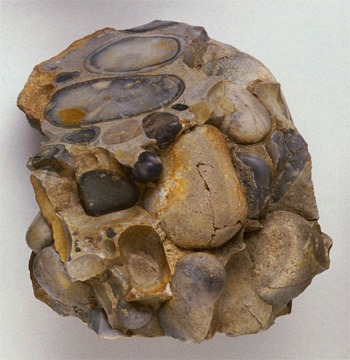
This rock formed when bits of other rocks became pressed into a solid. What type of rock is it?
a)
Sedimentary Rock
b)
Metamorphic Rock
c)
Igneous Rock
41.
This rock was formed when magma cooled very slowly inside the Earth. What specific type of rock is it?
a)
Intrusive Igneous Rock
b)
Extrusive Igneous Rock
c)
Foliated Metamorphic Rock
d)
Clastic Sedimentary Rock
42.
This rock formed when lava cooled very quickly on Earth's surface. What specific type of rock is it?
a)
Extrusive Igneous Rock
b)
Intrusive Igneous Rock
c)
Non-Foliated Metamorphic Rock
d)
Biochemical Sedimentary Rock
43.
When you watch a volcano erupt molten rock, you are seeing _____
a)
Lava
b)
Magma
c)
Mineral Crystals
d)
Igneous Rocks
44.
When you are describing the sizes of the mineral grains in a rock, you are detailing the rock's _____
a)
Texture
b)
Composition
c)
Sedimentation
d)
Igneous-ness
45.
What are the 3 major types of rocks?
a)
Igneous, Metamorphic, Sedimentary
b)
Metamorphic, Igneous, Cementation
c)
Brown, Red, Gray
d)
Streak, Hardness, Breakage
46.
Two ways to describe types of igneous rocks are _____
a)
Extrusive and Intrusive
b)
Foliated and Non-Foliated
c)
Clastic and Biochemical
d)
Black and Gray
47.
What process is used to form sedimentary rocks?
a)
Lava cools and hardens to form a rock.
b)
Bits of sand and gravel form layers that turn into rock from pressure.
c)
Extreme heat and pressure from inside the Earth turn rocks into new rocks.
d)
Magma trapped under the Earth's surface cools and solidifies.
48.
Which of the words below describe mud, sand, and tiny bits of rocks that cement together to form a type of rock?
a)
stalactites
b)
magmas
c)
metamorphs
d)
sediments
49.
This rock was formed by smaller pieces of rock that settled at the bottom of a lake millions of years ago. What type of rock is this?
a)
Sedimentary
b)
Igneous
c)
Metamorphic
50.
This rock was found near the mouth of a volcano. What type of rock is this?
a)
Sedimentary
b)
Igneous
c)
Metamorphic
51.
What is sedimentary?
a)
Formed by heat and pressure
b)
Formed by heat and cooling
c)
Layered rock formed by compaction
d)
All of the above
52.
When sediments are pressed together tightly, this is called ____________.
a)
Compaction
b)
Cementation
c)
Weathering
d)
Erosion
53.
The process in which dissolved minerals crystallize and glue sediment together.
a)
compaction
b)
deposition
c)
organic rock
d)
cementation
54.
Sedimentary rock made from fossils are called...
a)
organic
b)
chemical
c)
stratified
55.
Each rock type can follow only one pathway of the rock cycle.
a)
True
b)
False
56.
What has to increase for metamorphism to occur? 
a)
weathering and erosion
b)
temperature and pressure
c)
melting and cooling
d)
compaction ad cementation
57.
When magma cools quickly, what kind of texture does rock have?
a)
coarse grained
b)
large grained
c)
medium grained
d)
fine grained
58.
What are the main categories of sedimentary rock?
a)
extrusive and intrusive
b)
clastic, chemical, & organic
c)
felsic and mafic
d)
foliated and non-foliated
59.
What kind of metamorphic rock has its minerals grains arranged in planes or bands?
a)
extrustive
b)
foliated
c)
non-foliated
d)
intrusive
60.
naturally occurring solid mixture of one or more minerals and organic matter
a)
deposion
b)
erosion
c)
rock 
d)
rock cycle
61.
process by which new rock is made from old rock
a)
rock 
b)
texture
c)
rock cycle
d)
composition 
62.
Metamorphic rock in which minerals are NOT arranged in bands
a)
stratification
b)
non-foliated
c)
extrusive igneous rock
d)
strata
63.
Where would you most likely find a metamorphic rock?
a)
Deep in the Earth
b)
on the ocean floor
c)
next to a river
d)
in a volcano
64.
This rock is made from tiny pieces of other rocks that settled to the bottom of a valley millions of years ago. What type of rock is this?
a)
Sedimentary
b)
Igneous
c)
Metamorphic
65.
Ways a rock can be transformed into a metamorphic rock
a)
by heat
b)
by pressure
c)
by chemical reaction
d)
all of them
66.

What kind of igneous rock usually contains large crystals?

a)

clastic

b)

extrusive

c)

organic

d)

intrusive

67.

The process by which metamorphic rock changes to igneous rock begins with

a)

melting

b)

erosion

c)

deposition

d)

crystallization

68.

If heat and pressure inside Earth cause the texture and crystal structure of a rock to change, what new material is formed?

a)

sedimentary rock

b)

metamorphic rock

c)

igneous rock

d)

chemical rock

69.

A naturally occurring solid that can form by inorganic processes and that has a crystal structure and a definite chemical composition.

a)

It´s a rock

b)

It´s a crystal

c)

It´s a mineral

d)

It´s a substance

70.

Which is the process that breaks up rock on Earth’s surface?

a)

deposition

b)

melting

c)

compaction

d)

weathering

71.

Which missing rock type is the arrow pointing at?

a)

Igneous

b)

Sedimentary

c)

Metamorphic

72.

Which missing rock type is the arrow pointing at?

a)

Igneous

b)

Sedimentary

c)

Metamorphic

73.

Which missing rock type is the arrow pointing at?

a)

Igneous

b)

Sedimentary

c)

Metamorphic

74.

How does an igneous rock become a sedimentary rock?

a)

Heat and pressure

b)

Melting and cooling

c)

Weathering/Erosion and Cementation

d)

Cycling

75.

How does a sedimentary rock become a metamorphic rock?

a)

Heat and pressure

b)

Melting and cooling

c)

Weathering/Erosion and Cementation

d)

Cycling

76.

Which material is melting and cooling to become an igneous rock?

a)

Sediments

b)

Sedimentary rocks

c)

Magma

d)

Igneous rocks

77.

This is the continuous process of rock changing from one type to another.

a)

Igneous rocks

b)

Sedimentary rocks

c)

Metamorphic rocks

d)

Rock Cycle

78.

The substance that is melted rock below the ground is called what?

a)

Magma

b)

Sediment

c)

Gas

d)

Water

79.

In which location would you most likely find an igneous rock?

a)
b)
c)
d)
80.

Which force plays a major role in the formation of metamorphic rock?

a)

Acceleration

b)

Friction

c)

Pressure

d)

Centrifugal force

81.
The process in which sediment are fused or glued together.
a)
compaction
b)
deposition
c)
organic rock
d)
cementation
82.
What is the only rock that floats?
a)
granite
b)
limestone
c)
sandstone
d)
pumice 
83.
What type of rock is marble?
a)
igneous
b)
sedimentary
c)
metamorphic
84.
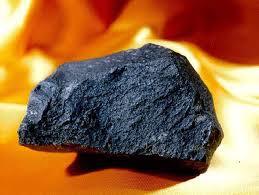
What type of rock is obsidian?
a)
igneous
b)
sedimentary
c)
metamorphic
85.
This rock formed when lava cooled very quickly on Earth's surface. What specific type of rock is it?
a)
Extrusive Igneous Rock
b)
Intrusive Igneous Rock
c)
Non-Foliated Metamorphic Rock
d)
Biochemical Sedimentary Rock
86.
This rock was formed when magma cooled very slowly inside the Earth. What specific type of rock is it?
a)
Intrusive Igneous Rock
b)
Extrusive Igneous Rock
c)
Foliated Metamorphic Rock
d)
Clastic Sedimentary Rock
87.
The movement of weathered material (sediment) is called?
a)
weathering
b)
erosion
c)
deposition
d)
cementation
88.
Sedimentary rock that is made of fragments of rocks cemented together by a mineral are called...
a)
chemical
b)
organic
c)
clastic
89.
Is the following metamorphic rock foliated or non-foliated?
a)
Foliated
b)
Non-foliated
c)
Neither
90.

a)

divergent boundary

b)

convergent boundary

c)

transform boundary

91.

a)

divergent boundary

b)

convergent boundary

c)

transform boundary

92.

a)

divergent boundary

b)

convergent boundary

c)

transform boundary

93.

New crust is formed at this type of boundary

a)

divergent

b)

convergent

c)

transform

94.

This type of boundary creates folded mountains.

a)

transform

b)

divergent

c)

continental-continental convergent

d)

continental-oceanic convergent

95.

This feature can be found along a divergent boundary

a)

mid-ocean ridge

b)

folded mountains

c)

deep sea trench

96.

Subduction means.....

a)

one plate goes under another plate

b)

two plates slide past each other

c)

two plate collide and form folded mountains

97.

divergent plates move

a)

away fro each other

b)

towards each other

c)

slide past each other

98.

convergent plates move

a)

towards each other

b)

away from each other

c)

past each other

99.

At a transform boundary the plates.....

a)

collide

b)

diverge

c)

slide past each other

100.
Mountains form from ...
a)
plates sliding past one another
b)
collision of plates
c)
plates moving away from each other
101.
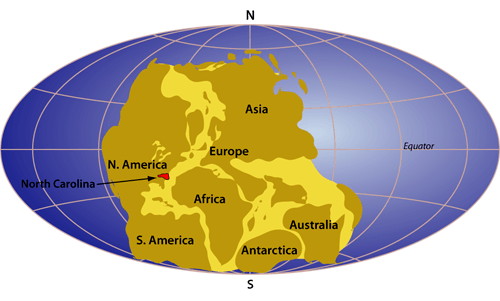
What is represented by the picture? 
a)
Sea-floor spreading
b)
Pangea
c)
How the continents are arranged today
d)
Volcanoes
102.
Which type of crust is more dense and thinner?
a)
Continental
b)
Asthenosphere
c)
Oceanic
d)
Byers
103.
What was Wegener's hypothesis called?
a)
The Pangea 
b)
Moving Continents 
c)
The Continental Drift
d)
Techtonic Plates
104.
Why was Alfred Wegner's theory of Continental Drift not immediately accepted by scientists?
a)
there was no mechanism to explain how Continental Drift happened.
b)
The theory of Continental Drift was immediately accepted by the scientific community.
c)
there was no evidence to support his theory.
d)
Scientists did not think it was possible for the Continents to move.
105.
This layer is divided into pieces called tectonic plates.
a)
Mesosphere
b)
Asthenosphere
c)
Mantle
d)
Lithosphere
106.
Which piece of evidence did Wegener use to prove continental drift?
a)
The shape of the continents
b)
Similar fossils found on separate continents
c)
Tree fossils found in odd places
d)
All of the above
107.

The movement of the tectonic plates is caused by

a)

the rotation of the Earth.

b)

convection currents in the Asthenosphere

c)

the gravity of the iron-nickel core.

d)

the Moho discontinuity.

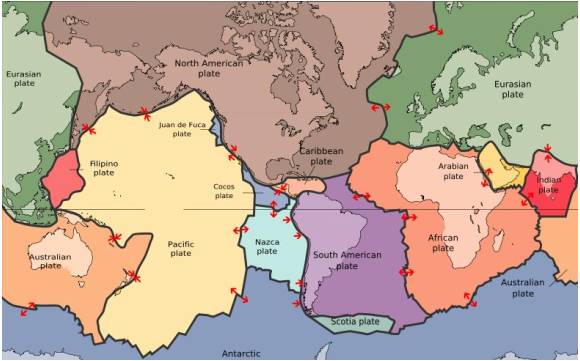
108.

The map in the picture shows tectonic plate boundaries. This map would be useful in predicting the location of future

a)

droughts

b)

hurricanes

c)

earthquakes

d)

tornadoes

109.
The Earth’s surface is not a solid surface but is divided into
a)
several oceanic plates.
b)
continental and crustal plates.
c)
seven continental plates.
d)
continental and oceanic plates.
110.
Geologists have long recognized that earthquakes are not randomly distributed on Earth but occur in concentrated areas that coincide with __________ and provide evidence for the theory of ___________ .
a)
mountain ranges; fault zones.
b)
continental borders; supercontinents.
c)
plate boundaries; plate tectonics
d)
areas of liquid magma; sea floor spreading.
111.
This is the driving force behind the movement of tectonic plates.
a)
Mantle convection currents
b)
Oceanic convection currents
c)
Atmospheric convection currents
d)
Solar convection currents
112.
What type of plate is thicker?
a)
continental 
b)
oceanic
113.
Who is the person credited with developing the theory of continental drift?
a)
Harry Hess
b)
Galileo
c)
Alfred Wegener
d)
Newton
114.
What is this a picture of?
a)
plate tectonics
b)
continental drift
c)
pangea
d)
glacier scaring
115.
What does the theory of continental drift state?
a)
The continents were once joined in a super-continent and have moved over time
b)
Continents are stationary and do not move
c)
The Earth is broken into lithospheric plates that move due to convection currents
d)
none of the above
116.
What two specific continents fit together most noticeably?
a)
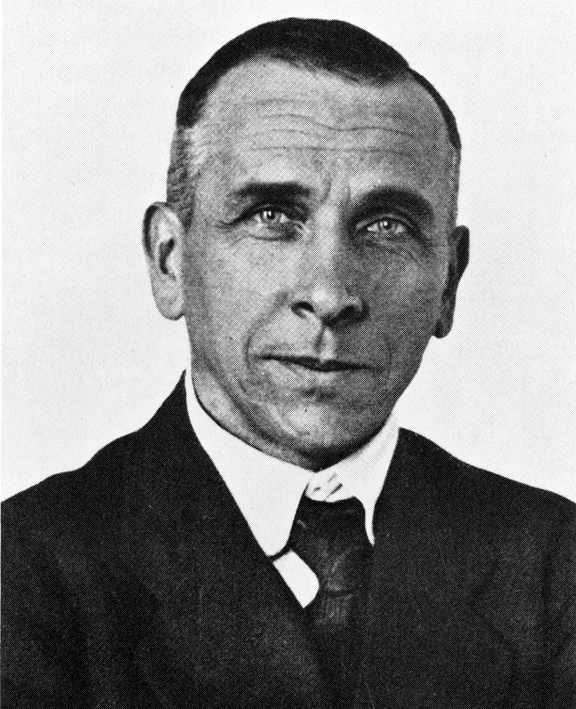
Africa and North America
b)
South America and Europe
c)
South America and Africa
d)
Antartica and Africa
117.
What are the two types of crust?
a)
continental and oceanic
b)
ocean and basin
c)
lower and upper
d)
thick and thin
118.
The geological theory that states that pieces of Earth's lithosphere are in constant, slow motion is the theory of
a)
subduction
b)
plate tectonics
c)
evolution
d)
seafloor spreading
119.
What are the remains of organism noticed by Wegener that are found the same in two continents?
a)
Leaves and flowers
b)
Ice and mountains
c)
Plants and animals
d)
Dinosaurs and reptiles
120.

Where did Wegener find plant fossils that today would not be able to survive on that type of land?

a)

North America

b)

Antarctica

c)

China

d)

India

121.
The formation of the Hawaiian Islands is one example of
a)
volcanoes forming over a hot spot
b)
volcanoes forming along plate boundaries
c)
the Ring of Fire
d)
continental drift
122.
What type of volcano forms from only quiet eruptions?
a)
Composite
b)
Cinder Cone
c)
Shield
123.
There are volcanoes underwater.
a)
True 
b)
False
124.
This type of volcano has MOSTLY NONEXPLOSIVE eruptions
a)
composite
b)
cinder cone
c)
shield
125.
What is letter A in the picture?
a)
Vent
b)
Crater
c)
Conduit
d)
Tephra
126.
What is letter B in the picture?
a)
Magma Chamber
b)
Crater
c)
Vent
d)
Conduit
127.
What is letter C in the picture?
a)
Vent
b)
Crater
c)
Caldera
d)
Tephra
128.
What is letter D in the picture?
a)
Crater
b)
Vent
c)
Conduit
d)
Tephra
129.
What is letter E in the picture?
a)
Tephra
b)
Pyroclastic Flow
c)
Magma Chamber
d)
Vent
130.
What are scientists that study volcanoes called?
a)
doctor
b)
vet
c)
volcanologist
d)
volcano scientist
131.
What is Magma when it reaches the surface of Earth?
a)
Lava
b)
Mafic Magma
c)
Felsic Magma
d)
None of these
132.

A small volcano with steep sides.

a)

cinder cone

b)

composite

c)

strata

d)

shield

133.

Where are volcanoes most likely to form?

a)

along plate boundaries

b)

near the center of continents

c)

near water

d)

on the moon

134.

When a substance flows easily we say it has a ____ viscosity

a)

low

b)

high

c)

medium

d)
135.

Which word describes molten rock that is below the crust?

a)

Lava

b)

Magma

136.

A fluid's thickness and resistance to flow is called....

a)

Viscosity

b)

Consistency

c)

Thickness

d)

Magma

137.

Volcanoes are located on Earth?

a)

Convergent

b)

Divergent

c)

Hot Spots

d)

All of the above

138.

The bowl shaped opening at the end of the pipe of a volcano is known as

a)

Crater

b)

Vent

c)

Magma chamber

d)

Cone

139.

Shield volcanoes have all these characteristics except

a)

Broad base

b)

Low viscosity lava

c)

Gentle Gradient

d)

Very tall volcanoes

140.

A way that a volcano can form

a)

Divergent boundaries

b)

Hot spots

c)

Subduction Zone

d)

All choices

141.

Tectonic plates move away from one another and can form a volcano is...

a)

Divergent

b)

Convergent

c)

Transform

d)

Subduction

142.

Tectonic plates collide into each other and mountains can form.

a)

Transform

b)

Divergent

c)

Convergent

143.

A large, step-sided volcano, composed of alternating layers of ash and lava flows is known as a:

a)

shield volcano

b)

composite volcano

c)

cinder cone

d)

none of the above

144.

one of the ingredietns that determine whether a volcanic eruption will be explosive or not

a)

silica

b)

tephra

c)

lava

d)

pyroclastic flow

145.

destructive mass of very hot volcanic ash and debris flowing down slope at great speed

a)

pyroclastic flow

b)

tephra

c)

granitic

d)

magma

146.

Type of magma that is low in silica and causes quiet eruptions

a)

basaltic

b)

andesitic

c)

granitic

d)

pyroclastic flow

147.

type of magma that is high in silica and causes explosive eruptions

a)

basaltic

b)

granitic

c)

andesitic

d)

pyroclastic flow

148.

type of magma that has an intermediate silica content

a)

basaltic

b)

granitic

c)

andesitic

d)

pyroclastic flow

149.

A volcano can..

a)

form new land

b)

erupt under water in oceans

c)

become dormant

d)

all of the above

150.

If lava has low viscosity, which adjectives best describe it?

a)

Runny, Smooth, Flows Easily

b)

Thick, Jagged, Flows Slowly

151.

How can volcanoes affect the weather?

a)

Producing ash which can block the sun.

b)

Producing gas which causes plants to grow.

c)

Producing pyroclastic flow which creates more rock.

152.

What kind of rocks are formed when lava from a volcano cools?

a)

metamorphic

b)

igneous

c)

sedimentary

d)

meteorites

e)

magma rocks