
 Worksheets
Rock Cycle Review
Total questions: 67
Worksheet time: 34mins
What Are The Three Main Types Of Rocks?
Igneous, Depository, Metamorphic
Depository, Igneous, Sedimentary
Metamorphic, Igneous, Depository
Igneous, Metamorphic, Sedimentary
How are metamorphic rocks formed?
Heating and cooling
Deposition
Heating and pressure
Materials gathering and pressing together
How are igneous rocks formed?
Sediment forming together
Heating and pressure
Cooling
Deposition
How are sedimentary rocks formed?
Heating and pressure
Sediment forming together
Weathering
Cooling
Rocks can turn into any other rocks?
True
False
Minerals and rocks are the same?
True
False
Rocks have four main characteristics that are used to classify them?
True
False
What are the four characteristics used to classify rocks?
Formation, mineral composition, erosion
Formation, mineral composition, texture, color
Streak, mineral composition, color, texture
Formation, mineral composition, texture, erosion
What are rocks made of?
Salt
Minerals
Other rocks
Sand
The color of a rock is a result of its chemical composition?
True
False
What is texture determined by?
Color
Erosion
The size, shape, and pattern of its grains
The look of it
What are grains?
The grains are the particles of minerals that give a rock its texture
Lines
Bumps, lines, and dots
It's chemical composition
The rocks cycle follows a specific order?
True
False
What can cause rocks to change?
The Earth's orbit around the sun
Environmental conditions
The minerals falling apart
Internal conditions
No rock lasts forever
True
False
An igneous rock with large crystals in it would have formed from __.
conglomerate
lava
magma
The type of rock formed when old rocks are weathered and the pieces that
break off are cemented together into new rock.
igneous
metamorphic
sedimentary
The type of rock formed when heat and pressure change an old rock into a new
type of rock.
igneous
metamorphic
sedimentary
The type of rock that may contain fossils.
igneous
metamorphic
sedimentary
What are rocks made of?
seeds
living things
wood
minerals
All rocks on Earth's surface can weather and become sediment
True
False
Metamorphic rocks are rocks that have been changed from heat and pressure.
True
False
The cycle of old rocks turning into new rocks is called_____.
the mineral cycle
the fossil cycle
the sedimentary cycle
the rock cycle
All types of rock can potentially change from one type to another at some point on the rock cycle.
True
False
When metamorphic rock is (a) is becomes sediment.
When igneous rock is (a) it becomes magma.

When molten (melted) rock cools and becomes a solid, a _____ rock forms.
Igneous
Sedimentary
Metamorphic
Mineral
Sedimentary rocks are made up of
large rocks.
hard rocks.
mostly igneous rocks
small particles of sediment.

According to the diagram, how does a sedimentary rock become a metamorphic rock?
Weathering and Erosion
Heat and Pressure
Compaction and Cementation
Melting

When heat or pressure causes one rock to change into a new type of rock, we call these rocks _____.
Igneous
Sedimentary
Metamorphic
Mineral
the transport of fragments of rock by water, wind, ice, or gravity
deposition
lithification
erosion
weathering

What is letter A?
Cooling
Melting
Heat and pressure
Weathering and erosion
What is letter B?
Cooling
Melting
Heat and pressure
Weathering and erosion
What is letter E?
Heat and pressure
Melting
Deposition, Compaction, Cementation
Weathering and erosion
What is letter G?
Heat and pressure
Cooling
Deposition, Compaction, Cementation
Weathering and erosion

1. The movement of rock by wind, water, ice, or gravity is called..
Deposition
Erosion
Weathering
Physical Change

1. Which biome is likely to be most affected by wind erosion?
Deciduous Forest
Rain Forest
Desert
Grasslands
The breakdown of rocks caused by freezing and thawing is called..
Mechanical Weatherin
Chemical Weathering
Erosion
Deposition

The breakdown of rock and soil is called..
Deposition
Weathering
Erosion
Physics

How might a weathered mountain appear different from a mountain that has not undergone much weathering?
The weathered mountain would appear rounder in shape
The weathered mountain would appear more jagged
The weathered mountain would be taller
The weathered mountain would contain fewer trees
What might cause chemical weathering
Acid Rain
Violent Earthquakes
Growing Plants and expanding ice
Volcanic Eruptions
How is mechanical weathering different from chemical weathering?
Chemical weathering happens over a much shorter time frame than mechanical weathering
Chemical weathering occurs in the tropics; mechanical weathering occurs in temperate climates
Chemical weathering occurs in the mountains; Mechanical weathering occurs on flat surfaces
Chemical weathering changes the chemical compositions of materials; mechanical weathering does not.

What impact does weathering have on soil formation?
Chemical weathering adds helpful chemicals to the soil
Rocks are broken down into smaller pieces, and finally into sediment
Mechanical weathering adds ice to the soil, which turns into water
Volcanic eruptions contribute metamorphic rocks to the soil.
What types of rocks are formed by weathering?
Metamorphic rocks
Igneous rocks
Sedimentary rocks
Volcanic rocks
How long does the weathering process take?
Years and years
Exactly one year
No more than a month
A few days
Carbonic acid is a mixture of ...
Water and limestone
Calcite and quartz
Oxygen and Hydrogen
Water and Carbon Dioxide

What process hollows out limestone caves?
Chemical Weathering
Mechanical Weathering
Spatial Weathering
Cave Weathering

1What is the purpose of sealing a concrete birdbath?
Allow it to warm up the water for birds
Allow the concrete to absorb water
Keep the concrete from freezing and cracking
Allow water to evaporate quicker
Pick the list which shows ONLY examples of physical weathering..
water, salt, Carbon Dioxide
water, ice, wind
Oxygen, Acids, Animals
water, wind, gravity

Oxidation is ..
The process by which Oxygen helps break down something
The process of opening up an object to breathe
A classy way of breathing
A loss of hydrogen

Which type of rocks are formed quickly above ground?
Extrusive Igneous Rocks
Sedimentary Rocks
Metamorphic Rocks
Intrusive Igneous Rocks

Which kind of rocks can melt into magma?
Metamorphic Rocks
Igneous Rocks
Sedimentary Rocks
All Rocks
Metamorphism is..
Where water and wind carry away sediments
Where chemical reactions change rocks into other substances
Where intrusive igneous rocks become extrusive igneous rocks
Where heat and pressure are applied to a rock to change it

Obsidian is an example of a rock that is ..
Intrusive Igneous Rock
Extrusive Igneous Rock
Sedimentary Rock
Metamorphic Rock
Traces of living organisms or shells are commonly found in..
Extrusive Igneous Rock
Intrusive Igneous Rock
Sedimentary Rock
Metamorphic Rock

This rock was another type of rock that was heated and compressed over time. What type of rock is this?
Sedimentary
Igneous
Metamorphic

This rock started as molten magma but transformed after a volcano erupted. What type of rock is this?
Sedimentary
Igneous
Metamorphic

This rock was formed by smaller pieces of rock that settled at the bottom of a lake millions of years ago. What type of rock is this?
Sedimentary
Igneous
Metamorphic
What are the 3 major types of rocks?
Igneous, Metamorphic, Sedimentary
Metamorphic, Igneous, Cementation
magma, lava, crystals
The process by which metamorphic rocks are formed...
heat and pressure
erosion and deposition
melting and cooling

Any rock can turn into any other kind of rock.
True
False
The process by which sedimentary rocks are formed...
compaction and cementation
What do we call the material that comes from rocks that have been broken down into smaller pieces?
texture
weathering
sediment
erosion
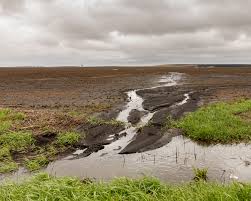
What is the process called that moves small pieces of Earth's surface to another location?
erosion
weathering
deposition
river flow

What is it called when Earth's surface is broken down into smaller pieces?
deposition
weathering
weather
erosion

How comfortable do you feel about your understanding of weathering and erosion?
I understand and can help others.
I understand but still need a little more time.
I am still a little confused on the differences between them.
I am struggling to understand and identify weathering and erosion.

