wayground logo

Free Printable Worksheets

Font size

S
M
L
XL
Worksheets

General Biology Final Exam Review

Total questions: 145

Worksheet time: 4hrs 32mins

Name
Class
Date
1.
In DNA, Adenine pairs with ___________. 
a)
Guanine
b)
Cytosine
c)
Thymine
d)
Uracil
2.
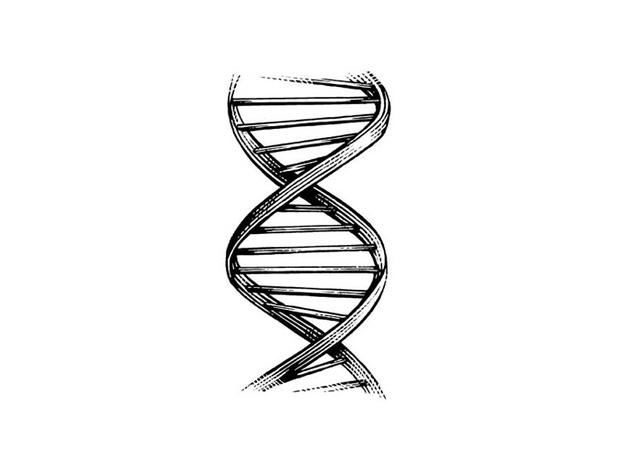
DNA has a _____________ structure. 
a)
double helix
b)
single strand
c)
ring 
d)
chain
3.
In RNA, Uracil pairs with ______. 
a)
cytosine
b)
adenine
c)
guanine
d)
thymine
4.

DNA holds the code for making

a)

lipids

b)

carbohydrates

c)

proteins

d)

sugars

5.

Choose the sequence of the mRNA strand that would be match up with to the following strand:

GTAGTCA

a)

UATUAGA

b)

ACGACTG

c)

CAUCAGU

d)

CATCAGT

6.
The main function of tRNA is to...
a)
carry a message that, when translated, forms proteins
b)
form a portion of ribosomes
c)
string together complementary RNA and DNA strands
d)
bring amino acids from the cytoplasm to the ribosomes
7.
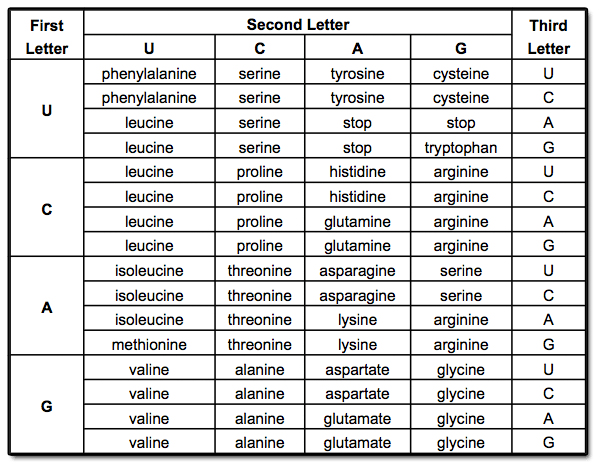
What amino acid is represented by the codon UUA?
a)
Phenylalanine
b)
Tyrosine
c)
Leucine
d)
Stop codon
8.

What is the correct amino acid sequence for the mRNA code AUGCCAGUAUGA

a)

Met-Pro-Ala-Val

b)

Met-Pro-Val

c)

Tyr-Gly-His

d)

Tyr-Gly-Arg-His

9.

Which is the mRNA molecule that would be created from this DNA template:

TGGCAAGTACGT

a)

ACCGTTCATGCA

b)

UGGCAAGUACGU

c)

UCCGUUCUUGCU

d)

ACCGUUCAUGCA

10.
Contains the bases adenine, uracil, cytosine and guanine
a)
DNA
b)
RNA
c)
Both
11.
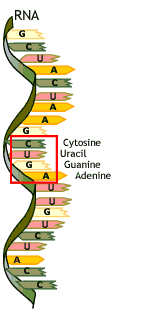
What part of protein synthesis does this diagram represent?
a)
mRNA
b)
tRNA
c)
rRNA
d)
RNA
12.
Guanine bonds with ______________.
a)
Adenine
b)
Guanine
c)
Cytosine
d)
Thymine
13.
Where do cells get the information to make proteins?
a)
RNA
b)
DNA
c)
phosphate group
14.
Any change in the sequence of DNA is...
a)
transgenic shift
b)
Single Genotype
c)
Monohybrid Trait
d)
Mutation
15.
Are all mutations bad?
a)
Yes
b)
No
c)
Maybe?
16.
A __________ is a branching diagram that shows evolutionary relationships.
a)
cladogram
b)
table
c)
derived character
d)
relationship tree
17.
_________ characters may or may not be similar between two organisms but they developed from a common ancestor.
a)
homologous
b)
analogous
c)
cladistic
d)
phylogenic
18.
__________ enable an organism to survive in its environment.
a)
adaptations
b)
natural selections
c)
divergence
d)
extinctions
19.

When organisms are better adapted to their environment they will survive and reproduce more successfully than organisms less adapted. This process is called what?

a)

Selective breeding

b)

Natural Selection

c)

Cloning

d)

Evolution of all species

20.
______________ is the process by which populations change in response to their environment.
a)
natural selection
b)
adaptation
c)
reproductive isolation
d)
divergence
21.

What do we call a change in a species over time?

a)

Adaptation

b)

Evolution

c)

Extinction

d)

Environmental influences

22.
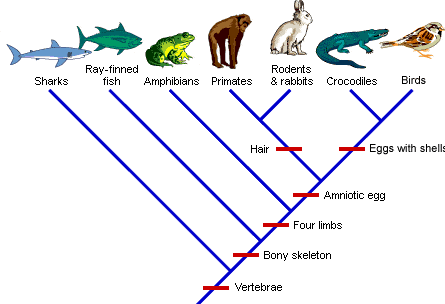
According to this cladogram, primates are most closely related to -
a)
Amphibians
b)
Rodents and rabbits
c)
Crocodiles
d)
Birds
23.
According to this cladogram, birds are LEAST related to -
a)
Amphibians
b)
Sharks
c)
Ray Finned Fish
d)
Crocodiles
24.
Which trait do only humans have, according to the cladogram?
a)
jaws
b)
mammary glands & hair
c)
terrestrial during all life stages
d)
opposable thumbs
25.
According to the cladogram, which organism is most distantly related to the human?
a)
crayfish
b)
rat
c)
perch
d)
frog
26.
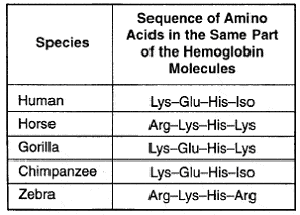
You look at two species and see very similar amino acid sequences. What does this likely tell you?
a)
These are the same animal.
b)
These animals have a common ancestor.
c)
These animals are not likely related.
d)
These animals are likely becoming one species.
27.
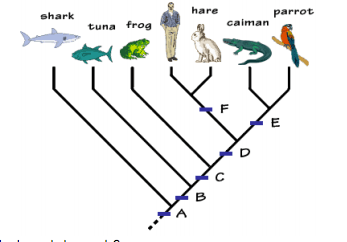
On the cladogram, which organism is the closest relative of the human?
a)
Frog
b)
Hare
c)
Caiman
d)
Parrot
28.
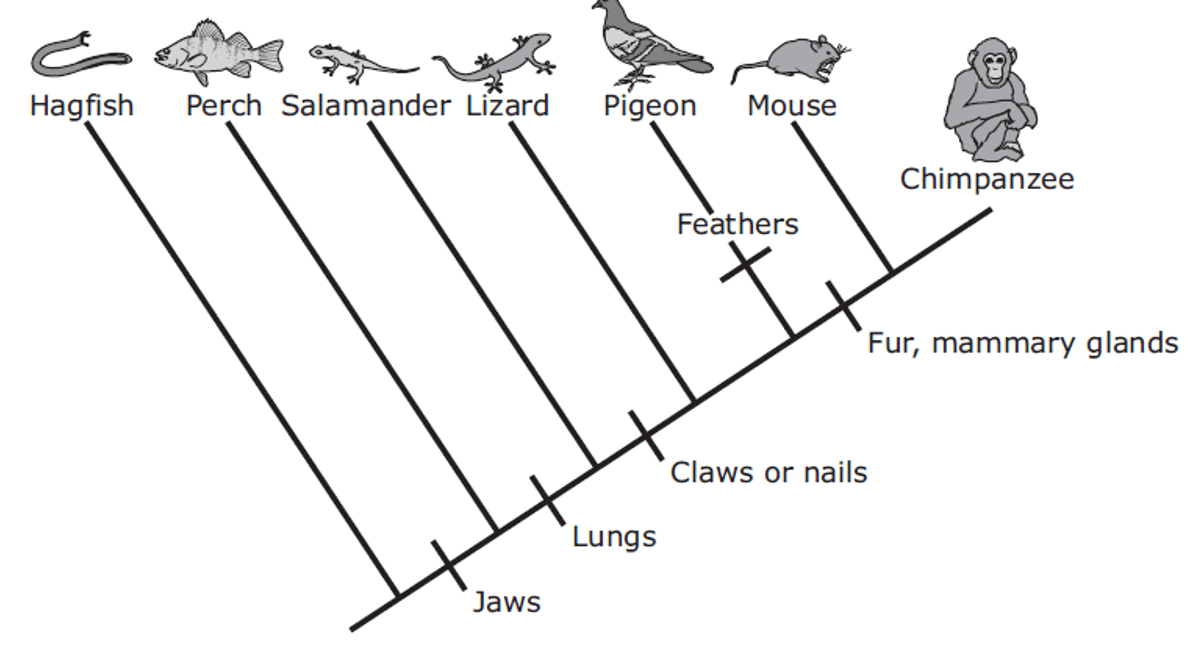
All the animals to the right of the hagfish would have the common characteristic of -
a)
Fur
b)
Claws or nails
c)
Lungs
d)
Jaws
29.
What is the name of bird Z?
a)
Certhidea
b)
Geospiza
c)
Camarhynchus
d)
Platyspiza
30.
What is the name for an organism that can produce its own food?
a)
heterotroph
b)
autotroph
c)
amoeba
d)
eukaryotic
31.
What is the name of an organism that cannot produce its own food and must get it from another source?
a)
prokaryotic
b)
eukaryotic
c)
autotroph
d)
heterotroph
32.
What are the products of photosynthesis?
a)
water and carbon dioxide
b)
oxygen and glucose
c)
oxygen and carbon dioxide
d)
oxygen and water
33.
What is the organelle that contains the chlorophyll used in photosynthesis ?
a)
mitochondria
b)
ribosome
c)
chloroplast
d)
nucleus
34.
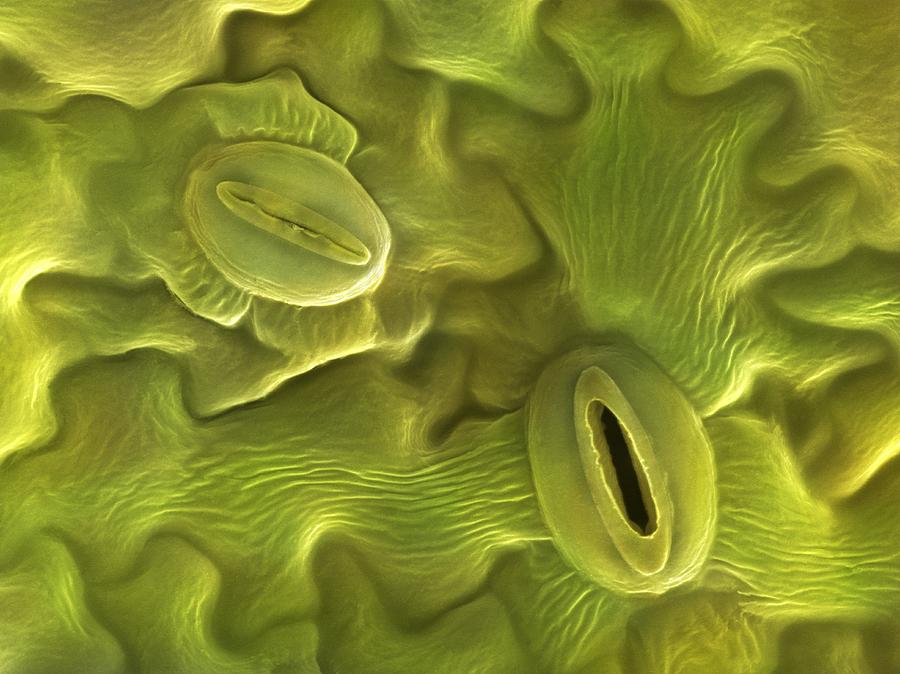
Opening that allows gas exchange
a)
Stomata
b)
Leaves
c)
Roots
d)
Vascular tissue
35.
From his work with mice and pneumonia-causing bacteria, Frederick Griffith discovered what?
a)
Replication
b)
Transcription
c)
Transformation
d)
Translation
36.
How did Rosalind Franklin's photo 51 affect the work of Watson and Crick?
a)
It was used to determine the physical structure of DNA
b)
It was used to identify the four bases that make up DNA
c)
It was used to determine the theory of independent assortment
d)
It was used to show DNA was the molecule of inheritance
37.
What was Watson and Crick's main scientific accomplishment?
a)
Building the first accurate model of DNA
b)
Isolating strains of pneumonia causing bacteria
c)
Determining base pairing rules
d)
Discovering the process of genetic transformation
38.
What does DNA stand for?
a)
Deoxyribonucleic acid
b)
Denitrogenous acid
c)
Deribonucleic acid
d)
Diribonucleic acid
39.
DNA is a polymer made of:
a)
Nucleotides
b)
Ribosomes
c)
Purines
d)
Pyrimidines
40.
Which organelle is DNA usually found in?
a)
cell membrane
b)
vacuole
c)
ribosome
d)
nucleus
41.
What will the matching sequence be on a strand that reads AAGCTAT?
a)
AACGATA
b)
TTCGTTA
c)
CCTGATA
d)
TTCGATA
42.
What are the three components of a nucleotide?
a)
sugar, hydrogen, nitrogen base
b)
sugar, oxygen, nitrogen base
c)
sugar, phosphate, nitrogen base
d)
sugar, phosphate, protein
43.
the process of making a copy of DNA
a)
transcription
b)
double helix
c)
DNA replication
d)
replication fork
44.

How many chromosomes are shown in a normal human karyotype?

a)

2

b)

23

c)

44

d)

46

45.

In humans, a male has

a)

one X chromosome only

b)

two X chromosomes

c)

one X chromosome and one Y chromosome

d)

two Y chromosomes

46.

Human females produce egg cells that have

a)

one X chromosome

b)

two X chromosomes

c)

one X or one Y chromosome

d)

one X and one Y chromosome

47.

The passing of traits from parent to child is known as _______________.

a)

heredity

b)

gene

c)

DNA

d)

RNA

48.

This trait is represented by a lower case letter and hidden whenever the dominant allele is present

a)

dominant allele

b)

codominance

c)

recessive allele

d)

Punnett Square

49.

This trait is represented by a capital letter and always shows up in an organism when the allele is present

a)

dominant allele

b)

codominance

c)

probability

d)

recessive allele

50.

Which of the following is homozygous recessive?

a)

RR

b)

Rr

c)

rR

d)

rr

51.

Which genotypes are heterozygous?

a)

EE

b)

tt

c)

Rr

d)

Both EE and tt

52.

Which genotypes are homozygous dominant?

a)

EE

b)

tt

c)

Rr

d)

Both EE and tt

53.

_____ is the genetic makeup of an organism.

a)

phenotype

b)

genotype

54.

A ____ is a region of DNA that controls a trait.

a)

gene

b)

phenotype

c)

chromatin

d)

genotype

55.

The ____ is the physical appearance of an organism.

a)

genotype

b)

phenotype

56.

The study of heredity is called

a)

Science

b)

DNA

c)

Dominant

d)

Genetics

57.
Who is the father of genetics? 
a)
Charles Darwin 
b)
Gregor Mendel
c)
Dimitri Mendeleev 
d)
Hans Krebs 
58.

The most specific classification, a group that mates to produce offspring

a)

Genus

b)

Fossils

c)

Species

d)

Speciation

59.

A body, organ, or bone that is still present but no longer useful to the organism is ______________________.

a)

Homologous Structure

b)

Vestigial Structure

60.
An organism's ability to survive and reproduce in its environment refers to its
a)
Fitness
b)
Variation
c)
Selection
d)
Mutation
61.
Mutations are important because they bring about
a)
death of the organism in which they develop
b)
genetic variation needed for a population to evolve
c)
benefits for the individual, not for the population
d)
Hardey-Weinberg equilibrium within a population
62.
The term for the formation of new and distinct species over the course of evolution is...
a)
speciation
b)
biological species concept
c)
reproductive barrier
d)
natural selection
63.
The flowers of pink tulips open in the morning, while the flowers of lavender tulips open in the early afternoon. The bees that pollinate these tulips cannot carry pollen back & forth between the two types of tulips because of their flowers being closed at different times of day. What type of reproductive barrier is this?
a)
behavioral isolation
b)
hybrid sterility 
c)
temporal isolation
d)
mechanical isolation 
64.
Some female peacocks prefer males with large, colorful tales while other female peacocks prefer males with no tail at all. Females are beginning to only mate with the type of males with the tail they prefer. What type of reproductive barrier is this?
a)
behavioral isolation
b)
hybrid sterility 
c)
temporal isolation
d)
mechanical isolation 
65.
The genitalia of the male damselfly varies in shape. Certain males can only hold onto & mate with females whose genitalia fit.  What type of reproductive barrier is this?
a)
behavioral isolation
b)
temporal isolation 
c)
gametic isolation
d)
mechanical isolation 
66.
A flash flood carried a raft of Amazon ants away from their original population. There is enough distance between the two groups, that they will never meet in nature again. What type of reproductive barrier is this?
a)
behavioral isolation
b)
temporal isolation 
c)
gametic isolation
d)
geographic isolation 
67.
What is a species? 
a)
A group of organisms that can mate with each other and produce fertile offspring. 
b)
A group of organisms that can mate and produce offspring even if those offspring are infertile.
c)
A group of organisms that genetically are very different from each other. 
d)
Indivual organisms that live in the same environment. 
68.

An organism's place in the biotic environment and its role in an ecosystem is

a)

Niche

b)

Epitope

c)

Habitat

d)

Habit

69.
Which of the following is an organism that eats only meat?
a)
herbivore
b)
carnivore
c)
omnivore
70.
Which of the following terms describes an area where an organism lives?
a)
community
b)
habitat
c)
area
71.
Which is represented by all of the bullfrogs living around a pond?
a)
community
b)
habitat
c)
population
72.
In which type of relationship do both species benefit?
a)
parasitism
b)
mutualism
c)
commensalism
73.
Barnacles grow on whales.  Whales give the barnacles a place to live but the barnacles do not help or harm the whale.  Which type of relationship is this?
a)
commensalism
b)
mutualism
c)
parasitiesm
74.
An organism that needs to eat other organisms to obtain energy is known as a:
a)
Autotroph
b)
Producer
c)
Consumer
d)
Mutualist
75.
Consumer that eats plants
a)
heterotroph
b)
herbivore
c)
producer
d)
community
76.
The rabbit in this food web would be considered a:
a)
Decomposer
b)
Producer
c)
Secondary Consumer
d)
Primary Consumer
77.
The amount of energy that usually transfers from one trophic level to the next...
a)
10%
b)
20%
c)
80%
d)
50%
78.
The nonliving aspects of an ecosystem.
a)
Abiotic factors
b)
Biotic factors
79.
The living portions of the ecosystem.
a)
Biotic factors
b)
Abiotic factors
80.
A collection of organisms that make up a community as well as all of the nonliving aspects of the environment.
a)
Population
b)
Community
c)
Habitat
d)
Ecosystem
81.
The process on the left is:
The process on the right is:
a)
Left: meiosis
Right: meiosis
b)
Left: meiosis
Right: cloning
c)
Left: mitosis
Right: meiosis
d)
Left: mitosis
Right: mitosis
82.

Before cells can divide, what must be copied?

a)

mitochondria

b)

cytoplasm

c)

DNA

d)

Cell Wall

83.

Which phase of Mitosis is shown here?

a)

Cytokinesis

b)

Interphase

c)

Anaphase

d)

Metaphase

84.
a)
Prophase
b)
Interphase
c)
Anaphase
d)
Telophase
85.
a)
Anaphase
b)
Cytokinesis
c)
Telophase
d)
Metaphase
86.

During which phase of mitosis do the chromosomes line up along the middle of the dividing cell?

a)

prophase

b)

anaphase

c)

metaphase

d)

interphase

87.

What is a characteristic of asexual reproduction?

a)

offspring that are identical to their parents

b)

undergo both meiosis and mitosis

c)

two-parent fertilization

d)

small number of offspring

88.

Which of the following represents the phases of mitosis in their proper sequence?

a)

prophase, metaphase, anaphase, telophase

b)

interphase, prophase, metaphase, anaphase, telophase

c)

interphase, prophase, metaphase, telophase

d)

prophase, anaphase, metaphase, telophase

89.

What is shown in Figure 11–4?

a)

independent assortment

b)

anaphase I of meiosis

c)

crossing-over

d)

replication

90.

Meiosis results in the formation of

a)

two genetically different cells.

b)

four genetically different cells.

c)

four genetically identical cells.

d)

two genetically identical cells.

91.

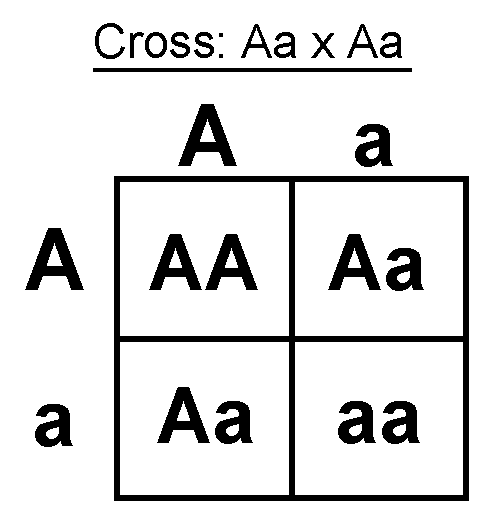
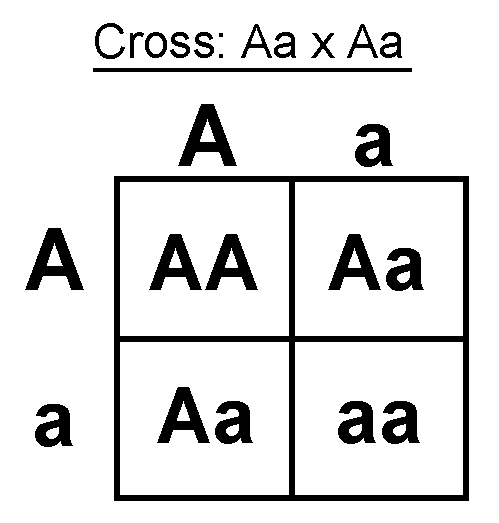
What allele combination should go in the missing box?

a)

AA

b)

Aa

c)

aa

d)

none of these

92.

What is the genotypic ratio of the offspring?

a)

3:1

b)

1:3

c)

1:2:1

d)

2:2

93.

What are the phenotype percentages of the offspring?

(A-Brown fur color; a-white fur color)

a)

50 % Brown fur and 50% White fur

b)

25 % Brown fur and 75% White fur

c)

75 % Brown fur and 25% White fur

d)

0% Brown fur and 100% White fur

94.
What is another name for natural selection?
a)
survival of the smartest
b)
survival of the fastest
c)
survival of the biggest
d)
survival of the fittest
95.
Which of the following is a factor in natural selection?
a)
Individuals of species compete with one another to survive.
b)
All species are genetically diverse.
c)
Individuals better able to adapt to changes leave more offspring.
d)
All are correct 
96.
Molecules diffusing with the concentration gradient through a protein channel is...
a)
Facilitated Diffusion
b)
Simple Diffusion
c)
Active Transport
d)
Osmosis
97.
What type of organic molecules are enzymes? 
a)
carbohydrates
b)
lipids 
c)
nucleic acids
d)
proteins
98.
A freshwater plant is placed in a container of saltwater. What will most likely happen to the cells of the plant?
a)
They will swell because water will move into them.
b)
They will swell because salt will move into them
c)
They will shrink because water will move out of them.
d)
They will shrink because salt will move out of them.
99.
This diagram shows a plant cell. Which structure is found in a plant cell but is absent in an animal cell? 
a)
1
b)
2
c)
3
d)
4
100.
What type of cell is shown?
a)
eukaryotic
b)
prokaryotic
c)
bacterial
d)
protist
101.
Proteins are assembled within this cell organelle.
a)
nucleus
b)
Golgi apparatus
c)
lysosome
d)
ribosome
102.
Cellular energy is produced in the membrane of this organelle.
a)
endoplasmic reticulum
b)
chloroplast
c)
mitochondria
d)
lysosome
103.
This organelle would NOT be found in animal cells.
a)
cell membrane
b)
nucleus
c)
lysosome
d)
chloroplast
104.
Which of these requires ATP?
a)
osmosis
b)
diffusion
c)
active transport
d)
stasis
105.
Which class of biomolecules include monosaccharides, disaccharides, and polysaccharides?
a)
carbohydrates
b)
lipids
c)
proteins
d)
nucleic acids
106.
Which class of biomolecules include fats, oils, and steroids?
a)
carbohydrates
b)
lipids
c)
proteins
d)
nucleic acids
107.
Which class of biomolecules is considered the main structural molecule?  This same class also makes up enzymes..
a)
carbohydrates
b)
lipids
c)
proteins
d)
nucleic acids
108.
Which class of biomolecules includes DNA and RNA?
a)
carbohydrates
b)
lipids
c)
proteins
d)
nucleic acids
109.
What type of cell is shown?
a)
Eukaryotic because it has a nucleus
b)
Eukaryotic because it lacks a nucleus
c)
Prokaryotic because it has a nucleus
d)
Prokaryotic because it lacks a nucleus
110.
Which of these is most likely an enzyme?  (Based on the suffix)
a)
Sucrose
b)
Galactose
c)
Fructose
d)
Amylase
111.
Which biomolecule's monomer (or building block) is glycerol and fatty acid?
a)
Lipids
b)
Proteins
c)
Carbohydrate
d)
Nucleic Acid
112.
What is a substance called if it speeds up a chemical reaction?
a)
reusable
b)
catalyst
c)
specific
d)
fragile
113.
Which biomolecule's monomer (or building block) are monosaccharides?
a)
Lipids
b)
Proteins
c)
Carbohydrate
d)
Nucleic Acid
114.
The phases of the cell cycle in correct order are _______________.
a)
Interphase, Prophase, Metaphase, Anaphase, Telophase, Cytokinesis
b)
Interphase, Prophase, Anaphase, Metaphase, Cytokinesis, Telophase
c)
Prophase, Metaphase, Anaphase, Telophase, Cytokinesis, Interphase
d)
Prophase, Metaphase, Telophase, Anaphase, Interphase, Cytokinesis
115.
Which biomolecule's monomer (or building block) is nucleotides?
a)
Lipids
b)
Proteins
c)
Carbohydrate
d)
Nucleic Acid
116.
Has membrane bound organelles
a)
Prokaryote
b)
Eukaryote
c)
both
117.
Which biomolecule is responsible for insulation and long-term energy storage?
a)
Protein
b)
Nucleic Acid
c)
Lipid
d)
09Carbohydrate
118.
How do enzymes work?
a)
Slow down chemical reactions
b)
Prevent chemical reactions from working
c)
increase the activation energy
d)
speed up chemical reactions
119.
Which process results in 4 haploid daughter cells?
a)
mitosis
b)
meiosis
c)
fertilization
d)
replication
120.
In meiosis four daughter cells are produced with ____ of the genetic material of the parent cell.  If the parent cell has 46 chromosomes the daughter cell will have ____.
a)
the same amount, 46
b)
double, 92
c)
half, 23
121.
What is structure D?
a)
Substrate
b)
Active site
c)
Enzyme
d)
Products
122.
_____ results in blending of traits.
a)
Codominance
b)
Incomplete Dominance
c)
Incomplete Recessive
d)
Polygenic Traits
123.
_____ is the expression of two traits.
a)
Codominance
b)
Incomplete Dominance
c)
Incomplete Recessive
d)
Polygenic
124.
Which process involves the copying of DNA strand to make new DNA?
a)
Transcription
b)
Translation
c)
Replication
d)
Protein Synthesis
125.
DNA polymerase 
a)
Is an enzyme 
b)
Adds new nucleotides to the template strand 
c)
Proofreads DNA strands to see that they are correct 
d)
All of these are functions of DNA polymerase
126.
What is the main function of a selectively permeable membrane?
a)
storage of water
b)
storage of chemicals
c)
breaks down molecules within the cell
d)
regulates what enters and leaves the cell
127.
Movement of materials down the concentration gradient through a protein channel is an example of 
a)
facilitated diffusion
b)
active transport
c)
respiration
d)
osmosis 
128.
Which list includes only structures that would be found in a prokaryotic cell? 
a)
Cell wall, plasma membrane, mitochondria
b)
Central vacuole, cell wall, lysosome
c)
Cell wall, plasma membrane, cytoplasm
d)
Plasma membrane, nucleus, mitochondria
129.
What are the three parts of a DNA nucleotide?
a)
Amine group, R group, & carboxyl group
b)
fatty acid, glycerol, & alcohol group
c)
phosphate group, deoxyribose sugar, & nitrogen base
d)
sterol ring, six carbon sugar, & alcohol group
130.
A strand of DNA with the sequence A-C-T-T-G serves as a template to form a strand of mRNA with the sequence U-G-A-A-C.  During which process would this happen?
a)
replication
b)
transcription
c)
translation
d)
meiosis
131.
Some peeled pieces of apple were placed in distilled water and some in very salty water. The cells in the apple pieces will…
a)
Lose water in both solutions
b)
Gain water in both solutions
c)
Lose water in the distilled water and gain water in the salty water
d)
Gain water in the distilled water and lose water in the salty water
132.
When is DNA replicated during the cell cycle?
a)
During the G1 phase
b)
During the G2 phase 
c)
During the S phase
d)
 During the M phase
133.
 Which sequence depicts the correct order of protein synthesis within a cell? 
a)
DNA → mRNA → amino acids → proteins
b)
DNA → amino acids → mRNA → proteins
c)
 DNA → mRNA → proteins → amino acids
d)
DNA → proteins → amino acids → mRNA
134.
Osmosis is the movement of _____ across a membrane.
a)
food
b)
energy
c)
oxygen
d)
water
135.
Which is true about active transport?
a)
It requires energy
b)
it does not require energy
c)
It moves substances down the concentration gradient
d)
it moves material from high to low concentration
136.
Passive transport requires no
a)
concentration gradients
b)
osmosis
c)
motion
d)
energy
137.
What is it called when a sperm and egg meet?
a)
meiosis
b)
fertilization
c)
cell division
d)
mitosis
138.
The cells produced via meiosis are called:
a)
sex cells (gametes)
b)
somatic cells
c)
body cells
d)
skin cells
139.
What is structure A?
a)
Substrate
b)
Active site
c)
Enzyme
d)
Products
140.
Why is sexual reproduction better than asexual reproduction?
a)
It gives an advantage to organisms to be different than the rest, if the environment changes.
b)
It is better for all organisms to be the same.
c)
It happens faster.
d)
It helps skin cells divide faster to heal wounds.
141.
If a cell has 12 chromosomes, how many will each daughter cell have after mitosis and cytokinesis?
a)
4
b)
6
c)
12
d)
24
142.
If a parent cell has 12 chromosomes, how many chromosomes will each gamete have after meiosis?
a)
4
b)
6
c)
12
d)
24
143.
If the Diploid number of Carrots is 18, the haploid number is
a)
18
b)
9
c)
27
d)
36
144.
Crossing over occurs in...
a)
Prophase 1
b)
Prophase 2
c)
Metaphase 1
d)
Metaphase 2
145.
Which examples are a sources of energy?
a)
Starch, cellulose, glycogen
b)
Valine, Histidine, Cysteine
c)
DNA, RNA
d)
Unsaturated and Saturated Fats