
 Worksheets
1st Semester Physical Science Examination, Dec 2024
Total questions: 100
Worksheet time: 2hrs 23mins
Which statement best describes particles in a solid?
Particles tightly packed together
No attractive forces between particles
Fills whatever container it is in
Molecules slide past each other; samples take shape of container
Which number is the outlier in the dataset? 23, 34, 27, 7, 30, 26, 28, 31, 34
7
23
31
34
Which sequence represents the steps of the scientific method?
Ask a question, research, state your hypothesis, experiment, analyze, draw a conclusion
State your hypothesis, ask a question, research, experiment, analyze, draw a conclusion
State your hypothesis, ask a question, research, draw a conclusion, experiment, analyze
Ask a question, state your hypothesis, research, experiment, analyze and draw a conclusion, share the results
The second shell from the center of an atom can hold how many electrons?
2
6
8
18
Which metal is liquid at room temperature?
Berrylium
Mercury
Iron
Calcium

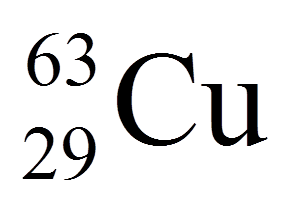
How many neutrons are in copper-63?
29
34
63
92

What is the chemical structure category of this image?
Element
Compound
Mixture of Elements
Mixture of Compounds
What is the ion with 17 protons and 18 electrons?
Cl+
Cl-
Ar+
Ar-
What is the primary purpose of conducting an experiment?
To gather data
To test a hypothesis
To analyze results
To formulate a question
Which state of matter does not have a definite shape or size?
Solid
Liquid
Gas
What is each vertical column on the periodic table called?
group
tower
period
crew
What happens to particle movement in a solid, liquid, or gas when heat is added?
Are not affected
Move faster
Move slower
None of the above
How are the isotopes of hydrogen related?
same mass, different atomic number
different mass, different atomic number
same mass, same atomic number
different mass, same atomic number
How would you categorize vegetable soup?
heterogeneous mixture
homogeneous mixture
Pure Substance
Compound
Which is a homogeneous mixture?
sand and water
saltwater
vegetable soup
oil and water
What is the basic unit of matter?
a mixture
a substance
an atom
a compound

Which elements are on the right side of the 'stair-step' line in the periodic table?
nonmetals
metals
gases
Halogens
An atom has 26 protons, 26 electrons, and 30 neutrons. What is its mass number?
56
52
30
26
Which variable is intentionally changed or controlled in an experiment?
dependent variable
independent variable
qualitative data
quantitative data
What are the horizontal rows on the periodic table called?
groups
families
periods
atomic numbers
What determines the identity of an element?
electrons.
protons.
neutrons.
valence.
How many electrons do atoms need in their outer shell for stability?
1
2
6
8

What type of compounds are formed from nonmetals?
ionic
covalent
metallic
chemical
What is the charge of an atom when it gains electrons?
Positive
Negative
Neutral
How many atoms are in C6H12O6?
3
6
12
24

Which element is depicted by the electron dot structure shown?
Argon
Chlorine
Sulfur
Nitrogen
How many electrons are in a neutral atom with 8 protons?
7
8
9
10
Which pair of elements is most likely to exhibit metallic bonding?
Na and Cl
O and S
Cu and Ag
H and He
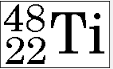
How many protons are in the titanium isotope?
48
22
26
70
How do chemical bonds form between atoms?
combined nuclei
give up neutrons
gain protons
share or transfer electrons
Identify the small positively charged particles in the nucleus of an atom.
neutron
ion
proton
electron
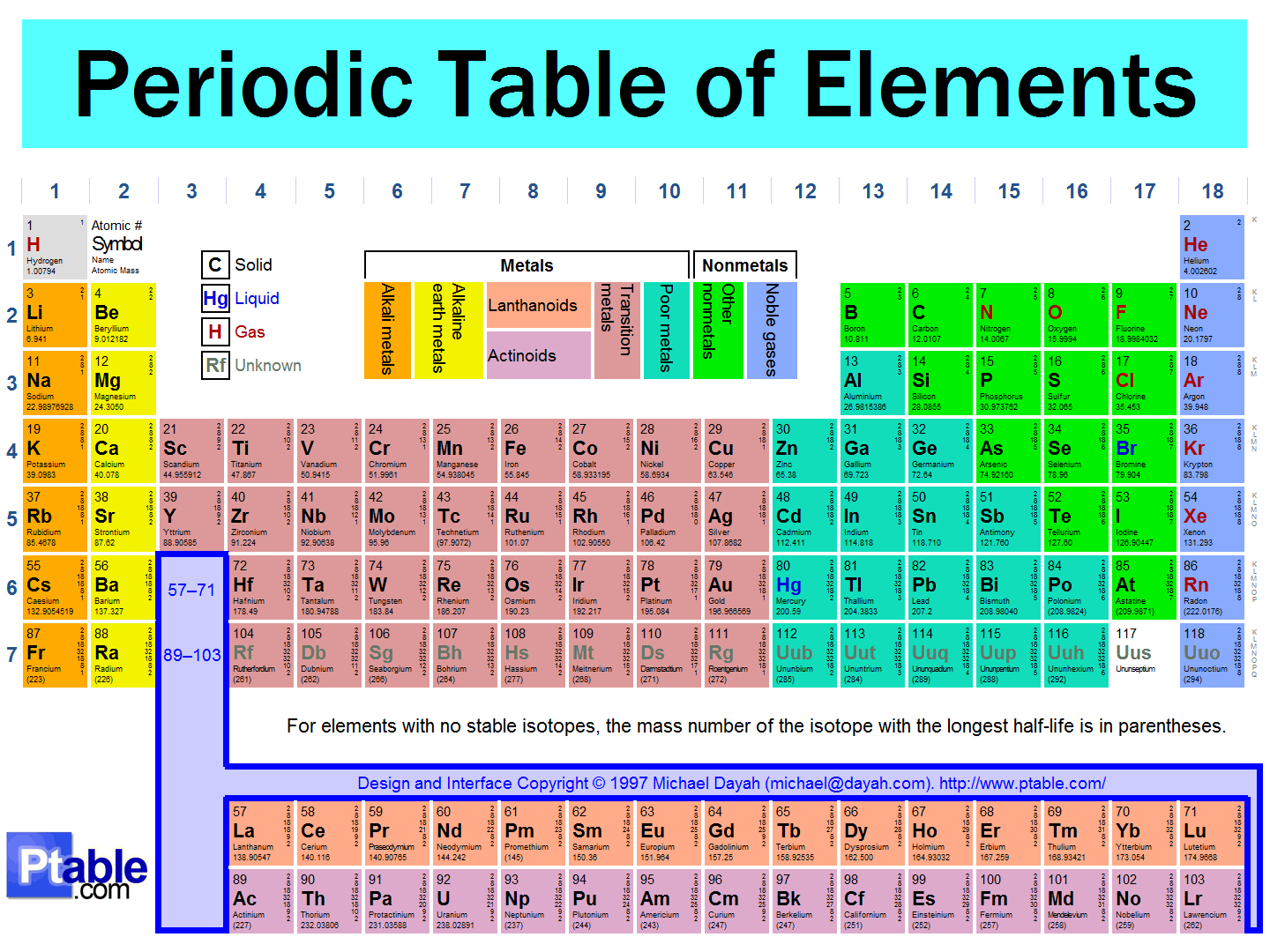
Which elements on the "stair-step" line of the periodic table are called "semiconductors"?
Metals
Nonmetals
Metalloids
Groups
What is the small number after an element symbol called, like in H2?
Coefficient
Subscript
Atom
Equation
What is the common name of H2O?
Hydrogen oxide
Water
Oxygen hydride
Hydroxide
What is the atomic number of an element with 6 protons?
6
12
18
24

Determine the number of protons, neutrons, and electrons in the Al3+ ion.
proton = 13 ; neutron = 14 ; electron = 10
proton = 13 ; neutron = 13 ; electron = 10
proton = 13 ; neutron = 14 ; electron = 13
proton = 13 ; neutron = 14 ; electron = 11
Which unit is biggest?
meter
millilter
centimeter
kilometer

What happens to an atom when it becomes an ion?
It gains or loses electrons.
It gains or loses neutrons.
It gains or loses protons.
It remains electrically neutral.
What part of the experiment contains the independent variable?
control group
experimental group
hypothesis
dependent variable
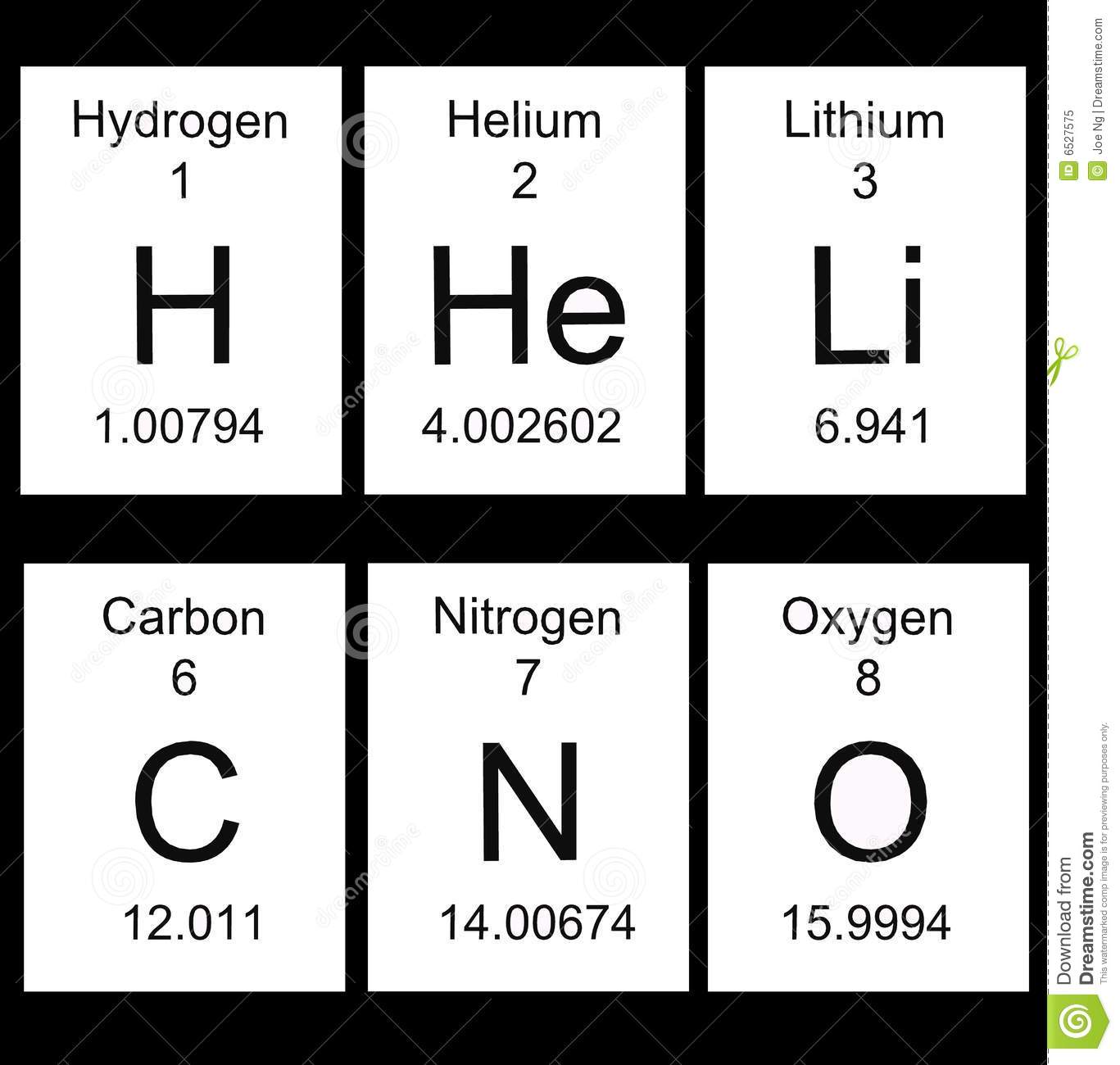
What does the number at the bottom of each square in the periodic table represent?
atomic number
atomic mass
chemical symbol
element name

Which is NOT a property of a solid?
They do not flow.
Definite volume.
No definite shape.
They are incompressible.
What is a characteristic of a well-formulated scientific question?
The question can be answered with a simple observation.
The question can be answered by conducting a scientific investigation.
The question can be answered by consulting a textbook.
What state of matter is air?
Solid
Liquid
Gas
Plasma
An ice cube turning to water is an example of what phase change?
Condensation
Melting
Sublimation
Vaporization

This group of elements does not react with other elements because they have a full valence shell
Alkali Metals
Transition Metals
Halogens
Noble Gas
If I add heat to a solid, how will the motion of the particles be affected?
They will move slower
They will stop moving
They will move faster
They will move to a different container
What is the name of the elements that are unreactive and have a full octet?
Halogens
Noble Gases
Alkali Metals
Transition Metals
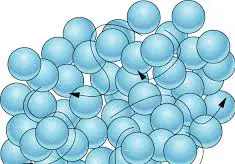
Which of the following statements is true regarding the particle structure of liquids? Particles of a liquid are:
very close together, so the liquid cannot easily change its shape.
fast-moving, so they fill the volume of their container.
relatively close together, so they cannot be easily compressed.
very far apart, so they have plenty of room to move around.
What is an atom or bonded group of atoms that has a positive or negative charge?
ion
atom
metal
nonmetal
Which element has the largest electronegativity?
barium
oxygen
iron
lithium

What group and period does this element belong in? *
period 1 and group 3
period 3 and group 1
period 2 and group 3
period 3 and group 2
The _________ tells us how many valence electrons an element has.
Group
Period
Atomic Number
Element
The _______ tells us how many energy shells an element has.
group
period
atomic number
element symbol

How many energy shells does Fe - Iron have?
26
2
4
55
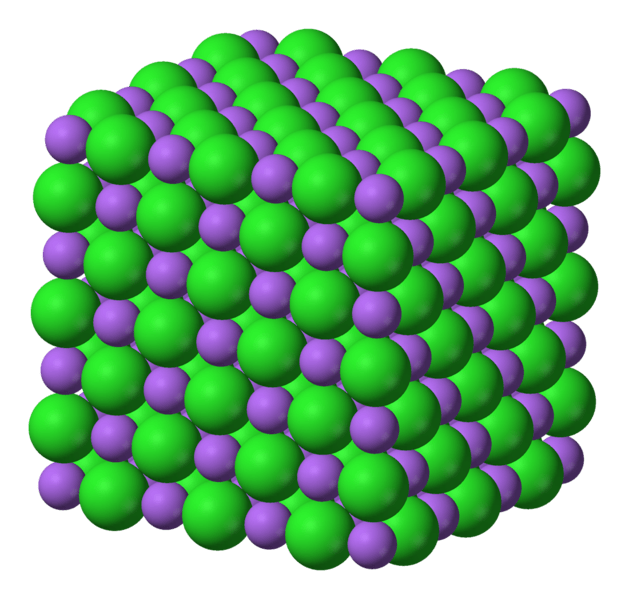
Which state of matter does this picture show?
Solid
Liquid
Gas


How many ELEMENTS are in C6H12O6?
1
12
3
6
A SUBSCRIPT IS...
Number to the left of the element symbol
Number to the right of the element symbol
the scientific name for a group of atoms
A substance made of only one kind of atom


How many ATOMS are there TOTAL in:
H2SO4
6
5
7
3
How many Nitrogen atoms are in the in H2C3O4N5?
2
3
14
5

Halogens have _________ electrons in their outermost shell.
2
7
8
18
Transition metals have a wide range of properties and are good conductors. Where are they located?
Group 3-12
Group 1-18
Group 3-18
Group 6-9
The vertical columns of the periodic table are called...
patterns
periods

A ____________is the force that holds atoms together in a compound.

An element obtains the properties of brittle, and doesn’t have strong shine (dull). The element has similar properties to Iodine. The element has a period of number 3.
Fluorine
Astatine
Chlorine
Radon


Based on the photo, what is the volume of the liquid?
35 mL
24 mL
25 mL
30 mL
If an element symbol has no subscript next to it, then this indicates that there is only ________________ atom of this element in the molecule.
Zero
Two
One
Three
What provides the specific elements and their quantities in a chemical substance?
Chemical formula
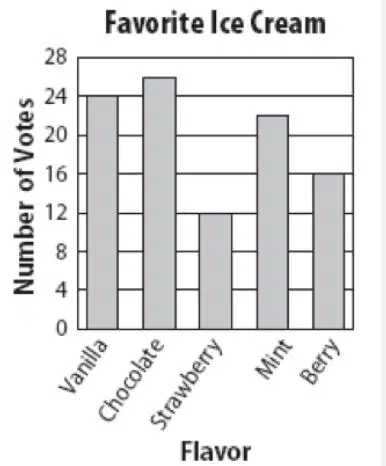
How many total people took part in the survey?
50
150
100
200
Which number is the least in value
5.0 x 10⁻⁹
5.0 x 10⁻⁴
5.0 x 10⁶
5.0 x 10⁸

240 cm = ___________ m
2400 m
24 m
2.4 m
0.24 m
SI standard for length
miles
kilometers
meters
feet
The official SI temperature scale is called the ____________
Fahrenheit scale
Celsius scale
Kelvin scale
Decimal scale

Atoms gain lose, gain, or ______electrons to get a stable outer energy level.
What are valence electrons?
The total number of electrons in an atom
The number of electrons in the outermost shell
The number of electrons in the second shell
The number of protons in the outermost shell

