Wayground logo

Free Printable Worksheets

Font size

S
M
L
XL
Worksheets

AP Biology Semester 1 Final: Version B

Total questions: 100

Worksheet time: 1hrs 21mins

Name
Class
Date
1.

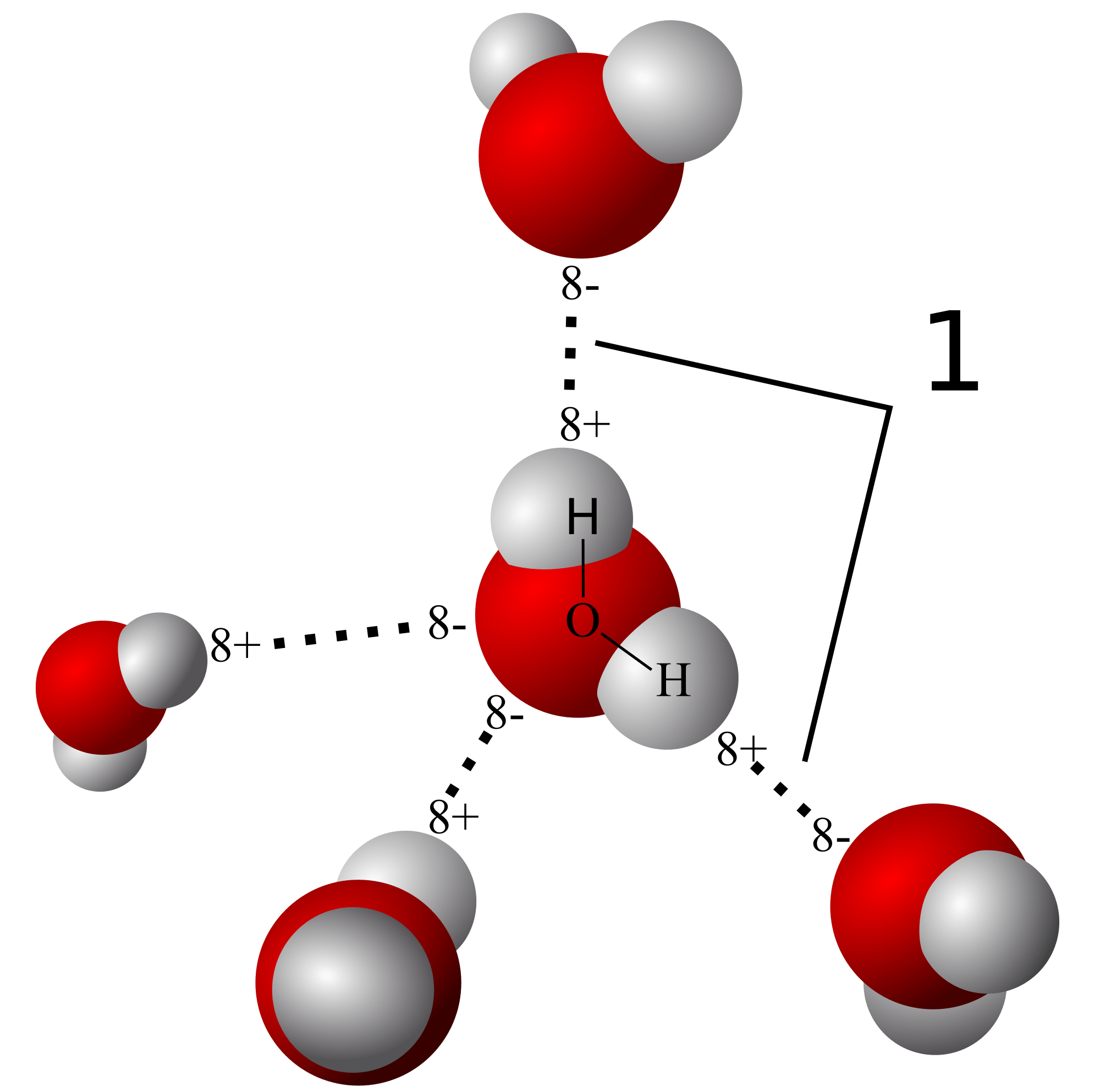
Matter

a)

has mass.

b)

All of the choices are correct.

c)

occupies space.

d)

is what life is composed of

e)

is composed of elements.

2.

Which of the following elements is Not one of the six most common in living organisms?

a)

carbon

b)

oxygen

c)

iron

d)

nitrogen

e)

hydrogen

3.

The characteristic way in which atoms of an element react is most related to the

a)

number of electrons in the outermost shell

b)

number of electrons in the innermost shell

c)

number of neutrons in the outermost shell

d)

number of neutrons in the nucleus

e)

size of the nucleus

4.

An atom, such as calcium, which has two electrons in the outer shell, would most likely

a)

share to acquire a complete outer shell.

b)

lose these two electrons and become a negatively charged ion.

c)

lose these two electrons and become a positively charged ion.

d)

bind with carbon by way of hydrogen bonds.

e)

bind with another calcium to satisfy its energy needs.

5.
What makes a molecule polar?
a)
Equal sharing of valence electrons
b)
Unequal sharing of valence electrons
c)
Stealing of electrons
d)
Temporary charges that come and go
6.
Covalently bonded molecules are made of atoms that
a)
share electorns
b)
shoot their electrons out into space
c)
move their electrons to the nucleus of the atom
d)
give electrons to and accept electrons from each other
7.
Because water has a positively charged end and a negatively charged end, it can be described as
a)
amphipathic
b)
hydrophobic
c)
polar
d)
nonpolar
8.
Which of the following is not an element found in large abundance in organisms?
a)
Calcium
b)
Carbon
c)
Hydrogen
d)
Nitrogen
9.

Attractions between water molecules are called

a)

Covalent bonds

b)

Ionic bonds

c)

Polar bonds

d)

Hydrogen bonds

10.
Organic chemistry is a science based on the study of
a)
functional groups.
b)
vital forces interacting with matter.
c)
carbon compounds.
d)
inorganic compounds.
11.

The bond between NaCl is an example of what kind of Bond

a)

Ionic

b)

Covalent

c)

Both

d)

Neither

12.
Some insects can stand on the surface of calm water. Their feet push the surface of the water down slightly, but they do not break the surface. Why?
a)
The insects are light enough so they do not break the hydrogen bonds holding the water molecules together
b)
The insects actually use their wings to hover slightly above the water’s surface and they only skim it with their feet.
c)
The insect’s feet are non-polar, so they are repelled by the polar water molecules and are pushed away from the water’s surface.
d)
The insects are small enough to see the individual water molecules, so they are able to step carefully from one molecule to the next
13.
Why does ice float?
a)
As water freezes, it expands and its density decreases.
b)
As water freezes, it takes up more hydrogen from the atmosphere, causing it to have a greater buoyancy.
c)
As water freezes, air becomes trapped between the hydrogen bonds of water molecules.
d)
As water freezes, it takes up more oxygen from the atmosphere, causing it to have a greater buoyancy.
14.

Hydrophillic

a)

polar or ionic that loves water

b)

nonpolar that hates water

c)

nonpolar that loves water

d)

polar or ionic that hates water

15.

Hydrophobic

a)

nonpolar that hates water

b)

polar that loves water

c)

ionic that loves water

d)

ionic that hates water

16.

Cohesion

a)

property of water that explains why water is attracted to other polar molecules

b)

property of water that explains why water is attracted to other water molecules

c)

property of water that explains why water defies gravity and travels up surfaces such as paper

17.

Surface tension

a)

strong intermolecular force due to hydrogen bonds between the water molecules

b)

property of water that allows water to become attracted to other polar or ionic molecules

c)

property of water that allows water to become attracted to other water molecules

18.
What is the molecule illustrated in the figure below?
a)
a trans polyunsaturated triacylglyceride
b)
a steroid similar to cholesterol
c)
a saturated fatty acid
d)
an unsaturated fatty acid
19.
Which of the 4 major macromolecules provides a quick burst of energy?
a)
Carbohydrates
b)
Lipids
c)
Proteins
d)
Nucleic Acids
20.
What macromolecule makes up the cell membrane's lining?
a)
Saturated Fatty acid chains
b)
Phospholipids
c)
Polypeptide chains
d)
Cellulose polysaccharide Chains
21.
DNA & RNA are examples of this type of macromolecule.
a)
Carbohydrates
b)
Lipids
c)
Proteins
d)
Nucleic Acids
22.

Which protein structure involves the peptide bonds between amino acids?

a)

primary

b)

secondary

c)

tertiary

d)

quaternary

23.

Which of the following solutions has the greatest concentration of hydrogen ions [H+]?

a)

gastric juice at pH 2

b)

vinegar at pH 3

c)

tomato juice at pH 4

24.
Enyzmes are a very important type of protein used to
a)
Build bones in skeleton
b)
Send hormonal signals throughout body
c)
Speed up chemical reactions
d)
Photosynthesize glucose in plants
25.
What is a protein: 
a)
A polymer composed of many sugars.
b)
A polymer composed of many amino acids. 
c)
A polymer composed of fatty acids. 
d)
A polymer composed of nucleotides. 
26.
When a protein unfolds, it is
a)
Denatured
b)
Building
c)
Adding amino acids
d)
Making food
27.
Each amino acid is different from the other due to....
a)
The R group
b)
The amino group
c)
The carboxyl group
d)
The central carbon
28.
In the phospholipid, the polar head is considered what type of structure?
a)
hydrophobic
b)
insoluble
c)
hydrophilic
29.

Why is it that some body cells respond differently to the same peptide hormones?

a)

Different target cells have different genes.

b)

Each cell knows how it fits into the body’s master plan.

c)

The target cell’s response is determined by the product of a signal transduction pathway.

d)

The hormone is chemically altered in different ways as it travels through the circulatory system.

30.
A protein that is destined for the membrane would be made 
a)
on a ribosome that is in the cytoplasm
b)
within a lysosome
c)
on a ribosome attached to the rough endoplasmic reticulum 
d)
within the Golgi body
31.
Which of the following cells would have the highest surface area to volume ratio?
a)
1
b)
2
c)
3
d)
they are all the same
32.

Certain diseases are found to be caused by a malfunction in the mitochondria. What is a likely result of these diseases?

a)

those cells with affected mitochondria struggle to produce the normal amounts of ATP

b)

those cells with affected mitochondria accumulated waste molecules because they caused breakdown material

c)

those cells with affected mitochondria cannot produce the normal levels of proteins

d)

the cells can make proteins but they are stuck within the cell and can't be secreted outside.

33.

Fluoresently labeled amino acids are used in an experiment in pancreas cells which secrete protein hormones. Which of the following correctly places the organelles using the amino acids in the right order?

a)

mitochondria , Rough ER, ribosomes, nucleus, smooth ER

b)

ribosomes, Rough ER, vesicle, Golgi body, outside the cell

c)

smooth ER , ribosomes, mitochondria, outside the cell

d)

ribosomes, smooth ER, lysosomes, outside the cell
34.
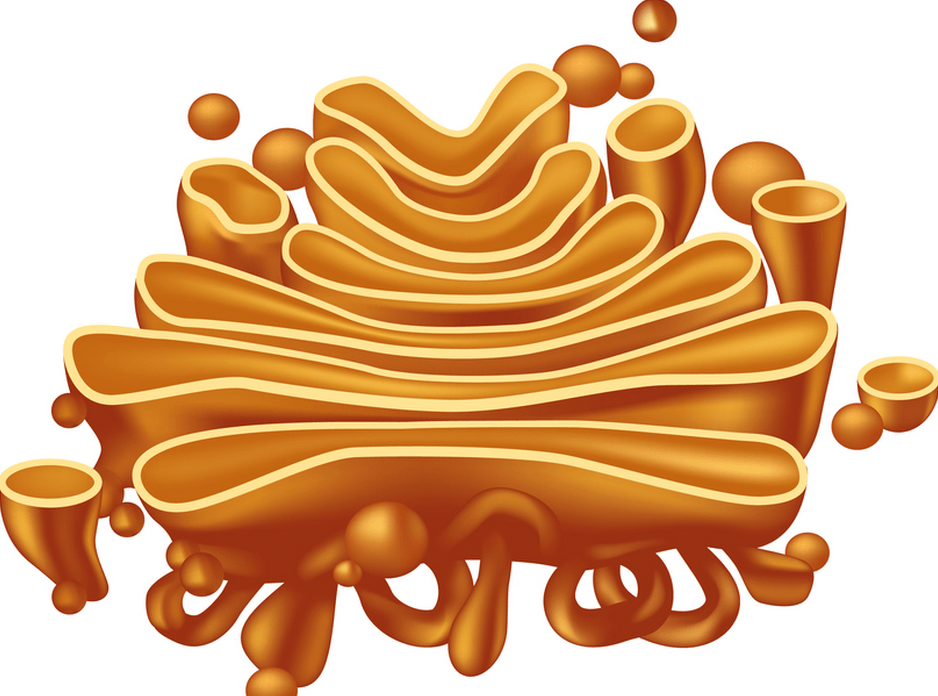
Endoplasmic Reticulum:/ER
a)
The smallest organelle with a huge job / Makes proteins, which are the building blocks of the body.
b)
A folded membrane that moves materials around inside cells / Also acts as the site of manufacturing materials needed by the cell.
c)
A small sack that stores water and food until the cell needs it /  Stores waste temporarily until the cell  gets rid of it.
d)
The protective outer layer that controls what enters and leaves the cell.
35.
Eukaryotic Cell
a)
a cell containing a nucleus and other membrane bound organelles
b)
a cell that lacks a nucleus and other membrane bound organelles; includes achaea and bacteria
c)
the idea that the mitochonria and chloroplasts were once free living and were engulfed by other prokaryotic cells.
d)
a part of the cell containing DNA and RNA and responsible for growth and reproduction
36.
What is the function of the Golgi Apparatus?
a)
To produce ribosomes
b)
To transfer materials
c)
To protect the cell
d)
To hold DNA
37.
What is in all cells and provides protein synthesis?
a)
Cell Membrane
b)
Ribosome
c)
Lysosome
d)
Chlroplast
38.
Two subunits made of RNA and protein.  Found in both prokaryotic and eukaryotic cells.
a)
chromatin
b)
ribosomes
c)
centrioles
d)
nucleolus
39.
I am a protein packaging and shipping machine! Who am I?
a)
vacuole
b)
ribosome
c)
mitochondrion
d)
golgi apparatus
40.
What is found in both plant and animal cells but is much larger in plant cells?
a)
Nucleus
b)
Mitochondria
c)
Chloroplast
d)
Vacuole
41.
A biologist ground up some plant leaf cells and then centrifuged the mixture to fractionate the organelles. Organelles in one of the heavier fractions could produce ATP in the light, whereas organelles in the lighter fraction could produce ATP in the dark. The heavier and lighter fractions are most likely to contain, respectively,
a)

peroxisomes and chloroplasts.

b)

chloroplasts and peroxisomes.

c)

chloroplasts and mitochondria.

42.

Which of the following processes is an "umbrella" term for the others?

a)

Osmosis.

b)

Facilitated diffusion.

c)

Passive transport.

d)

Transport of an ion down its electrochemical gradient.

43.
_______ regulates what enters and leaves a cell.  
a)
Cell Membrane
b)
Nucleus
c)
Mitochondria
d)
Cytoplasm
44.

White blood cells engulf bacteria using _______________.

a)

phagocytosis

b)

pinocytosis

c)

osmosis

d)

receptor-mediated exocytosis

45.
Which transport does not require energy?
a)
Passive
b)
Active 
46.
The picture is an example of...
a)
active tranport
b)
passive transport
c)
diffusion
d)
osmosis
47.
When cells are placed in a __________ solution they begin to swell.
a)
Hypertonic
b)
Isotonic
c)
Hypotonic
d)
Equalized
48.
Which form of active transport is being shown? (Inside of  the cell is tan colored) 
a)
Facilitated Diffusion
b)
Exocytosis
c)
Endocytosis
d)
Receptor-mediated endocytosis
49.
What is the primary function of the light reactions of photosynthesis?
a)
To produce glucose
b)
To produce NADPH and ATP
c)
To use ATP
d)
To produce RuBP
50.
What supplies the electrons that are lost in PS I?
a)
the electrons from PS II
b)
water
c)
glucose
d)
oxygen
51.
Where is glucose synthesized
a)
Photosystem II
b)
Photosystem I
c)
Calvin Cycle
d)
Glycolysis
52.
Green plants reflect ________ light.
a)
Red
b)
Green
c)
All
d)
Red and Violet
53.
Which of the following is the correct equation for PHOTOSYNTHESIS?
a)
CO2 + light + H2O --> O2 + glucose
b)
CO2 + glucose + H2O --> O2 + light
c)
O2 + light + H2O --> CO2 + glucose
d)
CO2 + O2 + H2O --> Light+ glucose
54.

ADP + P

a)

ATP

b)

NADPH

c)

NADP+

d)

ADP

55.

Where on an enzyme does the substrate bind?

a)

active site

b)

allosteric site

c)

C-terminus

d)

N-terminus

56.

Which of the following will increase the rate of the reaction?

a)

increase product

b)

increase substrate

c)

increase inhibitor

d)

increase enzyme

57.

Describe why an increase in temperature increases the rate of the reaction.

a)

increase in temperature increases the speed/kinetic energy of particles

b)

increase in temperature activates more enzyme to increase the rate

c)

increase in temperature results in increase in substrate available

d)

increase in temperature allows for a tighter fit in the active site

58.

In order to maintain order and power cellular processes,

a)

energy input must exceed energy loss

b)

energy input equals energy loss

c)

energy loss must exceed energy input

d)

energy loss equals energy input

59.
Glucose is broken down into pyruvate in a process known as 
a)
glycolysis
b)
electron transport
c)
the Krebs cycle
d)
phosphorylation
60.

A weightlifter is using heavy weights in short bursts for a competition. Because his muscle cells are not able to take in enough oxygen to make very much ATP the weightlifter begins to get fatigue in his muscles. Which of the following processes is most likely going on in the muscles of the weightlifter as he competes in his event?

a)

As the cells run out of oxygen they switch to anaerobic respiration (fermentation), which allows the cell to make small amounts of ATP in the absence of oxygen.

b)

As the cells run out of oxygen, they die off gradually and the weightlifter's muscles have fewer contracting muscle cells.

c)

The cells will never run out of oxygen if the weightlifter is breathing.

d)

As the cells run out of oxygen, they will continue to make the same amount of ATP, since oxygen is not required to make ATP.

61.

Anaerobic respiration yields about ______ ATP per glucose whereas aerobic respiration yields about _______ ATP per glucose.

a)

38, 2

b)

2, 38

c)

2, 18

d)

18, 2

62.
How is cellular respiration related to photosynthesis?
a)
Both require oxygen to start
b)
respiration is the opposite of photosynthesis
c)
Both start with glycolysis
d)
Both end with 38 ATP for cells
63.

Which of the following processes creates the most ATP during aerobic cellular respiration?

a)

glycolysis

b)

fermentation

c)

electron transport chain

d)

Citric acid cycle

64.
The second  law of thermodynamics states that entropy of a system  tends to ______________. 
a)
increase
b)
decrease
c)
stay constant
d)
fluctuate wildly
65.
The first law of thermodynamics states that energy is
a)
created
b)
destroyed
c)
conserved
d)
created and destroyed
66.

Photosynthesis goal is to

a)

convert light energy into glucose energy

b)

use light energy to make oxygen gas

c)

convert sugar energy into ATP

d)

convert sugar energy into oxygen gas

67.

Rubisco is important in which step of photosynthesis

a)

energizing the electrons in chlorophyll

b)

carbon fixation when CO2 is connected to RUBP during calvin cycle

c)

regeneration phase as RUBP is made during calvin cycle

d)

reduction of the carbon chain during the calvin cycle

68.

What happens to the oxygen levels if a plant were left in the dark over night?

a)

go up due to photosynthesis

b)

go down due to cell respiration

c)

stay the same since stomata are closed

69.

Which plant would have the most oxygen produced in 1 hour?

a)

plant given red light only

b)

plant given blue light only

c)

plant given white light

d)

plant given green light only

70.

An example of DIRECT cell communication is:

a)

White blood cells bumping into each other sharing antigen info

b)

Neurons communicating across a synapse

c)

Hormones traveling through the blood stream to target tissues

71.

An example of LOCAL cell communication is:

a)

White blood cells bumping into each other sharing antigen info

b)

Neurons communicating across a synapse

c)

Hormones traveling through the blood stream to target tissues

72.
A signal molecule that binds to a plasma-membrane protein is a
a)
ligand
b)
second messenger
c)
protein kinase
d)
receptor protein
73.
What determines whether a cell is a target cell for a particular signal molecule?
a)
phosphorylation cascade
b)
cAMP
c)
signal receptors
d)
phosphatase
74.

A cell converting a chemical signal into a cellular response is known as __.

a)

energetics

b)

transduction

c)

ligand response

d)

transformation

75.

After a ligand binds, the intracellular domain of a receptor protein changes _____, initiating transduction of the signal.

a)

color

b)

size

c)

shape

76.

Which of the following is a chemical message that usually travels through the bloodstream to target cells?

a)

hormone

b)

local regulator

c)

endocrine cell

d)

plasmodesmata

77.

Signal amplification is most often achieved by

a)

an phosphorylation cascade

b)

binding of multiple signals

c)

branching pathways

d)

action of adenylyl cyclase

78.

Testosterone does not affect all cells of the body because __________.

a)

testosterone cannot cross the plasma membrane

b)

not all cells have cytoplasmic receptors for testosterone

c)

not all cells in the body have membrane receptors for testosterone

d)

it is a local regulator

e)

it affects only cells that have ion-channel receptors

79.

The endocrine system incorporates feedback mechanisms that maintain homeostasis. Which of the following demonstrates negative feedback by the endocrine system?

a)

During labor, the fetus exerts pressure on the uterine wall, inducing the production of oxytocin, which stimulates uterine wall contraction. The contractions cause the fetus to further push on the wall, increasing the production of oxytocin

b)

After a meal, blood glucose levels become elevated, stimulating beta cells of the pancreas to release insulin into the blood. Excess glucose is then converted to glycogen in the liver, reducing blood glucose levels.

c)

At high elevation, atmospheric oxygen is more scarce. In response to signals that oxygen is low, the brain decreases an individual’s rate of respiration to compensate for the difference.

d)

A transcription factor binds to the regulatory region of a gene, blocking the binding of another transcription factor required for expression.

80.

One cellular response to a signal is apoptosis, otherwise known as programmed cell ____.

a)

division

b)

death

c)

growth

d)

reproduction

81.
As you get dehydrated, your blood becomes thicker and harder to pump. Your kidneys will respond by stopping urine production, sending the water from urine into your bloodstream to thin your blood back to normal level.
a)
Positive Feedback Response
b)
Negative Feedback Loop 
82.

If the calcium in your blood decreases below homeostasis levels, a gland in the brain will sense the decrease and send a chemical message to your bones. Your bones will release calcium into the blood, bringing blood calcium levels back up. This is an example of what type of feedback?

a)

Positive Feedback Response

b)

Negative Feedback Loop

83.
Structure (b) is a ____.
a)
chromosome
b)
chromatid
c)
centromere
84.
DNA is replicated during ______ of the cell cycle.
a)
G1
b)
S
c)
G2
d)
G0
85.
Why do cells go through cell division
a)
Growth
b)
Reproduction
c)
Repair
d)
All of the above
86.
The phase of mitosis in which the sister chromatids separate from each other
a)
prophase
b)
metaphase
c)
anaphase
d)
telophase
87.
Which of the following shows the correct sequence of the cell cycle?
a)
Mitosis-> G1->S->G2->cytokinesis
b)
S->G1-> G2-> mitosis-> cytokinesis
c)
cytokinesis->mitosis->G1->S->G2
d)
 G1->S->G2->mitosis->cytokinesis
88.
In which phase of mitosis do the sister chromatids line up on the equator of the cell?
a)
Prophase
b)
Metaphase
c)
Anaphase
d)
Telophase
89.
In which phase of mitosis does the nucleus disappear, centrioles move to the poles, and chromosomes condense into sister chromatids?
a)
Prophase
b)
Metaphase
c)
Anaphase
d)
Telophase
90.
What phase does a cell stay in the longest?
a)
interphase
b)
cell division
c)
cytokinesis
d)
mitosis
91.
A pair of identical chromosomes shown in a karyotype, one inherited from mom, and one inherited from dad are called
a)
sister chromotids
b)
centromeres
c)
homologous chromosomes
d)
autosomes
92.
What is the sex of this individual?
a)
female
b)
male
93.

Maintain stable internal environment

a)

receptor

b)

type 2 diabetes

c)

homeostasis

d)

insulin

94.

Receives the message and coordinates a response

a)

control center

b)

effector

c)

glucagon

d)

homeostasis

95.

Increases or speeds up original change

a)

negative feedback

b)

positive feedback

c)

endotherm

d)

ectotherm

96.

Depend on external sources of heat

a)

endotherm

b)

glycogen

c)

ectotherm

d)

responce

97.

Use internally generated heat

a)

endotherm

b)

ectotherm

c)

hypothalamus

d)

type 1 diabetes

98.

Body cannot produce insulin

a)

type 1

b)

type 2

99.
Meagan has a large membrane-enclosed structure within her cells that contain her DNA known as a(n) _______
a)
Necleo Peptide
b)
nucleus
c)
RNA marker
d)
ribozome
100.
______ are the biological equivalent of a solar cell.
a)
Mitochondria
b)
Chloroplasts
c)
ER
d)
Golgi Apparatus