wayground logo

Free Printable Worksheets

Font size

S
M
L
XL
Worksheets

Earth Science B Storylines Finals Review

Total questions: 160

Worksheet time: 4hrs 49mins

Name
Class
Date
1.
The amount of water vapor present in the air is called ________________.
a)
weather
b)
humidity
c)
air mass
d)
dew point
2.
Because the earth is spinning on its axis, the global winds appear to curve. This is known as the __________ ________.
a)
Coriolis Effect
b)
Greenhouse Effect
c)
Climate Effect
d)
Atmosphere Effect
3.
What kind of weather is usually associated with a high pressure system?
a)
Sunny weather
b)
Precipitation (rain, snow, etc.)
4.
Rain, snow, sleet, and hail are all forms of _____.
a)
precipitation
b)
condensation
c)
evaporation
d)
climate
5.
What is the condition of the Earth's atmosphere at a certain time and place?
a)
climate
b)
temperature
c)
weather
d)
air pressure
6.
What type of breeze is created when the land is warmer than the ocean?
a)
Seabreeze
b)
Landbreeze
7.
Warm air rises because it is __________ dense then cold air.
a)
More
b)
Less
8.
Which weather tool measures air pressure?
a)
thermometer
b)
barometer
c)
anemometer
d)
psychrometer
9.
What heats the Earth's surface?
a)
the moon
b)
the sun
c)
the ocean
d)
the sky
10.
The layer of the atmosphere where weather occurs is the _.
a)
thermosphere
b)
stratosphere
c)
mesosphere
d)
troposphere
11.

Which of the following describes a maritime polar air mass?

a)

Humid & cold

b)

Humid & warm

c)

Dry & cold

d)

Dry & warm

12.

Which of the following describes a tropical continental air mass?

a)

Humid & cold

b)

Humid & warm

c)

Dry & cold

d)

Dry & warm

13.

Which kind of pressure system results in clear skies and no wind?

a)
b)
14.

Which kind of pressure system results in rain, wind, & clouds?

a)
b)
15.

Which kind of weather is produced from a cold front?

a)

Thunderstorms

b)

Light rain

c)

It depends

16.

Which kind of weather is produced from a warm front?

a)

Thunderstorms

b)

Light rain

c)

It depends

17.

Which kind of weather is produced from a stationary front?

a)

Thunderstorms

b)

Light rain

c)

It depends

18.

Which type of front is represented by this symbol:

a)

Cold Front

b)

Warm Front

c)

Stationary Front

19.

Which type of front is represented by this symbol:

a)

Cold Front

b)

Warm Front

c)

Stationary Front

20.

Which type of front is represented by this symbol:

a)

Cold Front

b)

Warm Front

c)

Stationary Front

21.

SELECT ALL THAT APPLY: Which of the following will produce some type of precipitation?

a)

A High pressure system

b)

A Low pressure system

c)

A cold front

d)

A warm front

22.
Located at the leading edge of a temperature drop off. Bring heavy thunderstorms, rain, and hail. Cool, fair weather is likely to follow.  
a)
Warm Front
b)
Cold Front
c)
Occluded Front
d)
Stationary Front 
23.
Located at the leading edge of a warm air mass. Brings gentle rain or light snow, followed by warmer, milder weather.  
a)
Warm Front
b)
Cold Front 
c)
Occluded Front 
d)
Stationary Front 
24.
Where the warm and cold air meet and stall, clouds and fog form, and it may rain or snow.  It could bring many days of clouds and precipitation.  
a)
Warm Front
b)
Cold Front
c)
Occluded Front 
d)
Stationary Front 
25.
When a cold front overtakes a warm front, the temperature drops as the warm air mass is cut off from the ground and pushed upward.  It can bring strong winds and heavy precipitation. 
a)
Warm Front
b)
Cold Front
c)
Occluded Front
d)
Stationary Front 
26.
Identify the type of front that is shown in the image.
a)
Occluded Front
b)
Cold Front
c)
Stationary Front
d)
Warm Front
27.
Identify the type of front that is shown in the image.
a)
Occluded Front
b)
Cold Front
c)
Stationary Front
d)
Warm Front
28.
Identify the type of front that is shown in the image.
a)
Occluded Front 
b)
Cold Front
c)
Stationary Front
d)
Warm Front
29.
Identify the type of front that is shown in the image.
a)
Occluded Front
b)
Cold Front
c)
Stationary Front
d)
Warm Front
30.
An unequal heating of the surface of Earth by the sun causes areas of high and low pressure to form. What do the arrows in the diagram most likely represent?
a)
wind
b)
precipitation
c)
clouds
d)
runoff
31.
The map below shows a high pressure system. The lines on the map represent areas of equal atmospheric pressure, measured in millibars. The difference in atmospheric pressure between Point X and Point Y causes
a)
wind
b)
gravity
c)
tides
d)
humidity
32.
The boundary  between two air masses is known as:
a)
front
b)
storm
c)
climate
d)
flood
33.
Which condition usually means cloudy, stormy weather?
a)
high pressure
b)
low pressure
34.
Located at the leading edge of a temperature drop off. Bring heavy thunderstorms, rain, and hail. Cool, fair weather is likely to follow.  
a)
Warm Front
b)
Cold Front
c)
Occluded Front
d)
Stationary Front 
35.
How do we name air masses?
a)
Water and temperature
b)
Air pressure
c)
Humidity and temperature
d)
Cold and warm
36.
How do we characterize an air mass that forms over the ocean?
a)
Dry
b)
Wet
c)
Cold
d)
Warm
37.
How do we characterize an air mass that forms over land?
a)
Dry
b)
Wet
c)
Cold
d)
Warm
38.
A wet and cold air mass would be a...
a)
Maritime polar
b)
Continental polar
c)
Maritime tropical
d)
Continental tropical
39.
A dry and cold air mass would be...
a)
Maritime polar
b)
Continental polar
c)
Maritime tropical
d)
Continental tropical
40.
Which abbreviation of an air mass can be identified as dry and hot?
a)
cP
b)
mP
c)
cT
d)
mT
41.
Which abbreviation of an air mass can be identified as cold and moist?
a)
cP
b)
mP
c)
cT
d)
mT
42.
Air travels
a)
from high pressure to low pressure
b)
from low pressure to high pressue
43.
Isotherms are lines on a weather map that show
a)
a line where the pressure is the same all along that line
b)
a line where the weather is the same all along that line
c)
a line where the temperature is the same all along that line.
d)
a line where the wind is the same all along that line
44.

A high pressure weather system is a...

a)

whirling mass of cool, dry air

b)

whirling mass of warm, moist air

c)

the temperature at which water starts to condense

d)

the amount of water vapor in the air

45.

A low pressure system is a...

a)

whirling mass of cool, dry air

b)

whirling mass of warm moist air

c)

the temperature at which water starts to condense

d)

the amount of water vapor in the air

46.

Air in Fig. B. brings with it

a)

Warm, moist air

b)

Bad weather

c)

Cold, moist air

d)

Good weather

47.

Average air pressure at sea level is

a)

29.92 inches of mercury

b)

25.17 inches of mercury

c)

31.25 inches of mercury

48.

Stationary

a)
b)
c)
d)
49.

Warm

a)
b)
c)
d)
50.

Occluded

a)
b)
c)
d)
51.

Cold

a)
b)
c)
d)
52.

Where did the warm air mass originate?

a)

A northern (high latitudes) ocean

b)

A southern (low latitudes) ocean

c)

A northern continental region

d)

A southern continental region

53.

Where did the cold air mass originate?

a)

A northern (high latitudes) ocean

b)

A southern (low latitudes) ocean

c)

A northern continental region

d)

A southern continental region

54.

Which location (A, B, C, or D) recorded the highest wind speed?

a)

A

b)

B

c)

C

d)

D

55.

Which location (A, B, C, or D) is in the center of a high pressure area?

a)

A

b)

B

c)

C

d)

D

56.

Which location (A, B, C, or D) is in the center of a low pressure area?

a)

A

b)

B

c)

C

d)

D

57.

What is the approximate air pressure of location D?

a)

996 mb

b)

1012 mb

c)

1014 mb

d)

1010 mb

58.

He must be talking about...

a)

a high pressure zone

b)

a low pressure zone

c)

earths rotation on its axis

d)

a fidget spinner

59.

Which location (A or C) is the wind blowing clockwise?

a)

A

b)

C

60.

At which location (A, B, C, or D) is the air rising?

a)

A

b)

B

c)

C

d)

D

61.

In order to report information about the weather each meteorologist uses the symbols in the attached image to interpret what is going on in the atmosphere. This is called a

a)

isotherm

b)

isobar

c)

weather map

d)

station model

62.

A weather station records a barometric pressure of

1013.2 millibars. Which diagram below would best represent this weather station on a weather map?

a)
b)
c)
d)
63.

Which map correctly shows the wind directions of the high-pressure and low-pressure systems?

a)
b)
c)
d)
64.

Which diagram best shows the fronts and their locations on

the weather map?

a)
b)
c)
d)
65.

The weather at station C would most likely be

a)

A) overcast, humid, and cool

b)

B) partly cloudy and warm

c)

C) very dry and extremely hot

d)

D) partly cloudy, windy, and very cold

66.

Assuming that the low-pressure system follows a normal storm track, which weather station is probably located in the path of the approaching center of the low?

a)

A

b)

B

c)

C

d)

E

67.
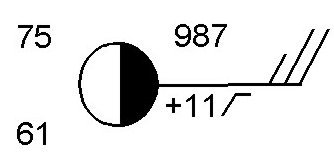
What is the temperature at this station
a)
75 degrees
b)
61 degrees
c)
987 degrees
d)
11 degrees
68.
What is the wind speed at this station
a)
3 knots
b)
15 knots
c)
25 knots
d)
30 knots
69.

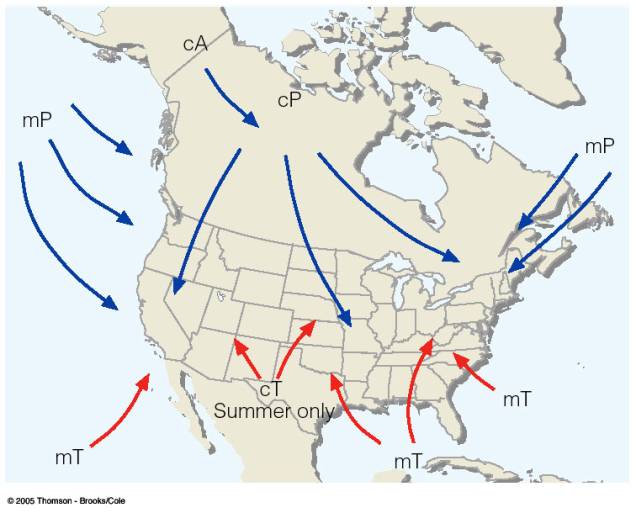
Base your answer to the question on the weather map below. The isobars show air pressures, in millibars. Points A and B indicate locations on the map. Which geographic region was most likely the source of the mT air mass located over the southeastern states?

a)

Central Canada

b)

dessert SW (Arizona, New Mexico)

c)

Gulf of Mexico

d)

Northern Pacific Ocean

70.

The weather map shows a portion of the United States. Line AB represents a frontal boundary between two air masses. The two large arrows indicate the direction that a cP air mass is moving. Which symbol correctly represents the frontal boundary at line AB?

a)
b)
c)
d)
71.

Weather station models for three New York State cities on the same day at the same time are shown. Which map shows the front that was most likely passing through Rochester at that time?

a)
b)
c)
d)
72.

What is an example of rotation

a)

When the Earth spins once on it's axis

b)

When the Earth goes around the sun

c)

When the moon goes around the Earth

d)

When the sun moves closer to the Earth

73.

What is an example of revolution?

a)

When the Earth spins once on its axi

b)

When the Earth goes around the sun

c)

When it changes from day to night

d)

When the sun moves closer tot he Earth

74.

What is the axis of the Earth?

a)

The average distance between Earth and the sun

b)

The time it takes the Earth to travel around the sun once

c)

The imaginary line form pole to pole around which the Earth spins

d)

The latitude on the Earth which is receiving the most direct sunlight

75.

Which of these takes one day to complete?

a)

1 rotation of the Earth?

b)

1 revolution of the Earth

c)

1 rotation of the sun

d)

1 revolution of the sun

76.

Which of these takes one year to complete?

a)

1 rotation of the Earth?

b)

1 revolution of the Earth

c)

1 rotation of the sun

d)

1 revolution of the sun

77.

When it is winter here in the northern hemisphere, what season is it it Australia, in the the southern hemisphere?

a)

Summer

b)

Winter

c)

Spring

d)

Fall

78.

When the North Pole is tilted toward the sun, which area has the most hours of daylight?

a)

The arctic circle

b)

The tropic of cancer

c)

The tropic of capricorn

d)

The antarctic circle

79.

Which part of the Earth does not see a change in the seasons?

a)

The arctic and antarctic circles

b)

The tropics of capricorn and cancer

c)

The equator

d)

All areas on Earth see seasons, but not at the same time

80.

The equator gets more direct sunlight and the poles receive less. This means that...

a)

The poles are warmer than the equator

b)

The equator will always have longer days than the poles

c)

The equator is warmer than the poles

d)

The poles have less extreme seasons

81.

On the summer solstice...

a)

we have the shortest day of the year

b)

we have an equal amount of day and night

c)

we have the longest day of the year

d)

The Earth is closest to the sun

82.

What is an equinox?

a)

When the Earth is farthest from the sun

b)

When we have the longest night of the year

c)

When Earth is closest to the sun

d)

When we have an equal length of day and night

83.

During the summer our hemisphere is...

a)

closest to the sun

b)

tilted toward the sun

c)

farthest from the sun

d)

tilted away from the sun

84.

During the winter our hemisphere is...

a)

closest to the sun

b)

tilted toward the sun

c)

farthest from the sun

d)

tilted away from the sun

85.

At which location is it winter in the northern hemisphere?

a)

Location 1

b)

Location 2

c)

Location 3

d)

Location 4

86.

At which location are both the northern and southern hemispheres receiving equal amounts of sunlight?

a)

Location 1

b)

Location 2

c)

Location 3

d)

All of the above

87.

Which hemisphere is getting more direct sunlight at location 1?

a)

Northern Hemisphere

b)

Southern Hemisphere

c)

Eastern Hemisphere

d)

Western Hemisphere

88.

If a planet is more tilted that Earth, what will their seasons be like?

a)

Their seasons will be more mild

b)

Their seasons will be more extreme

c)

Their seasons will be the same

d)

Their seasons will vary depending on how close to the sun they are
89.
How long after a new moon will it take to see another new moon?
a)
12 days
b)
29.5 days
c)
27.3 days
d)
365 days
90.
Waxing means...
a)
Growing
b)
Dying
c)
Losing light
d)
Moving
91.
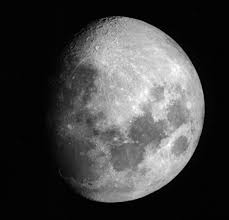
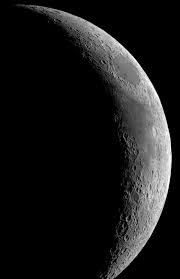
Name the moon phase
a)
waning crescent
b)
waxing crescent
c)
waning gibbous
d)
waxing gibbous
92.
Name the moon phase
a)
waning crescent
b)
waxing crescent
c)
waning gibbous
d)
waxing gibbous
93.
Name the moon phase
a)
waning crescent
b)
waxing crescent
c)
waning gibbous
d)
waxing gibbous
94.
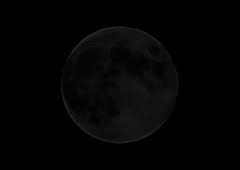
Name the moon phase
a)
First Quarter
b)
Last Quarter
c)
New Moon
d)
Full Moon
95.
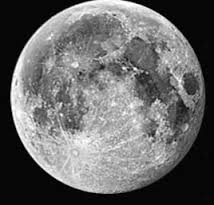
Name the moon phase
a)
First Quarter
b)
Last Quarter
c)
New Moon
d)
Full Moon
96.
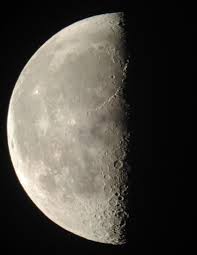
Name the moon phase
a)
First Quarter
b)
Last Quarter
c)
New Moon
d)
Full Moon
97.
Name the moon phase that would come AFTER this moon.
a)
waning crescent
b)
waxing crescent
c)
waning gibbous
d)
waxing gibbous
98.
Name the phase of the moon for letter a
a)
First Quarter
b)
Last Quarter
c)
Waxing Gibbous
d)
Waning Gibbous
99.
"Waning" means
a)
Growing
b)
Shrinking
100.
True or False: A gibbous moon means more than half of the moon is lit up?
a)
True
b)
False
101.
The Moon orbits Earth in a ________________ direction
a)
clockwise
b)
counterclockwise
c)
upwards
d)
downwards
102.
Where are the Earth, moon and sun during this moon phase?
a)
The Earth, moon and sun are in a straight line with the moon in the middle.
b)
The Earth, moon and sun are in a straight line with the sun in the middle.
c)
This is not a moon phase.
103.
What percent of the moon is always illuminated?
a)
75%
b)
100%
c)
25%
d)
50%
104.
Which is the reason why we have moon phases?
a)
Angles of just the Earth & sun changing to see different amounts of reflected light.
b)
How Earth orbits the sun changing the amounts of reflected light.
c)
Angles of the Earth, sun & moon changing to see different amounts of reflected light.
d)
Angles of moon changing to see different amounts of reflected light.
105.
How could you best define a full moon?
a)
The moon, sun and Earth are in a right angle lighting up the right side.
b)
The moon, sun and Earth are in a straight line with Earth in the middle.
c)
The moon, sun and Earth are in a right angle lighting up the left side.
d)
The moon, sun and Earth are in a straight line wiht the moon in the middle.
106.
This picture represents day and night. What is the motion?
a)
Revolution
b)
Orbit
c)
Rotation
d)
Axis
107.
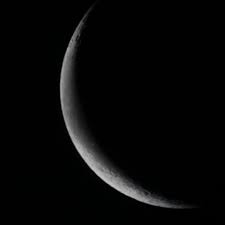
This picture represents which moon phase?
a)
Waxing Gibbous
b)
Waning Crescent
c)
Waning Gibbous
d)
Waxing Crescent
108.
Which gas in our atmosphere is most abundant?
a)
Argon
b)
Oxygen
c)
Nitrogen
d)
Carbon Dioxide
109.
The air in the troposphere has a greater density than the air in any other layer of the atmosphere,
a)
True
b)
False
110.
Temperature in the stratosphere warms as altitude increases.
a)
True
b)
False
111.
What is the percentage of oxygen in Earth's atmosphere?
a)
1%
b)
21%
c)
78%
d)
90%
112.
What is the percentage of nitrogen in Earth's atmosphere?
a)
1%
b)
21%
c)
78%
d)
90%
113.
In which layer of the atmosphere does weather occur?
a)
Mesosphere
b)
Thermosphere
c)
Stratosphere
d)
Troposphere
114.
Which layer of the atmosphere contains the greatest amount of water vapor?
a)
Thermosphere
b)
Troposphere
c)
Mesosphere
d)
Stratosphere
115.
What causes the temperature to increase in the stratosphere?
a)
Nitrogen
b)
Ozone
c)
Water Vapor
d)
carbon dioxide
116.
What decreases as you go up in the atmosphere?
a)
Altitude
b)
Atmosphere
c)
Meteors
d)
Air Pressure
117.
What is the outer most main layer of Earth's atmosphere?
a)
Thermosphere
b)
Troposphere
c)
Stratosphere
d)
Mesosphere
118.
The layers of the atmosphere are classified according to changes in _________.
a)
altitude
b)
density
c)
composition
d)
temperature
119.
James plans to climb to the top of Mount Everest.  Which of the following statements about his climb will be the most accurate?
a)
Air pressure will rise and the temperature on a thermometer will increase.
b)
Air pressure will fall and the temperature on a thermometer will decrease.
c)
Air pressure will rise and the temperature on a thermometer will decrease.
d)
Air pressure and thermometer will not change.
120.
Which of the following is the correct order of the atmosphere layers from Earth to space?
a)
troposphere, stratosphere, mesosphere, thermosphere, exosphere
b)
troposphere, mesosphere, thermosphere, exosphere, stratosphere
c)
thermosphere, stratosphere, mesosphere, troposphere, exosphere
d)
troposphere, stratosphere, mesosphere, exosphere, thermosphere
121.
Which layer is the coldest?
a)
Troposphere
b)
Stratosphere
c)
Mesosphere
d)
Thermosphere
122.
Describe how the ozone layer protects the earth.
a)
Absorbs solar radiation, Protects Earth from UV Rays,  and emits heat
b)
Ozone in the lower atmosphere is a pollutant
123.
Water vapor is a greenhouse gas
a)
True
b)
False
124.
The warming of the atmosphere by the trapping of heat being radiated to space is called
a)
evaporation
b)
condensation
c)
the greenhouse effect
d)
radiation
125.
The layer of the atmosphere containing the ozone layer is
a)
troposphere
b)
stratosphere
c)
thermosphere
d)
mesosphere
126.
The layer of the atmosphere containing the ionosphere and auroras is
a)
troposphere
b)
mesosphere
c)
stratosphere
d)
thermosphere
127.
The layer of the atmosphere where meteors burn up
a)
mesosphere
b)
thermosphere
c)
troposphere
d)
stratosphere
128.
Heat from the sun travels to Earth by _____.
a)
conduction
b)
convection
c)
insulation
d)
radiation
129.
What's the hottest layer of the Earth's atmosphere
a)
Troposphere
b)
Ozone Layer
c)
Exosphere
d)
Thermosphere
130.
What is being illustrated in the picture?
a)
greenhouse effect
b)
coriolis effect
c)
global warming
d)
air pressure
131.
What is the layer of gases called that surrounds Earth?
a)
atmosphere
b)
litosphere
c)
asthenosphere
d)
space
132.

the measure of height above sea level

a)

altitude

b)

pressure

c)

gravity

d)

density

133.
Temperature decreases as altitude increases in the Thermosphere.
a)
True
b)
False
134.
What is the second lowest main layer of Earth's atmosphere?
a)
Thermosphere
b)
Troposphere
c)
Stratosphere
d)
Mesosphere
135.
This layer of atmosphere uses a type of oxygen (O3) to protect us from ultraviolet light.
a)
Mesosphere
b)
Ozonosphere or ozone layer
c)
Thermosphere
d)
Troposphere
136.

Which layer do space shuttles travel in?

a)

troposphere

b)

thermosphere

c)

mesosphere

d)

stratosphere

137.

What happens after the pressure of atmosphere II allowed water vapor to condense?

a)

oxygen is produced

b)

it vaporizes again and rose into the atmosphere.

c)

Liquid water formed the earth's early oceans.

d)

It forms into a metamorphic rock.

138.
What is latitude?
a)
the distance of a location from the equator
b)
the distance of the location from the prime meridian
c)
the distance of a location from the sun 
d)
the distance of a location from the moon
139.
The Rio de Janiero is located in the ___ zone.
a)
Polar
b)
Tropic
c)
Temperate
140.
Dakar is located in the ___ zone.
a)
Polar
b)
Tropic
c)
Temperate
141.
Which location is warmer: Los Angeles or N'Djamera?
a)
Los Angeles
b)
N'Djamera
142.
Daneborg is located in the ___ zone.
a)
Polar
b)
Tropic
c)
Temperate
143.
According to location and latitude lines, which city is colder?
a)
Brasilia
b)
Los Angeles
c)
London
d)
Daneborg
144.
The reason why it is so hot near the equator is ___.
a)
the sun heats the lava under that area
b)
the area near the equator gets lots of indirect sunlight
c)
the area near the equator gets lots of direct sunlight
d)
the light near that area is shy
145.
What is the name of the line of latitude that is BLUE?
a)
Antarctic Circle
b)
Tropic of Cancer
c)
Arctic Circle
d)
Tropic of Capricorn
146.
What is the name of the line of latitude that is HOT PINK?
a)
Equator
b)
Tropic of Cancer
c)
Arctic Circle
d)
Tropic of Capricorn
147.
What is the name of the line of latitude that is GREEN?
a)
Equator
b)
Tropic of Cancer
c)
Antarctic Circle
d)
Tropic of Capricorn
148.
The tropic zone is in between which two lines of latitude?
a)
Arctic Circle and Antarctic Circle
b)
Tropic of Cancer & Tropic of Capricorn
c)
Tropic of Cancer & the Arctic Circle
d)
The equator & the Tropic of Cancer
149.
North America is mostly in which climate zone?
a)
Polar
b)
Arctic
c)
Tropic
d)
Temperate
150.
Why are the locations in high latitudes so much colder than the locations in low latitudes?
a)
They receive less direct sunlight.
b)
They receive more direction sunlight.
c)
The sun never shines there.
d)
The sun doesn't like those areas.
151.
What is the height of an area above sea level?
a)
elevation
b)
topography
c)
latitude
d)
longitude
152.

Fill in the blank: The higher the altitude, the ______ the temperature.

a)

warmer

b)

colder

153.
_______ affects weather because the further north or south you go from the Equator, the less solar energy (heat).
a)
altitude
b)
latitude
c)
sunlight
d)
atmosphere
154.
______ is the average pattern for weather over a long period of time.
a)
climate
b)
weather
c)
forecast
d)
sunlight
155.
Earth is unevenly heated due to its?
a)
oceans and moon
b)
tilt and shape
c)
gravity and clouds
d)
climate and weather
156.
What are the 3 major climate zones in order from equator to the poles?
a)
polar, temperate, tropical
b)
tropical, temperate, polar
c)
temperate, polar, tropical
157.
What are the two main factors that determine the climate of an area?
a)
precipitation and humidity
b)
temperature and air pressure
c)
wind conditions and humidity
d)
temperature and precipitation
158.
A polar climate is?
a)
warm and cool
b)
consistently moderate
c)
consistently cool
d)
consistently warm
159.
A temperate climate is?
a)
consistently cool
b)
consistently warm
c)
consistently moderate
d)
warm and cool
160.
The temperature of a tropical climate is?
a)
consistently warm
b)
consistently cool
c)
consistently moderate
d)
warm and cool