Wayground logo

Free Printable Worksheets

Font size

S
M
L
XL
Worksheets

Earth in Space unit review

Total questions: 64

Worksheet time: 32mins

Name
Class
Date
1.

The diagram provided shows a portion of the solar system. Which objects lighted surface shown incorrectly?

a)

The moon

b)

Mercury

c)

Venus

d)

Earth

2.

Is the person in this diagram experiencing day or night?

a)

Day

b)

Night

c)

Noon

3.
Which season is taking place in the Northern Hemisphere in Position 1?
a)
Winter
b)
Spring
c)
Summer
d)
Fall
4.

Why is summer warmer than winter?

a)

The hemisphere experiencing summer is tilted more directly toward the sun

b)

During summer, the entire planet is closer to the sum

c)

The sun radiates more energy during the summer

d)

The earth spins slower on its axis during the summer

5.
Why is the Equator warmest?
a)
Because it is closest to the sun.
b)
Because it receives the most direct sunlight
c)
Because no clouds form here.
d)
Because it is far from the sun
6.
What season is depicted in the picture?
a)
summer
b)
winter
c)
fall 
d)
spring
7.
What season is depicted in the picture?
a)
summer
b)
winter
c)
fall 
d)
spring
8.
When the moon is in between the earth and the sun it is a
a)
New Moon
b)
Full Moon
c)
First Quarter
d)
Third Quarter
9.

If the moon is fully illuminated it is said to be a____________ moon.

a)

New

b)

Full

c)

Crescent

d)

Gibbous

10.

A satellite is defined as something that orbits a planet. How many NATURAL satellite(s) does Earth have?

a)

Five

b)

Sixteen

c)

One

d)

Three

11.

The cycle of the moon lasts about ___________.

a)

15 days

b)

7 days

c)

27-28 days

d)

30-31 days

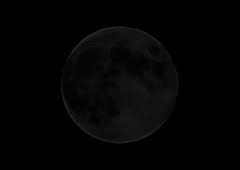
12.

Name the moon phase

a)

First Quarter

b)

Third Quarter

c)

New Moon

d)

Full Moon

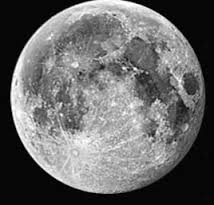
13.

Name the moon phase

a)

First Quarter

b)

Third Quarter

c)

New Moon

d)

Full Moon

14.

Which moon phase is shown in this diagram?

a)

new moon

b)

first quarter

c)

full moon

d)

3rd quarter

15.
What is the difference between a gibbous moon and a crescent moon?
a)
The gibbous shows more than half of the bright side of the moon.
b)
The crescent shows more than half of the bright side of the moon.
c)
The gibbous shows less than half of the bright side of the moon. 
16.
Phases of the moon in which the moon appears to be getting larger are referred to as _______.
a)
waxing
b)
waning
c)
new
d)
eclipse
17.

What phase is a lunar eclipes?

a)

Full moon

b)

third quater

18.

A _____________________ eclipse occurs  when  the  Moon passes into the  darkest part of the Earth’s shadow.

a)

Total Lunar Eclipse

b)

Moon Phases

c)

Lunar Eclipse

19.
a)

Lunar eclipse

b)

solar eclipse

20.

It happens when the Earth moves between the Sun and the moon, blocking part of the Sun's light from reaching the moon.

a)

solar eclipse

b)

lunar eclipse

c)

neap tides

d)

spring tides

21.

What color might the moon appear during a lunar eclipse?

a)

blue

b)

green

c)

purple

d)

red

22.
A lunar eclipse occurs when the line up is this:
a)
Sun -Earth-Moon
b)
Moon, Sun, Earth
c)
Earth-Sun-Moon
d)
Sun-Moon-Earth
23.
The line up for a solar eclipse is: 
a)
Sun-Earth-Moon
b)
Earth-Sun-Moon
c)
Sun-Moon-Earth
d)
Earth-Moon-Mars
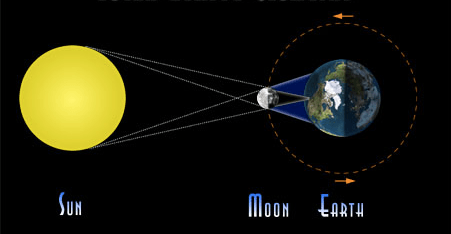
24.
Which type of eclipse is shown in this picture?
a)
Solar Eclipse
b)
Orbit
c)
Lunar Eclipse
d)
Total Eclipse
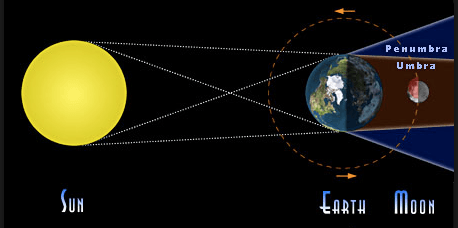
25.
Which type of eclipse is shown in the diagram?
a)
Solar Eclipse
b)
Lunar Eclipse
c)
Total Eclipse
d)
Partial Eclipse
26.

We do NOT have a lunar eclipse each month because...

a)

The tilt of the moon's orbit is at 5 degrees

b)

The moon is too small

c)

The moon's orbital distance changes

d)

All choices

27.
What causes tides?
a)
gravity
b)
wind
c)
spring
d)
neap
28.
The bulge of water on the side of the Earth closest to the moon produces ___________.
a)
high tide
b)
low tide
c)
neap tide
d)
spring tide
29.
A neap tide is a tide with the greatest difference between low and high tides
a)
true
b)
false
30.
What type of tides would this arrangement of earth-moon-sun create?
a)
neap tide
b)
spring tide
c)
new moon tide
d)
full moon tide
31.
What type of tide would this arrangement of earth-moon-sun create?
a)
full moon tide
b)
new moon tide
c)
neap tide
d)
spring tide
32.
Which body has the greater effect on Earth's tides?
a)
Sun
b)
Saturn
c)
Moon 
d)
Venus
33.

Based on your observations of the prism, select the true statements.

a)

When light travels through a prism, the light is separated by wavelength.

b)

Humans see the different wavelengths of visible light as different colors.

c)

The prism is being used to combine different colors of light.

d)

The light bends when it enters the prism and again when it leaves the prism.

34.

Why does this car appears red under a white light?

a)

The car is absorbing the red light and reflecting the blue and green.

b)

The car is reflecting only the red light while absorbing the blue and green.

c)

The car is absorbing the red and green light while reflecting the blue.

d)

The car is absorbing the red, blue and green, but our eyes can only see the red.

35.
What property of light makes this pencil appear to be bent or broken?
a)
Reflection
b)
Refraction
c)
Diffraction
d)
Absorption
36.

The bouncing back of light waves off of a surface is...

a)

Reflection

b)

Refraction

c)

Light

d)

Lens

37.

When an object soaks in the light it _____________

a)

absorbs

b)

reflects

c)

refracts

38.

 The color of objects that we see is the color of the wavelength that is ______ from its surface.

a)

reflected

b)

refracted

c)

diffused

d)

absorbed

39.
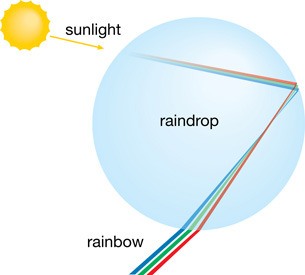
Light bending as it passes through a rain drop is an example of...
a)
Refraction
b)
Reflection
40.
Transfer of energy when a wave disappears into a surface
a)
Transparent
b)
Refraction
c)
Reflection
d)
Absorption
41.

Does this object give off its own light?

a)

yes

b)

no

42.
If you are using a green color filter, what color will you only see?
a)
blue
b)
green
c)
white
d)
red
43.

When light strikes an object with a rough surface, photons bounce off at random angles.

a)

Exposure

b)

Rarefaction

c)

Scattering

d)

Bouncing

44.
A large group of moons, planets and stars in space is called ____________.
a)
Light Years
b)
Galaxy
c)
Stars
45.

A large grouping of stars, dust and gas bound together by gravity is called?

a)

nebula

b)

galaxy

c)

gravity

d)

solar system

46.
List the objects in order from largest to smallest.
a)
Stars, Galaxies and Planets
b)
Galaxies, Stars and Planets
c)
Planets, Stars and Galaxies
47.

What are stars held together by?

a)

Gravity

b)

Moon

c)

Sun

48.

Which of the following is the largest?

a)

star

b)

solar system

c)

universe

d)

galaxy

49.

What is the name for space and everything in it?

a)

galaxy

b)

universe

c)

solar system

d)

planet

50.
The force keeping a planet in orbit around the sun is...
a)
Friction
b)
Tension
c)
Gravity
d)
weight
51.
Two factors effecting the magnitude of the force of gravity between 2 objects are...
a)
Mass and Distance 
b)
Mass and Matter
c)
Distance and Weight 
d)
Weight and Mass
52.
The force of gravity acting on an object is the object's ______.
a)
Mass
b)
Matter
c)
Weight 
d)
Terminal velocity 
53.
What is the force acting between any two objects in the known universe all the time?
a)
Gravitational Force 
b)
Force of Friction 
c)
Normal Force 
d)
Electromagnetic Force 
54.
As the distance between 2 objects increases, what happens to gravitational force?
a)
It increases.
b)
It decreases.
c)
It stays the same.
d)
Only Mr. Silvio knows what will happen.
55.
As mass increases, what happens to the gravitational force?
a)
It increases.
b)
It decreases.
c)
It stays the same.
d)
It acts as a 3rd degree derivative function.
56.
Which of the following will not change in different gravitational fields?
a)
weight
b)
force
c)
mass
d)
pounds
57.
Any object with mass has gravity.
a)
True
b)
Sometimes
c)
False
d)
Never
58.
The amount of matter in an object is 
a)
pressure
b)
weight
c)
mass
d)
force
59.

As the mass of a star increases, the gravity will ______

a)

increase

b)

decrease

c)

stay the same

d)

gravity is not affected by mass

60.

Which model has a greater gravitational attraction (if any)?

a)

A

b)

B

c)

Both A and B have the same gravity

61.

The sun appears brighter than other stars because...

a)

it is the largest star in the universe

b)

it is the hottest star in the universe

c)

it is the largest star in our galaxy

d)

it is closer to Earth than other stars

62.
When light travels through water it ______.
a)
speeds up
b)
gets wet
c)
slows down
d)
makes it boil
63.

How / Why does light change direction?

a)

Light bends in a curved path when its frequency is changed

b)

light changes direction when it is absorbed

c)

light changes direction when it speeds up or slows down through different mediums

d)

light changes direction when its wavelength is changed

64.

Which color has the longest wavelength?

a)

Yellow

b)

Red

c)

Green

d)

Purple