wayground logo

Free Printable Worksheets

NEW

Font size

S
M
L
XL
Worksheets

Ions and Ionic Compounds

Total questions: 67

Worksheet time: 1hrs 12mins

Name
Class
Date
1.
How many valence electrons does a bromine atom have?
a)

1

b)

2

c)

6

d)

7

2.

The positive particle in an atom.

a)

proton

b)

neutron

c)

electron

d)

electron cloud

3.

How many protons does Nitrogen have?

a)

7

b)

8

c)

14

d)

14.01

4.

Which of the labeled structures is a neutron?

a)

a

b)

b

c)

c

5.

The negative particle in an atom.

a)

proton

b)

neutron

c)

electron

6.

The neutral particle in an atom.

a)

proton

b)

neutron

c)

electron

7.

An element has 17 protons and 18 neutrons in the nucleus. What is the element's mass number?

a)

17

b)

18

c)

1

d)

35

8.

What is the chemical symbol of this element?

a)

79

b)

Au

c)

AU

d)

gold

9.
An atom with atomic number 6 would have how many protons?
a)

6

b)

12

c)

3

d)

Cannot be determined 

10.

An atom's overall charge is _____.

a)

Positive 

b)

Depends on its mood 

c)

Neutral 

d)

Negative 

11.
The particles that are found in the nucleus of an atom are _____.
a)
Neutrons and electrons
b)
Electrons only
c)
Protons and neutrons
d)
Protons and electrons
12.
What are the 3 particles that make-up the atom?
a)
Protons, neutrons, and isotopes
b)
Neutrons, isotopes, and electrons
c)
Positives, negatives, and electrons
d)
Protons, neutrons, and electrons
13.

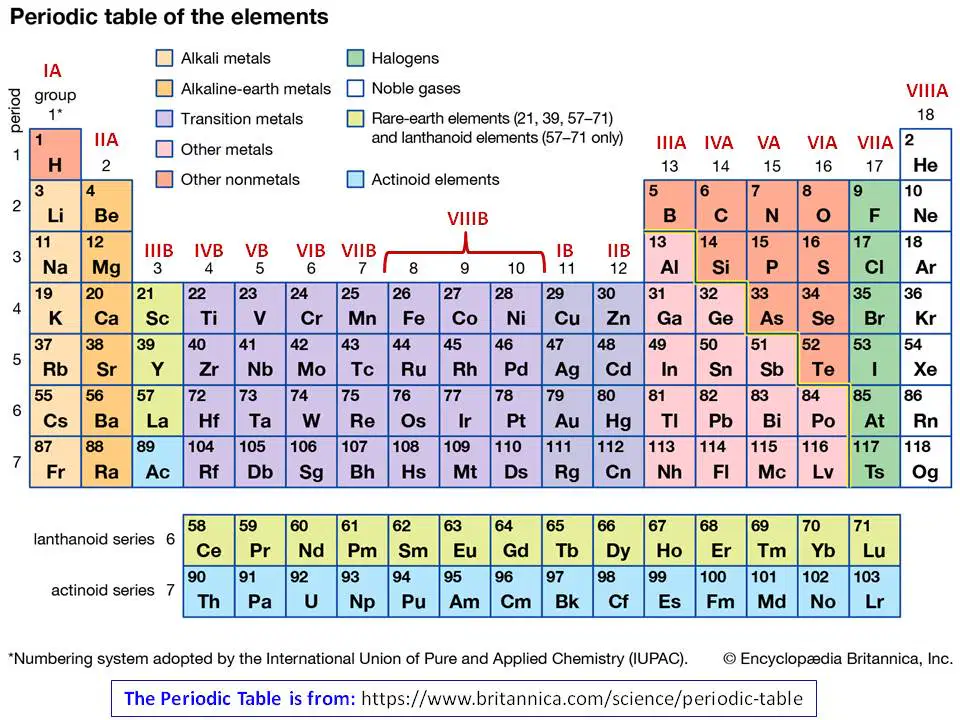
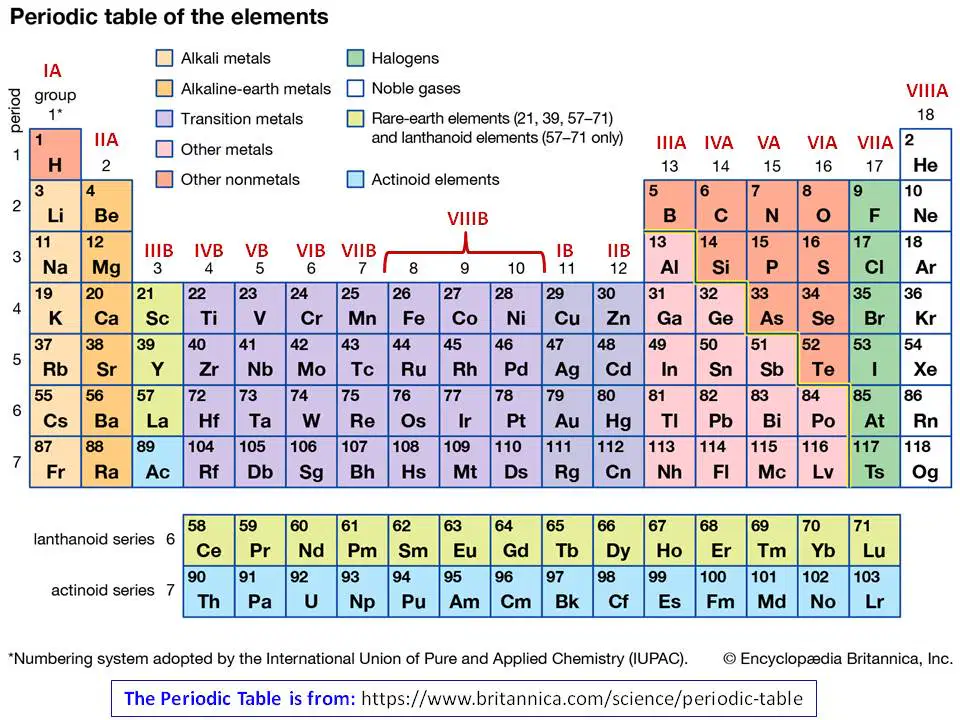
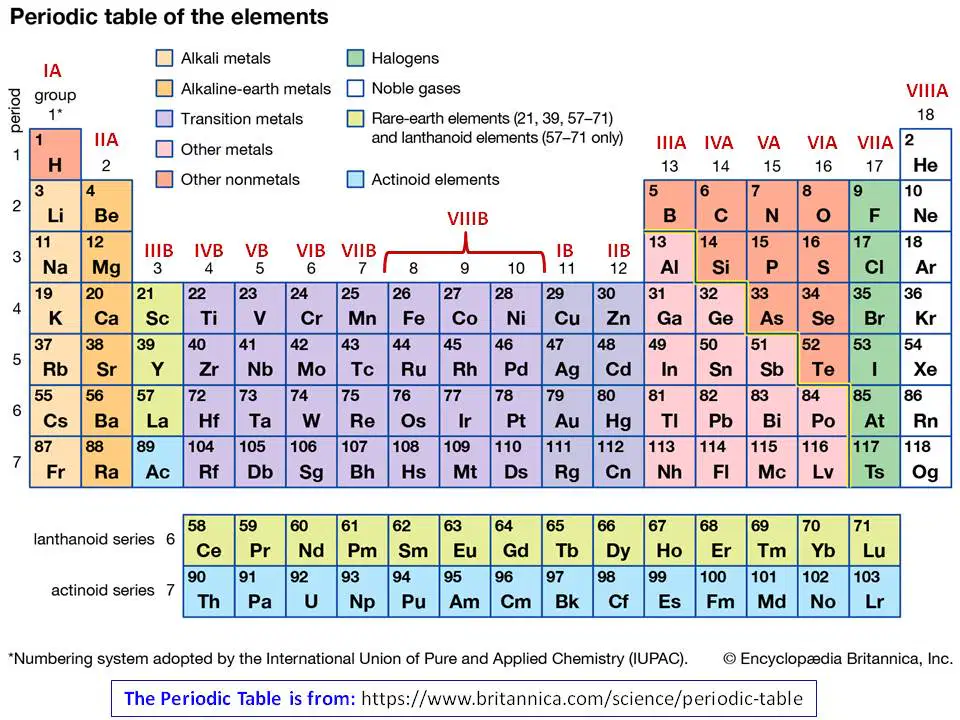
What are the elements in group 1 (the far left) of the periodic table called?

a)

Alkali metals

b)

Alkaline earth metals

c)

Halogens

d)

Noble gases

14.

What are the elements in group 2 of the periodic table called?

a)

Alkali metals

b)

Alkaline earth metals

c)

Halogens

d)

Noble gases

15.

What are the elements in group 18 (the far right) of the periodic table called?

a)

Alkali metals

b)

Alkaline earth metals

c)

Halogens

d)

Noble gases

16.

What are the elements in group 17 of the periodic table called?

a)

Alkali metals

b)

Alkaline earth metals

c)

Halogens

d)

Noble gases

17.

What are the elements in groups 3-12 of the periodic table called?

a)

Transition metals

b)

Non-metals

c)

Metalloids

d)

Metals

18.

What are the elements found along the "staircase" called? They have properties of both metals and non-metals.

a)

Metalloids

b)

Non-metals

c)

Transition metals

d)

Metals

19.

Hydrogen is a:

a)

Alkali metal

b)

Metalloid

c)

Non-metal

d)

Noble gas

20.

The positively charged particle in the nucleus of an atom is a:

a)

Proton

b)

Neutron

c)

Electron

d)

Shell

21.

A tiny, negatively charged particle that moves around the nucleus of an atom in clouds/shells is called:

a)

An electron

b)

A proton

c)

A neutron

d)

A shell

22.

The total number of protons and neutrons in an atom's nucleus is equal to the:

a)

Atomic number

b)

Atomic mass

c)

Number of valence electrons

d)

Number of electron shells

23.

The horizontal rows on the periodic table are called:

a)

Shells

b)

Periods

c)

Groups

d)

Horizontals

24.

The vertical columns on the periodic table that have common properties are called

a)

Groups

b)

Periods

c)

Shells

d)

Valences

25.

The Russian scientist who created one of the first periodic tables by using atomic mass was:

a)

Bohr

b)

Rutherford

c)

Mendeleev

d)

Thomson

26.

The subatomic particles that are located the farthest from the nucleus are:

a)

Valence electrons

b)

Valence protons

c)

Periodic electrons

d)

Periodic protons

27.
Which element is found in period 3 group 2?
a)
Sodium (Na)
b)
Magnesium (Mg)
c)
Yttrium (Y)
d)
Boron (B)
28.
What is an ion?
a)
A Charged Atom
b)
A Large Atom
c)
A Small Atom
d)
A Cute Atom
29.
Why are ions formed?
a)
To make our lives difficult
b)
Because atoms want 8 valence electrons
c)
Because atoms have the same number of protons and electrons
d)
Because atoms gained neutrons
30.
An atom becomes _________ when it gains electrons.
a)
Positive
b)
Negative
c)
Neutral
d)
Invinsible
31.

What is the charge of a sodium ion?

a)

+2

b)

+1

c)

-1

d)

-2

32.
Group 17 always has ions with a charge of 
a)
+1
b)
+2
c)
-1
d)
-2
33.
What charge will an Oxygen ion have? 
a)
+1
b)
-1
c)
+2
d)
-2
34.
If an element has 3 valence electrons, what charge will likely form on its ion ?
a)
+3
b)
+5
c)
-3
d)
-5
35.
Which of the following has a -3 charge?
a)

Boron

b)

Fluorine

c)

Nitrogen

d)

Neon

36.
charge of lithium ion
a)
-2
b)
-1
c)
+1
d)
+2
37.
charge of beryllium ion
a)
-2
b)
-1
c)
+1
d)
+2
38.
Elements on the LEFT side of the periodic table will most likely form:
a)
Positive ions
b)
Negative ions
c)
Neutral Ions
d)
None of these
39.
Cations are...
a)
Positive
b)
Negative
c)
Neutral
d)
Purring
40.
Anions are...
a)
Positive
b)
Negative
c)
Neutral
d)
Crying
41.
An atom becomes _______ when it loses electrons.
a)
Positive
b)
Negative
c)
Neutral
d)
Invinsible
42.
Which particles change the charge in atoms when ions are formed?
a)
Protons
b)
Electrons
c)
Neutrons
d)
Kittens
43.
What is the ionic symbol for a Caesium atom?
a)
Cs+
b)
Cs-
c)
Cs+2
d)
Cs-2
44.
A chemical bond resulting from the electrostatic attraction between positive and negative ions is called a(n)
a)
covalent bond.
b)
ionic bond.
c)
charged bond.
d)
dipole bond.
45.
If my charge becomes 2+ what does that say about me?
a)
I am stealing 2 electrons
b)
I am losing 2 electrons
c)
I am in period 2
d)
I have an atomic # of 2
46.
If I gain electrons I become
a)
Positive because I've added to my atom
b)
negative because I've added electrons
c)
same because i'm balanced
d)
equal because now I have electrons
47.
Metals tend to 
a)
gain electrons
b)
lose electrons
48.
Nonmetals tend to 
a)
gain electrons
b)
lose electrons
49.
When a nonmetal gains electrons, it becomes this type of ion.
a)
Anion
b)
Cation
50.
A Silicon atom wants...
a)
3 more electrons
b)
3 less electrons
c)
4 more or less electrons
d)
2 more electrons
51.
A Radium atom wants...
a)
One more electron
b)
One less electron
c)
Two more electrons
d)
Two less electrons
52.
What is a Rubidium ion's symbol?
a)
Rb-
b)
Rb+
c)
Rb-2
d)
Rb+2
53.
What is the ionic symbol for a phosphorus atom?
a)
P-3
b)
P+3
c)
P-2
d)
P+2
54.
What is the ionic symbol for a Tin atom?
a)
Sn+4 or Sn-4
b)
Sn-4
c)
Sn+3
d)
Sn-3
55.
What is the ionic symbol for Krypton?
a)
Kr
b)
Kr+
c)
Kr-
d)
Kr-2
56.
Which of the following is not a compound?
a)

HCl

b)

Cl

c)

NaCl

d)

CO2

57.
Metals tend to 
a)
gain electrons
b)
lose electrons
58.
How do the following two elements bond together?
Na1+  F1-         
a)
NaF
b)
NaF3
c)
Na3F
d)
Na1F2
59.
When an ionic compound is formed, its charge is 
a)
negative
b)
neutral (no charge)
c)
positive
60.

Why do all bonds form?

a)

so the number of protons equals the number of electrons

b)

so an atom can become unstable

c)

to fill the outermost energy level

61.
NaCl
a)
Ionic
b)
Covalent
c)
Metallic
d)
Polyatomic Ion 
62.
MgCl2
a)
Ionic
b)
Covalent
c)
Polyatomic Ion
d)
Metallic 
63.
The octet rule means that all valence shells want to have the number...... 
a)
1
b)
9
c)
8
d)
16
64.

What is the proper chemical formula for potassium oxide?

a)

PO

b)

KO

c)

K2O

(where 2 is a subscript)

65.

What are the charges on aluminum fluoride?

a)

Al 2+

F-

b)

Al 3+

F-3

c)

Al3+

F-

66.

If Ca has a 2+ charge and phosphorus has a 3+ charge, then how many atoms of Calcium and phosphorus are needed to produce neutral Calcium phosphide?

a)

2 Calcium

2 Phosphorus

b)

3 Calcium

1 Phosphorus

c)

3 Calcium

2 Phosphorus

67.

What is the proper name for an ionic compound with Ba and N?

a)

Nitrogen barium

b)

Nitrogen baride

c)

Barium nitrogen

d)

Barium nitride