wayground logo

Free Printable Worksheets

Font size

S
M
L
XL
Worksheets

1st Nine weeks review for extra credit

Total questions: 93

Worksheet time: 55mins

Name
Class
Date
1.

Studying how the heart or others organs work is

a)

Anatomy

b)

Physiology

2.
Which plane divides the body into left and right sides
a)
Frontal
b)
Coronal
c)
Sagittal 
d)
Transverse
3.
Which of the following is NOT a plane of the body?
a)
Coronal
b)
Frontal
c)
Transverse
d)
Vertical
4.
Which of the following planes has a horizontal line through the body
a)
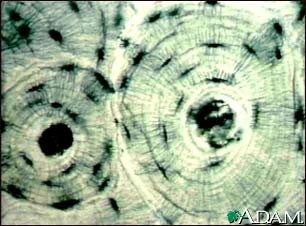
Transverse
b)
Coronal
c)
Lateral
d)
Frontal
5.
What does the coronal plane divide the body into?
a)
Front to back
b)
Side to side 
c)
Left to right
d)
Top to bottom
6.
Laying face down on the ground would result in which position
a)
Supinated
b)
Inferior 
c)
Hyperextension
d)
Prone
7.
Your head is ________ blank to your toes
a)
Inferior
b)
Medial
c)
Superior
d)
Sagittal
8.
Your ears are _______ to your eyes
a)
Lateral
b)
Medial
c)
Superior
d)
Inferior
9.
Your elbow is _______ to your wrist
a)
Lateral
b)
Distal
c)
Inferior
d)
Proximal
10.
Your nose is ______ to your eyes
a)
Medial
b)
Distal
c)
Coronal
d)
Sagittal
11.
Your thumb is ______ to your pinky
a)
Lateral
b)
Medial
c)
Proximal
d)
Distal
12.
Which anatomical plane divides the body into upper and lower parts
a)
Coronal
b)
Transverse
c)
Lateral 
d)
Sagittal
13.
 A heart attack would have symptoms that change or worsen rapidly. Which type of symptom is this
a)
Acute
b)
Chronic
c)
Superficial
d)
Deep
14.
The left arm is __________ to the left leg
a)
Contrallateral
b)
Ipsilateral 
c)
Lateral
d)
Distal
15.
The right ear is __________ to the left foot
a)
Contralateral 
b)
Ipsilateral 
c)
Deep
d)
Distal
16.
The heel is ______ to the toes 
a)
Posterior
b)
Anterior
c)
Inferior
d)
Proximal
17.
The skin is _________ to the muscle layer
a)
Superficial 
b)
Deep
c)
Distal
d)
Intermediate
18.
Towards the Front. 
[The eyes are _______ to the brain].
a)
Inferior
b)
Deep
c)
Lateral
d)
Anterior
19.
A body part is below another body part, is toward the feet
a)
Distal
b)
Inferior
c)
Proximal
d)
Sagittal
20.
A body part is above another part, or is closer to the head
a)
Superficial
b)
Lateral
c)
Superior
d)
Deep
21.
Body is standing straight, facing forward, upper limbs at side and palms facing forward. 
*right and left refer to "right" and "left" of the body in position.
a)
Sagittal
b)
Anatomical Position
c)
Anterior Position
d)
Anatomical Plane
22.
Divides body into left and right portions
-Mid-: equal right & Left halves
a)
Superficial
b)
Sagittal
c)
Proximal
d)
Transverse
23.
The bone is _____ to the skin.
a)
inferior
b)
superficial
c)
deep
d)
posterior
24.
The cranial cavity and the spinal (vertebral) cavity are both contained within the _______ cavity.
a)
dorsal
b)
ventral
c)
abdominal
d)
throacic
25.
The thoracic cavity and the abdominopelvic cavity are both contained within the _______ cavity.
a)
dorsal
b)
ventral
c)
cranial
d)
spinal
26.
#6
a)
diaphram
b)
abdominal
c)
thoracic
d)
pelvic
27.
Which organ belong with this system: Nervous
a)
kidneys
b)
glands
c)
brain
d)
bones
28.
Which organ belong with this system: endocrine
a)
kidneys
b)
glands
c)
brain
d)
bones
29.
Which organ belong with this system: circulatory
a)
heart
b)
stomach
c)
lungs
d)
muscles
30.
Which organ belong with this system: digestive
a)
heart
b)
stomach
c)
lungs
d)
muscles
31.
Which organ belong with this system: urinary
a)
kidneys
b)
glands
c)
brain
d)
bones
32.
Which abdominal quadrant is labeled 3
a)
Right Upper Quadrant
b)
Right Lower Quadrant
c)
Left Upper Quadrant
d)
Left Lower Quadrant
33.
Fat cells
a)
adipose
b)
areolar
c)
reticular
d)
nervous
34.
Most abundant type of body tissue
a)
Epithelial
b)
Connective 
c)
Muscle
d)
Nervous
35.
What major tissue type does bone represent?
a)
epithelial
b)
connective
c)
muscle 
d)
nervous
36.
What major tissue type does fat represent?
a)
epithelial
b)
connective
c)
muscle
d)
nervous
37.
What major tissue type does blood represent?
a)
epithelial
b)
connective
c)
muscle
d)
nervous
38.
Many layers of cells
a)
stratified
b)
simple
c)
cuboidal
d)
squamous
39.
11. Transitional epithelium has what special trait
a)
it secretes hormones
b)
it can stretch
c)
it produces blood cells
d)
it has ducts
40.
22. What is edema
a)
When tissue loses too much water and shrinks
b)
When cells soak up water and swell
c)
When cells cannot take in water
d)
When cells perform peristalsis
41.
Identify:
a)
Smooth Muscle
b)
Columnar
c)
Transitional
d)
Pseudostratified
42.
Identify:
a)
Simple squamous
b)
Cuboidal
c)
Transitional
d)
Pseudostratified
43.
a)
smooth muscle
b)
bone
c)
nerve
d)
blood
44.
Which tissue is this?
a)
Simple squamous
b)
simple columnar
c)
transitional
d)
simple cuboidal
45.
What tissue type is this?
a)
Adipose tissue
b)
Cardiac muscle
c)
Nervous tissue
d)
Skeletal muscle
46.
What tissue type is this?
a)
Skeletal muscle
b)
Nervous tissue
c)
Adipose tissue
d)
'Specialised' connective tissue
47.
What tissue is this
a)
Bone
b)
Cartilage
c)
Blood
d)
Adipose
48.
The muscle tissue shown is called ______.
a)
Skeletal
b)
Cardiac
c)
Smooth
49.
What tissue is this?
a)
Pseudostratified
b)
Simple cuboidal
c)
Transitional
d)
Simple Squamous
50.
What tissue is this?
a)
Columnar
b)
Cuboidal
c)
Pseudostratified
d)
Transitional
51.
Name this tissue
a)
Bone
b)
Cartliage
c)
Blood
d)
Dense regular 
52.
Name this tissue
a)
Bone
b)
Cartilage
c)
Blood
d)
Adipose
53.
What tissue is this
a)
Transitional epithelium
b)
Cartilage
c)
Dense Fibrous
d)
Areolar
54.
This type of muscle tissue is found in the walls of hollow organs such as the stomach 
a)
Skeletal
b)
Cardiac
c)
Smooth
55.
Name this tissue
a)
Skeltal
b)
Cardiac
c)
Smooth
56.
Name the tissue
a)
Skeletal
b)
Cardiac
c)
Smooth
57.
Which of the following is a function of epithelial tissue?
a)
Protection
b)
Absorption
c)
Secretion
d)
All the the above
58.
which muscle tissue is voluntary?
a)
skeletal muscle
b)
cardiac muscle
c)
smooth muscle
59.
What is the strongest of all the bonding types?
a)
Covalent
b)
Ionic
c)
Hydrogen
d)
Metallic
60.
What are the four elements that all life is made up of?
a)
Hydrogen, Oxygen, Nitrogen and Carbon
b)
Helium, Oxygen, Neon and Carbon
c)
Hydrogen, Titanium, Carbon, Nitrogen
d)
Oxygen, Chlorine, Iron, Nitrogen
61.
What are special types of proteins that act as catalysts?
a)
Enzymes
b)
Lipids
c)
Polysaccharides
d)
DNA
62.
Zane is making a chart of compounds that are found in the human body. What is the most common compound found in the human body?
a)
H2O   
b)
CO2
c)
Sodium Bicarbonate (baking soda)
d)
NaCl (table Salt)
63.
Kayla has a cat with blue eyes. The color of her cat’s eyes is determined by deoxyribonucleic acid (DNA). The DNA directs which substance to construct these eyes?
a)
lipids
b)
water
c)
proteins
d)
carbohydrates
64.
When people eat foods high in proteins, such as meat, eggs and cheese, the body breaks down the proteins into smaller molecules. What is supplied to cells when the body breaks down proteins?
a)
amino acids
b)
nucleic acids
c)
phospholipids
d)
carbohydrates
65.

Red bone marrow produces which of the following?

a)

Red blood cells

b)

White blood cells

c)

platelets

d)

all of these

66.

Which type of marrow stores fat?

a)

red

b)

white

c)

yellow

d)

all of these

67.

Spongy bone is found in flat bones and at the ends of long bones.

a)

true

b)

false

68.
Bones that originate within sheetlike layers of connective tissue.
a)
partial bones
b)
chondritic bones
c)
intramembranous bones
d)
endochondral bones
69.
Bones that begin as masses of cartilage later replaced by bone tissue.
a)
intramembranous bones
b)
entraspecific bones
c)
ethmodial bones
d)
endochondral bones
70.
The primary mineral stored by compact bone is
a)
Calcium
b)
Selenium
c)
Zinc
d)
Magnesium
71.

What type of fracture penetrates through the skin?

a)

Closed (simple)

b)

Open (compound)

c)

Greenstick

d)

Transverse

72.

What is the name of the incomplete fracture usually seen in children?

a)

Linear

b)

Transverse

c)

Fibial

d)

Greenstick

73.
Sprains are injuries to:
a)
ligaments
b)
tendons
c)
bones
d)
skin
74.

What is Osteoporosis?

a)

Bone density decrease

b)

Only affects women

c)

Something you only have to worry about after you're 50+ years old

d)

Bone density increase

75.

People who spend a lot of time inactive have a higher rate of osteoporosis than their active counterparts

a)

true

b)

false

76.

Identifying the identity of a set of bones would be the duty of a forensic anthropologist

a)

True

b)

false

77.

The length of the femur is most often used to determine

a)

weight

b)

age

c)

height

d)

gender

78.

Rigor mortis is

a)

used to help determine time of death

b)

a progressive tightening of the muscle after death

c)

only active for up to 48 hours

d)

all of these apply to rigor mortis

79.
Which is the most reliable bone to determine the sex of a skeleton? 
a)
Femur
b)
Skull
c)
Pelvic bone
d)
Collarbone
80.
The pelvis in the picture is most likely
a)
male
b)
female
81.
One of the  ways to determine the race using bones is by examining the :
a)
the pelvis
b)
the leg bones
c)
skull
d)
the occipital bump
82.
What is E?
a)
Pelvis Bone
b)
Public Bone
c)
Pubic Symphysis
d)
All of the Above
83.

Which suture is the arrow pointing to?

a)

Sagittal

b)

Coronal

c)

Lamboidal

d)

Temporal

84.

Round eye orbits, subpubic angle of 103 degrees, rectangular-shaped pubis, smooth skull.

a)

male

b)

female

c)

other

85.

Pelvis narrow, protuberance on occipital bone, sloping forehead.

a)

human male

b)

human female

c)

animal

86.

All skull sutures fused.

a)

under 10 years of age

b)

age range 11 years to 21 years

c)

age range - 30 years to 49 years

d)

over 50 years of age

87.
Bones can tell us all of the following except:
a)
mineral deficiencies
b)
all of these can be determined
c)
diseases/disorders
d)
fractures
88.

What can be determined by examining bones?

a)

age

b)

race

c)

height

d)

All of these

89.
Ways that articulations are classified
a)
Structurally
b)
Functionally
c)
Both Structurally & Functionally
d)
Neither
90.
Types of fibrous joints include  
a)
synarthrotic, amphiarthrotic, and diarthrotic 
b)
syndesmosis, suture, and gomphosis 
c)
synchondrosis, symphysis, and synovial
d)
pivot, condylar, and ellipsoidal
91.
Freely movable joint
a)
diarthrosis
b)
amphiarthrosis
c)
synarthosis
92.
Carpals and tarsals (flat bones) are examples of this type of joint
a)
condyloid
b)
gliding
c)
hinge
d)
saddle
93.

In terms of structure, which type of articulation has a joint capsule?

a)

fibrous

b)

cartilaginous

c)

synovial

d)

amphiarthrotic