
 Worksheets
eop biotech.
Total questions: 114
Worksheet time: 1hrs 22mins
Which of the following is NOT considered a significant advance in PCR methodology?
The use of fluorescently-tagged probes for real-time quantitation of PCR products
The use of agarose gel electrophoresis to visualize amplified products
The use of reverse transcriptase to generate cDNA from single-stranded RNA
The invention of the thermal cycler
Protease
Degrading proteins
Joining pieces of DNA together
Performing PRC restrictions
Digesting DNA
DNA Ligase
Joining pieces of DNA together
Degrading proteins
Performing PRC restrictions
Digesting DNA
Heat-stable DNA polymerase
Performing PRC restrictions
Degrading proteins
Joining pieces of DNA together
Digesting DNA
Restriction enzymes
Digesting DNA
Performing PRC restrictions
Joining pieces of DNA together
Degrading proteins
Which of the following is an advantage of treating diabetic patients with genetically engineered human insulin, rather than pig or cow insulin?
There is less chance of an immune response to human insulin.
It is a more efficient process to purify insulin from yeast or bacterial cultures than it is from animal organs.
Ethical issues concerning the use of animals are avoided.
all of these
“Bioethics” is best described as:
The study of decision making as it applies to moral decisions that must be made due to advances in biology and technology.
The study of biology as it relates to changes in society.
The evolution of better adapted organisms, which do not destroy the more primitive forms.
The portion of the brain responsible for making moral decisions.
Why might some people be ethically opposed to using CRISPR/Cas9 to create mutations in animal embryos?
Alterations in germline cells will be passed on to future generations.
Alterations in germline cells will not be passed on to future generations.
Alterations in somatic cells will not be passed on to future generations.
Alterations in somatic cells will be passed on to future generations.
Ensure that all government regulations are followed, working closely with all departments
Quality Assurance (QA)
Research and Development
Manufacturing
Quality Control (QC)
Works to identify new or improved products or processes
Research and Development
Quality Assurance (QA)
Manufacturing
Quality Control (QC)
Participates in the production of commercial quantities of a product
Manufacturing
Quality Assurance (QA)
Research and Development
Quality Control (QC)
Conducts testing on raw materials, in-process samples, and finished products.
Quality Control (QC)
Manufacturing
Research and Development
Quality Assurance (QA)
Which of the following is the study of the entire set of proteins of a cell or organism?
Genomics
Transcriptomics
Metabolics
Proteomics
Which of the following is the study of the full complement of DNA in a cell?
Proteomics
Transcriptomics
Metabolics
Genomics
Quality Assurance approves or rejects the final product based on final product specifications
Step 1
Step 2
Step 3
Step 4
Quality Control tests the final product following test records
Step 1
Step 2
Step 3
Step 4
Manufacturing produces the product following a batch record
Step 1
Step 2
Step 3
Step 4
Quality Control tests, and approves or rejects raw materials, following test records
Step 1
Step 2
Step 3
Step 4
Maintaining a safe work environment is critical for the well-being of all employees. Which of the following agencies is responsible for regulations pertaining to worker safety?
The Environmental Protection Agency (EPA)
The U.S. Department of Agriculture (USDA)
The Occupational Safety and Health Administration (OSHA)
The Food and Drug Administration (FDA)
The U.S. agency responsible for regulating biopharmaceuticals for use in humans is:
The Food and Drug Administration (FDA)
The Environmental Protection Agency (EPA)
The Occupational Safety and Health Administration (OSHA)
The U.S. Department of Agriculture (USDA)
Patenting a new biopharmaceutical will give a company exclusive rights to manufacture the product for a term of twenty years in the U.S. One reason the U.S. government does this is to incentivize companies to invest in developing new drugs, with the security of knowing they might off-set development costs through revenue gained by selling the drug exclusively.
Correct answer:
true
false
Which department within a biotechnology company is responsible for document control, and for the oversight of regulatory compliance?
Research and Development
marketing
Quality control
Quality Assurance (QA)
Biomanufacturing
Good Laboratory Practice (GLP) is a quality system intended to ensure regulatory compliance in pre-clinical laboratory studies
true
false
Phase with volunteers who have the disease or condition. The primary focus is efficacy and determining side effects.
Phase 1
Phase 2
Phase 3
Phase with volunteers who have the disease or condition. The primary focus is a broad scale study of the drug’s efficacy, and monitoring side effects.
Phase 1
Phase 2
Phase 3
Phase with healthy volunteers or people with the disease/condition. The primary focus is on studying safety parameters of the drug.
Phase 1
Phase 2
Phase 3
The enzyme maltase catalyzes the break down of maltose into glucose. A technician added maltase to a solution of maltose to be incubated at 37°C. Samples were taken from the reaction tube every five minutes over the course of one hour, to measure the glucose concentration. After an hour, the technician noticed the water bath failed to reach 37°C (it only warmed to 25°C).
What is the most appropriate course of action for the technician regarding the out of conformance water bath?
Report the problem to Quality Assurance (QA) personnel, or the individual in charge of equipment repair.
No action needs to be taken by the technician.
Repeat the experiment using the same water bath to see if it reaches the appropriate temperature.
Report the problem to Quality Assurance (QA) or the individual in charge of repair, and place an “Out of Service” label on the water bath.
Which of the following is a controlled document that contains step-by-step instructions on how to perform a routine activity within a company?
Test Record
Standard Operating Procedure
Document Log
Batch Record
Which of the following is a controlled document that contains step-by-step instructions on how to manufacture a product, including spaces for capturing information specific to the task?
Document Log
Standard Operating Procedure
Test Record
Batch Record
Why must a company manufacturing a controlled product maintain documentation on all processes and checks?
Documentation ensures that all equipment is operating correctly.
, Not Selected
Documentation provides objective evidence that the product was made and tested correctly.
Documentation ensures that all personnel followed the proper procedures.
Documentation provides a traceable record for the FDA during inspections.
All of these
What is a disadvantage to using prokaryotes in the production of biopharmaceuticals?
Prokaryotes are unable to properly fold and assemble more complicated eukaryotic proteins.
Prokaryotes cannot accept mammalian DNA.
Prokaryotic cell cultures are more susceptible to contamination than eukaryotic cell cultures.
Which structure regulates the flow of molecules into and out of the cell?
Lysosome
Mitochondria
Nucleus
Endoplasmic reticulum
Plasma membrane
Why is E. coli usually incubated at 37°C?
LB agar is most stable at 37°C
E. coli only grows at 37°C.
The maximum growth rate for E. coli occurs at 37°C
Which of the following serves as the decolorizer in a Gram stain?
Crystal violet
Iodine
Alcohol
Gram safranin
Which of the following is an accurate description of Gram positive bacteria after Gram staining?
Purple, because gram positive bacteria have a thick layer of peptidoglycan in the cell membrane.
Pink, because gram positive bacteria have a thick layer of peptidoglycan in the cell membrane.
Pink, because gram positive bacteria have a thin layer of peptidoglycan in the cell membrane.
Purple, because gram positive bacteria have a thin layer of peptidoglycan in the cell membrane.
When exposed to a foreign antigen, the normal human immune system response is to produce which of the following?
Hormones
Red blood cells
Antibodies
Hemoglobin
Why are biopharmaceuticals typically more difficult to manufacture than traditional chemically-synthesized pharmaceuticals?
Biopharmaceuticals are more prone to contamination.
, Not Selected
Biopharmaceuticals typically require special handling and storage
Biopharmaceuticals cannot be heat sterilized like traditional pharmaceuticals.
all of the above
Which of the following features of bacterial plasmids can be used as a marker when growing bacterial cultures?
Arabinose operon
Antibiotic resistance gene
Origin of replication
Multiple cloning site
The observable traits of an organism are referred to as the:
Genotype
Phenotype
Karyotype
Merotype
According to the Central Dogma of molecular biology, DNA is __________ into RNA, which is ___________ into protein.
transcribed, translated
transfected, translated
transcribed, transfected
translated, transcribed
Cell theory states:
Cells only arise from pre-existing cells.
The cell is the smallest form of life.
All life forms are made from one or more cells.
all of these
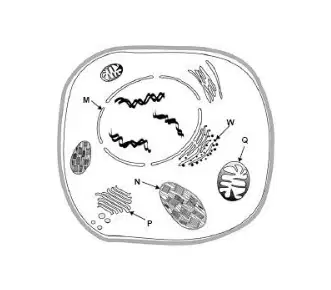
Which process occurs at structure W?
Packaging of molecules
Aerobic respiration
Protein Synthesis
DNA Replication
Which type of cell could use sugar to produce energy in an oxygen-deprived environment?
Yeast
Animal (muscle)
Bacterial
All of these
After mitotic division, how many chromosomes do daughter cells have compared with the parent cell?
Twice as many
The same number
Half as many
None of these
Which of the following is an accurate description of Gram negative bacteria after Gram staining?
Purple, because gram positive bacteria have a thick layer of peptidoglycan in the cell wall.
Purple, because gram positive bacteria have a thin layer of peptidoglycan in the cell wall.
Pink, because gram positive bacteria have a thin layer of peptidoglycan in the cell wall.
Pink, because gram positive bacteria have a thick layer of peptidoglycan in the cell wall.
A technician performing an ELISA uses a primary antibody with a mouse IgG2a isotype to analyze patient blood samples. Which of the following secondary antibodies would be the most appropriate to use in the assay?
Human anti-rabbit
Rabbit anti-mouse
Mouse anti-rabbit
Mouse anti-human
Which of the following best defines the term "epitope"?
The quantity of circulating antibody in the blood
The part of an antigen that is recognized by the immune system
The response to a specific foreign substance
The component of blood that contains the antibodies
A couple seeks the help of a genetic counselor to help them understand their chances of having a child with cystic fibrosis (CF). The husband’s father had CF, so they are worried he is a carrier of the mutant CF gene. The results of their genetic screening shows that both the husband and the wife are carriers of mutant CF gene. Both are “Cc”, where “C” represents the normal (dominant) gene, and “c” represents the mutant (recessive) gene. What is the percent likelihood each of their children would have CF?
No chance
25% chance of having the disorder
50% chance of having the disorder
100% chance of having the disorder
Genomics involves the study of all of the following EXCEPT:
Studying gene expression under varying conditions or in different cell types
Studying how DNA is replicated within the cell cycle
Comparing genomes between different organisms
Identifying the function of the genes in the genome
Mapping the location of genes in the genome
Human males inherit an X chromosome and mitochondrial DNA from their mothers.
True
False
Mixes or homogenizes small volume solutions
(a)
Enclosed, ventilated lab workspace
(a)
Separates molecules based on size and charge
(a)
Measures acidity and alkalinity of solutions
(a)
Mixes cell cultures at a constant temperature
(a)
Sterilizes contents with high pressure and steam
(a)
Amplifies DNA by heating and cooling
(a)
Measures mass
(a)
Measures and delivers volumes under 1.0 mL
(a)
Separates substances based on density
(a)
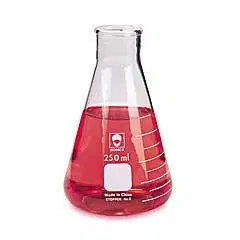
??
(a)
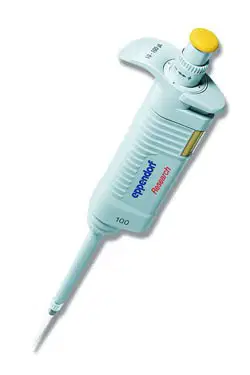
?.
(a)
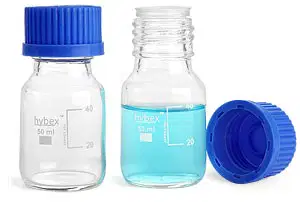
...
(a)
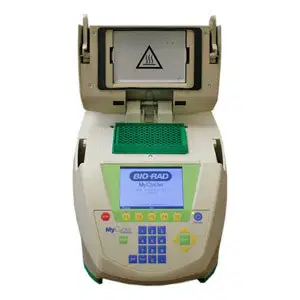
;;
(a)
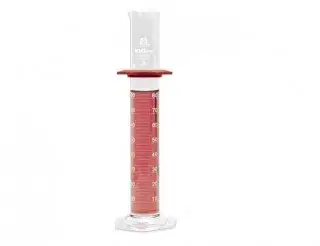
..
(a)
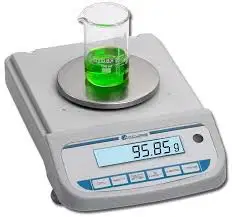
.
(a)
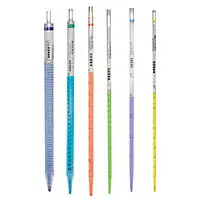
.
(a)
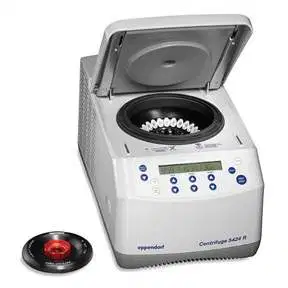
,.
(a)
Following an SOP, a technician made 1 L of LB agar and poured it into five media bottles for sterilization. After autoclaving and cooling the bottles, she noticed the autoclave tape did not change color. Are any of the bottles of agar usable?
yes
no
Measures hydrogen ion activity in water-based solutions
(a)
A device for regulating the temperature of anything subjected to heat
(a)
Instrument that produces enlarged images of small objects
(a)
Used to quantify biological or chemical events within a microtiter plate
(a)
Used to measure the absorption of light by a substance in order to quantify it
(a)
Connects to an electrophoresis tank to create an electric field between the electrodes
(a)
Enclosed, ventilated workspace designed to limit exposure to hazardous or toxic fumes, vapors, or dust
(a)

..
(a)
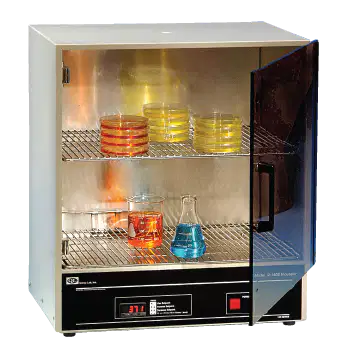
.
(a)
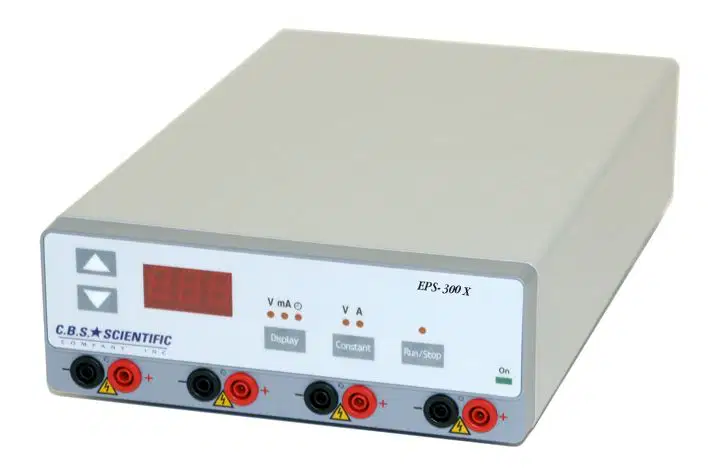
..
(a)
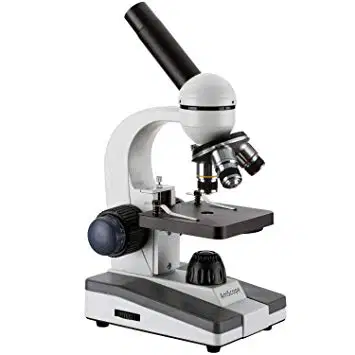
..
(a)
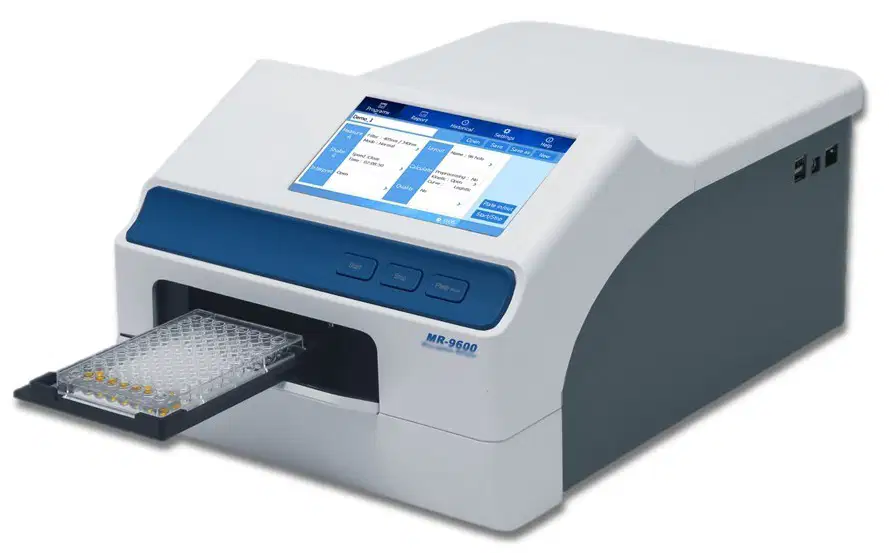
..
(a)
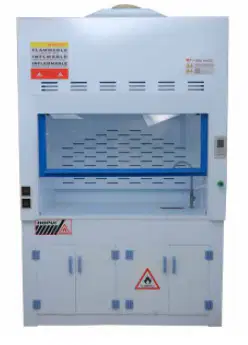
..
(a)

..
(a)
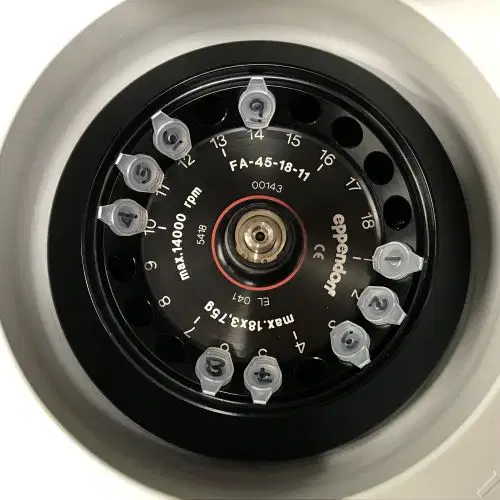
Where should the final microcentrifuge tube be placed in the rotor below to balance the centrifuge?
9
13
15
18

..
(a)
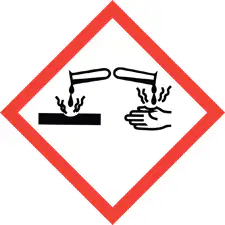
..
(a)

..
(a)

.
(a)

..
(a)
After adding primary antibody to an ELISA plate, a technician decides to visit the breakroom for a snack during the incubation period. In this case, is it acceptable for the technician to leave on their lab coat and gloves?
yes
no
Which of the following is permitted in the laboratory?
Open-toed shoes and sandals
Loose hair and clothing
Eye glasses
Eating, as long as there are no crumbs
all of these
Which of the following is true regarding the handling of biohazardous waste?
It does not require special handling.
It must be retained in the lab for a minimum of three months prior to disposal.
It does not need special labeling.
It must be segregated from other chemical and laboratory waste.
When labeling Petri plates, what information should be included on the plate?
The medium used
The name of the microorganism, or the sample being plated
The initials or name of the technician performing the plating
the date
all of these

..
(a)
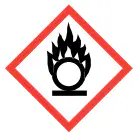
..
(a)

..
(a)
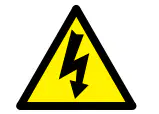
..
(a)

..
(a)
Who is responsible for safety in the laboratory?
The lab manager
Technicians
Students
Scientists
all of these
Why are there separate waste containers for biohazardous waste and regular trash?
Biohazardous waste needs to be disposed of differently than regular trash.
Biohazard bags are certified for puncture/tear resistance
To alert the personnel handling the trash that it might be hazardous.
all of these
All biohazardous waste must be biologically-inactivated before it is disposed of as regular trash.
True
False
Your supervisor provides you with a 1.0 mg/mL solution of Bovine Serum Albumin (BSA). What is the dilution ratio if you add 100 µL of 1.0 mg/mL BSA to 100 µL of diluent?
1:10
1:7.5
1:2
1:5
Your supervisor provides you with a 1.0 mg/mL solution of Bovine Serum Albumin (BSA), and asks you to make a 5-step 2-fold serial dilution (2-1 at each step).
After you have performed the 5-step 2-fold serial dilution (2-1 at each step) as requested, what is the dilution ratio at the final step (step 5)?
1:2
1:4
1:8
1:16
1:32
A technician is asked to prepare a dilution of a common laboratory disinfectant. The label indicates that a 1:39 dilution in water is required prior to use. Calculate the volume in mL of disinfectant required to make 2.0 L. Record the correct amount, rounded to one decimal place.
(a)
Calculate the volume in mL of 100% ethanol required to make 0.75 L of a 70% (v/v) solution of ethanol in water. Record the correct amount below.
(a)
Calculate the volume in mL of a 50 mg/mL ampicillin stock solution required to make 600 mL of LB with a final concentration of ampicillin at 100 µg/mL. Record the correct amount, rounded to one decimal place.
(a)
Calculate the volume in mL of 25X TAE Buffer required to make 1.3 L of 1X TAE Buffer. Record the correct amount below.
(a)
Calculate the mass in mg of kanamycin required to make 50 mL of a 12.5 mg/mL solution of kanamycin. Record the correct amount below.
(a)
Calculate the mass in g of CaCl2 required to make 375 mL of a 24% (w/v) CaCl2 solution. Record the correct amount, rounded to one decimal place.
(a)
Calculate the mass in g of agarose required to make 100 mL of a 0.9% agarose gel. Record the correct amount, rounded to one decimal place.
(a)
Calculate the volume in mL of a 10 M NaOH stock solution required to make 500 mL of 100 mM NaOH? Record the correct amount below.
(a)
Your supervisor asks you to make a 1 M solution of MgCl2. Which of the following could you use to calculate the mass of MgCl2 required to make the solution?
Formula weight
Molecular weight
Molecular mass
all of the above
When plotting this data on a graph should the concentration (the independent variable) be on the X or the Y axis?
x axis
y axis
Why must technicians practice aseptic technique when culturing cells?
To ensure they are using the correct media to grow their desired cells.
To ensure they are incubating their cells at the proper temperature
To ensure they are adding the correct supplements to their media
To ensure they are growing pure cultures of their desired cells.

