
Font size
 Worksheets
Oceanography: Plate Tectonics test
Total questions: 72
Worksheet time: 39mins
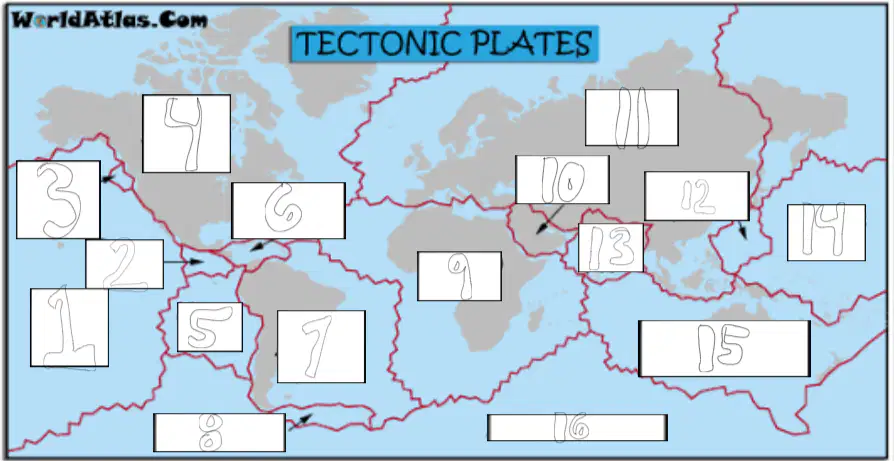
Fill in the blank for 1
Pacific Plate
Cocos plate
Caribbean plate
Atlantic plate
Fill in the blank for 2
Pacific Plate
Cocos plate
Caribbean plate
Atlantic plate
Fill in the blank for 3
Juan de fuca plate
Cocos plate
Caribbean plate
Atlantic plate
Fill in the blank for 4
Juan de fuca plate
North American Plate
Caribbean plate
Atlantic plate
Fill in the blank for 5
Juan de fuca plate
North American Plate
Nazca plate
Atlantic plate
Fill in the blank for 6
Juan de fuca plate
North American Plate
Nazca plate
Caribbean plate
Fill in the blank for 7
South America Plate
North American Plate
Nazca plate
Caribbean plate
Fill in the blank for 8
South America Plate
North American Plate
Nazca plate
Scotia plate
Fill in the blank for 9
South America Plate
African plate
Nazca plate
Scotia plate
Fill in the blank for 10
South America Plate
African plate
Arabian plate
Scotia plate
Fill in the blank for 11
South America Plate
African plate
Eurasian plate
Scotia plate
Fill in the blank for 12
Philippine plate
African plate
Eurasian plate
Scotia plate
Fill in the blank for 13
Philippine plate
African plate
Eurasian plate
Indian plate
Fill in the blank for 14
Philippine plate
Pacific plate
Eurasian plate
Indian plate
Fill in the blank for 15
Australian plate
Pacific plate
Eurasian plate
Indian plate
Fill in the blank for 16
Australian plate
Pacific plate
Antarctica plate
Indian plate
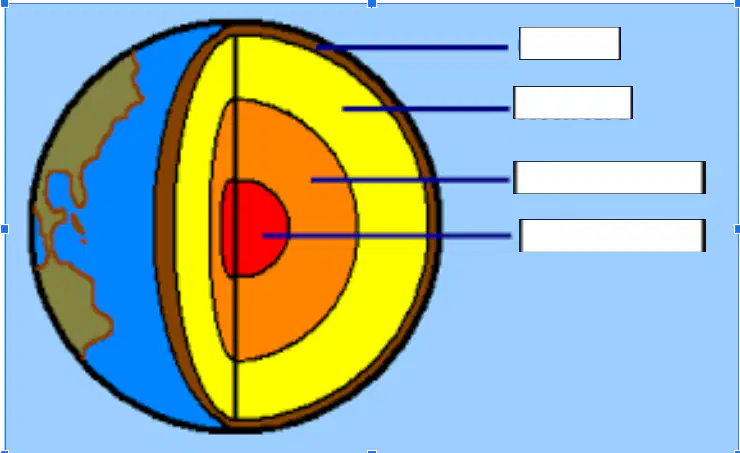
Choose the right order(top down)
Crust, mantle, outer core, inner core
Outer core, crust, mantle, inner core
Crust, outer core, inner core, mantle
Crust, mantle, inner core, outer core
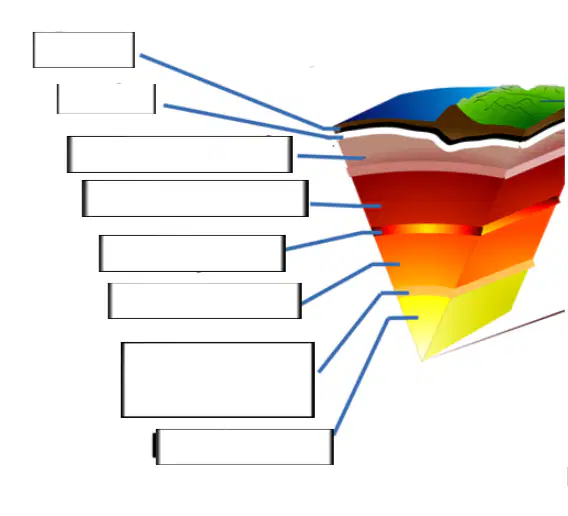
Name the layers(use comma and space, skip second to last one)
include:
-upper mantle
-lower mantle
-moho
-outer core
-inner core
-crrust
-D layer
(a)
thinnest layer
inner core
outer core
mantle
crust
thickest layer
inner core
outer core
mantle
crust
hottest layer
inner core
outer core
mantle
crust
coolest layer
inner core
outer core
mantle
crust
liquid layer
inner core
outer core
mantle
crust
most dense layer
inner core
outer core
mantle
crust
attached to crust, is solid but cracked into many plates
lithosphere
mesosphere
continental crust
asthenosphere
composed of metals iron and nickle
core
mantle
oceanic crust
continental crust
partially molten rock, "oatmeal" state of movement
asthenosphere
mesosphere
lithosphere
core
is made of granite
continental crust
oceanic crust
lithosphere
moho
is a chemical (oxygen) boundary between crust and mantle
moho
oceanic crust
continental crust
lithosphere
is more dense, thinnest crust
oceanic crust
continental crust
asthenosphere
moho
lower mantle composed of solid rock
mesosphere
asthenosphere
lithosphere
continental crust
composed of basalt
oceanic crust
continental crust
core
mesosphere
says that earth's crust consists of about 15 separate major plates in the lithosphere floating in the asthenosphere
plate tectonics
seafloor spreading
continental drift
says that upward moving mantle rock would carry heat causing the oceanic crust and shallow mantle rock to expand creating the mid-ocean ridge where volcanoes would cause basalt to spew up onto ocean floor
plate tectonics
seafloor spreading
continental drift
Says that all earth's land had once been joined into a single super continent called Pangaea, then moved apart
plate tectonics
seafloor spreading
continental drift
was proposed by Alfred Wegener
plate tectonics
seafloor spreading
continental drift
was proposed by Harry Hess
plate tectonics
seafloor spreading
continental drift
was proposed by John Tuzo Wilson
plate tectonics
seafloor spreading
continental drift
one plate moves toward another
Divergent
Convergent
Transform or Horizontal Displacement
plates move past each other
Divergent
Convergent
Transform or Horizontal Displacement
plates move away from each other
Divergent
Convergent
Transform or Horizontal Displacement
forms new seafloor
Divergent
Convergent
Transform or Horizontal Displacement
forms ocean trenches
Divergent
Convergent
Transform or Horizontal Displacement
forms folded mountain ranges on land
Divergent
Convergent
Transform or Horizontal Displacement
forms rift valleys
Divergent
Convergent
Transform or Horizontal Displacement
forms faults, cracks in crust where movement occurs
Divergent
Convergent
Transform or Horizontal Displacement
forms island arcs and volcanic mountains
Divergent
Convergent
Transform or Horizontal Displacement
creates tensional force
Divergent
Convergent
Transform or Horizontal Displacement
creates shearing force
Divergent
Convergent
Transform or Horizontal Displacement
creates compressional force
Divergent
Convergent
Transform or Horizontal Displacement
Examples of Divergent (on continents)
red sea
gulf of California
East Africa rift valley
Iceland
Examples of Divergent (in ocean)
Iceland
East Pacific Risa
Mid-Atlantic Ridge
red sea
Examples of Convergent (head-on)
Alps
Appalachian
Himalayas
Mt.Everest
Examples of Convergent (tail-end)
Alps
Appalachian
Himalayas
Mt.Everest
Convergent (continent)
Japan
the Philippines
Marianas trench
Alps
Transform example
Sand Andras Fault
gulf of California
East Africa rift valley
Himalayas
P-wave diagram
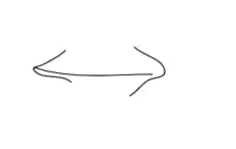
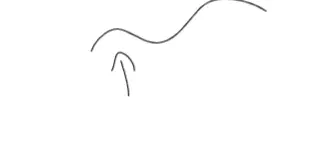
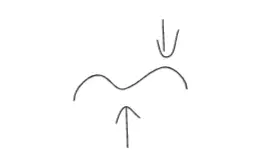
S-wave diagram
Direction of P-wave particals
longitudinal
transversal
Both Longitudinal and transversal
States of matter P-wave travels through
gass
solid
gass and solid
States of matter S-wave travels through
gass
solid
gass and solid
Two names for the P-wave
primary
pressure
plates
Pacific
Two names for the S-wave
Secondary
Shear
Shift
Slow
faster, P or S wave?
P-wave
S-wave
more dense=?
faster
slower
2 types of surface waves
S-wave
P-wave
L-wave
Rayleigh wave
How are surface waves different from body waves?
they are on the surface
only surface waves can be transversal
only surface waves can go through solid
more damaging
How are surface waves different from each other?
Rayleigh move in circle
Love waves move from side to side
Rayleigh waves are the slowest
Epicenter
point vertically above earthquake
where earthquake originates(crust)
instrument used to record the motion of the ground during an earthquake
occurs when an ocean plate runs into a continental plate and slides beneath it
focus
point vertically above earthquake
where earthquake originates(crust)
instrument used to record the motion of the ground during an earthquake
occurs when an ocean plate runs into a continental plate and slides beneath it
seismograph
point vertically above earthquake
where earthquake originates(crust)
instrument used to record the motion of the ground during an earthquake
occurs when an ocean plate runs into a continental plate and slides beneath it
subduction
point vertically above earthquake
where earthquake originates(crust)
instrument used to record the motion of the ground during an earthquake
occurs when an ocean plate runs into a continental plate and slides beneath it

