
 Worksheets
DNA/Biotechnology TRMS
Total questions: 100
Worksheet time: 2hrs 35mins
The biological process responsible for passing on physical traits from one generation to another.
Heredity
Stem cells
Genotype
Characteristics
Technology that utilizes biological systems, living organisms or parts of this to develop or create different products.
Genetics
Heredity
Biotechnology
Genotype
This is the practice of inserting the DNA of another species into an organism's DNA so that the organism gains a new trait.
Cloning
Gel Electrophoresis
Genetic Engineering
DNA Fingerprinting
This is the practice of choosing individuals of a species to mate based on their desirable characteristics
Bacterial recombination
Natural selection
Genetic modification
Selective breeding
Which of these is the correct definition of genetic modification/genetic engineering?
Choosing individuals to mate based on desired characteristics
Observing genetic changes in populations over time based on adaptive traits
Extracting stem cells to differentiate into specialized tissues
Altering the DNA of an organism at the molecular level
The process that has been used for centruries to create purebred animals such as black labs is called
recombinant DNA
cloning
selective breeding
A company that creates hair dye would most likely employ a bio-technician for which job?
researching trends
developing new colors
creating cost effective packaging
developing a product that will be safe for consumers
What would be a positive reason to genetically alter Fraser Fir trees in North Carolina to make them more resistant to rot?
By producing crops that are frost resistant
By making robots to replace large farm machines
The population of fir trees would increase and grow healthier.
By increasing the use of wind farms that produce electricity
Selective breeding is...
a process to create an organism with desired traits from parents with those desired traits
natural method of producing offspring with desired traits
creating a new species
making organisms reproduce during times of stress
An example of selective breeding is
a dog breeder mating 2 dogs to make more dogs
a farmer grows bees to pollinate the plants on his farm
a person pollinates 2 white rose plants to only create white roses
Which of these is the first step in selective breeding flowers.
Repeat the process only with the offspring with the desired traits
watch the seeds grow
Choose plants that have the desired trait to pollinate
chose which trait is desirable
A mutation
is always bad for an organism
is always good for an organism
is a change in an organism's DNA
never changes an organism
Which is NOT a result of selective breeding?
Large seedless watermelons that consumer demand
Bright oranges that are all about the same size
An insect that matches the color of the environment
A dog that has been bred to have short hair
The purpose of selective breeding is to
get bigger animals
get smaller animals
create animals with desirable traits
create animals with bad traits


How can farmers best use selective breeding to increase apple production?
By limiting the number of trees growing so they can have more space.
By choosing trees that are the largest in size.
By increasing the amount of water and fertilizer the trees receive.
By choosing trees that consistently have the most apples.
In which ways can genetic engineering can improve crops
Make them pest or drought resistant
Make them more nutritious
Make them larger
All answers are correct

A farmer has bred his pineapple plants from the sweetest pineapples in his last harvest to get even sweeter pineapple plants next time. What is this an example of?
Natural Selection
Genetic Engineering
Selective Breeding or artificial selection
Extinction
Which process is involved in selective breeding?
Allowing organisms to reproduce without human interference
Humans choosing individuals with desirable traits to parent the next generation
Using technology to cut DNA and insert genes to get the traits you want.
Which process is involved with genetic engineering?
Allowing organisms to reproduce without human interference
Humans choosing individuals with desirable traits to parent the next generation
Using technology to cut DNA and insert genes to get the traits you want.
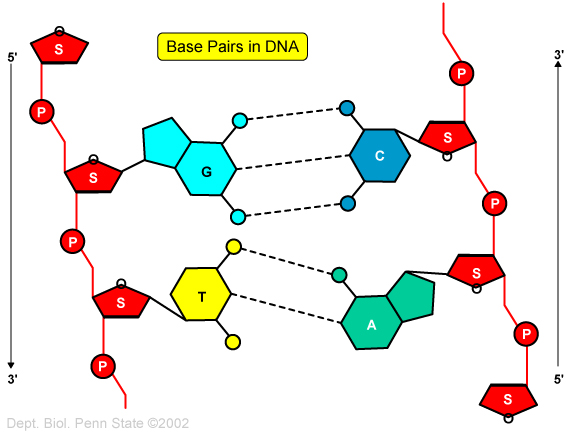
What base pairs with adenine?
phosphate
guanine
cytosine
thymine
What base pairs with guanine?
cytosine
guanine
thymine
sugar
What is DNA
donuts need algea
did no algebra
do not answer
deoxyribonucleic acid
What are the 3 parts of a nucleotide?
a phosphate group
a base
a wave caused by a large bomb
a 5 carbon sugar
Why is DNA important?
It teleports cookies to my locker.
It carries the instructions for our cells.
It allows me to be invisible.
It gave us a snow day in August.
If a DNA sequence it GAATGCCT, what are the matching base pairs?
ACGTACCTG
AEIOU and sometimes Y
CTTACGGA
GCCTATGC
If a DNA sequence is CATCAT, what are the matching base pairs?
ACGTAC
MEOW
GTAGTA
GCCTAT
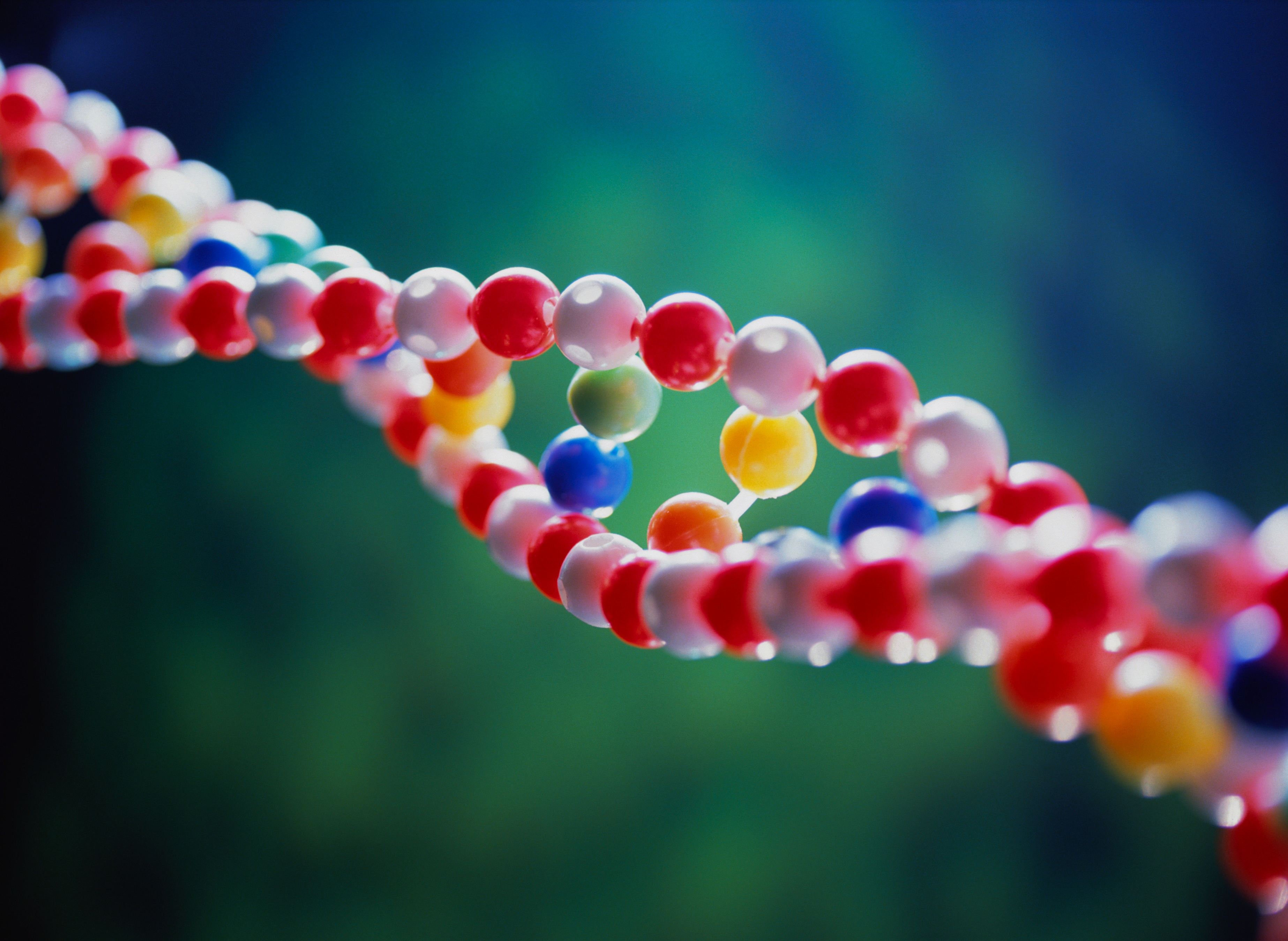
What does the structure of DNA resemble?
an airplane propeller
a twisted ladder
a twisted Christmas tree
a hippo in a tutu

How many chromosomes do human cells have?
46
23
2
44

Bundled up, organized DNA is called a
gene
trait
chromosome
nucleotide
DNA is a(n)
atom
molecule
nucleus
cell

A DNA molecule is shaped like a
toilet
cone
ball
spiraled ladder
DNA acts like a(n )__________________ for our traits.
instruction manual
nucleus
cell
gene
Chromosomes occur in the _______ of a cell.
cell
chromosome
gene
nucleus
_______ are features of a living thing that can include height, bone structure, disease risk, and hair, skin, and eye color.
Genes
Cells
Traits
Chromosomes
The backbone of a DNA molecule is made from a 5 carbon ______________ and a _______________ group.
lipid, carbon
sugar, phosphate
nitrogen, oxygen
nitrogen, sulfur
DNA makes a copy of itself in a process called ________________________________?
translation
replication
transcription
division
DNA is made of ______ strands.
1
2
3
4

Guanine, cytosine, adenine, and thymine are
sides of the ladder in DNA
phosphate molecules
nitrogen bases
The sides of the DNA molecule (the ladder) are made up of nucleotides. These nucleotides are ____ & ____.
deoxyribose sugar and phosphates
Splenda and phosphates
phosphates and glucose
T-G-A-C-C-A
T-G-A-G-C-A

The mutated DNA segment is TTACGCAAC. This is an example of ___ mutation.
Mutation: ATC GCAT
What mutation occurred?
The mutated DNA segment is TTCGCAAG. This is an example of ___ mutation.
A complex molecule containing the genetic information that makes up the chromosomes.
deoxyribose
deoxyribonucleic acid (DNA)
nucleotide
gene
When bases do not pair up correctly. It changes the genetic sequence.
genetic mutation
disease
genetic error
mutant
The base that pairs with cytosine.
guanine
thymine
phosphate
adenine
The chemicals that make up the rungs of the DNA ladder.
deoxyribose
phosphate
nitrogen bases
nucleotides
Nucleotides are made of a molecule of deoxyribose, connected to a phosphate & a nitrogen base. They make up one side of the DNA double helix.
true
false
The control center of the cell, containing DNA.
nucleus
ribosome
cell membrane
nucleotide
GAG-CTC-GAC-AGA
Mutant
GAG CTC-CAC-AGA
The mutated DNA segment is TTCGCAAG. This is an example of ___ mutation.
T-G-A-C-C-A
T-G-A-G-C-A
The mutated DNA segment is TTCGCAAG. This is an example of ___ mutation.
Mutation: ATC GCAT
What mutation occurred?

What is a section of DNA that codes for a specific protein called?
RNA
replication
gene
protein

What is it called when DNA makes a copy of itself?
Translation
Replication
Mitosis
Gene therapy

Who took this photo of DNA?
Rosalind Franklin
Francis Crick
Dr. Dre
James Watson

What is this?
Nucleotide
Amino Acid
Protein
Ribosome
Which of the following is NOT a part of a nucleotide?
Sugar
Phosphate
Phospholipid
Nitrogen Base
Which of the following is NOT a DNA base?
THYMINE
URACIL
ADENINE
GUANINE
Which of the following is the correct complement to the following DNA sequence?
ATCTGTA
TAGACAT
CATATAG
UACAUTC
What bonds DNA base pairs?
Nitrogen
Carbon
Hydrogen
Tape
What alternates along the sides of the DNA molecule?
Nitrogen Base Pairs
Phosphate and Sugar
Ribose and Deoxyribose
Adenine and Thymine
Which of the following describes RNA?
Deoxyribose Sugar
Adenine = Thymine
Single-stranded
Stays in the nucleus

