
Font size
 Worksheets
pt 1 and 2 of nervous system
Total questions: 85
Worksheet time: 3585secs
Select difference between the nervous and endocrine system
Nervous System uses electrical and chemical signals; Endocrine system uses chemical signal
Endocrine is slowly responsive; nervous system is fastly responsive
Nervous system's effects are short-lived; endocrine system's effects are long lasting
The nervous system uses only neuron as cells; endocrine does not
The Endocrine System uses only chemical signal called (a) .
What electrical signals does the nervous system use?
Action potential
Graded potential
Hormones
Neurotransmitters
The chemical signals that the nervous system uses is (a) .
What are the functions of the nervous systems
Sensory Input
Integration
Motor Output
Sensory Output
Integration occurs in the _________ and ____________
Brain
Spinal Cord
Organs
Select what is a part of the central nervous system
Brain
Spinal Cord
Thoracic Cavity
True or false? Are the cranial and spinal nerves apart of PNS or CNS?
PNS
CNS
What are the divisions of the PNS?
Sensory Afferent Division
Motor Efferent
Sensory Efferent
Sensory Afferent bring information into the ____
CNS
PNS
Sensory afferent division is _____ of the spinal because cells carry information.
dorsal
ventral
Motor Efferent Division comes from the ____ side of the spinal cord
Ventral
Dorsal
Does the sensory afferent have any divisions?
Yes
No
Select the divisions of the motor efferent division
Somatic Nervous System
Autonomic Nervous System
Sensory Afferent
Nonautomatic nervous system
The somatic nervous system controls which muscles?
Skeletal
Cardiac
Smooth
The autonomic nervous system control which muscles?
Skeletal
Cardiac
Smooth
True or false? The somatic nervous system is involuntary
True
False
Select the divisions of the Autonomic Division
Parasympathetic division
sympathetic divison
Sensory Afferent
Motor Efferent
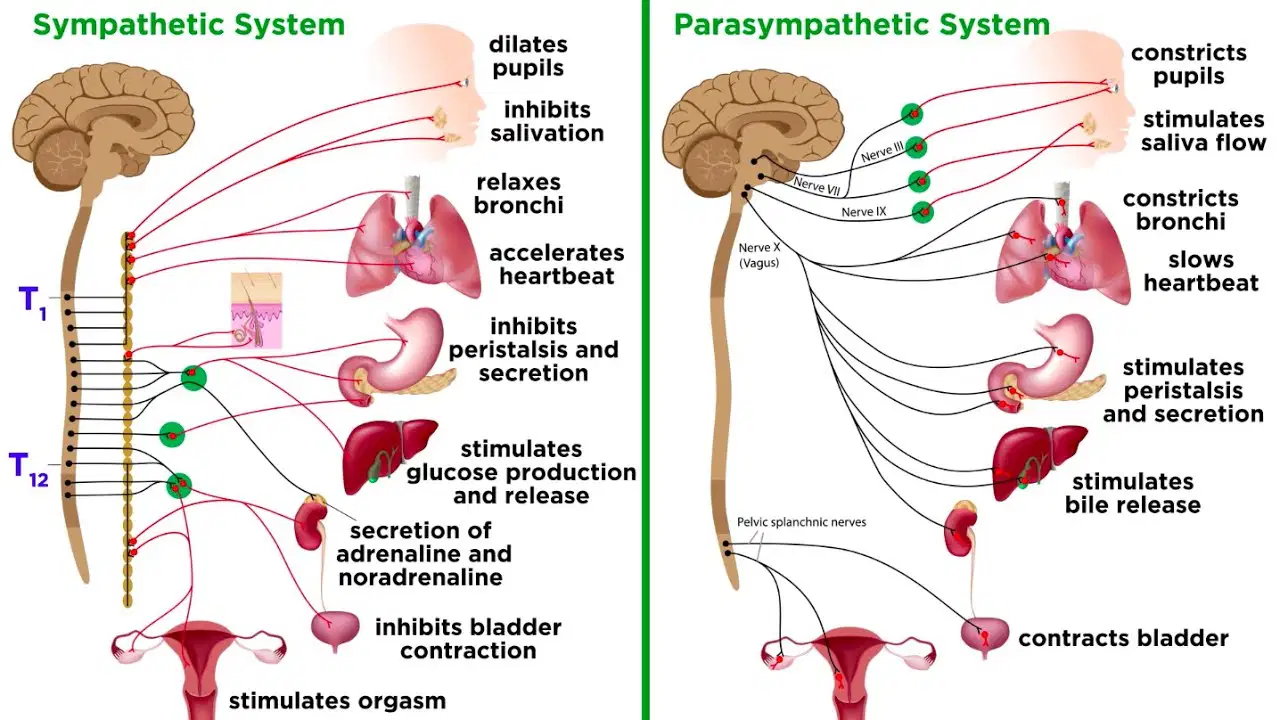
The symphathetic division is also known as the
fight or flight
rest and digest
Select the cells of the nervous system
Glial cells
Neurons
Osteocytes
Chondrocytes
Select the functions of neurons
Sensory input
Integration
Motor Output
Sensory Output
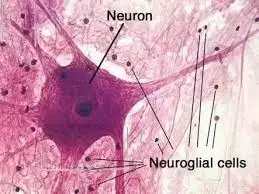
Which are more numerous: Glial or neurons?
Glial
Neurons
How many central nervous system glial cells are there?
3
2
4
Select the type of CNS Glial Cells
Astrocytes
Microglial
Oligodendrocyte
Ependymal
Schwann Cells
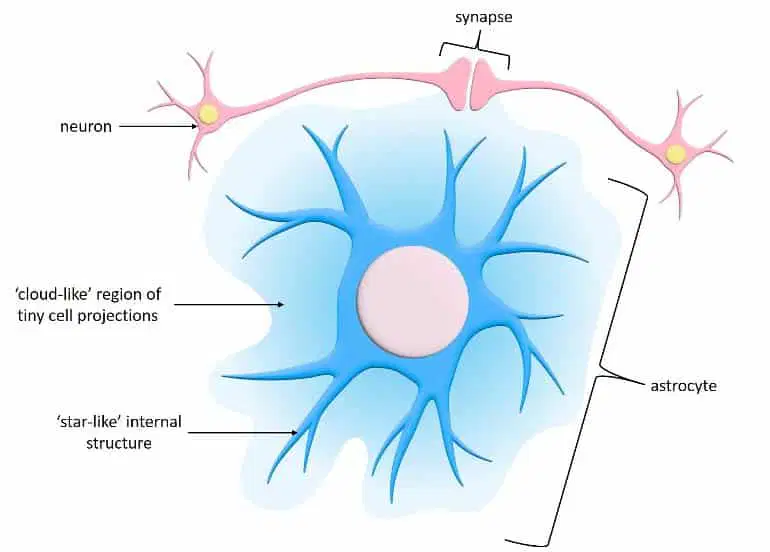
_____________ are glial cells that maintain tissue around neurons and form the blood-brain barrier
astrocytes
microglial
ependymal
oligodenrocytes
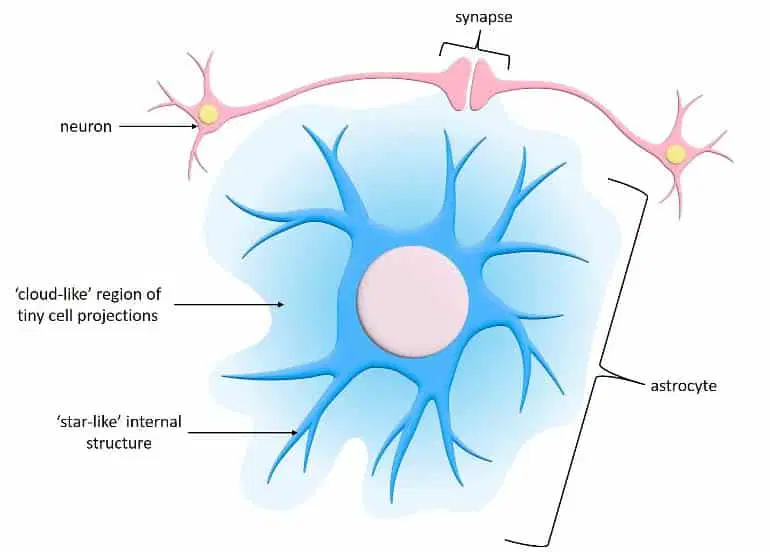
Microglia perform (a) , which engulf foreign substance with its arms
A _________ ________ is the electrical difference between the inside and outside of a cell
(a)
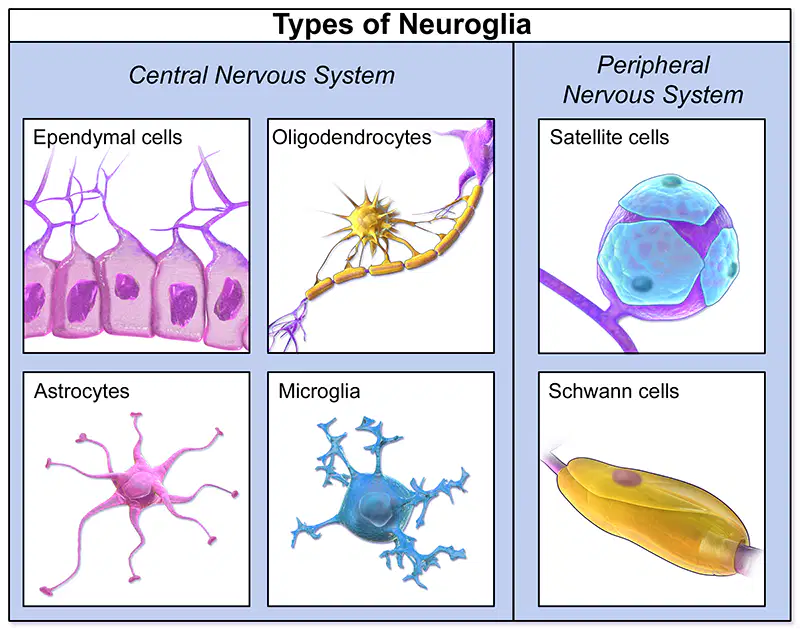
Oligodendrocyte form an insulation around neurons, which is called the _____ _____
(a)
The ________ cells line the brain's ventricles and central canal of the spinal cord
Ependymal
Microglial
Oligodendrocyte
astrocyte

What is the liquid right here?
(a)
What fluid does the central canal, brain's ventricles, and subarachnoid have?
Cerebrospinal fluid
Water
Calcitonin
A collection of somata in the CNS is a (a) .
A collection of somata in the PNS is a (a)

Ependymal cells have (a) to move CSF
How many PNS Glial Cells are there?
2
3
4
Select the 2 PNS Glial Cells
Schwann Cells
Satellite Cells
Astrocytes
Ependymal
True or false? Schwann cells are in the CNS
True
False (only PNS)
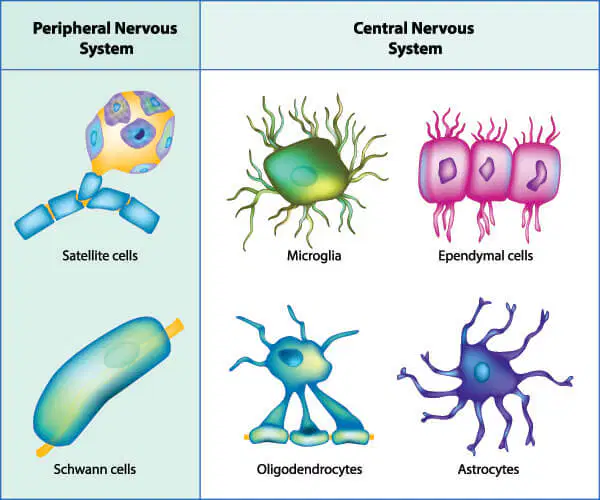
True or false? The role of the satellite cells is to maintain the PNS interstitial fluid.
True
False
Select what soma's components
Nucleus
Nissi body
Neurofibrils
Smooth ER
Most somata is in the ___
CNS
PNS
__________ occurs in the cell body
Integration
Motor Output
Select the processes of a neuron
Dendrites
Axon
Soma
Astrocytes
Select the dendrites electrical signal
Graded Potential
Action Potential
They have no electrical signal
Select the axon's electrical signal
Action potential
Graded Potential
Axon's terminals release (a) onto onto neuron or an effector cell
Select the parts of the axon
axon hillock
schwann cell
node of ranvier
telodendria
axon terminals
Gaps between the schwann cells are the...
axon hillock
schwann cell
nodes of ranvier
telodendria
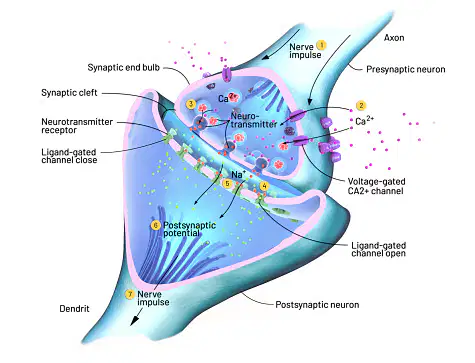
A junction between two neurons or between a neuron and an effector cell is a...
(a)
The axon terminals have synaptic (a)
The synaptic vesicles of the presynaptic neuron perform (a) , which bind onto the synaptic neuron.
The space between the postsynaptic and presynaptic neurons are the _______ _____
(a)
Select the Structural Classification of neurons
multipolar
bipolar
unipolar
receptor

where are bipolar neuron found?
retina of eyes
nose
tongue
heart
the most common neuron is...
multipolar
bipolar
unipolar
All sensory neurons are
unipolar
multipolar
bipolar
select the function classification of neurons
receptor
sensory neurons
integration
motor neurons
effector
True or false? Intergral neurons are the least common.
true
false (most common)
Do synapses correlate w/ memory?
Yes
No
The electrical difference between the inside and outside of a cell is the ________ ________
(a)
What is used to measure the membrane potential
EEG
EKG
voltmeter
telegraph
The membrane potential is about _____ of a resting neuron
-70mV
-55mV
-90mV
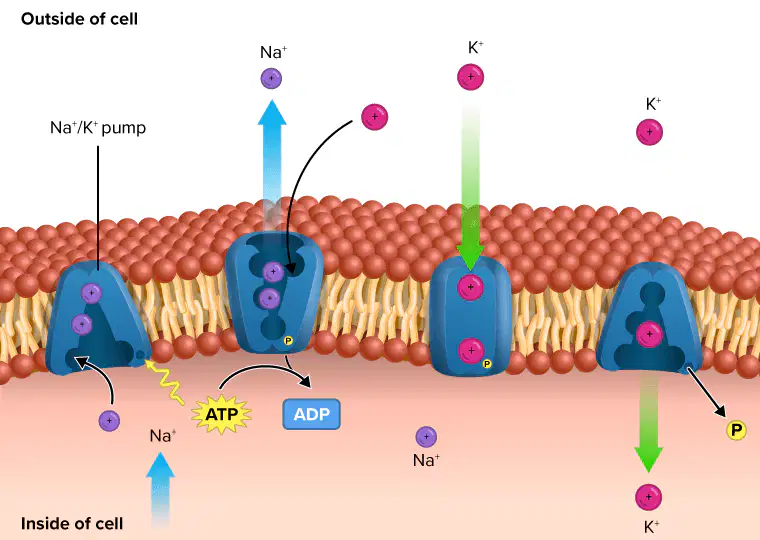
In the sodium-potassium pump, there are ____ sodium ions and 2 potassium ions
three Na+; two K+
2 Na+; 2 K+
3 Na+; 3 K+
The sodium-potassium pump uses what type of energy?
(a)
In the _______ _______ channel, integral proteins leak potassium
(a)
True or false? In a potassium leakage channel, potassium ions will go a low concentration of potassium ions
True
False
In ________ _________ channel, sodium ions go to a lower concentration of sodium ions
(a)
The electrical difference is (a)
Where do electrical signals first occur in the neuron?
Axon Hillock
Dendrites
Nodes of Ranvier
Axon Terminals
______________ is when the membrane potential becomes more positive
depolarization
hyperpolarization
repolarization
Select an example of depolarization
sodium ion influx in membrane
Blood calcium influx
potassium ions reflux in membrane
Chloride ingress
In repolarization, the neuron does not return to its resting membrane potential
true
false

Select an example of repolarization
Potassium ions reflux in membrane
Sodium ions influx in membrane
Blood calcium ions influx in membrane
Hyperpolarization is when the membrane potential is ______ that -70mV
less
more
What does EPSP stand for
(a)
EPSP is associated with
Depolarization
hyperpolarization
Neurotransmitters open ______ ion gated channels
sodium
potassium
chloride
Neurotransmitters are released from the _____ ________ of pre-synaptic neurons
(a)
In hyperpolarization, do neurotransmitters bind to the same receptor proteins as neurotransmitters in depolarization?
Yes
No
Chloride gated ion channels are opened by (a) .
IPSP stands for...
(a)
The threshold potential is
-55mV
-70mV
-90mV
Which one allows the membrane potentiak to be near the threshold potential, if the membrane potential is at its resting state?
Hyperpolarization
Depolarization
EPSP
IPSP
Waves of change in the membrane potential in the dendrites and soma is the _____ _______
(a)
Waves get ________ in graded potential
smaller
bigger
If the membrane potential is -65mV, is that hyperpolarization or depolarization?
hyperpolarization
Depolarization

