
 Worksheets
Unit 9 Natural Selection Test Review
Total questions: 85
Worksheet time: 52mins

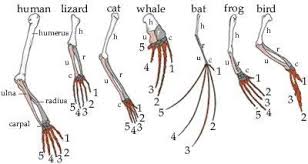
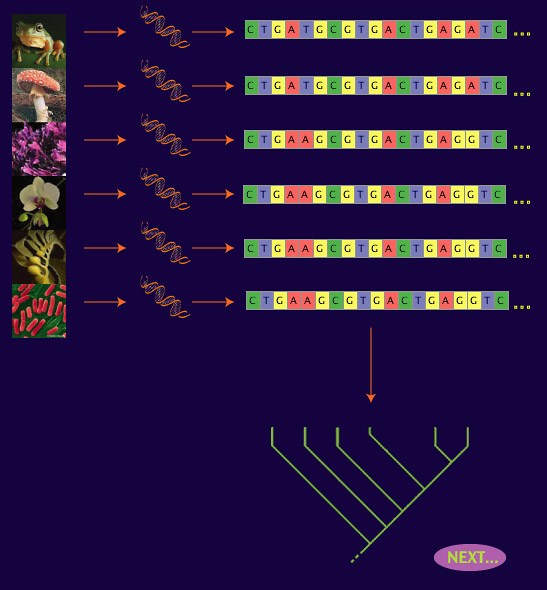


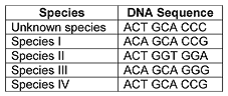

Recently, scientists have been able to use ___________to find common proteins and amino acids to determine how closely related species are.
DNA
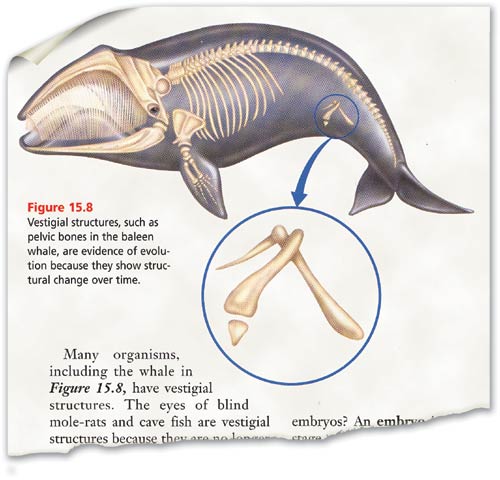
Vestigial structures
Fossils
Homologous structures
Which IS NOT used as evidence for evolution?
Fossils
Natural Selection
Early Development/Embryos
Body Structure/Anatomy
DNA/Proteins
Which of the following is the collection of life's remains found in sedimentary rock?
natural selection
homologous structures
Charles Darwin
the fossil record


What conclusion can you draw from the fact that many modern whale species have vestigial pelvic and leg bones?
The ancestors of whales may have been land mammals
Whales could walk if they wanted to
Whales are preparing to evolve into land animals
Someday whales will be able to walk and will have legs


The image suggests that whales and hippopotamuses shared a common ancestor. When did these ancestors live?
25-35 million years ago
50-60 million years ago
60-75 million years ago
75 million years ago or more
Which of the following is NOT a Biological Evidence of Evolution?
Fossils
Embryology
Comparative Anatomy
Molecular Biology


Tall kelp have a distinct advantage over shorter kelp in receiving needed sunlight in their ocean environment
directional selection
disruptive selection
stabilizing selection
sexual selection
artificial selection

snails with a forward spiral and snails with a backward spiral have an advantage in their environment
directional selection
stabilizing selection
disruptive selection
artificial selection
sexual selection
What is natural selection?
Your natural fate is decided from birth
Nature actively chooses who surivives
Those best suited to demands of environment surivie
The weakest of a species survive
The total collection of genes in a population at any one time.
population genetics
gene pool
gene flow
allele frequency




What is suggested by the anatomical similarity of different species of vertebrates?
no evolutionary relationships between the groups
recent common ancestry
similar environments in the past
evolution from a distant common ancestor


The five-factors for evolution are gene flow, genetic drift, mutation, natural selection and ....
non-random mating
controlled mating
emigration
immigration
The combined alleles of all individuals in a population is called the population's
phenothype
gene pool
mutation rate
allele frequency


