Wayground logo

Free Printable Worksheets

Font size

S
M
L
XL
Worksheets

solar

Total questions: 139

Worksheet time: 3hrs 38mins
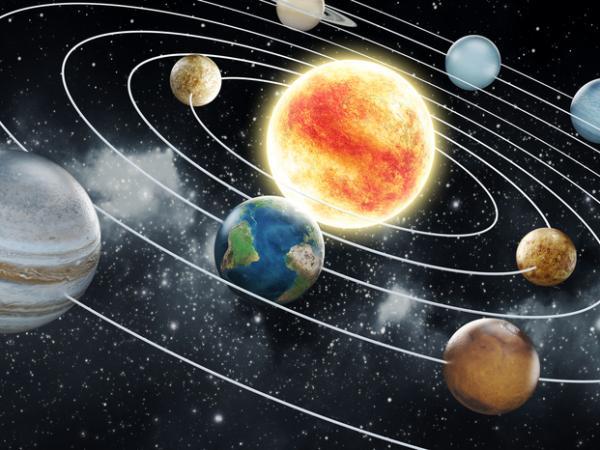
Name
Class
Date
1.
How long does it take to the Earth to do the ROTATION MOVEMENT?
a)
365 days
b)
24 hours
c)
24 hours + 6 hours
d)
28 days
2.
What is the Sun?
a)
It is a satellite
b)
It is a Star
c)
It is a comet
d)
It is a planet
3.
How many planets are there in the Solar System?
a)
eight
b)
three
c)
nine
d)
ten
4.

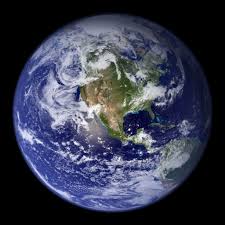
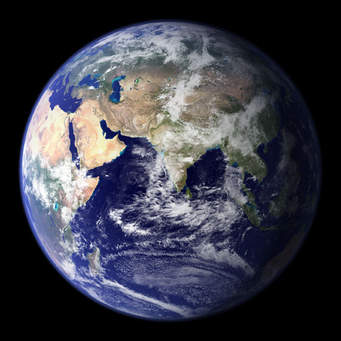
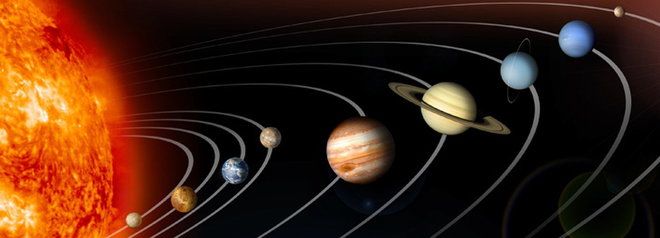
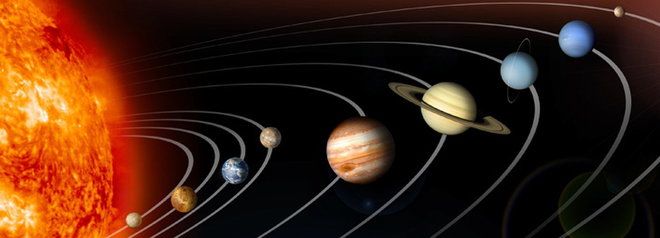
What is the planet ?

a)

Mars

b)

Earth

c)

Pluton

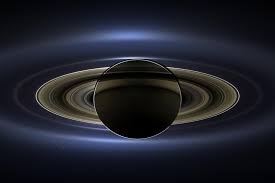
5.

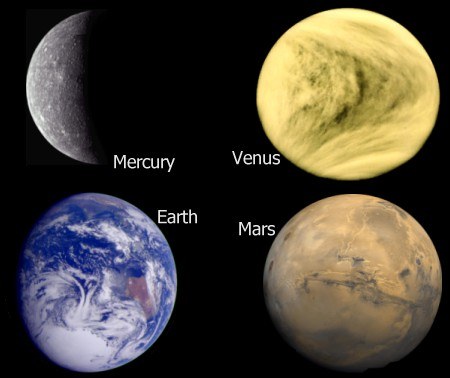
what is the planet ?

a)

Uranus

b)

Venus

c)

Saturn

6.

Mercury is the smallest planet in the Solar System.

a)

True

b)

False

7.
Which planet is closest to the sun?
a)
Uranus
b)
Mercury
c)
Neptune
d)
Earth
8.
Which is the second closest planet to the sun?
a)
Earth
b)
Saturn
c)
Venus
d)
Mercury
9.
Which planet is farthest from the sun?
a)
Neptune
b)
Pluto
c)
Earth
d)
Uranus
10.
A small rocky object orbiting the sun.
a)
Asteroid
b)
Comet
c)
Moon
d)
Meteor
11.
A natural satellite of a planet.
a)
Asteroid
b)
Comet
c)
Moon
d)
Meteor
12.
What planet is the largest planet in our solar system?
a)
Earth
b)
Jupiter
c)
Uranus
d)
Saturn
13.
What does orbit mean?
a)
The path a planet takes around the sun.
b)
The spinning of the planet.
c)
When a rocket blasts into space.
d)
To fly into outer space.
14.
How many moons orbit the planet Earth?
a)
2 moons
b)
No moons
c)
1 moon
15.
What best describes the Asteroid Belt?
a)
A group of large rocks that are in outer space.
b)
The 8 planets that are in our solar system.
c)
A line of clouds in outer space.
16.
What is the only planet that has life on it?
a)
Earth
b)
Mars
c)
Venus
d)
Pluto
17.
There is one star in our solar system.
a)
True
b)
False
18.
Who stated the sun was the center of the solar system?
a)
Ptolemy
b)
Copernicus
c)
Kepler
d)
Galileo
19.
Who used the telescope to observe the heavens?
a)
Ptolemy
b)
Copernicus
c)
Kepler
d)
Galileo
20.
What theory tries to explain the origin of the universe?
a)
Big Bang Theory
b)
Copernican Theory
c)
Ptolemain Theory
d)
Galilean Theory
21.
What does a waxing moon mean?
a)
when the lit part of the moon increases
b)
when the lit part of the moon decreases
c)
the pathway the earth takes around the sun
d)
all of the planets, moon, and other space objects going around the sun
22.
What is the definition of orbit?
a)
the spinning of the earth on its axis
b)
when the lit part of the moon increases
c)
all of the planets, moon, and other space objects going around the sun
d)
the imaginary line that goes through the north and south poles that the earth spins on
23.
What is the center of our solar system?
a)
moon
b)
earth
c)
sun
d)
Jupiter
24.
Which one takes 24 hours?
a)
rotation
b)
revolution
25.
What describes the earth going around the sun?
a)
rotation
b)
revolution
26.
What causes day and night?
a)
rotation
b)
revolution
27.
What causes the seasons to change?
a)
rotation
b)
revolution
28.
Which one takes one year?
a)
rotation
b)
revolution
29.
What is energy created by the sun called?
a)
sun energy
b)
hot energy
c)
solar energy
d)
solar heat
30.
What is the sun?
a)
a star
b)
a comet
c)
a planet
d)
an asteroid
31.
How does the moon get its light?
a)
it reflects the sun's light onto the earth
b)
it creates its own light, similar to a star
c)
it gathers light from earth during the day
d)
the moon is actually a yellow color, so it appears to be bright during the nighttime
32.
Which planet in our solar system is closest to the Sun?
a)
Earth
b)
Jupiter
c)
Mercury
d)
Saturn
33.

Which of the following is an accurate model of how the Sun, Earth, and Moon move?

a)

Sun and moon orbit Earth

b)

Earth and moon orbit Sun

c)

Earth orbits the Sun and the moon orbits Earth

d)

Earth and sun orbit moon

34.
What planet is eighth in the Solar System?
a)
Uranus
b)
Jupiter
c)
Neptune
d)
Mars
35.
Earth and the other planets closest to the Sun are made mostly of _______
a)
gas
b)
metal
c)
water
d)
rock
36.
Which is the largest object in our solar system?
a)
Sun
b)
Jupiter
c)
Earth
d)
Pluto
37.
A ball of ice and dust with a tail of gas and dust pointing away from the sun.
a)
Asteroid
b)
Comet
c)
Moon
d)
Meteor
38.
Which is the second closest planet to the sun?
a)
Earth
b)
Saturn
c)
Venus
d)
Mercury
39.
Which planet is third from the sun?
a)
Mars
b)
Pluto
c)
Venus
d)
Earth
40.

Which planet is NOT one of the

"Gas Giants"?

a)

Uranus

b)

Venus

c)

Neptune

d)

Saturn

41.

What is the largest planet in

our solar system?

a)

Neptune

b)

Jupiter

c)

Uranus

d)

Mars

42.
One full orbit of an object around another object is called a ________.
a)
axis
b)
rotation
c)
revolution
d)
satellite
43.
Select the order from smallest to largest.
a)
Sun, Milky Way, solar system, universe
b)
Sun, Milky Way, universe, solar system
c)
Sun, solar system, Milky Way, universe
d)
Sun, solar system, universe, Milky Way
44.
Day and night is caused by the _____________ of earth on its axis.
a)
revolution
b)
orbit
c)
rotation
45.

Which outer planets have rings?

a)

Just Saturn

b)

Saturn and Jupiter

c)

Jupiter, Neptune, and Saturn

d)

all 4 of the outer planets

46.
Which planet is the hottest planet?
a)
Mercury
b)
Mars
c)
Venus
d)
Saturn
47.

This table shows the rotation period and revolution period for 6 planets, and Earth’s moon, all relative to Earth’s periods. Which 2 planets have shorter days than Earth?

a)

Jupiter and Saturn

b)

Venus and Mercury

c)

Mars and Jupiter

d)

Saturn and Moon

48.

How long ago was our solar system formed?

a)

10 million years ago

b)

4.6 million years ago

c)

4.6 billion years ago

d)

2 billion years ago

49.

a small rocky body orbiting the sun, ranging from the size of a small house to dust particles

a)

nebula

b)

terrestrial planets

c)

collision

d)

asteroids

50.

the astronomical model in which the Earth and planets revolve around the Sun at the center of the Solar System.

a)

Aristarchus

b)

accretion

c)

nebula

d)

heliocentric system

51.

a large planet composed mostly of gases, such as hydrogen and helium, with a relatively small rocky core. The gas giants of our solar system are Jupiter, Saturn, Uranus and Neptune

a)

terrestrial planets

b)

planetesimals

c)

nebula

d)

gas giant planets

52.

How many stars are in our Solar System?

a)

Billions

b)

1

c)

5,000

d)

8

53.

Which of these planets is the farthest from the sun?

a)

Mercury

b)

Earth

c)

Neptune

d)

Jupiter

54.

Which is the largest planet in our Solar System?

a)

Saturn

b)

Neptune

c)

Earth

d)

Jupiter

55.

Which planet is sometimes called the "red planet"?

a)

Jupiter

b)

Mercury

c)

Mars

d)

Uranus

56.

Which of these sets of planets are terrestrial planets?

a)

Mercury, Saturn, Mars, Venus

b)

Mars, Earth, Venus, Mercury

c)

Earth, Mars, Neptune, Jupiter

d)

Venus, Mercury, Earth, Uranus

57.

What is in our Solar System?

a)

Planets

b)

Moons

c)

Sun

d)

All of the above

58.

Which planet is the hottest in the Solar System?

a)

Earth

b)

Mercury

c)

Venus

d)

Mars

59.

Which planet is the sixth from the sun?

a)

Venus

b)

Jupiter

c)

Uranus

d)

Saturn

60.

Which planet has the Big Red Spot?

a)

Jupiter

b)

Saturn

c)

Mars

d)

Neptune

61.

Which planet is Earth's sister planet?

a)

Neptune

b)

Mars

c)

Venus

d)

Saturn

62.

About how many days does it take to revolve around the sun on Earth?

a)

30

b)

365

c)

24

d)

1

63.

Which planet is third from the sun?

a)

Venus

b)

Mars

c)

Jupiter

d)

Earth

64.

The correct term for the way Earth spins on it's axis is ___?

a)

rotate

b)

revolve

c)

year

d)

rings

65.

Some sources say Uranus is not a gas giant, but an ________ instead.

a)

red giant

b)

dwarf planet

c)

ice giant

d)

sister planet

66.

Which planet was named after the messenger of Roman gods?

a)

Mars

b)

Saturn

c)

Earth

d)

Mercury

67.
The planets can appear to move........
a)
East to West, West to East, or stand still
b)
West to East only
c)
East to West only
d)
East to West or stand still
68.
Why do stars in a constellation seem to stay in one position?
a)
The Stars orbit the sun like the Earth does
b)
The Stars do not orbit the sun or earth
c)
The Stars orbit the earth like the moon
69.
What causes the seasons to change?
a)
The earth rotates on its axis
b)
The earth revolves around the sun
c)
The earth's axis is tilted
d)
Wind patterns on earth
70.
Why do we have different phases of the moon?
a)
Because the moon revolves around the earth
b)
Because the moon revolves around the sun
c)
Because the earth rotates
d)
Because the moon rotates
71.
What is the largest planet in our solar system?
a)
Earth
b)
Saturn
c)
Jupiter
d)
The Sun
72.
Stars vary greatly in .........
a)
Size and temperature only
b)
Size and color only
c)
Size, color and temperature
d)
Color and temperature
73.
If the moon is a crescent shape then changes to a gibbous. What is the next phase ?
a)
If the moon is a crescent shape then changes to a gibbous. What is the next phase ?
b)
Cresent
c)
Gibbous
d)
Full moon
74.
The four planets that are nearest the sun are called the.........
a)
Inner planets
b)
Outer planets
c)
Small planets
d)
Gas giants
75.
After a new moon, which phase of the moon appears next?
a)
Crescent moon
b)
New moon
c)
Gibbous moon
d)
Full moon
76.
 How long does it take the earth to rotate once? 
a)
12 hours
b)
24 hours
c)
20 hours
d)
36 hours
77.
Season changes and days being longer in the summer are due to....
a)
The earths tilt
b)
The earths rotation
c)
The Earths revolution
78.
Which of the following planets is Earths sister planet?
a)
Venus
b)
Neptune
c)
Mars
d)
Mercury
79.
The constellation Orion cannot be seen from the same place in the sky all year because....
a)
the Stars move
b)
Earth revolves around the sun
c)
The moon revolves around the earth
80.
 Which of the following planets are the gas giants, outer planets?
a)
Mercury , Venus, mars
b)
Jupiter, Saturn, uranus
c)
Mars, Jupiter, venus
81.

Which planet is closest to Earth in size?

a)

Mercury

b)

Uranus

c)

Venus

d)

Mars

82.

Which is NOT a rocky planet?

a)

Earth

b)

Neptune

c)

Mercury

d)

Mars

83.

Which is NOT true about Mercury?

a)

it has no moons

b)

it has no atmosphere

c)

it is 1/2 the size of Earth

d)

it is closest to the sun

84.

Hamea, Makemake, Ceres, and Eris are all

a)

dwarf planets

b)

meteoroids

c)

asteroids

d)

comets

85.

Which is the smallest celestial body in our Solar System?

a)

meteoroid

b)

planet

c)

dwarf planet

d)

asteroid

86.

Which is the largest celestial body in our Solar System?

a)

Jupiter

b)

Sun

c)

Saturn

d)

Mars

87.

Which celestial body turns on its side?

a)

Neptune

b)

Mars

c)

Jupiter

d)

Uranus

88.

The asteroid belt is found between

a)

The Sun and Mercury

b)

Neptune and Uranus

c)

Venus and Earth

d)

Mars and Jupiter

89.

What gas causes Uranus and Neptune to look blue?

a)

carbon dioxide

b)

methane

c)

sulfuric acid

d)

nitrogen

90.

Which planet is 4x bigger than Earth?

a)

Mars

b)

Neptune

c)

Saturn

d)

Jupiter

91.

What is true about Jupiter, Saturn, Uranus, and Neptune?

a)

they all have many moons

b)

they all have a solid surface

c)

they all are smaller than Earth

d)

they all have liquid water on the surface

92.

How does Mars size compare to Earth?

a)

it's 2x bigger

b)

it's 3x bigger

c)

it's 1/2 the size

d)

it's 1/3 the size

93.

How many moons does Mars have?

a)

0

b)

1

c)

2

d)

3

94.

How many moons does Mercury have?

a)

0

b)

1

c)

2

d)

3

95.

About how much of Earth's atmosphere is oxygen?

a)

20%

b)

40%

c)

60%

d)

80%

96.

Which is true about Mercury, Venus, Earth, and Mars

a)

they all have an atmosphere

b)

they all have many moons

c)

they all have rings made of rocks and ice

d)

they all have a rocky surface

97.

What is the hottest planet?

a)

Mercury

b)

Venus

c)

Mars

d)

Jupiter

98.

Which planet is closest to Neptune in size?

a)

Earth

b)

Venus

c)

Uranus

d)

Mars

99.

What are comets made of?

a)

sulfuric acid

b)

ice

c)

helium and hydrogen

d)

carbon dioxide

100.

What gases make the Sun so hot and bright?

a)

carbon dioxide & sulfuric acid

b)

nitrogen & oxygen

c)

helium & hydrogen

d)

methane & helium

101.

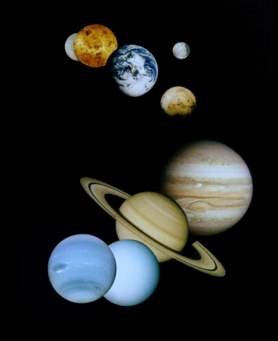
What is the name of this planet?

a)

EARTH

b)

MERCURY

c)

MARS

d)

VENUS

102.

This planet has rings.

a)

SATURN

b)

MERCURY

c)

MARS

d)

VENUS

103.

The biggest planet is...

a)

JUPITER

b)

EARTH

c)

MARS

d)

VENUS

104.

This planet is also called "The Red Planet"

a)

JUPITER

b)

EARTH

c)

MARS

d)

VENUS

105.

The hottest planet is...

a)

JUPITER

b)

EARTH

c)

MARS

d)

VENUS

106.
The moon is a natural  ______ of Earth.
a)
comet
b)
axis
c)
satellite
d)
space probe
107.
Earth's ________ on its axis causes day and night.
a)
rotation
b)
revolution
c)
phase
d)
comet
108.
One kind of  _______ is the crescent Moon.  
a)
axis
b)
asteroid
c)
phase
d)
space probe
109.
One full orbit of an object around another object is called a ________.
a)
axis
b)
rotation
c)
revolution
d)
satellite
110.
The __________ has planets, moons, comets, and asteroids.
a)
solar system
b)
earth
c)
rotation
d)
United States
111.
One of the main differences between the outer and inner planets is __________.
a)
The inner planets all have water
b)
the inner planets are much bigger than the outer planets
c)
the outer planets are gas planets
d)
the outer planets have rings, and the inner planets don't
112.
Where is the asteroid belt found?
a)
between earth and mars
b)
Between Uranus and Neptune
c)
Between Mercury and Venus
d)
Between Mars and Jupiter
113.
Why does Earth have different seasons? 
a)
because of the distance between Earth and the sun 
b)
because of the speed of Earth as it rotates on its axis 
c)
because of the amount of light blocked by the moon on its axis 
d)
because of the tilt of Earth on its axis as it moves around the sun 
114.

What is a meteoroid that has hit Earth's surface?

a)

Meteor

b)

Asteroid

c)

Comet

d)

Meteorite

115.
 How long does it take the earth to rotate once? 
a)
12 hours
b)
24 hours
c)
20 hours
d)
36 hours
116.
What model of the solar system states the sun is the center
a)
Geocentric Model
b)
Heliocentric model
c)
Biocentric modal
d)
Hydrocentric  model
117.
Put the planets in order from the sun.
a)
Mercury, Venus, Mars Earth, Jupiter, Saturn, Uranus, Neptune, Pluto
b)
Mercury, Venus, Earth, Mars, Jupiter, Sarturn, Neptune, Uranus, Pluto
c)
Mercury, Venus, Earth, Mars, Jupiter, Sarturn,  Uranus, Neptune,Pluto
d)
Mercury, Venus, Earth, Mars, Sarturn, Jupiter, Neptune, Uranus, Pluto
118.

Which planet is NOT one of the

"Gas Giants"?

a)

Uranus

b)

Venus

c)

Neptune

d)

Saturn

119.
When the southern hemisphere has winter, what season does the northern hemisphere have?
a)
winter
b)
spring
c)
summer
d)
fall
120.
It takes the earth one year to make one what?
a)
revolution
b)
rotation
c)
turn
d)
flip 
121.
What is a planet?
a)
a group of stars that forms a pattern in the sky
b)
a large ball of hot gases that gives off heat and light
c)
a large ball or rock or gas that moves around the sun
d)
a toy aliens play with
122.
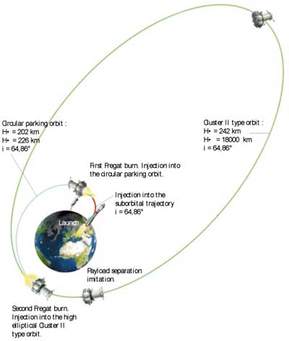
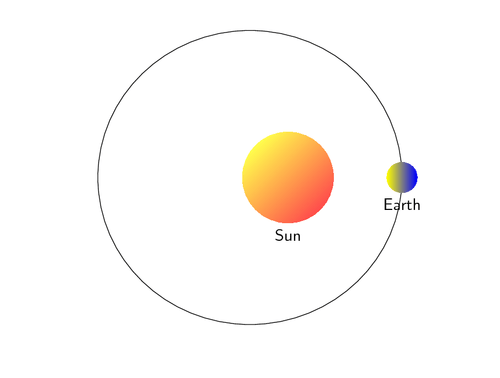
This picture shows the path Earth takes as it moves around the sun. What is the path called?
a)
a constellation
b)
a moon
c)
an orbit
d)
a planet
123.
Which thing is a huge ball of hot gases that gives off heat and light?
a)
a moon
b)
a planet
c)
a star
d)
a spaceship
124.
Which planet is the largest?
a)
Earth
b)
Jupiter
c)
Neptune
d)
the Sun
125.
Which planet is between Mercury and Earth?
a)
Mars
b)
Uranus
c)
Venus
d)
the Moon
126.

Which planet is the closest planet to the sun?

a)

Mercury

b)

Venus

c)

Mars

d)

Pluto

127.
Besides Pluto, which planet is the furthest planet from the sun?
a)
Mercury
b)
Earth
c)
Neptune
d)
Uranus
128.
Which planet is the largest?
a)
Jupiter
b)
Saturn
c)
Neptune
d)
Uranus
129.
Besides Pluto, which planet is the smallest?
a)
Mercury
b)
Venus
c)
Earth 
d)
Mars
130.
Between which two planets is the asteroid belt located?
a)
Mercury & Venus
b)
Mars & Jupiter
c)
Uranus & Neptune
d)
Neptune & Pluto
131.
Which planet is red because of iron oxide or rust?
a)
Venus
b)
Mars
c)
Jupiter
d)
Saturn
132.
What is the center of our solar system?
a)
moon
b)
earth
c)
sun
d)
Jupiter
133.

All planets in our solar system are the same size.

a)

true

b)

false

134.

Choose the third planet in the solar system.

a)

Jupter

b)

Neptune

c)

Mars

d)

Earth

135.

Choose the smallest planet in our solar system.

a)

Mercury

b)

Venus

c)

Europa

d)

Earth

136.

Choose the planet in our solar system that rotates on its side.

a)

Jupiter

b)

Neptune

c)

Uranus

d)

Earth

137.

Choose the planet closest to the sun.

a)

Neptune

b)

Mercury

c)

Earth

d)

Pluto

138.

Choose the planet closest in size to Earth.

a)

Mars

b)

Jupiter

c)

the moon

d)

the sun

139.

Mars is often called __________ due to rust in rocks.

a)

Red Planet

b)

Blue Planet

c)

Green Planet

d)

Orange Planet