
 Worksheets
Critical Care Final
Total questions: 178
Worksheet time: 9hrs 54mins
The nurse receives report from the previous shift, and documents that the patient is in sinus rhythm. The nurse is verifying patient identity and the patient does not respond to verbal or physical stimuli. The monitor still displays an organized rhythm, but the nurse is unable to palpate or auscultate a pulse. What is the next correct action?
Contact the provider to report the change in patient condition
Administer 1mg of epinephrine every 3-5 minutes
Defibrilate at 200 joules
The patient is in pulseless electrical activity and care should be provided based on code status
Which statement made by a new graduate nurse about invasive mechanical ventilation is incorrect?
"Assist control mode refers to the patient receiving a set total lung capacity but the rate is maintained by the patient's own rate of breathing."
Synchronized intermittent mandatory ventilation (SIMV) refers to the patient setting an independent rate but limited tidal volume based on the patient's own strength. A minimum rate is also used as a backup to prevent hypoventilation."
"Continuous positive airway pressure will increase the residual capacity and keep the alveoli open. Rate and volume are controlled by the patient. This is one step in the weaning process."
"Assist control mode controls both the rate and volume that are preset and delivered without the machine responding to any of the patient's own breaths."
A patient with ARDS is on a mechanical ventilator with a heart rate of 128, SaO2 is 88% and the ventilator settings are FiO2 50%; PEEP 8 cm; AC 10 with a total respiratory rate of 30; and a tidal volume of 700 mL. There are coarse rhonchi audible in all lung fields. The appropriate nursing action would be to:
Administer the ordered neuromuscular blockade medications.
Increase the PEEP to 10 cm and sedate the patient.
Increase the FiO2 to 60% and tidal volume to 750 mL for 2 minutes.
Hyperoxygenate with 100% oxygen and suction the patient.
Which nursing action would best optimize overall oxygenation and ventilation in the patient with acute respiratory distress syndrome (ARDS)?
Hyperventilate the patient after suctioning
Suction the patient every 30 minutes
Provide adequate rest and recovery time between procedures.
Administer sedation infrequently.
An older client is experiencing hypovolemic shock. Which action would be given the highest priority for this client?
Establish intravenous access
Bolus of 0.45% NS at a rate of 999ml/hr
Administering analgesics for control of pain
Complete health history
A client being treated for hypovolemic shock is prescribed a titrating dose of dopamine. Which evaluation will the nurse anticipate while administering this medication?
Stabilization of fluid loss
Urinary output of at least 3 mL/hour
Increased cardiac output
Decreased cardiac irritability
The nurse is caring for a client experiencing anaphylactic shock. Which of the following should be included in the plan of care for this client?
Select all that apply.
Support the blood pressure.
Maintain an adequate airway.
Provide adequate oxygen supply
Remove the source of infection.
Remove the mechanical barrier to blood flow.
A six-year-old pediatric client, who recently underwent a tonsillectomy 27 hours prior, presented to the emergency department after an episode of severe coughing, resulting in continuous bright red bleeding from back of throat. The patient is hypotensive, pale and slow to respond. The patient is afebrile. The mother teaches critical care nursing and asks what type of shock her child is in, you respond with _______ shock.
Septic
Distributive
Hypovolemic
Cardiogenic
A patient with neurogenic shock is demonstrating symptomatic bradycardia. What action will the nurse take at this time?
Administer 1mg Atropine
Limit patient movement
Administer phenylephrine as prescribed
Prepare to administer crystalloids
A patient with acute lung injury is being started on enteral nutrition. Which interventions will the nurse provide to ensure nutritional support for this patient? Select all that apply.
Discard any residual gastric contents during assessments
Assess for gastric residuals with assessments or per facility policy.
Keep the head of the bed elevated to at least 30 degrees
Nutrition is not necessary for healing.
Withhold the use of the nasogastric tube until radiographic placement is confirmed.
During an assessment, a ventilated patient has a furrowed brow and grimaced expression and also begins to move about in bed. Which assessment strategy would be most helpful for the nurse to validate these observations?
Glasgow Scale
Maslow's hierarchy of needs
Neurological assessment
Pain assessment tool
An 86-year-old client is admitted with pneumonia related sepsis. What manifestations might the nurse expect to find when assessing this client?
Select all that apply.
Hematuria
Dyspnea
tachypnea
Decreased Level of Consciousness
Lethargy
Sepsis is the most common cause of disseminated intravascular coagulation (DIC). All of the following statements concerning this life threatening complication is true except:
In the early phase, the patient may demonstrate manifestations of thrombosis and microemboli.
Though a coagulopathy is present, excessive blood loss rarely results in hemorrhagic shock.
The rapidity of onset is determined by the intensity of the trigger and is related to the condition of the patient’s liver, bone marrow and endothelium.
The most critical intervention for DIC is the early identification and treatment of the underlying disorder.
The nurse is administering intravenous nitroglycerin to a patient admitted with hypertensive crisis. The infusion has been titrated based on the physician titration orders and the guidelines of the facility. During the next assessment the nurse notices that the patient is pale, diaphoretic, lethargic, disoriented and severely hypotensive. Which intervention by the nurse is most appropriate?
Recheck the blood pressure
Administer two breaths via bag-valve mask ventilation
Immediately call the physician to report the current status of the patient and obtain order to decrease infusion
Pause or stop the nitroglycerin infusion and reassess
A patient has been diagnosed with septic shock. The patient has received a 3L normal saline bolus. Hemodynamics are as follows: ABP 78/44 MAP 56, CVP 18, HR 133, O2 90% with FIO2 at 100%. Which intervention would the nurse anticipate next?
Begin bolus of an additional liter of normal saline
Initiate dopamine infusion at 20 mcg/kg/min
Increase FIO2 %
Titrate norepinephrine infusion at 5-20mcg/min
A 70-year-old man presents to the emergency department with a 2-day history of fever, chills, cough, and right-sided pleuritic chest pain. On the day of admission, the patient’s family noted that he was more lethargic and dizzy and was falling frequently. The patient’s vital signs are: temperature, 101.5°F; heart rate, 120 bpm; respiratory rate, 30 breaths/min; blood pressure, 70/35 mm Hg; and oxygen saturation as measured by pulse oximetry, 80% without oxygen supplementation. A chest radiograph shows a right lower lobe infiltrate.
Which intervention would the nurse anticipate first?
Assist with airway maintenance and provide supplemental oxygen
Initiate norepinephrine infusion at 30mcg/kg/min
Antipyretic therapy
Administer broad spectrum antibiotics
A 40-year-old man with a history of IV drug use is admitted with cellulitis and multiple abscesses of the right upper extremity. His current weight is 70 kg. He rapidly develops worsening respiratory distress, hypotension and ultimately requires intubation and mechanical ventilation. Blood gas analysis shows a pH of 7.23, Paco2 of 68, Pao2 of 80, and an oxygen saturation of 91%. His ventilator settings are assist-control mode with a tidal volume of 420 mL, respiratory rate of 16 breaths/min, positive end-expiratory pressure (PEEP) of 5 cm H2O, and Fio2 of 100%. His end tidal CO2 is 22mmHg. The nurse understands that which setting on the ventilator would have the greatest affect on PaCO2 and ETCO2 of this patient?
Increase Positive End Expiratory Pressure (PEEP)
Increase FIO2
Decrease inspiratory pressure
Decreased PEEP
In a client with a tracheostomy, the nurse should monitor for complications related to the loss of which protective mechanism?
Decrease in oxygen-carrying capacity of the trachea
Filtration and humidification of inspired air
The ability to cough
The sneeze reflex initiated by irritants in the nasal passages
The nurse is caring for a patient on the ventilator. Which assessment findings requires immediate response?
Urine output of 20mL between 4 hour assessments
Bilateral infiltrates on a chest XRay
Lactic acid level of 2.9
Emesis coming out around endotracheal tube and patient's mouth
The nurse is caring for a patient that was admitted for respiratory distress. The patient has a history of peripheral vascular disease and coronary artery disease. The patient appears cyanotic, dyspnic, has tracheal tug, respiratory rate 38, and oxygen saturation reading of 84% on 2L nasal cannula. Which action by the nurse is most appropriate for this patient?
reposition or apply new oximeter
Internet message or page respiratory therapy
Call the physician
Increase the oxygen flow rate or apply a higher flow device
The nurse is administering blood to a patient who was admitted for potential sepsis. The initial vital signs were T- 36.8, P- 102, BP- 101/58 RR- 18, SPO2- 94% 8L hi-flow nasal cannula after 15 minutes the patient is complaining of back and flank pain. The 15 minute vital signs are: T- 38.8, P- 122, BP- 90/58 RR- 28, SPO2- 94% 10L hi-flow nasal cannula. Which action by the nurse is most appropriate given the situation?
Stop the transfusion
Administer furosemide 80mg rapid IV push
Contact the physician for antipyretic order
Slow or decrease the rate of the infusion secondary to transfusion associated circulatory overload
The nurse is caring for a patient on the ventilator and the ventilator continues to alarm related to low volume during inspiration. The patient's oxygen saturation is 90% and the patient continues to move head back and forth on pillow and raising arms up against soft restraints. Given this presentation, what is the most appropriate initial intervention by the nurse?
Assure the patient that everything is going to be okay
Increase sedation infusion based on titration orders.
Contact respiratory therapy
Contact the physician for an order to alter the ventilator settings
What should the nurse do when administering antibiotics to a patient with sepsis?
Wait for the results of liver and renal function tests before beginning antibiotic therapy.
Antibiotics should always be administered after blood cultures are obtained.
Administer the antibiotic with the shortest administration time first so that all antibiotics are administered quickly.
Antibiotics should be administered as soon as the patient has received a fluid bolus.
What is the overall goal of providing fluid resuscitation and vasopressors to a patient in septic shock?
Provide adequate vasoconstriction.
Increase the metabolic rate.
Increase the systolic arterial pressure.
Increase tissue perfusion.
A patient in septic shock receives large amounts of IV fluids. However, this was unsuccessful in maintaining tissue perfusion. As the nurse, you anticipate the physician to order which medication to improve tissue perfusion?
Acetaminophen
Corticosteroids
Broad spectrum antibiotics
Norepinephrine
A patient has just been intubated and placed on mechanical ventilation. What is the first assessment immediately after tube placement?
Pulse oximetry
Chest x-ray
Auscultation of gastric sounds
End tidal CO2 monitoring
A patient who has been on mechanical ventilation for three days develops a fever of 101.0°F, green sputum, and right lower lobe crackles. The nurse contacts the physician regarding possible development of which complication?
Pneumothorax
Ventilator-associated pneumonia
Pulmonary embolism
Stress ulcer
The nurse is assessing a patient and auscultates crackles within the poster lower lobes that do not clear with coughing. The nurse understands that which medication will provide the most benefit for this patient?
Albuterol nebulizer
furosemide
Morphine
broad spectrum antibiotics
A nurse is caring for a patient immediately after extubation of the endotracheal tube. During post extubation assessment, which of the following findings indicates the patient is not tolerating extubation well?
Occasional pink-tinged sputum
Basilar lung crackles on the right
Stridor
Respiratory rate of 24 breaths/min
A patient is brought to the emergency department after a motor vehicle accident. The patient is demonstrating signs of hypovolemic shock. Which of the following types of fluids would be most appropriate to administer initially during the resuscitation period?
Norepinephrine
0.45% Normal Saline
D5W
0.9% Normal Saline
While caring for a patient with sepsis, the nurse suspects that disseminated intravascular coagulation is developing. What did the nurse assess in the patient? Select all that apply.
Decreased Bleeding Times
Increased urinary output
Increased platelets
Diminished pulses
Cyanosis of the fingers
A patient receives a fluid challenge as part of care for sepsis. Which outcome indicates that the challenge was successful? Select all that apply.
MAP 72 mm Hg
Heart rate increased
Heart rate decreased
Peripheral edema
CVP 10 mm Hg
A patient receiving care for sepsis is having blood samples drawn to evaluate specific organ functioning. Why is this being done?
Evaluates the success of fluid resuscitation
Systemic inflammation impairs perfusion of multiple organs
Determines the source of a hospital-acquired infection
Identifies the microorganism causing the original infection
Which nursing intervention is the highest priority during blood administration?
Tell the patient that the infusion could take up to 4 hours.
Slow down the transfusion if the patient develops shortness of breath.
Warm the infusion during administration.
Stop the transfusion if the patient has a 2-degree Fahrenheit/1-degree Celsius rise in temperature.
While caring for a patient with sepsis, the nurse suspects that disseminated intravascular coagulation is developing. What did the nurse assess in the patient? Select all that apply.
Cyanosis of the fingers
Diminished pulses
Lethargy
Patient complains of extremity pain
Urine output of 80ml/hr
The nurse is caring for a patient that was admitted for respiratory distress. The patient has a history of peripheral vascular disease and coronary artery disease. The patient appears cyanotic, dyspneic, has tracheal tug, and respiratory rate 44. The pulse oximeter displays an irregular waveform and does not display an oxygen saturation percentage. Which action by the nurse is most appropriate for this patient?
Provide bag-valve mask ventilation.
Call the physician.
Call respiratory therapy, and wait to apply interventions.
Apply a non-invasive oxygen device to the patient.
The nurse is evaluating the effectiveness of a normal saline fluid bolus for Mr. Nguyen, an 80-year-old patient admitted with hypovolemic shock and acute renal failure. Which assessment finding indicates that the fluid bolus is having the desired effect?
Normal skin turgor
Heart rate 80 beats per minute
A systolic blood pressure of 110 mm Hg
A MAP of 70 mm Hg
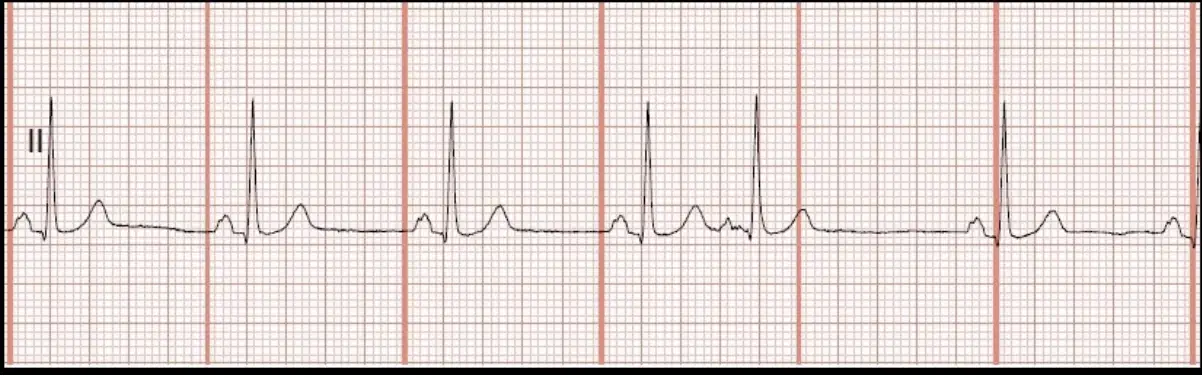
This rhythm is (a)

What is this rhythm?
(a)
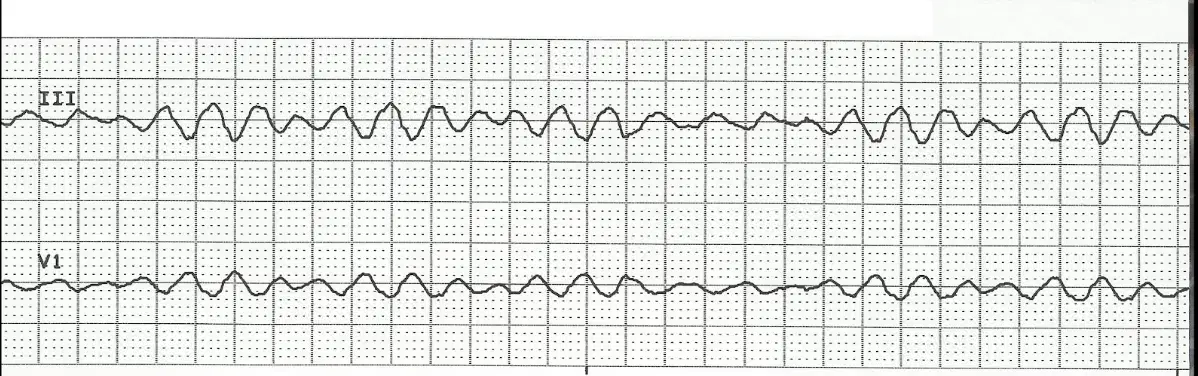
What is this rhythm?
(a)

What is this rhythm?
(a)

What is this rhythm?
(a)
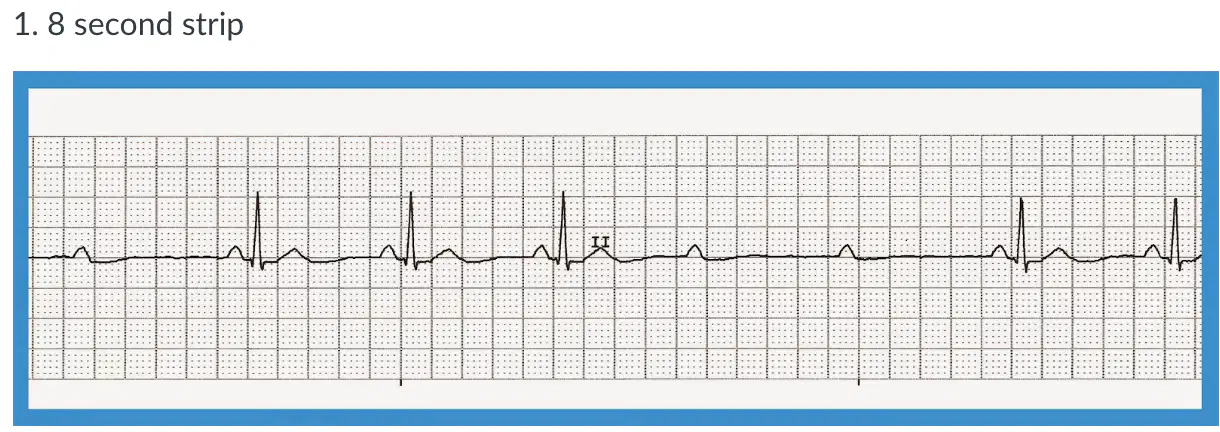
What is this rhythm?
(a)
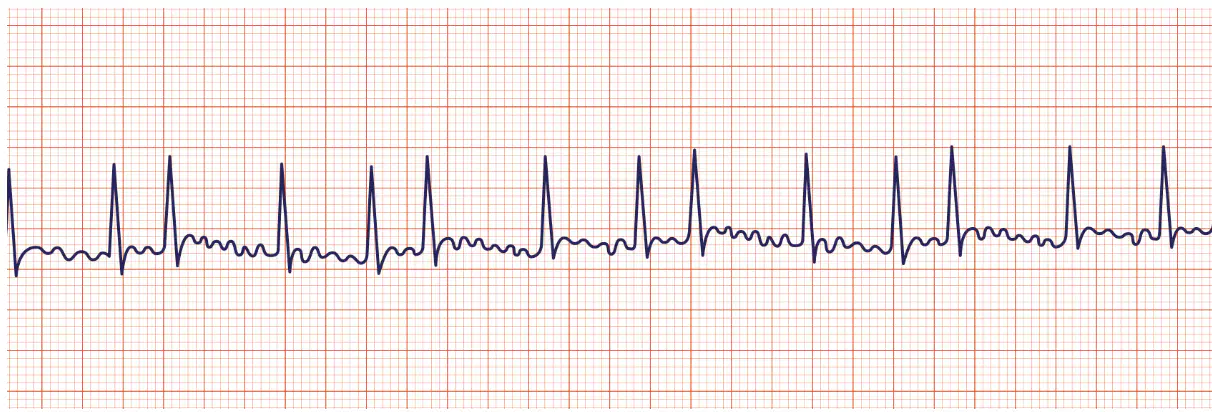
What is this rhythm?
(a)
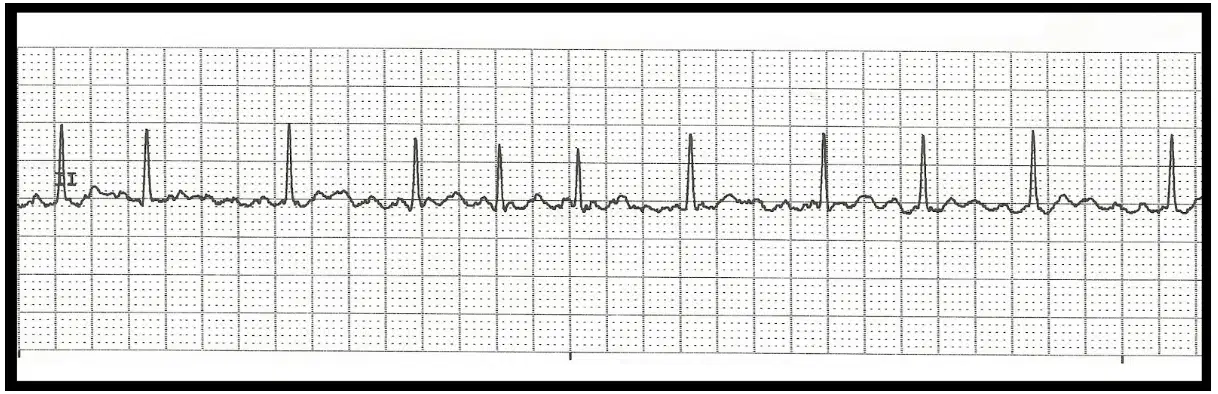
What is this rhythm?
(a)
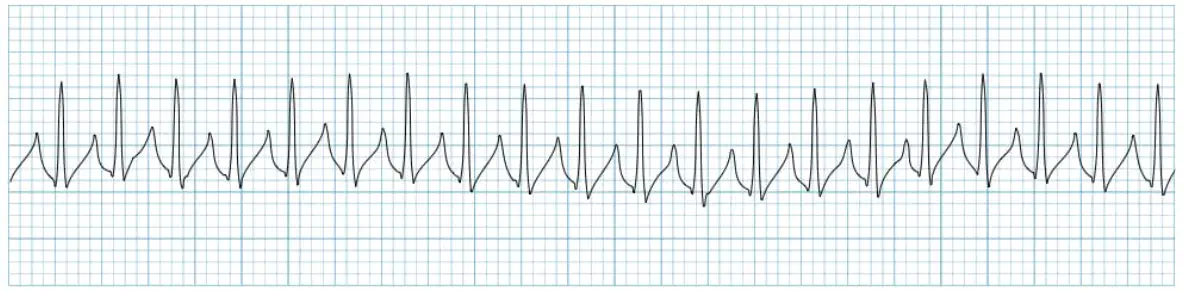
What is this rhythm?
(a)
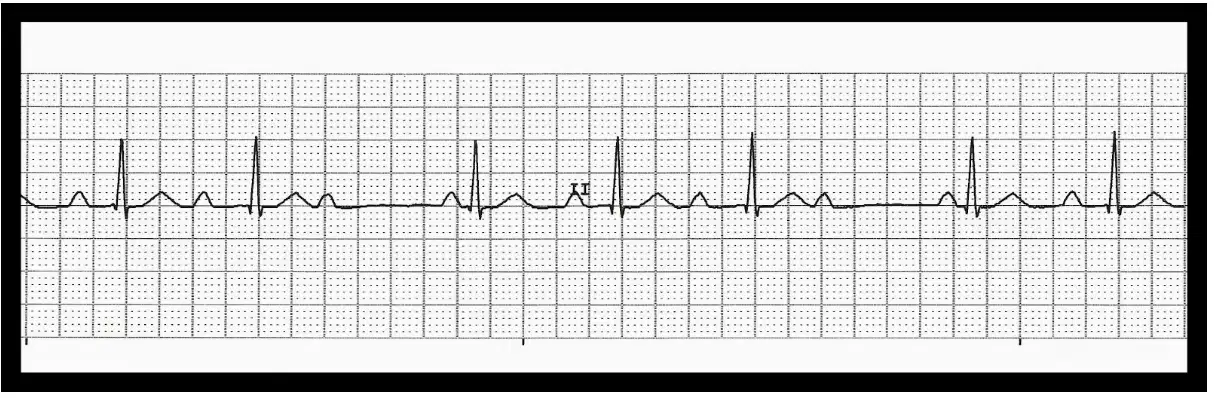
What is this rhythm?
(a)
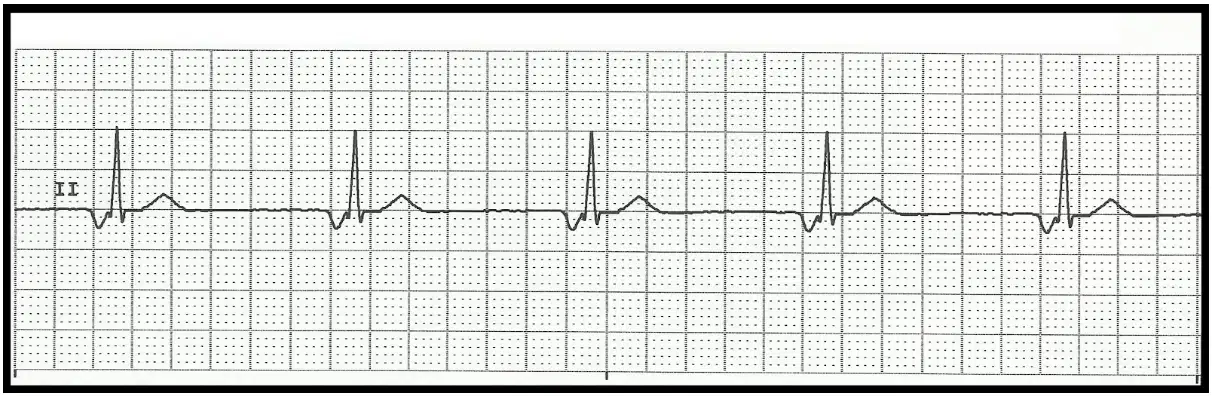
What is this rhythm?
(a)
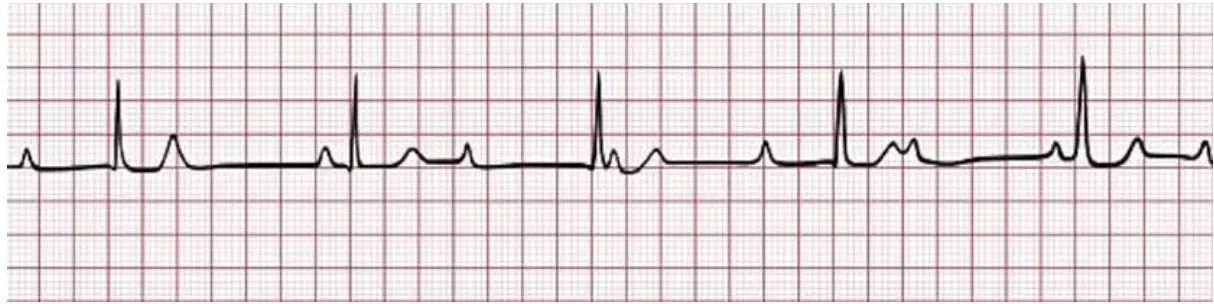
What is this rhythm?
(a)
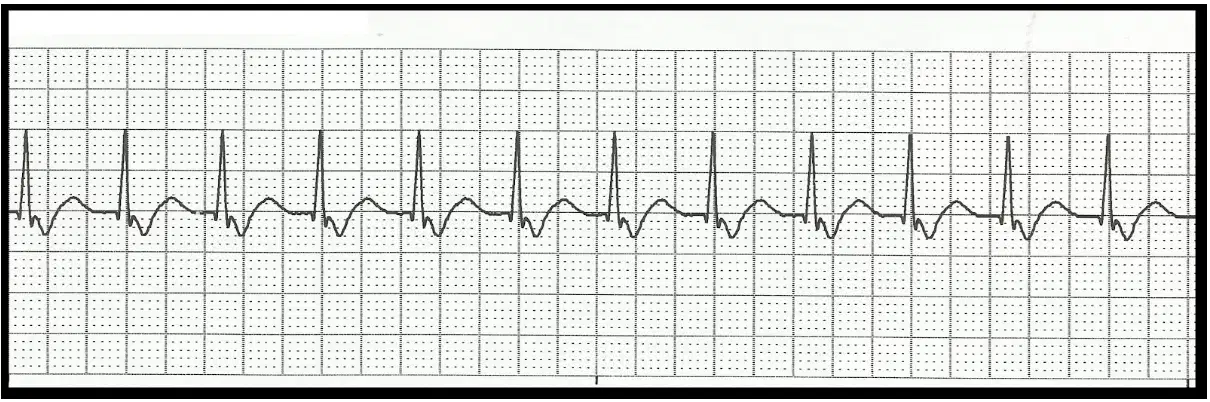
What is this rhythm?
(a)
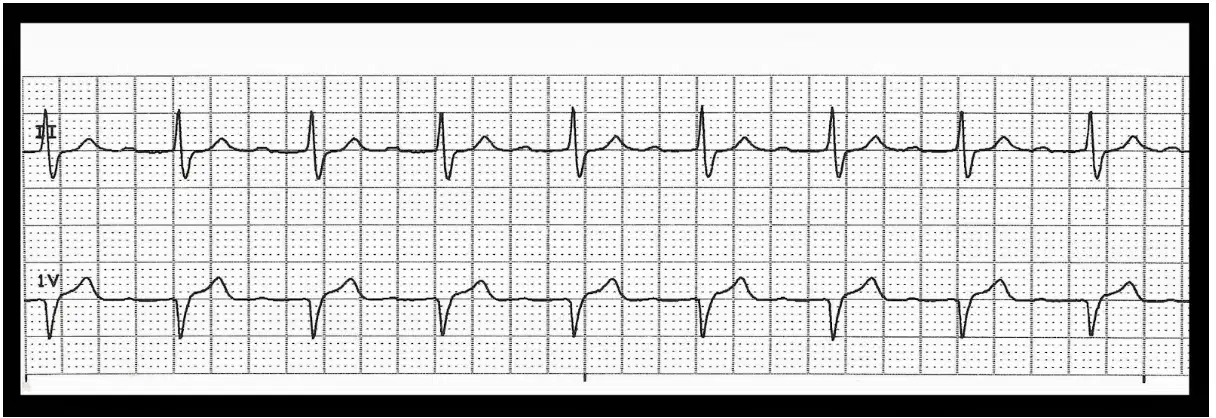
What is this rhythm?
(a)
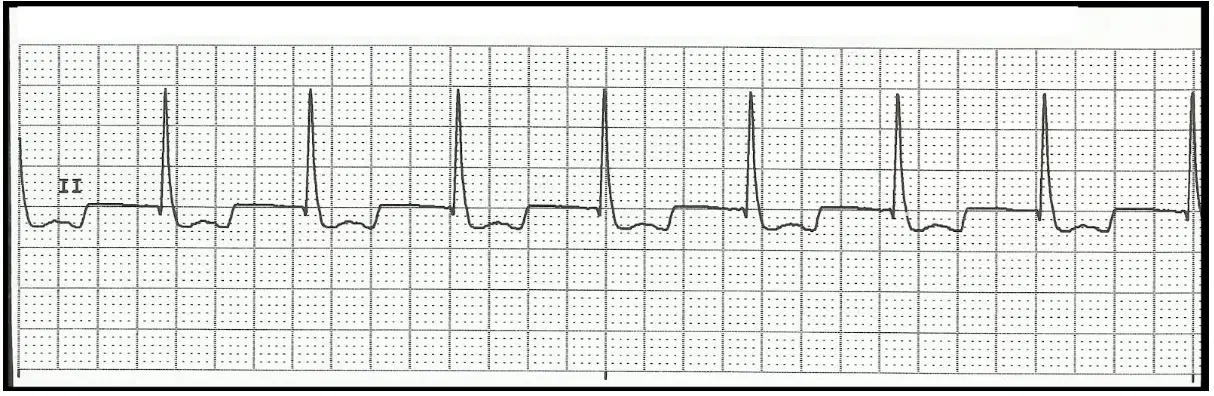
What is this rhythm?
(a)
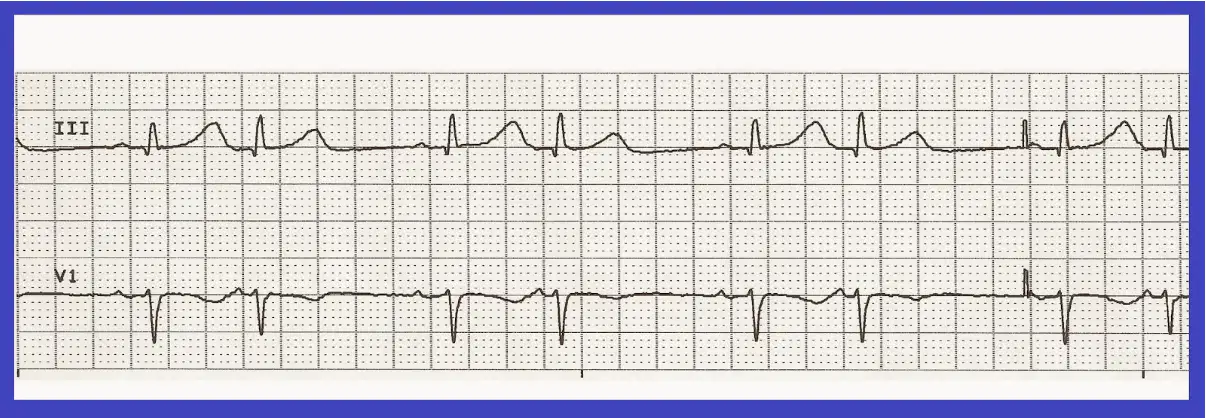
Is the following a PVC, PJC, or PAC?
(a)
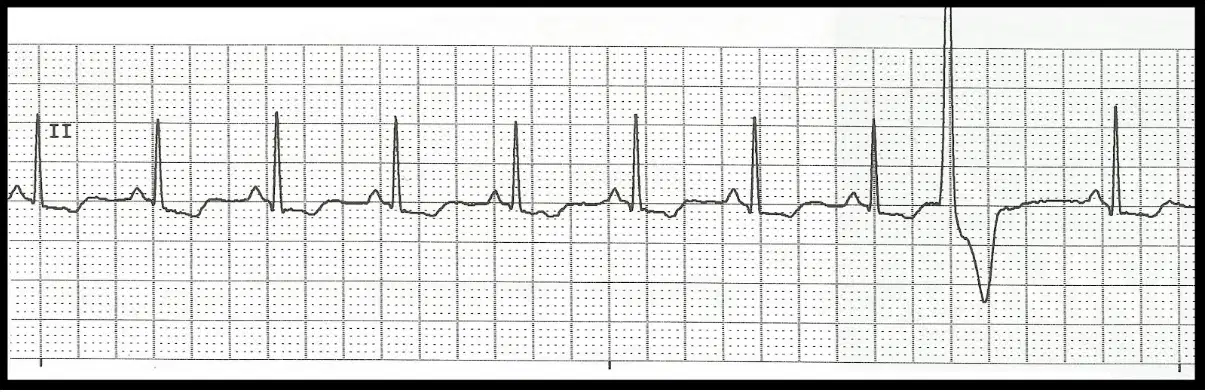
Is the following a PVC, PJC, or PAC?
(a)
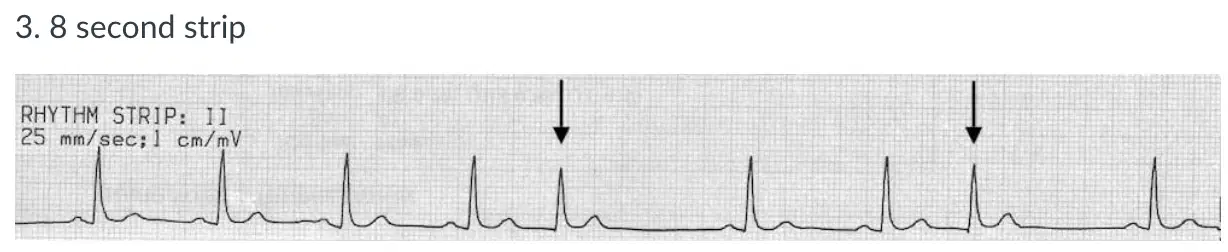
Is the following a PVC, PJC, or PAC?
(a)
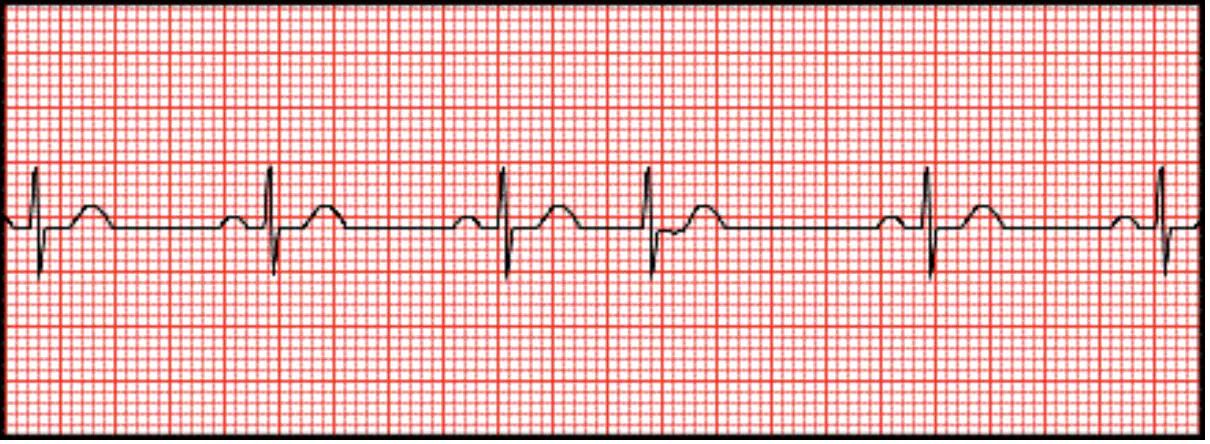
Is the following a PVC, PJC, or PAC?
(a)
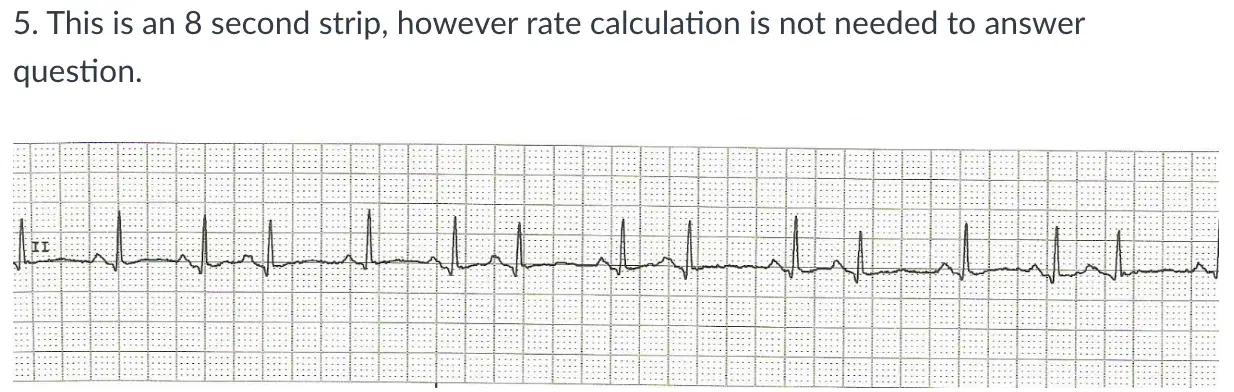
Is the following a PVC, PJC, or PAC?
(a)

Select all that Apply.
Actual volume is 329
PEEP is set at 6
FIO2 is 50%
Respiratory rate is set at 13
Total respirations are 28

Select all that apply.
Patient actual volume received is 711
PEEP is set at 16
PEEP is set at 14
FIO2 is set at 40%
The ventilator mode is set at VC

Select all that apply.
Pulse oximetry is 21%
Mode is set at APRV
Mode is set at spontaneous
Total respirations at 10

The nurse recognizes that utilizing the prone position to enhance oxygenation in a patient with acute respiratory distress syndrome is contraindicated when the patient has:
Select all that apply
Abdominal compartment syndrome with open abdominal incision
Right below the knee amputation
A spinal injury
Acute Respiratory Distress Syndrome
Brain injury
A patient has been admitted to the cardiac unit with a diagnosis of right ventricular failure due to post myocardial infarction complications. Which of the following assessment findings would the nurse anticipate based on this complication?
Peripheral edema and jugular vein distension
Fatigue and dyspnea
Bradycardia and circumoral cyanosis
Dyspnea and pulmonary crackles
The nurse is prepping the patient for a Treadmill Cardiac Stress test. The nurse explains the test is used to demonstrate how the heart functions during increased activity. Understanding the purpose of the test and the heart's normal compensatory mechanism for increased myocardial demand, the nurse knows which medication is contraindicated prior to the test?
aspirin
lisinopril
metoprolol
metformin
What is the primary reason for administering morphine to a client having a STEMI?
Sedation to calm the patient
Decrease myocardial oxygen demand
General pain control
Decrease anxiety
The nurse is reviewing discharge medications for a patient being discharged post stent placement after a myocardial infarction of the LAD. The patient has not had any cardiac or renal complications after the MI. The nurse anticipates that the patient will be on which medications?
Carvedilol, simvastatin, metoprolol, clopidogrel, and aspirin
Carvedilol, furosemide, lisinopril, clopidogrel, and aspirin
Carvedilol, simvastatin, lisinopril, amiodarone, and aspirin
Carvedilol, simvastatin, lisinopril, clopidogrel, and aspirin
The nurse is caring for a patient admitted to the cardiac unit for shortness of breath, productive cough, elevated troponin levels, and fever. Fungal pneumonia is listed as the admitting diagnosis, and physician H&P states cardiac function normal. The patient's 12 lead EKG was normal and free of ST elevation, ST depression or bundle branch block. The patient's chest x-ray image is indicative of pulmonary congestion, and bilateral infiltrates. The patient was cyanotic prior to being placed on 15 liters non-rebreather. Results of a sputum culture shows penicillium fungal growth. The patient asks the nurse how bad his heart attack was, because the previous nurse in the emergency department told him he had a heart attack because his troponin level was elevated.
Based on the patient presentation, which statement by the nurse is most accurate?
You have had a significant heart attack that has caused a fungal infection in your lungs.
There are many reasons that heart muscle can become damaged and result in elevated troponin levels. Your lung infection is more than likely the cause.
You were not admitted for a heart attack.
I am sorry, but only the physician can provide that information.
Your elevated troponin levels indicate heart muscle damage, but we will not know how much blockage is in your coronary arteries until you are in the heart catheterization lab.
The nurse is assessing a patient newly admitted to the cardiac observation unit. The nurse auscultates a systolic murmur and a pericardial friction rub. The patient complains of shortness of breath and fine crackles are heard on auscultation of the posterior lower lobes. The patient has an elevated white blood cell count but is afebrile. The echocardiogram interpretation states there is vegetation adherence to the valve, as well as regurgitation back to the left atrium. Based on the patient presentation and diagnostic results, which valve is regurgitating?
Tricuspid
Aortic
Pulmonic
Mitral
A nurse is taking care of a neonate, who was noted to have a heart murmur during the newborn assessment. It would be especially important for the nurse to advise the parents to notify the nurse if the baby exhibits which of the following signs/symptoms?
Spits up after nursing
difficulty or inability to suckle or nurse
Keeps his or her eyes closed
Respiratory rate 30-40
The nurse is providing nutritional education to the parents of an infant recently diagnosed with a congenital heart defect. The nurse knows that the parents understand the dietary education with which of the following responses?
Since our baby cannot tolerate extra fluids, and they have lower caloric requirements, we should limit their intake.
Since our baby needs more calories than regular and the best way to do this is to provide a calorie dense formula.
Our baby will need a low salt, low carbohydrate and high potassium diet.
Since our baby is retaining CO2, we need to moderate the amount of carbohydrates ingested with feedings.
Which of the following patterns is indicative of infection in the postoperative period following cardiac surgery for the infant?
Temperature of 37.7 degrees C 24 weeks after surgery
Temperature of 36.1 degrees C immediately after surgery
Temperature of 38.6 degrees C 72 hours after surgery
Temperature of 36.1 degrees C 36 hours after surgery
In the newborn patient the presence of decreased ventricular function and the presence of atrial arrhythmias increases the baby’s risk for:
Fever
clubbing of nails
Cerebrovascular Accident
Air embolism
A 6-month-old client with a ventricular septal defect is receiving digoxin elixir for regulation of his heart rate. Which finding should be reported to the doctor?
Glucose 180
Heart rate of 62
Blood pressure 90/60
Respiratory rate of 38
The nurse is assessing the patient, who was admitted post CVA. During the NIH Stroke Scale Assessment the nurse notes that the patient does not verbalize the H sound when asked to state Huckleberry. What is a priority safety intervention for this patient?
Have patient tuck chin when swallowing
Request an occupational therapy consult
Establish bedside suction
Contact the physician
A client diagnosed with a stroke is going to receive treatment with fibrinolytic therapy using the recombinant tissue plasminogen activator alteplase. What should the nurse explain to the client's family about the use of this medication?
Not associated with serious complications
Used to treat thrombotic and hemorrhagic strokes
Administered to dissolve the clot that is occluding the cerebral circulation
Indicated if the stroke symptoms have occurred within the last 6 hours
When assisting a patient with a cane to transfer or ambulate, what does the nurse instruct the patient to do?
Use the stronger arm to hold onto the cane.
Lean into or toward the nurse for stability.
Lean forward when rising from chair, using strong arm to push up and affected arm to support cane.
Lean backward with straightened legs to sit.
You are working dayshift in the emergency department and have just admitted an 74 year old male patient having difficulty speaking and unable to lift his left arm.Vitals are BP 198/88, MAP 118, HR 84, Pulse 84, SPO2 92% on room air, temperature 37.1 C, respiratory rate 22. Given the presentation of the patient, what is a priority test for this patient?
Cardiac echo
Blood glucose
EKG
CT scan
The nurse is caring for a patient that has complaints of weakness on one side, and slurred speech. The patient's blood pressure is 228/162 mmHg and pulse 92 BPM. The patient has just come back to the ED after a CT scan that was negative for bleeding. Given the patient situation, which medication does the nurse anticipate administering next?
Aspirin 325mg oral
labetalol 20mg IV push
Heparin 1000 units IV push
t-PA IV infusion
The nurse is caring for a patient diagnosed with an ischemic stroke. The patient has been admitted into the ICU for 24 hours, and during the previous shift his NIHSS was charted as a 16 and that the patient was alert and scored a 0 for aphasia and dysarthria. The nurse completes the NIHSS at the beginning of the shift and the patient scores a 38 and unable to pronounce the H sound. Which immediate response by the nurse is most appropriate?
Listen to upper airway and establish bedside suction
Panic
Contact the previous nurse to confirm accuracy.
Contact the physician about the change
The nurse is caring for a patient that has recently been admitted to the ICU after a right carotid endarterectomy. The patient is complaining of a headache, pain on right side of neck, and difficulty swallowing and speaking. The nurse assess for which post carotid endarterectomy surgical complication?
Hematoma development at surgical site.
Hypovolemia related to blood loss
Infection of surgical site.
TIA
While providing oral medications to a patient recovering from a stroke, the nurse notices that the patient coughs repeatedly and has difficulty clearing the throat. Which of the following interventions would be most appropriate?
Request an occupational therapy consult
Change the diet to full liquid
Change the diet to soft
Request a speech therapy consult
A patient being treated with warfarin experiences a hemorrhagic CVA. What should the nurse anticipate being prescribed for this patient?
Vitamin K
Packed red blood cells
Nitroglycerin
TPA
The nurse is preparing medications for the patient experiencing acute decompensated heart failure related to history of cardiomegaly. Which medication should be administered to help decrease oxygen demand for the patient?
Digoxin
Morphine sulfate
Metoprolol
Albuterol
During an assessment the nurse notes that the patient with dilated cardiomyopathy has pitting edema in bilateral lower extremities and fine crackles on inspiration during auscultation of lung fields with dyspnea. The nurse assesses that the patient has had an intake of 1200 ml total and an output of 50 ml from Foley catheter over the last 4 hours. Which of the following PRN medications would be most appropriate given the patient presentation?
Administer PRN guaifenesin
Administer PRN furosemide
Administer PRN digoxin
Administer PRN albuterol nebulizer
Which of the following medications would the nurse anticipate administering to a patient with decreased cardiac output related to poor contractility of the heart muscle?
Lisinopril
Nitroglycerin
Amiodarone
Digoxin
A 14 year old patient is diagnosed with cardiomyopathy and makes the statement "I am too young to have cardiomyopathy, my grandpa has that, I just got over heated playing baseball." The nurse understands that the patient might be diagnosed with what type of cardiomyopathy?
Congested
dilated
Chronic
Arrhythmogenic
The nurse is caring for a patient in the ICU. The nurse has referred the patient for organ procurement. Which of the following make the patient a viable candidate? Select all that apply.
A CO2 level of 34 ten minutes after apnea test
A Glasgow coma scale less than 8
Requiring mechanical ventilation
No chest wall movement during apnea test
CO2 greater than 60 after apnea test
When providing end-of-life care for patients, what will the nurse prioritize highest?
Hydration and hygiene
Neurological assessment and protection of skin integrity.
Pain control and emotional support
Oxygen supplementation and assistance with end-of-life planning.
A patient who has died an unexplained death has numerous catheters and drainage tubes in place and is being prepared for an autopsy. In providing care for the body after the patient has been pronounced dead, how shall the nurse manage the tubes prior to the autopsy?
The nurse will remove all catheters in blood vessels and leave drains and urinary catherters in place.
The nurse will remove all tubes and discard on isolation trash receptacles.
The nurse will not remove any tubes from the body.
The nurse will remove all tubes and send to the autopsy procedure with the body.
The nurse is caring for a patient post organ transplant. Which of the following might the nurse anticipate including in the discharge education? Select all that apply.
You will not have any restrictions for returning to work.
You will be discharged on at least one, if not more than one, antirejection medication.
You will not have to be on any antirejection medications at discharge.
You will want to avoid crowded or heavily populated areas for up to several weeks after surgery.
A list of support groups and organizations within the patient's area will be provided even prior to discharge.
The nurse is assisting with an apnea test on a patient to determine brain death after noting no brain activity on the EEG. The nurse does not note any diaphragmatic or chest wall movement after 8 minutes off of the ventilator. The post apnea test ABG shows a PCO2 level of 68. The nurse notes the apnea test as:
inconclusive
variable
negative
positive
The nurse is caring for a patient that was diagnosed with pre-eclampsia and has just started a bolus infusion of magnesium sulfate. The patient's respiratory rate is 10/min and deep tendon reflexes are flaccid. What priority intervention should the nurse implement?
Turn patient on their left side
Administer high-flow oxygen
Administer calcium gluconate
Stop the magnesium infusion
A patient experiences vaginal bleeding and complete placental abruption at 28 weeks of gestation. What interventions can the nurse expect?
Cerclage procedure
Manual cervical pressure
Emergent c-section
Bed rest
The nurse is caring for a patient who is 32 weeks gestation. She presented to the ED with diaphoresis, tachycardia, sudden onset of severe abdominal pain, and severe vaginal bleeding. Upon review of the patient's history and physical assessment, the OB physician determined that the patient was experiencing a grade 3 placental abruption. What nursing interventions should you provide for this patient? Select all that apply.
Assure the patient that there are no risks to the unborn baby
prepare to administer blood products
Obtain fetal heart tones
Administer supplemental oxygen
Apply firm pressure to the top of the fundus
A pregnant client is diagnosed with HELLP syndrome. The client's nurse understands that which clinical finding is not a manifestation of this condition?
Elevated liver enzymes
Elevated lipid panel
Hemolysis
Decreased platelet count
The nurse is caring for a patient admitted for observation to the OB unit. The patient is complaining of headache, fatigue and edema. Blood pressure is 188/124, protein on dipstick 4+ and the patient is 33 weeks pregnant. Which interventions can the nurse anticipate? Select all that apply.
Place patient on left-side regardless of fetal heart rate
Insert foley catheter
Allow multiple family members at bedside, continuously, for distraction.
Initiate intravenous access
Strict bedrest
The goal of treatment for placenta previa is to stop vaginal bleeding. Which of the following is a common intervention for a client diagnosed with placenta previa?
Bedrest
Amniocentesis
Manual cervical pressure
Perineal artery ligation
John is a 67-year-old male who recently underwent a stent placement. He is following up with his primary care provider for a medication reconciliation. Which medications would the provider anticipate John to be taking (select all that apply)?
Metoprolol 25mg daily
Plavix 75mg daily
Furosemide 40mg daily
Aspirin 81mg daily
Amiodarone 25mg daily
Which patient is not at an increased risk for MI or strokes?
Patient diagnosed with pyelonephritis
Patient with a history of atrial fibrillation
Patient who smokes a pack of cigarettes daily
Patient diagnosed with cardiomyopathy
As the nurse you know which statements are TRUE about Tetralogy of Fallot? Select all that apply (select all that apply):
"Tetralogy of Fallot is treated with only palliative surgery."
"In this condition the heart has to work harder to pump blood to the lungs, which cause the right ventricle to work harder and enlarge."
"Many patients with this condition will experience clubbing of the nails."
Tetralogy of Fallot is a cyanotic heart defect."
You are doing hourly rounding on your patient within the ICU. At 5:00pm the patient was eating his dinner. Now the patient is lethargic, slow to answer, and showing signs of weakness. What is the first step the nurse should take?
Check the patient’s blood sugar
Take to patient to get a stat head CT scan
Complete a NIH stroke scale
Page the doctor about the patient’s neurological status change
You are orientating a new graduate nurse within the emergency department. Your patient presents with stroke-like symptoms. What would warrant the preceptor to step in after seeing the new graduate do what wrong during the NIH stroke scale?
Ask the patient to hold his arms up for 10 seconds
Ask the patient to squeeze both your hands simultaneously
Have the patient do a visual acuity test
Have the patient raise his eyebrows
Which nursing intervention is the highest priority during blood administration?
Slow down the transfusion if the patient develops back pain.
Warm the infusion prior to administering.
Tell the patient that the infusion could take up to 6 hours.
Stop the transfusion if the patient develops a fever.

What is the correct interpretation for this pacemaker rhythm?
oversensing/underpacing
undersensing/overpacing
ventricular pacing
atrial pacing
dual pacing
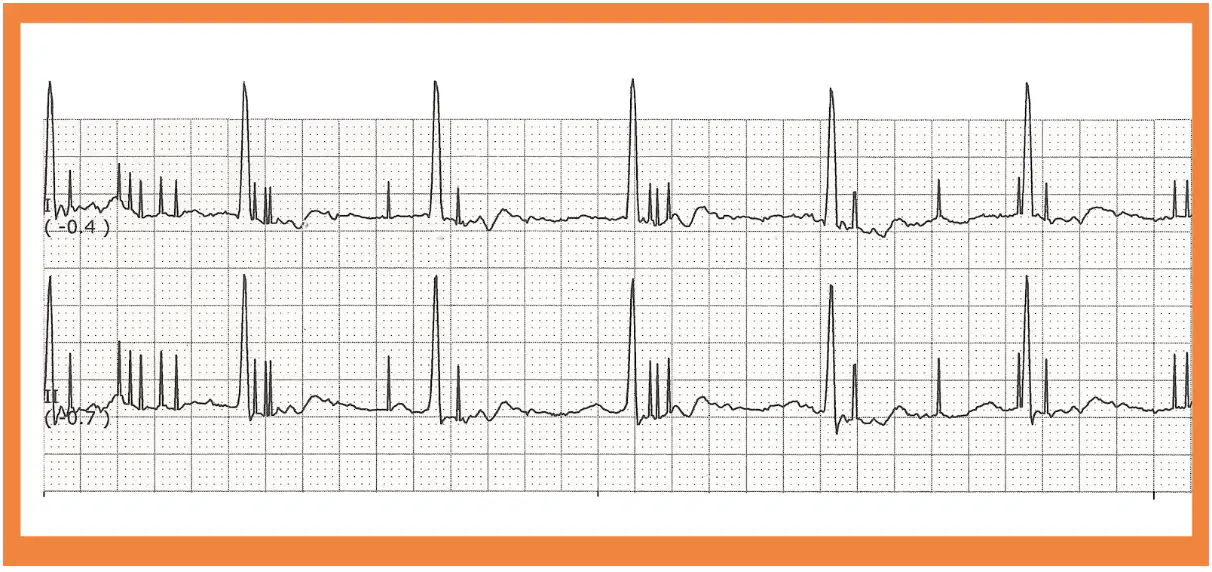
What is the correct interpretation for this pacemaker rhythm?
dual pacing
undersensing/overpacing
oversensing/underpacing
vetricular pacing
atrial pacing
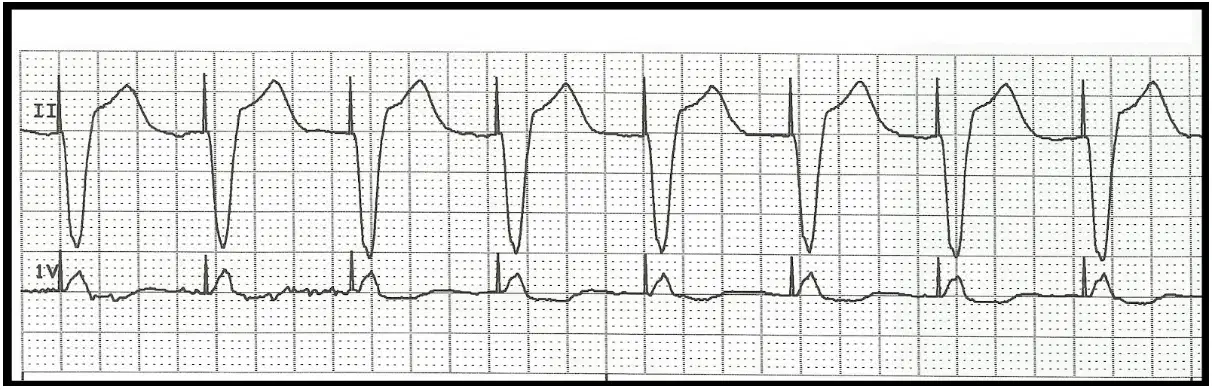
What is the correct interpretation for this pacemaker rhythm?
Ventricular pacing
oversensing/underpacing
atrial pacing
undersensing/overpacing
dual pacing
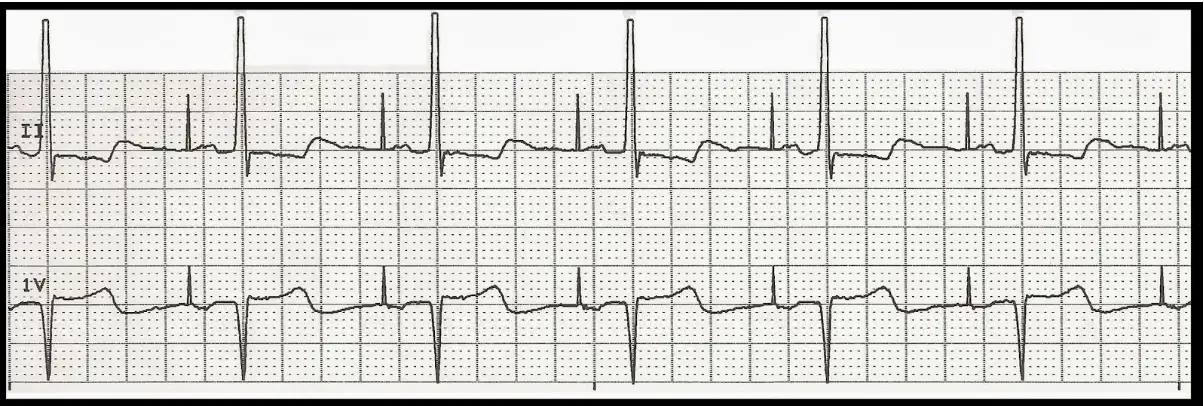
What is the correct interpretation for this pacemaker rhythm?
venticular pacing
atrial pacing
oversensing/underpacing
underpacing/oversensing
dual pacing
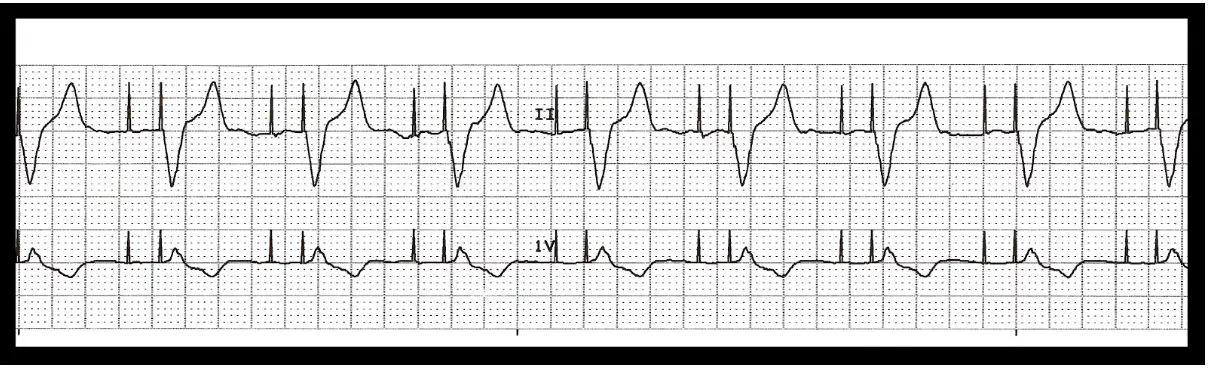
What is the correct interpretation for this pacemaker rhythm?
Oversensing/underpacing
undersensing/overpacing
ventricular pacing
dual pacing
atrial pacing
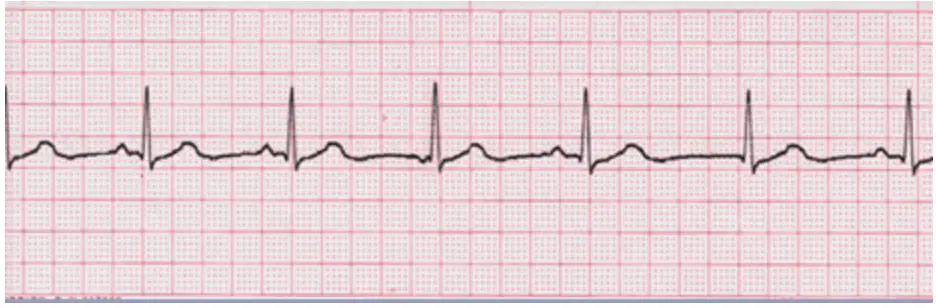
What is this rhythm?
(a)
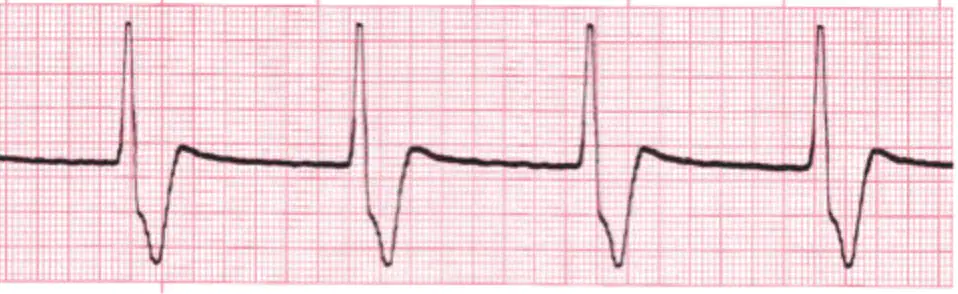
What is this rhythm?
(a)
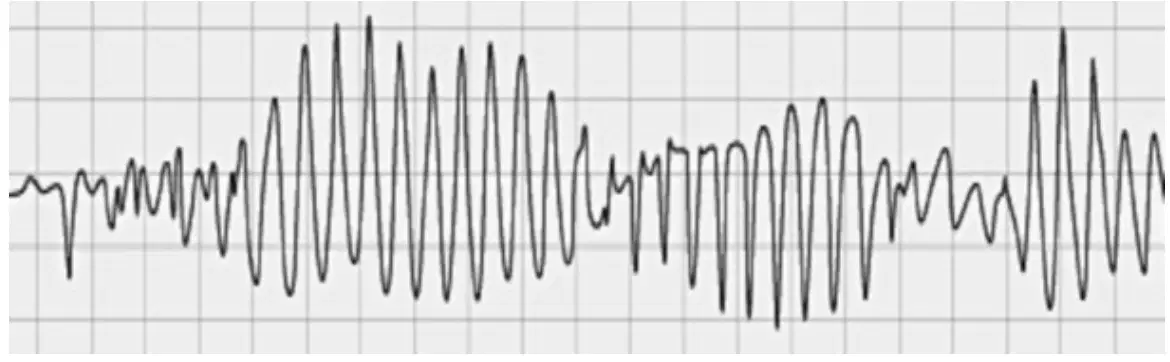
What is this rhythm?
(a)
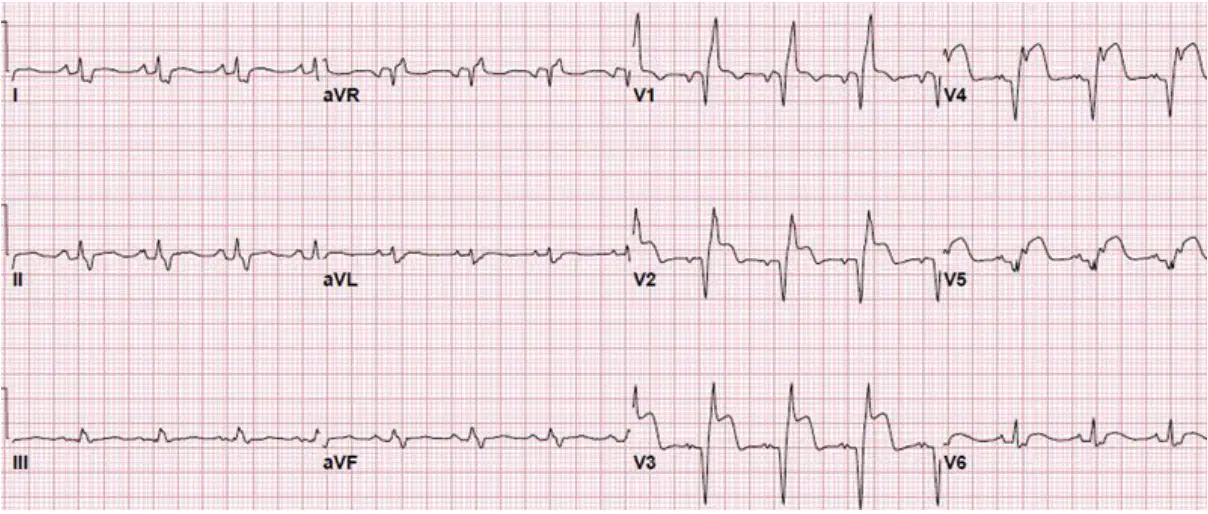
Which coronary artery is potentially occluded?
Left circumflex artery
Left Anterior Descending
Right Coronary Artery
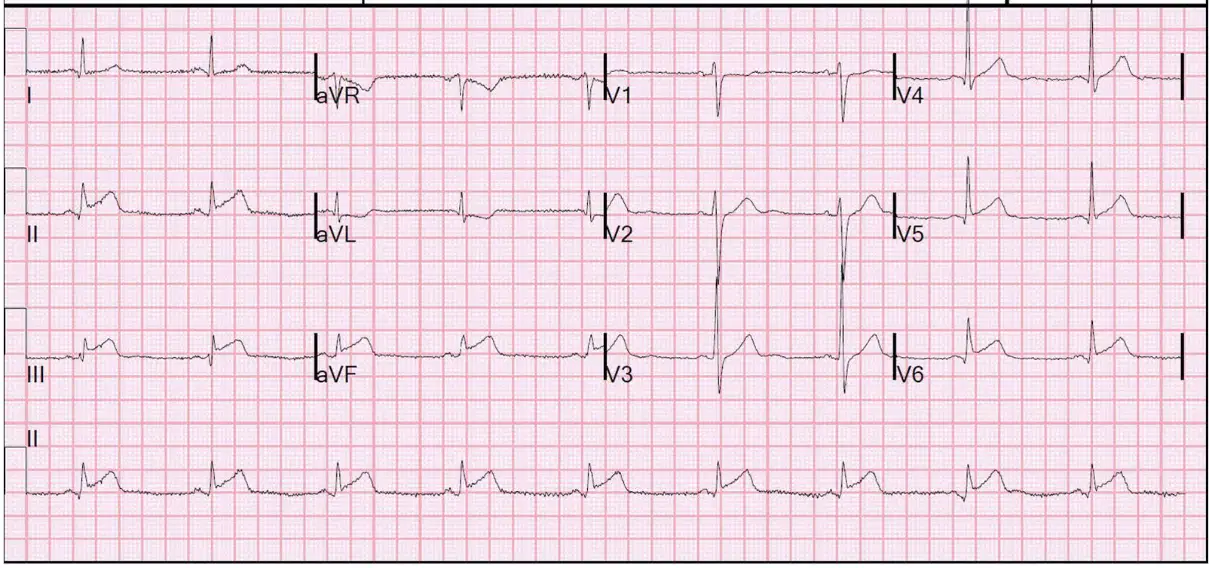
Interpret the 12-lead.
Right Coronary Artery Occlusion
LAD Coronary Artery Occlucion
Normal EKG
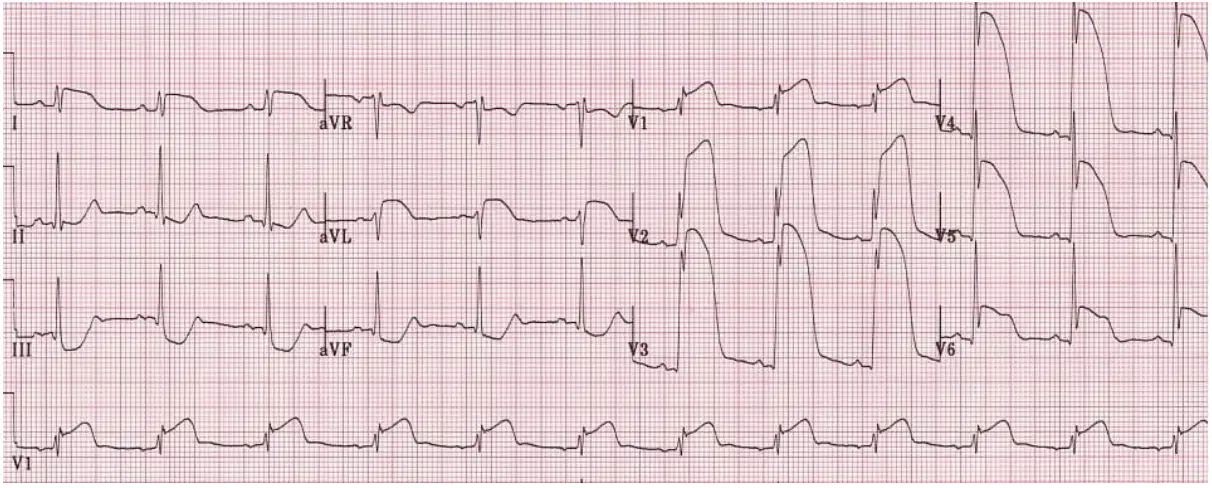
The nurse is caring for a patient recovering from the cath lab after presenting to the emergency department with this EKG. The nurse anticipates the patient will be discharged on which types of medications?
Antiplatelet, beta blocker, ace inhibitor and proton pump inhibitor
Beta blocker, statin, ARB and diuretic
Beta blocker, statin, antiplatelet, ace inhibitor, nitroglycerin and proton pump inhibitor
Antiplatelet and niacin

The nurse is caring for a patient that was recently admitted from the cardiac catheterization lab after receiving two stents to the left anterior descending artery. The patient is complaining of chest discomfort 2/10, which is down from admission 10/10. A post catheterization 12 lead EKG was just completed, and the nurse is comparing it to the patient's pre catheterization 12 lead EKG. Based on the comparison, which actions by the nurse is most appropriate?
Nurse calls rapid response team
The nurse continues to monitor, as this is the desired effect.
The nurse prepares the patient to return to the catheterization lab.
The nurse contacts the cardiologist to report increase in ST elevation.

The nurse is caring for a patient that has just been admitted to the cardiac ICU after having a stent placed in the right coronary artery for an inferior myocardial infarction. A repeat EKG has just been completed on arrival to the cardiac ICU from the catheterization lab. The nurse is assessing the patient and the patient states that they are having pain 9 out of 10 in their upper back. Given the patient pain assessment, and comparing the pre-catheterization lab and post-catheterization lab EKGs, what is the most appropriate response by the nurse?
Administer morphine and explain to patient that residual inflammation or pain is common after a myocardial infarction.
Administer an additional dose of 325mg chewable aspirin and nitroglycerin.
Administer morphine and nitroglycerin per PRN order and prepare to return to catheterization lab.
Continue to monitor as this is an expected result.
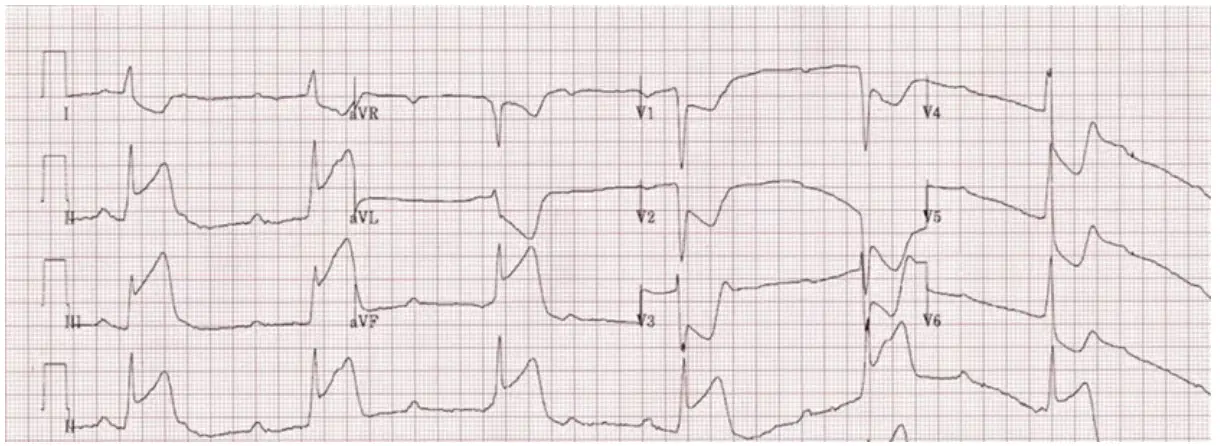
Your patient presents to the emergency room with complaints of chest pain. Patient’s vitals are as followed: 80bpm, 20RR, 140/96 BP, 96% 2L. Troponin was elevated at 0.5. Her EKG is below:
You need to transfer the patient to a different hospital for stent placement. What is a medication you can start her on while she waits to be transported to another hospital?
Heparin infusion
Furosemide infusion
Amiodarone infusion
Epinephrine infusion
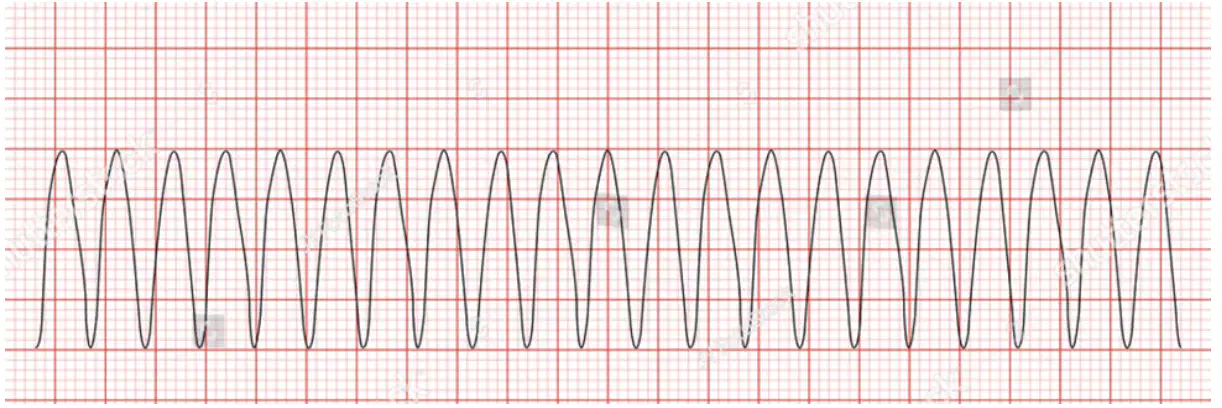
Your patient is awake, watching television, and has no complaints. You place them on the cardiac monitor and above is the rhythm you assess. Vital signs are as followed: 200bpm, 26 RR, 110/70 BP, 96% on room air. What is the first intervention the nurse should do?
Administer 12mg of Adenosine IV push
Obtain IV access
Synchronize cardioversion at 100J
Ask the patient to bare down
A client with a head injury is demonstrating signs of increased intracranial pressure (IICP). Which medications will the nurse anticipate administering that will decrease symptoms and potential complications related to IICP?
Select all that apply.
mannitol
pentobarbital
aspirin
amoxicillin
acetaminophen
A patient is brought into the Emergency Department after jumping off of a moving food truck. The client has suffered a traumatic injury involving multiple body systems. What is the priority for the nurse?
Airway maintenance with cervical spine protection
Exposure and familial support
Circulation with hemorrhage control
Disability and neurological assessment
The nurse is caring for a trauma patient in the emergency department that had a positive FAST exam. Which medication will the nurse anticipate administering to this trauma patient in relation to the FAST results?
vasopressin
Tranexamic acid
dobutamine
fibric acid
The nurse becomes concerned when a client who sustained a head injury, while playing a virtual reality video game, begins to demonstrate decerebrate posturing. What does this posture suggest to the nurse about the client's brain functioning?
Altered level of consciousness
Corticospinal tract impairment
Developing a seizure disorder
Brainstem impairment
The nurse is determining ways to decrease environmental stimuli for a client with increased intracranial pressure. Which action by the nurse will decrease environmental stimuli?
Turn all lights on to allow for orientation
Teach family to speak for the patient
Limit the client's visitors.
Provide all care quickly at one time
Coma stimulation is being implemented for a patient who sustained a traumatic brain injury. Which of the following should be included in this plan for stimulation?
Ensure that only one person at a time is speaking during the period of stimulation.
Stop the family from bringing in personal items of the patient.
Increase the volume level of speaking and stimulation in the patient’s room.
Provide stimulation during a sleep/rest period.
A patient with a traumatic brain injury is in need of fluid replacement therapy to maintain a systolic blood pressure of at least 90 mm Hg. The nurse realizes that the best fluid replacement for this patient would be:
0.45% saline
vasopressin
Normal saline
D5 1/2NS
Upon assessment, you are concerned that the patient is experiencing herniation. Which of the following would be expected findings of Cushing’s triad?
Wide pulse pressure, bradycardia, increased systolic pressure
Narrow pulse pressure, bradycardia, hypotension
Narrow pulse pressure, tachycardia, hypotension
Wide pulse pressure, tachycardia, increased systolic pressure
A 72 year old female is admitted with a large frontal subdural hematoma due to a fall at home on blood thinners. Frontal head injury behaviors and expected assessment findings may include which of the following?
Difficulty with bowel and bladder control
hypotension
Auditory deficits
Impulsivity and behavior changes
A patient is admitted following a traumatic brain injury. Upon assessment, the patient’s MAP is 75, ICP 27, and CPP 48. According to the findings, what should the nurse do first?
Begin a vasopressor to increase CPP
Call the physician immediately
Assess the patient for neutral head position
Increase the patient’s sedation level
A 32-year-old male presents with battle signs and racoon's eyes, nausea, vomiting, and rhinorrhea. His blood pressure is 130/72, heart rate 98, oxygen saturation 98% on room air, respirations of 26, and temperature of 99⁰ F. Which intervention is most appropriate at this time?
Insert a nasogastric tube to decompress the stomach and relieve nausea.
Test the nasal drainage for cerebral spinal fluid.
jaw thrust
Administer acetaminophen for the patient’s fever.
A 24-year-old patient presents to the emergency department following an MVA. His blood pressure is 88/62 and heart rate is 125. The physician performs a FAST exam to rule out which potential complication from the MVA?
Splenic laceration
pneumothorax
flail chest
epidural hematoma
A 33 year old male was brought to the ED after sustaining a gunshot wound to the leg. A massive transfusion protocol was completed, and the patient regained hemodynamic stability once the bleeding was stopped. What assessment finding indicates a need for further immediate intervention?
Pain rating of 7 out of 10
Loss of sensation in the affected extremity
Decreased mobility of the affected extremity
Platelet value of 145,000
The nurse is caring for a patient that experienced a traumatic brain injury while performing at a concert. When the nurse asks the patient his name, he responds with: "Back to the rhythm of the funky jam, DJ Kool is who I am."
When the nurse asks the patient where he is at, he responds with:
"Rockin' to the beat in the place to be"
When the nurse asks the patient what year it is, he responds with:
"Check out the flavor of the rhythm I wrote! While I got a chance here, let me clear my throat!"
How will the nurse document the orientation status for this patient?
Alert and oriented to person only
Alert but not oriented.
A narrative note describing the current orientation questions and answers.
Will chart by exception.
The nurse is assessing a patient admitted with a spinal cord injury that occurred while tailgating. During the assessment the nurse discovers that the patient has only visible contraction from the hip down. The patient has no sensation of light touch or pin prick from hip and mid-thigh down. The patient has also been incontinent of stool and did not have any anal contraction, anal pressure or anal sensation during incontinent episode. After completing the assessment the nurse suspects the patient has what type of spinal cord injury?
Incomplete L2 injury
Incomplete L3 injury
Complete L3 injury
Complete L2 injury
The nurse in the Emergency Department is preparing to administer methylprednisolone to a client with a spinal cord injury. What effect will this medication have on the client?
Prevent cord damage and ischemia from inflammation and edema
Improve the level of consciousness and patient outcome.
Improve circulation to the area of injury
Improve the ability to be adequately ventilated
The nurse is caring for a patient with a spinal cord injury. During the assessment the patient is able to extend and flex against gravity and resistance at the elbows, but has no contraction from hip flexors down. The patient has decreased sensation at the nipple line and below. The patient is incontinent of bowel and bladder. The patient was able to verbalize anal and perineal sensation, but was unable to produce motor function of the anus. Use the ASIA protocol to determine the type of spinal cord injury for this patient.
Complete T4
Incomplete T4
Complete L2
Incomplete L2
The nurse is using the ASIA Impairment Scale to assess a patient presenting with a spinal cord injury post MVA. The patient has only palpable contraction in knee extensors and flaccid below, has impaired pin prick and light touch sensation bilateral knees down. The patient also has active muscle contraction of anus but unable to determine sensation or light touch of anus. Please use the attached scale to determine the level and type of spinal cord injury.
Incomplete L5 spinal cord injury
Complete L2 spinal cord injury
Incomplete L1 spinal cord injury
Incomplete L3 spinal cord injury
The nurse is caring for a patient with a spinal cord injury. During the assessment the patient has full strength of the elbows and wrists, but has no movement or muscle contraction of fingers. The patient has no sensation to pin prick or light touch from the axilla and down, the patient is incontinent of bowel and bladder and has no anal sensation. Use the ASIA protocol to determine the type of spinal cord injury for this patient.
Complete C8
Complete C5
Complete C4
Complete T2
The nurse is caring for a patient with a spinal cord injury. During the assessment the patient is able to extend and flex at the elbows and the third finger, but only has visible contraction of the fifth finger. The patient has no sensation starting at the medial antebrachium, but has sporadic contraction and relaxation of the anal sphincter. Use the ASIA protocol to determine the type of spinal cord injury for this patient.
Incomplete T1
Complete T1
Incomplete C8
Complete C8
The nurse is caring for a 24-year-old trauma patient that was admitted to the ED following a penetrating injury by an old metal pole, to the spleen, after miscalculating a dive off of a boat and into the lake. The nurse anticipates that the patient will receive which vaccines in relation to this injury?
varicella
rabies vaccine
T-dap vaccine
flu vaccine
pneumonia vaccine
What level of TBI is this?
GCS score is less than 8 and the patient is being referred for potential organ doantion after apnea testing
Mild
Moderate
Severe
What level TBI is this?
Patient hit in head with a shoe, and loss conciousness for 15 minutes, GCS 15 and CT scan negative.
Mild
Moderate
Severe
What level TBI is this?
Patient was lip syncing and miscalculated her "death drop" dance move. Upon assessment the patient had a GCS of 10 and lost conciousness for 3 hours.
Mild
Moderate
Severe
What level TBI is this?
Student "passes" out during first day of cadaver work in physiology lab. The student hits head on floor and loses conciousness for 2 hours, has a GCS of 11 upon assessment and cannot remember anything that has happenned in the past 2 days.
Mild
Moderate
Severe
What level TBI is this?
The patient tripped over flat ground and hit her head, upon assessment GCS 14, loss of counciousness for 5 minutes and has mild headache.
Mild
Moderate
Severe
What level TBI is this?
Patient is on mechanical ventilation with minimal chance of breathing on own, because of damage to brainstem
Mild
Moderate
Severe
The nurse is admitting a 30-year-old male patient dressed as a chicken, who was hit by a car while attempting to cross the street. Which is a priority assessment?
Additional health history
Pluck feathers
Confirm peripheral pulses with doppler
Obtain MRI
The nurse is conducting a primary assessment on a trauma client. Which of the following would demonstrate the client is having difficulty with ventilation?
Client is lethargic
Shallow rapid respirations
Client is diaphoretic
Oxygen saturation 90%
The nurse is caring for a nine-month-old who just returned from the PACU after a shunt placement for hydrocephalus. Which of the physician's orders would the nurse question?
Elevate head of bed 40 degrees
Daily head circumference and PRN
Vital signs and neuro checks hourly and PRN
Small, frequent formula feedings once awake from sedation.
The nurse is caring for a patient born with spina bifida. The nurse positions the patient in the incubator in which position?
prone with a sterile saline dressing over sac
supine with a sterile saline dressing over the sac.
Prone with a pressure dressing over the sac.
prone with sac covered by a clean diaper
The health care provider has ordered mannitol (Osmitrol) for a child with a head injury. The best indicator that this medication has been effective is:
Pupil response
Decreased intercranial pressure and decreased head circumference
Hyponatremia
Decreased facial swelling
The nurse prepares medications for a patient with status epilepticus. What should the nurse identify as the medication of choice for this patient?
A steroid
An opioid
An antispasmodic
A benzodiazepine
The nurse is caring for a patient who suffered a pneumothorax related to a penetrating chest wound after performing own stunts while filming an action movie. The nurse anticipates what assessment findings while assessing the chest tube drainage system? Select all that apply.
occasional bubbling in water seal chamber
fluctuation when patient coughs
saturated dressing that has been reinforced
drainage system lower than the patient
chest tube clamp at bedside
The nurse is instructing a new graduate nurse to monitor for signs and symptoms of increased intracranial pressure. Teaching has been successful when the new graduate states "I will anticipate _________________________ signs and symptoms of increased intracranial pressure."
Increased temperature, increased respirations, decreased pulse, and increased blood pressure
Decreased temperature, decreased pulse, decreased respirations, and increasing blood pressure
Increased temperature, decreased respirations, decreased pulse, and decreased blood pressure
Increased temperature, decreased pulse, decreased respirations, and increasing blood pressure
The nurse is completing a neurovascular assessment on an unresponsive patient admitted with a traumatic brain injury after falling off a pole. The nurse is assessing response to painful stimuli, which is the most appropriate method?
temporal pressure
sternal rub
nailbed pressure
orbital rim pressure
The nurse is caring for a patient with a complete L2 spinal cord injury. The nurse is providing education to the patient and family about signs and symptoms of autonomic dysreflexia, what symptoms should be included? Select all that apply.
diaphoresis
hypertension
shivering
headache
flushing above site of injury
The nurse is caring for a patient with a complete T4 spinal cord injury, the patient becomes diaphoretic and complains of a severe headache. What is the next nursing action?
Assess patient blood pressure
Measure intrabdominal pressure
Assess bladder distention
Assess pupillary response
The nurse is evaluating patient admitted to the emergency department for a cervical fracture after falling from the top of a moving ice cream truck. Which assessment finding indicates the patient is still in spinal shock?
flaccid paralysis
tachycardia
cap refill greater than 5 seconds
hypertension
What is the purpose of hypertonic saline related to TBI patients?
Decreases free water from intracranial space and into circulation
Decreases risk of increased intracranial pressure by decreasing neuroexcitotoxicity from overstimulation
Decreases intracranial pressure by decreasing metabolic demand from agitation
Lower acute increased intracranial pressure
increase cerebral perfusion pressure
What is the purpose of midazolam related to TBI patients?
Lower acute increased intracranial pressure
Decreases intracranial pressure by decreasing metabolic demand from agitation
Decreases risk of increased intracranial pressure by decreasing neuroexcitotoxicity from overstimulation
Decreases free water from intracranial space and into circulation
increases cerebral perfusion pressure
What is the purpose of Fentanyl related to TBI patients?
Decreases intracranial pressure by decreasing metabolic demand from agitation
Decreases risk of increased intracranial pressure by decreasing neuroexcitotoxicity from overstimulation
Decreases free water from intracranial space and into circulation
Decreases response to painful stimuli
increase cerebral perfusion pressure
What is the purpose of Dopamine related to TBI patients?
Decreases risk of increased intracranial pressure by decreasing neuroexcitotoxicity from overstimulation
Decreases free water from intracranial space and into circulation
increase cerebral perfusion pressure
Decreases intracranial pressure by decreasing metabolic demand from agitation
decrease response to painful stimuli
What is the purpose of Acetaminophen related to TBI patients?
Decreases risk of increased intracranial pressure by decreasing neuroexcitotoxicity from overstimulation
Decreases free water from intracranial space and into circulation
Decreases intracranial pressure by decreasing metabolic demand from agitation
increases cerebral perfusion pressure
decrease availability of inflammatory and pyretic cytokines
What is the purpose of Pentobarbital related to TBI patients?
Decreases risk of increased intracranial pressure by decreasing neuroexcitotoxicity from overstimulation
Decreases free water from intracranial space and into circulation
Lower acute increased intracranial pressure
Decreases intracranial pressure by decreasing metabolic demand from agitation
Decreases response to painful stimuli
What is the purpose of Mannitol related to TBI patients?
Decreases risk of increased intracranial pressure by decreasing neuroexcitotoxicity from overstimulation
increases cerebral perfusion pressure
Lower acute increased intracranial pressure
Decreases intracranial pressure by decreasing metabolic demand from agitation
Decreases free water from intracranial space and into circulation
The nurse is evaluating a patient that was admitted to the ICU ten days ago after traumatic injury while riding a mechanical bull. The patient was diagnosed with a diffuse axonal injury and has had transient neurologic deficits. The patient displays signs and symptoms of aggressive behavior and is easily agitated during the evaluation. These signs and symptoms are used to evaluate the effectiveness of which medication?
ceftriaxone
famotidine
baclofen
amitriptyline
The nurse is evaluating a patient admitted for a crushing injury to right lower extremity after jumping off top of a streetlight, while celebrating final exams. Which assessment findings may indicate the patient is developing compartment syndrome in the right lower extremity? Select all that apply.
Increased pain above level of injury
lack of sensation in extremity
Delayed or minimal cap refill in extremity
pallor or cyanosis of extremity
bounding pulses in extremity
The nurse is completing a neurological assessment on a patient admitted for traumatic injury riding on a unicycle while playing a harmonica. During the assessment the patient only opens eyes when nailbed pressure is applied, unable to form words only making sounds, and extends extremities outward for motor response. The nurse documents the Glascow Coma scale as?
4
8
6
Unable to determine
A client in the ICU has a MAP of 90 mm Hg and an ICP reading of 45 mm Hg. The nurse interprets these figures to mean:
The CPP is 135 mmHg
ICP pressure is too low.
Cerebral perfusion pressure is dropping
The patient may be experiencing pain
You are providing care to a patient experiencing diabetic ketoacidosis. The patient is on an insulin drip and their current glucose level is 300. In addition to this, the patient also has 5% Dextrose 0.45% NS infusing in the right antecubital vein. Which of the following patient signs/symptoms causes concern?
Patient's skin and mucous membranes are dry.
Patient complains of thirst.
Patient is nauseous.
Patient has a potassium level of 2.9
Which of the following is not a sign or symptom of Diabetic Ketoacidosis?
polydipsia
ketonuria
abdominal pain
oliguria
Which of the following statements about metformin are true? Select all that apply.
Metformin can cause weight gain when started
Metformin can be used in treatment of Polycystic Ovarian Syndrome
A patient has just had IV push dye for a procedure, they should hold their metformin for at least 48 hours
Metformin doses do not require adjustment with patients with low GFR or renal failure
Metformin decreases cholesterol levels
A nurse is precepting a new graduate nurse and discussing diabetes and DKA education. Which of the following statements by the graduate nurse demonstrate an understanding of diabetes and DKA (select all that apply)?
Sick day rules include checking blood glucose levels more frequently, but hold all insulin if not eating.
Medications such as Trulicity and Ozempic can decrease risk of cardiovascular deaths in diabetic patients.
Hemoglobin A1C is an indicator of diabetes compliance over a three month time period.
Beta-blockers can mask signs and symptoms of hypoglycemia.
Insulin decreases serum potassium
What type of insulin do you expect the doctor to order for treatment of DKA?
Subcutaneous Novolog
IV Regular Insulin
IV NPH
IV Levemir
A patient is admitted with Diabetic Ketoacidosis. The physician orders intravenous fluids of 0.9% Normal Saline and 10 units of intravenous regular insulin IV bolus and then to start an insulin drip per protocol. The patient’s labs are the following: pH 7.25, Glucose 455, potassium 2.5. Which of the following is the most appropriate nursing intervention to perform next?
Start the IV fluids and administer the insulin bolus and drip as ordered
Hold the insulin and notify the doctor of the potassium level of 2.5
Hold IV fluids and administer insulin as ordered
Recheck the glucose level
The nurse monitors the blood glucose levels of a patient being treated with insulin for diabetic ketoacidosis. Why should the nurse ensure glucose levels decline no more than a rate of 50-70 mg/dL/hour?
When blood glucose drops rapidly, fluids shift out of the cell, which increases dehydration, causing severe hypovolemic shock.
A rapid drop in blood glucose can result in hypokalemia, causing life-threatening arrhythmias.
A rapid drop in blood glucose can result in formation of thromboses as a result of dehydration.
When blood glucose drops rapidly, severe damage to the brain results from metabolic alkalosis.
The nurse is providing discharge instructions to a patient with a mild brain injury. Which of the following should be included in these instructions?
Dizziness will disappear in a few days.
Avoid participating in rigorous activities because of a cumulative effect.
Return to normal activities and work
The headache will go away in a few days
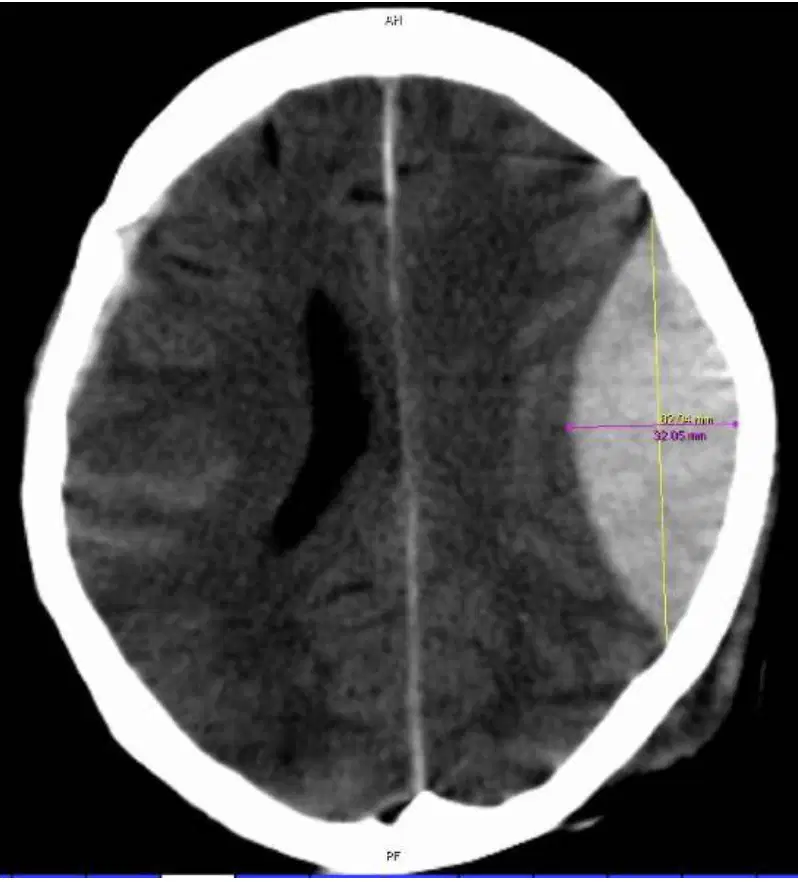
The nurse is caring for a patient who lost control while dressed as a unicorn frolicking on a treadmill and landed against the wall. The patient is lethargic and complaining of a headache. During the neuro assessment the patient's right pupil is fixed and dilated. The nurse knows that this patient has what type of hematoma?
Diffuse Axonal Injury
Epidural hematoma
Subdural hematoma
Intracerebral hemorrhage
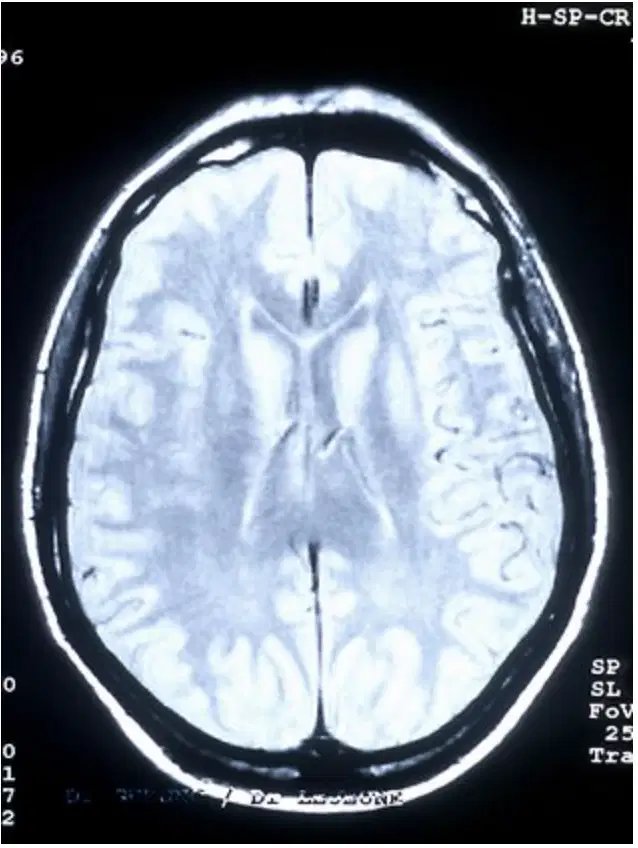
The nurse is caring for a patient that was admitted for a traumatic brain injury. The patient is 47 years old and has a history of high impact sports. Upon admission the patient's spouse admits that the patient has been confused and impulsive the past few months. The nurse understands that this CT and the history from the spouse suggest that the patient has what type of brain injury?
Intracerebral hemorrhage
Subdural hematoma
Diffuse Axonal Injury
Chronic traumatic encephalopothy

The nurse is assisting the neurologist during a cold caloric stimulation test on a 25 year old male patient who sustained a traumatic brain injury from the below situation. The patient is the person laying on the table.
During instillation of cold water into the patient's right ear the patient's right eye slowly deviated toward the right and the left eye did not deviate from center. The nurse understands that this suggests what type of prognosis for this patient?
The patient's brain stem functioned is impaired.
The patient will recover cognitively but will have decreased nerve stimulation of lower extremitis.
This patient will have cognitive impairment or slowed response, but will regain higher motor function skills with therapy.
Brainstem function is intact

