
 Worksheets
Biology Review Questions
Total questions: 142
Worksheet time: 3hrs 20mins

Which statement BEST describes how embedded proteins help a plasma membrane perform its function?
They prevent waste material from leaving a cell.
They prevent water molecules from entering a cell.
They allow certain kinds of molecules to enter or leave a cell.
They allow substances dissolved in water to enter or leave a cell.
Mitchell is creating a model of a plant cell. Mitchell wants to include organelles that are involved in energy production for the cell. Which organelles should Mitchell include?
Mitchell should use mitochondria to store energy and cytoplasm to release energy from food.
Mitchell should include the nucleus to transform light energy and chloroplasts to store energy.
Mitchell should include cytoplasm to store energy and lysosomes to release energy from food.
Mitchell should include chloroplasts to transform light energy and mitochondria to release energy from food.

Sydney created a cell model for her science project as shown above. Sydney needs to label her model. Which statement BEST describes the type of model Sydney created?
Sydney has created a plant cell model because only plant cells contain chloroplasts and a cell wall.
Sydney has created an animal cell model because only animal cells contain a nucleus and a cell wall.
Sydney has created a plant cell model because only plant cells contain cytoplasm and a cell membrane.
Sydney has created an animal cell model because only animal cells contain chloroplasts and a cell membrane.
Which describes an interaction between the Golgi apparatus and another organelle to maintain a cell's homeostasis?
The Golgi apparatus stores nutrients provided by the mitochondria.
The Golgi apparatus sorts and packages proteins created by ribosomes.
The Golgi apparatus collects genetic information to be used by the nucleus.
The Golgi apparatus sends and receives chemical signals for the membrane.
In a cell, the information that controls the production of proteins must pass from the nucleus to what other cell structure?
mitochondrion
cell membrane
chloroplast
ribosome
The fluid-mosaic model of the cell membrane suggests that the membrane is primarily composed of proteins and lipids. Which of the following is a function of proteins in the cell membrane?
to allow substances to cross the plasma membrane via active transport
to provide a hydrophilic head so that water can enter the cell
to package and sort molecules to be sent in vesicles
to read messenger RNA to assemble amino acids
Which of the following are NOT found in both plant and animal eukaryotic cells?
vacuoles
nuclei
mitochondria
chloroplasts
Which of the following is the most accurate statement comparing cell membranes and cell walls?
Cell walls prevent everything from entering the cell, while cell membranes allow some things to enter.
Cell membranes function mostly as selectively permeable gatekeepers while cell walls function mainly as support systems.
Cell membranes are found only in animal cells; cell walls are found only in plant cells.
Cell walls function mostly for photosynthesis while cell membranes function mostly for cellular respiration.
An environmental toxin is discovered that interferes with certain cellular functions. When affected cells are examined, it is observed that proteins are normally found in the plasma membrane are instead found in the cytoplasm. Other proteins are also located improperly. Which structure is most likely affected by the toxin?
Lysosomes
Mitochondria
Cell Wall
Golgi apparatus

Which term best completes the concept map above?
an animal cell
a prokaryotic cell
a virus
a plant cell

The diagram above shows how living things use enzyme in chemical reactions to release energy. How do enzymes affect the reactions in which they take part?
Most enzymes slow down chemical reactions.
Enzymes are converted into products in the reaction.
Enzymes increase the activation energy of the reaction.
Enzymes decrease the activation energy of the reaction.
Enzymes help living organisms metabolize food. Typically, an enzyme acts to
slow down a metabolic reaction, which prevents the organism from using energy too quickly.
maintain a metabolic reaction, which causes the organism to lose energy as it takes in food.
transform a metabolic reaction into an oxidation reaction, providing the organism with oxygen.
speed up a metabolic reaction, which allows the organism to get energy quickly.
The function of the nucleic acids contained in the body cells of an organism is
directing the synthesis of proteins necessary for proper cell function.
producing the inorganic molecules needed for normal cell growth.
disrupting meiosis and the synthesis of amino acids into a sequence.
forming a variety of gametes that will pass on hereditary information.
What is the role of carbohydrates in animal cells?
synthesizing proteins
developing enzymes
storing energy
protecting the cell wall

A student set up the following investigation. An artificial membrane separates two fluid-filled compartments. This membrane is permeable to water but impermeable to sucrose. Both compartments initially hold the same amount of fluid, which consists of sucrose dissolved in water. The fluid in compartment A is a 20% sucrose solution. The fluid in compartment B is a 35% sucrose solution. Which prediction is correct?
Water will move from compartment A to compartment B by osmosis.
Water will move from compartment B to compartment A by osmosis.
Sucrose will move from compartment A to compartment B by diffusion.
Sucrose will move from compartment B to compartment A by diffusion.

Use the illustration of a cell in its environment above to answer the question. Based on the distribution of these molecules, what will most likely happen after a certain amount of time?
The concentration of CO2 will remain the same inside the cell.
The concentration of O2 will remain the same outside the cell.
The concentration of CO2 will decrease outside the cell.
The concentration of O2 will increase inside the cell.

Which means of particle transport is shown in the figure above?
Osmosis
Diffusion
Facilitated diffusion
Active transport
Maggie places cells of Elodea, a freshwater plant, on a wet-mount microscope slide. She uses a saltwater solution to prepare the slide. When she observes the cells under the microscope, what is she MOST LIKELY to see?
The cells will shrink within the cell walls.
The cells will swell, expanding the cell walls.
The cell walls will dissolve, releasing the cell.
The cells will not be affected and remain unchanged.
Which process requires cellular energy?
active transport
passive transport
diffusion
osmosis
A balloon allows water but not sugar to pass through it. The balloon contains a 10% sugar solution. A beaker contains a 5% sugar solution. Which statement is true?
When placed in the beaker, the balloon will gain water by osmosis.
When placed in the beaker, the balloon will lose water by osmosis.
When placed in the beaker, the balloon will gain water by active transport.
When placed in the beaker, the balloon will lose water by active transport.

Use the diagram above to answer the question. The diagram shows a beaker of water and molecules of red dye at the beginning of an experiment (Time 1) and the same beaker of water and molecules of red dye after 30 minutes (Time 2). Which of the following BEST explains what happened?
Molecules of red dye moved by diffusion from a higher concentration to a lower concentration.
Molecules of red dye moved by active transport from a higher concentration to a lower concentration.
Molecules of water moved by osmosis from a higher concentration to a lower concentration.
Molecules of water moved by active transport from a higher concentration to a lower concentration
Which statement BEST describes diffusion?
Diffusion requires the cell to use energy.
Diffusion is an example of active transport.
Diffusion occurs when particles spread from areas where they are less concentrated to areas where they are more concentrated.
Diffusion occurs when particles spread from areas where they are more concentrated to areas where they are less concentrated.
Fill in the blank: Prophase, ________________, Anaphase, ___________________
Metaphase, Television
Telophase, Mitochondria
Metaphase, Telophase
Telophase, Metaphase

During photosynthesis, what gas do plants release?
oxygen
carbon dioxide
water
nitrogen

In cellular respiration, glucose and ____________ goes in but _______________ and water comes out.
oxygen, carbon dioxide
carbon dioxide, oxygen
glucose, water
water, glucose


The cell theory is...
All living organisms are composed of at least one cell.
building blocks of life. All cells come from
All of the above
Cells arise only from previously existing cells.
A prokaryotic cell is...
Cells that don't contain a nucleus but do contain other membrane-bound organelles.
Cells that contain a nucleus but no other membrane-bound organelles.
Cells that contain a nucleus and other membrane-bound organelles.
Cells that don't contain a nucleus or any other membrane-bound organelles.
A Eukaryotic cell is...
Cell that has no membrane.
Cell with no membrane-bound organelles.
A cell containing a nucleus and other membrane-bound organelles.
A cell containing a nucleus and other nucleus-bound organelle.
The cell membrane main purpose is...
Selective Permeability
Energy Production
Locomotive
Looking good



What is the outer most part of a cell?
cell wall
nucleus
cell membrane
cell skin


True or False: Lipids are insoluble
True
False
True or False: The main function of a lipid is to store energy.
True
False
The units of protein are
Amino acids
Glucose
Fatty acid
Peptides


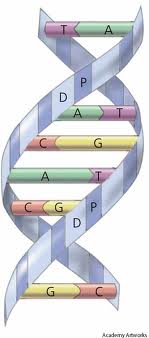
What does DNA stand for?
Denatured Acid
Dominant Acid
Deoxyribonucleic Acid
Diribonucleic Acid
The following describes ________ during mitosis. The chromosomes line up along the center/middle of the cell and the spindle fibers attach to each chromosome at the centromere.
prophase
metaphase
anaphase
telophase
TT,tt,PP,pp,SS,ss are examples of alleles that are?
homozygous
heterozygous
different
homologous
The exact genetic makeup of an organism, such as RR, Tt, PP is its?
phenotype
dominance
genotype
trait
Females-XX; MalesXY. A couple has 4 girls. What is the chance the next child will be a boy?
75%
100%
25%
50%

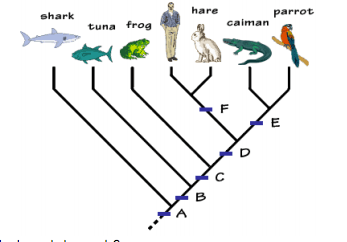


Which statement best describes the process of evolution?
Populations can survive in different locations on earth
Environmental conditions limit the number of species on Earth
Populations grow when resources are abundant
The traits of a species can change over time
Having freckles is dominant over not having freckles. If two individuals heterozygous for freckles have a child, what is the probability the child will have freckles?
0%
25%
50%
75%
Identical twin girls are separated at birth and cared for by two different families. After twenty years, the twins have different heights and weights. What is most likely the cause of these differences?
One twin had a genetic condition that prevented her from growing tall.
The DNA of one twin was different from the DNA of the other twin.
Each twin was provided a different diet and physical activities.
The proteins made by one twin were different than the proteins made by the other twin.
What is the function of a restriction enzyme?
to control the movement of proteins into a cell
to regulate blood sugar levels
to produce hormones that regulate digestion
to cut DNA at a specific nucleotide sequence
Some marine worms and mollusks go through similar larval stages during development. Which can be inferred about their relationship?
They share a common ancestor
The mate with each other
They compete for a habitat
The share the same food source
Which statement best describes natural selection?
As the weather changes, organisms that are able to find shelter need less energy to live.
Organisms that eat only plants need less food than organisms that eat animals.
Organisms better adapted to their environment are more likely to reproduce and pass on their traits to their offspring.
Small organisms are more likely to survive than larger organisms.
Some scientists claim recent evidence suggests birds should be reclassified to share more taxonomic groups with dinosaurs. What type of evidence would provide the best support for this claim?
evidence showing birds shared similar habitats with dinosaurs
evidence showing birds shared similar nutritional requirements as dinosaurs
evidence showing birds shared similar behaviors with dinosaurs
evidence showing birds shared a common genetic history with dinosaurs

This is a dichotomous key for selected arthropods. To which order does the caddis fly belong?
Acarina
Diptera
Siphonaptera
Trichoptera
Which molecules are joined together to make proteins?
fatty acids
nucleic acids
amino acids
acetic acids
Which word equation best represents the process of cellular respiration?
carbon dioxide + glucose → oxygen + water
carbon dioxide + water → glucose + oxygen
glucose + oxygen → carbon dioxide + water
oxygen + water → carbon dioxide + glucose
How does the body of a runner keep up with the demand for energy when cellular oxygen levels are low?
through energy production in the mitochondria
through aerobic respiration in the plasma membrane
through ATP produced directly from sunlight
through anaerobic respiration in the cytoplasm

Scientists can determine relatedness among organisms by comparing partial amino acid sequences. The table shows four partial amino acid sequences from four organisms.
Which organism is the LEAST related to the other three organisms?
Organism 1
Organism 2
Organism 3
Organism 4

The image shows part of the humerus bone in different genera of primates.
Which statement is best supported by the observable structures of the different humerus bones?
The primates lived in similar environments.
The primates shared a common ancestor.
The primates interbreed with similar organisms in a population.
The primates had diets that consisted of similar types of foods.

Researchers studying populations of lizards from the genus Gallotia on the Canary Islands compared the protein cytochrome b in different populations. The table shows the number of differences in the cytochrome b protein between different populations.
Which conclusion about the relatedness of the lizards do these data support?
G. atlantica and G. stehlini are the least closely related. .
G. simonyi and G. bravoana are the most closely related.
G. galloti eisentrauti and G. galloti palmae are the most closely related.
G. galloti eisentrauti and G. galloti galloti are the least closely related

The graph shows the number of taxa of reptiles whose fossilized tracks have been found.
Which statement is best supported by these data?
Competition for food and shelter among reptile species was very low during the Triassic period.
A great extinction occurred during the Jurassic period.
Environmental conditions for speciation were most favorable for reptiles during the Permian period.
Reptiles adapted to a terrestrial environment during the Cretaceous period.

The diagram shows light- and dark-colored beetles that live on a tree.
Which result is most likely to occur to the beetle population due to predation over time?
The number of light-colored beetles in the population will increase.
There will be more dark-colored beetles than light-colored beetles.
The number of light-colored beetles will decrease.
The dark-colored beetles will move to a different type of tree.
The white cattail is a hybrid species of plant that is a result of the cross between the broad-leaved cattail and the narrow-leaved cattail. Over time, the white cattail has established itself in the wetlands of Midwestern states. Which of these explains the success of the white cattail?
Favorable genes from parental generations provide advantageous characteristics to the hybrid species.
Hybridization produces offspring traits that allow different species to survive in extreme environments.
Inherited traits passed on from parental generations make hybrid species more susceptible to disease.
Hybrid species display more adaptations due to their reduced genetic diversity.
Adaptations that result from natural selection are expected to increase the fitness of an organism. In terms of natural selection, which of the following best describes fitness?
Being able to escape from predators
Being among the strongest organisms in a population
Being able to survive, find a mate, and produce offspring
Being able to survive long enough to reach the adult stage
Common baboons live on the savanna in breeding groups called troops. While females tend to stay with the troop, younger or less dominant males may leave to join a neighboring troop. Which of these is a likely outcome of movement by young males?
Gene flow occurs between populations.
Allele frequencies suddenly change.
Relative genotypic frequencies reach a constant state.
Intermediate phenotypes increase in the species.
The gray squirrel, Eastern fox squirrel, and red squirrel are all different species of squirrels. Why is having a scientific name for each species of an organism important?
To prevent existing named organisms from having their names changed as they become extinct
To keep the classification system from being altered as new organisms are discovered
To allow organisms to be placed in many classification levels at the same time
To standardize the naming and organization of organisms to avoid confusion
Scientists around the world use a standardized taxonomic system. Why would scientists want to use a taxonomic system that is standardized?
In order to avoid confusion with the identification of organisms
Because Linnaeus established the system
So that Latin names can be applied for a practical purpose
In order to place organisms in different groups
Scientists around the world use a standardized taxonomic system. Why would scientists want to use a taxonomic system that is standardized?
In order to avoid confusion with the identification of organisms
Because Linnaeus established the system
So that Latin names can be applied for a practical purpose
In order to place organisms in different groups

A
B
C
D

F
G
H
I

A
B
C
D

A
B
C
D

