
Font size
 Worksheets
Unit IV Ecology
Total questions: 89
Worksheet time: 45mins
A certain species of pine tree survives only in scattered locations at elevations above 2800 meters in the western United States. To understand why this tree grows only in these specific places, an ecologist should _____.
study the anatomy and physiology of this species
investigate the various biotic and abiotic factors that are unique to high altitude
analyze the soils found in the vicinity of these trees, looking for unique chemicals that may support their growth
collect data on temperature, wind, and precipitation at several of these locations for a year
A fish swimming into an estuary from a river would have which of the following as its greatest physiological challenge?
The high water flow would make the fish expend more energy.
The low oxygen content would give the fish difficulty in swimming aerobically.
The temperature change would stress the fish by denaturing its proteins.
The change in water solute content would challenge the osmotic balance of the fish.
A population is correctly defined as having which of the following characteristics?
I. inhabiting the same general area
II. Belonging to the same species
III.possessing a constant and uniform density and dispersion
III only
I and II only
II and III only
I, II, III
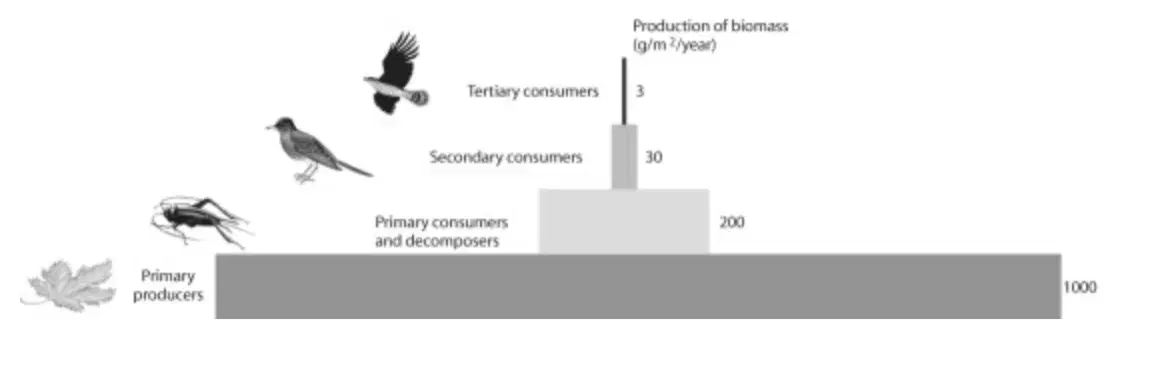
After looking at the figure above, what can be said about productivity in this ecosystem?
Nothing can be said based on this information.
Between 80% and 90% of the energy is lost between most trophic levels.
Between 10% and 20% of the energy is lost between most trophic levels.
Productivity increases with each trophic level.
Agricultural lands frequently require nutrient augmentation because _____.
nitrogen-fixing bacteria are not as plentiful in agricultural soils because of the use of pesticides
the nutrients that become the biomass of plants are not cycled back to the soil on lands where they are harvested
land that is available for agriculture tends to be nutrient-poor
cultivation of agricultural land inhibits the decomposition of organic matter
As climate changes because of global warming, plant species' ranges in the northern hemisphere may move northward. The trees that are most likely to avoid extinction in such an environment are those that _____.
have seeds that are easily dispersed by wind or animals
produce well-provisioned seeds
have seeds that become viable only after a forest fire
disperse many seeds in close proximity to the parent tree
Besides sunlight, which would be the next most important climatic factor for terrestrial plants?
wind and fire
moisture and wind
temperature and wind
temperature and moisture

Burning fossil fuels releases oxides of sulfur and nitrogen. These air pollutants can be responsible for _____.
I only
II only
III only
I and II only
Choose the term that matches the description.This causes extremely high levels of toxic chemicals in fish-eating birds.
acid precipitation
biological magnification
greenhouse effect
eutrophication
Consider the food chain of grass → grasshopper → mouse → snake → hawk. About how much of the chemical energy fixed by photosynthesis of the grass (100 percent) is available to the hawk?
0.01%
0.1%
1%
10%
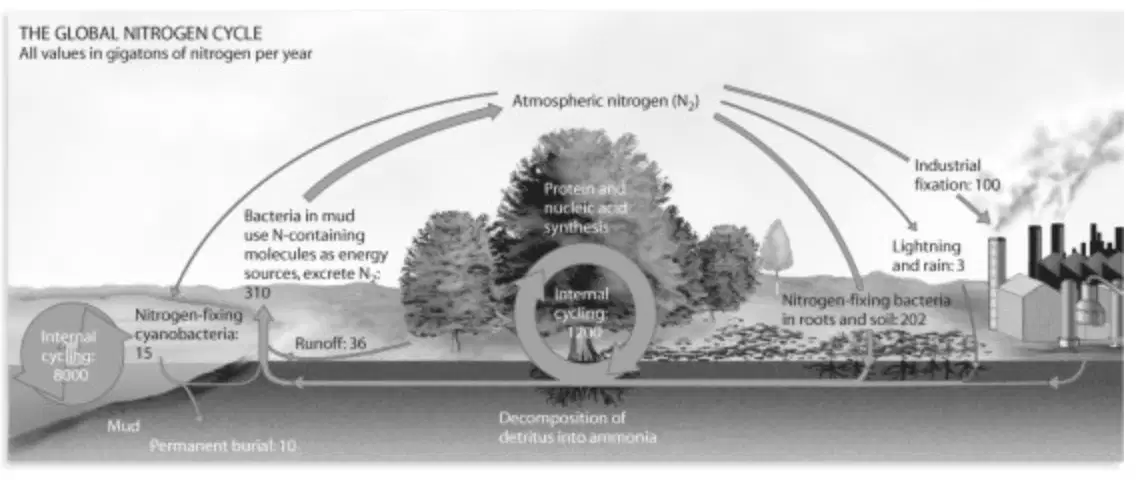
Consider the global nitrogen cycle depicted in the figure above. How are humans altering this cycle?
industrial nitrogen fixation
nitrogen lost to the atmosphere
reduction of nitrogen available to terrestrial ecosystems
reduction of nitrogen fixation by bacteria
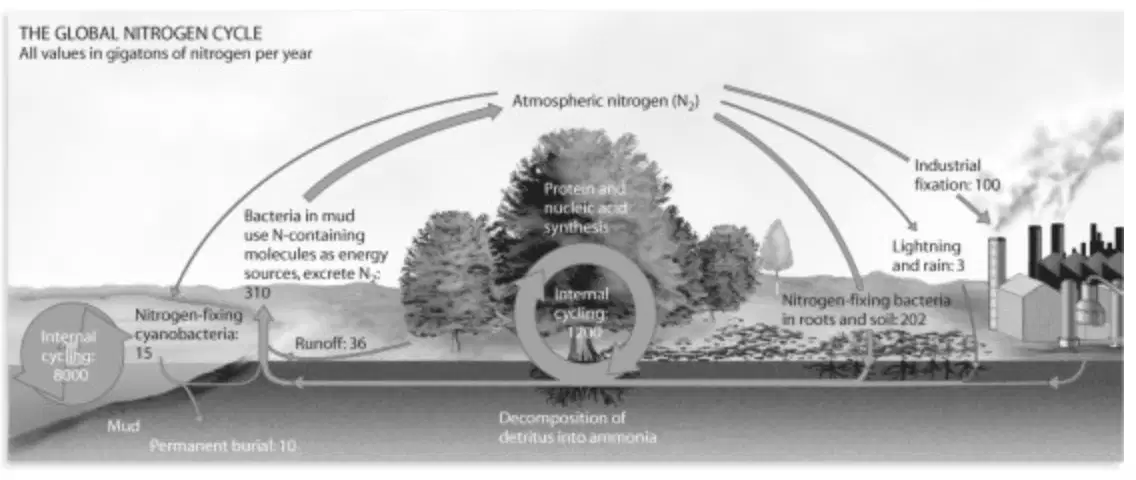
Consider the global nitrogen cycle depicted in the figure above. What is the limiting portion of the cycle for plants?
industrial nitrogen fixation
nitrogen lost to the atmosphere
internal nitrogen cycling in the oceans
nitrogen fixation by bacteria
During exponential growth, a population always _____.
grows at its maximum per capita rate
quickly reaches its carrying capacity
cycles through time
loses some individuals to emigration
Eutrophication is often caused by excess limiting nutrient runoff from agricultural fields into aquatic ecosystems. This results in massive algal blooms, which eventually die and decompose, ultimately depleting the dissolved oxygen and killing large numbers of fish and other aquatic organism. Predict which of the following human actions would best address the problem of eutrophication near agricultural areas?
After each eutrophication event, remove the dead fish and invertebrates to place on agricultural fields instead of fertilizer.
Determine which limiting nutrient is responsible for the algal bloom and use other fertilizers to apply to crops.
Remove the algae before it dies and decomposes to prevent eutrophication from occurring.
Determine critical nutrient loads required for certain crops and do not exceed this amount during fertilizer application.

Food web for a particular terrestrial ecosystem (arrows represent energy flow and letters represent species)Examine this food web for a particular terrestrial ecosystem. Which species is autotrophic?
A
C
D
E
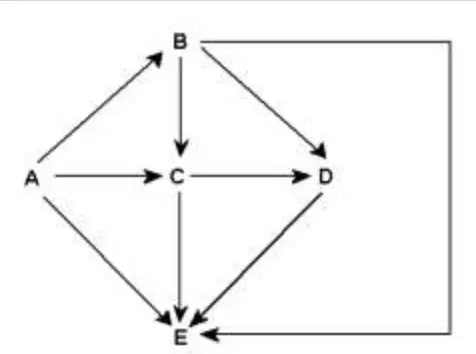
Food web for a particular terrestrial ecosystem (arrows represent energy flow and letters represent species)Examine this food web for a particular terrestrial ecosystem. Which species is most likely a decomposer on this food web?
A
B
C
E
For most terrestrial ecosystems, pyramids composed of species abundances, biomass, and energy are similar in that they have a broad base and a narrow top. The primary reason for this pattern is that _____.
secondary consumers and top carnivores require less energy than producers
at each step, energy is lost from the system
biomagnification of toxic materials limits the secondary consumers and top carnivores
top carnivores and secondary consumers have a more general diet than primary producers
Generalized global air circulation and precipitation patterns are caused by _____.
rising, warm, moist air masses that cool and release precipitation as they rise and then, at high altitude, cool and sink back to the surface as dry air masses after moving north or south of the tropics
air masses that are dried and heated over continental areas that rise, cool aloft, and descend over oceanic areas followed by a return flow of moist air from ocean to land, delivering high amounts of precipitation to coastal areas
polar, cool, moist high-pressure air masses from the poles that move along the surface, releasing precipitation along the way to the equator, where they are heated and dried
the revolution of Earth around the sun
Generally speaking, deserts are located in places where air masses are usually _____.
tropical
humid
rising
descending
How does an inefficient transfer of energy among trophic levels result in the typically high endangerment status of many top-level predators?
Top-level predators are destined to have small populations that are sparsely distributed.
Predators have relatively large population sizes.
Predators are more disease-prone than animals at lower trophic levels.
Top-level predators are more likely to be stricken with parasites.
If carbon dioxide levels continue to increase and climate change continues over the next century, which of the following would best predict the directional migration of the North American ecosystems from the biomes shown in this climograph?
The ecosystems will shift to the south due to decreasing transpiration rates.
The ecosystems will move to both the eastern and western coastlines as these areas will be more moderate.
The ecosystems will move down mountains as the temperatures warm.
The ecosystems will shift to the north as temperatures warm.
If global warming continues at its present rate, which biomes will likely take the place of the coniferous forest (taiga)?
temperate broadleaf forest and grassland
desert and chaparral
tropical forest and savanna
chaparral and temperate broadleaf forest
If the sun were to suddenly stop providing energy to Earth, most ecosystems would vanish. Which of the following ecosystems would likely survive the longest after this hypothetical disaster?
tropical rain forest
tundra
benthic ocean
desert
If you are interested in observing a relatively simple community structure in a clear water lake, you would do well to choose diving into _____.
an oligotrophic lake
a eutrophic lake
a relatively shallow lake
a nutrient-rich lake
Imagine some cosmic catastrophe jolts Earth so that its axis is perpendicular to the orbital plane between Earth and the sun. The most obvious effect of this change would be _____.
the elimination of tides
an increase in the length of a year
a decrease in temperature at the equator
the elimination of seasonal variation
Imagine that a deep temperate zone lake did not turn over during the spring and fall seasons. Based on the physical and biological properties of limnetic ecosystems, what would be the difference from normal seasonal turnover?
The lake would fail to freeze over in winter.
An algal bloom of algae would result every spring.
Lakes would suffer a nutrient depletion in surface layers.
The pH of the lake would become increasingly alkaline.
Imagine that you are managing a large game ranch. You know from historical accounts that a species of deer used to live there, but they have been extirpated. After doing some research to determine what might be an appropriately sized founding population, you reintroduce them. You then watch the population increase for several generations, and graph the number of individuals (vertical axis) against the number of generations (horizontal axis). With no natural predators impacting the population, the graph will likely appear as _____.
a diagonal line, getting higher with each generation
an "S" that ends with a vertical line
an upside-down "U"
a "J," increasing with each generation
In areas of permafrost, stands of black spruce are frequently observed in the landscape, while other tree species are noticeably absent. Often these stands are referred to as "drunken forests" because many of the black spruce are displaced from their normal vertical alignment. What is the most likely explanation for the unusual growth of these forests in this marginal habitat?
Branches are adapted to absorb more carbon dioxide with this displaced alignment.
Taproot formation is impossible, so trees developed shallow root beds.
Trees are tilted so snow prevents them from breaking or tipping over.
Trees tip so that they do not compete with each other for sunlight.
In deep water, which of the following abiotic factors would most limit productivity?
temperature
light availability
solute concentration
In mountainous areas of western North America, north-facing slopes would be expected to _____.
receive more sunlight than similar southern exposures
be warmer and drier than comparable southern exposed slopes
support biological communities similar to those found at lower elevations on similar south-facing slopes
support biological communities similar to those found at higher elevations on similar south-facing slopes
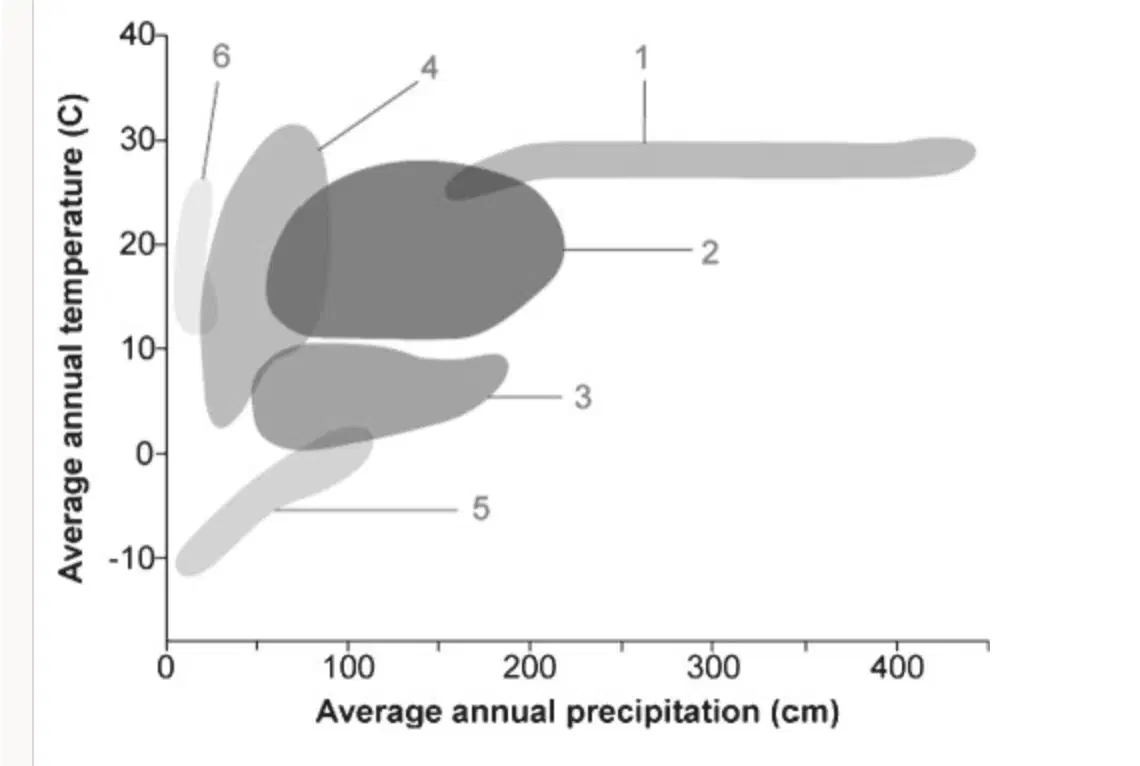
In the figure above, which number would designate the arctic tundra biome?
3
4
5
1
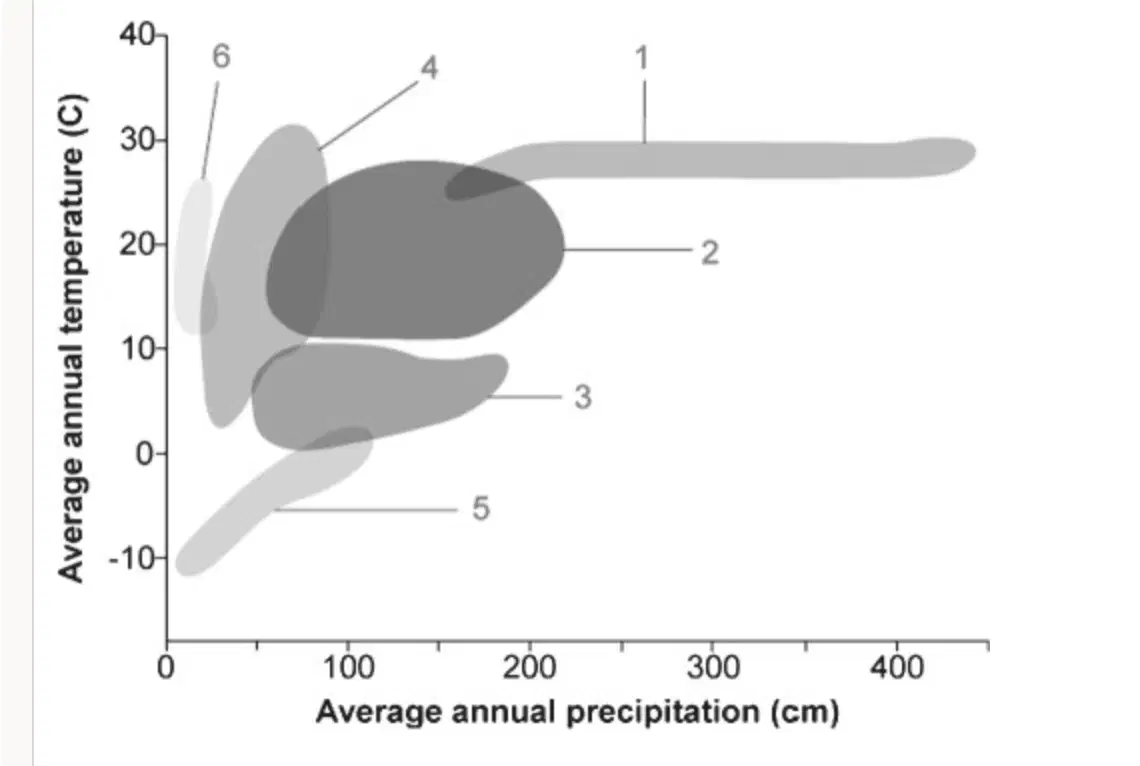
In the figure above, which number would designate the biome with the highest variation in annual precipitation?
4
2
3
1
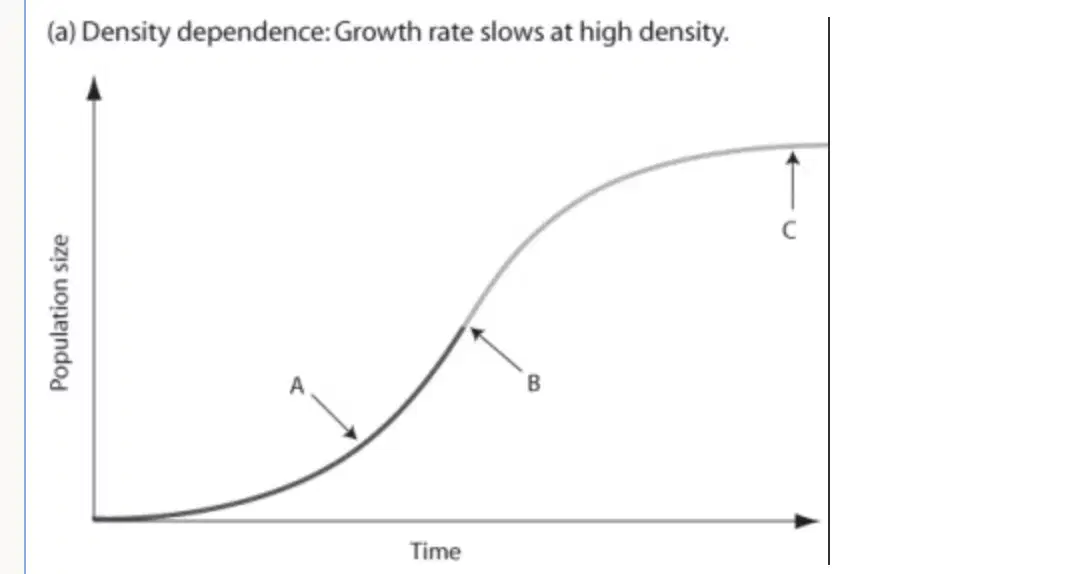
In the figure above, which of the arrows represents the carrying capacity?
A
B
C
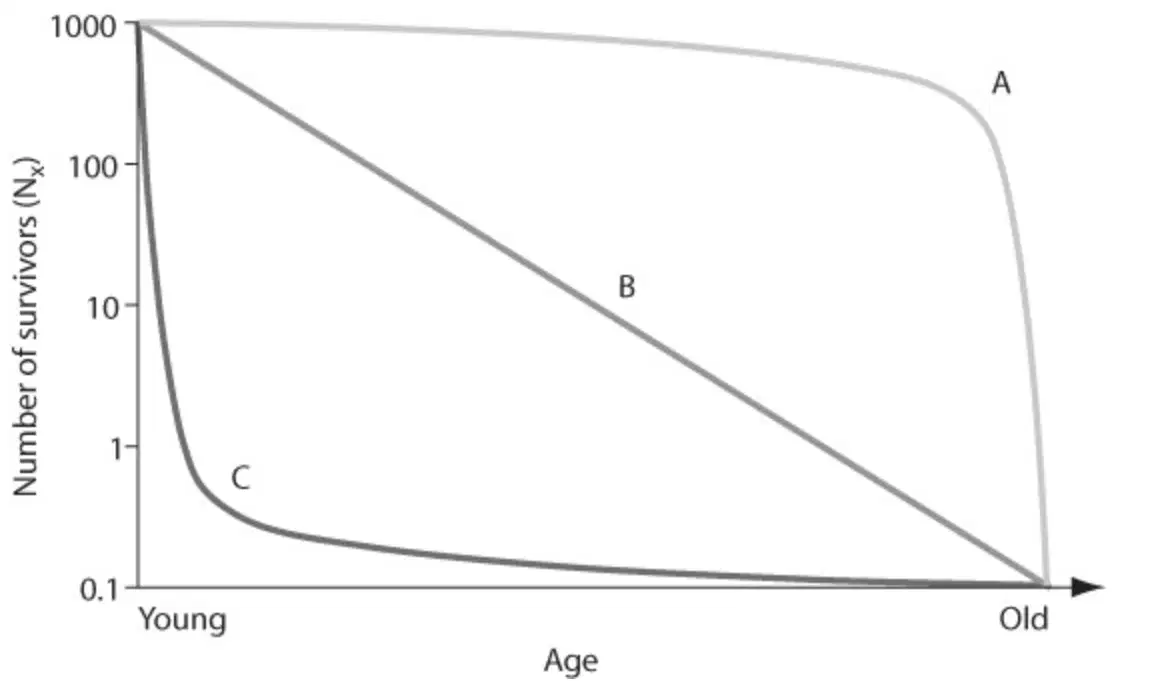
In the figure above, which of the following survivorship curves applies to most plant species?
Curve A
Curve B
Curve C
Locating new nature preserves in biodiversity hot spots may not necessarily the best choice because _____.
hot spots are situated in remote areas not accessible to the public
their ecological importance makes land purchase very expensive
a hot spot helps conserve only a few species
changing environmental conditions may shift the location of the communities
Locating new nature preserves in biodiversity hot spots may not necessarily the best choice because _____
hot spots are situated in remote areas not accessible to the public
their ecological importance makes land purchase very expensive
a hot spot helps conserve only a few species
changing environmental conditions may shift the location of the communities
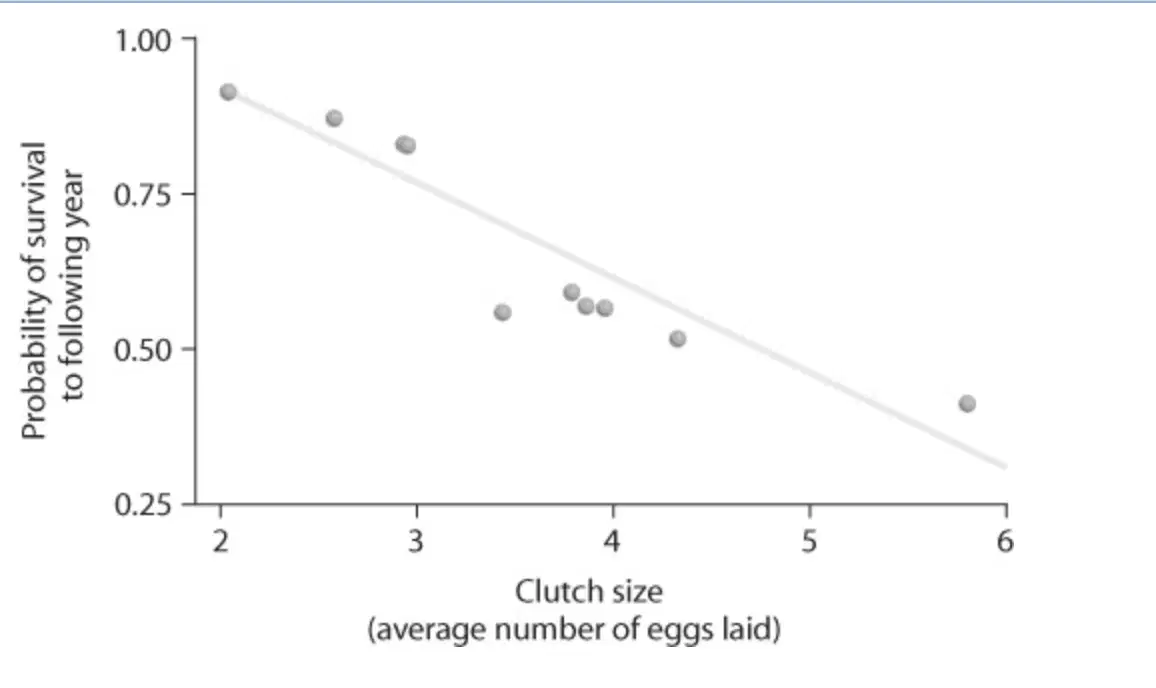
Looking at the data in the figure above, what can be said about survival and clutch size?
Animals with low survival tend to have smaller clutch sizes.
Large clutch size correlates with low survival.
Animals with high survival tend to have larger clutch sizes.
Probability of survivorship does not correlate with clutch size.

Looking at the figure above, what is contributing significantly to stabilizing population size over time?
I. No migration
II. Low migration
III. High Migration
I only
II only
III only
II and III
Matter is gained or lost in ecosystems. How does this occur?
Chemoautotrophic organisms can convert matter to energy.
Matter can be moved from one ecosystem to another.
Photosynthetic organisms convert solar energy to sugars.
Heterotrophs convert heat to energy.
Natural selection involves energetic trade-offs between _____.
choosing how many offspring to produce over the course of a lifetime and how long to live
producing large numbers of gametes when employing internal fertilization versus fewer numbers of gametes when employing external fertilization
increasing the number of individuals produced during each reproductive episode and a corresponding decrease in parental care
high survival rates of offspring and the cost of parental care
Nitrifying bacteria participate in the nitrogen cycle mainly by _____.
converting nitrogen gas to ammonia
releasing ammonium from organic compounds, thus returning it to the soil
releasing ammonium from organic compounds, thus returning it to the soil
incorporating nitrogen into amino acids and organic compounds
Of the following ecosystem types, which have been impacted the most by humans?
wetland and riparian
desert and high alpine
taiga and second-growth forests
tundra and arctic
Researchers have been studying a rare population of eighty-seven voles in an isolated area. Ten voles from a larger population were added to this isolated population. Besides having ten additional animals, what benefits are there to importing individuals?
Additional animals from a distant population will likely bring genetic diversity and reduce inbreeding depression.
Additional animals will bring additional competition and could hurt the population.
Additional animals would increase beneficial genetic drift.
There is no benefit other than increasing the overall population size.
Studying species transplants is a way that ecologists _____.
determine the distribution of a species in a specified area
develop mathematical models for distribution and abundance of organisms
determine if dispersal is a key factor in limiting distribution of organisms
consolidate a landscape region into a single ecosystem
Studying species transplants is a way that ecologists _____.
determine the distribution of a species in a specified area
develop mathematical models for distribution and abundance of organisms
determine if dispersal is a key factor in limiting distribution of organisms
consolidate a landscape region into a single ecosystem
The discipline that applies ecological principles to returning degraded ecosystems to a more natural state is known as _____.
landscape ecology
conservation ecology
restoration ecology
resource conservation
The main cause of the increase in the amount of carbon dioxide in Earth's atmosphere over the past 150 years is _____.
increased worldwide primary production
an increase in the amount of infrared radiation absorbed by the atmosphere
the burning of larger amounts of wood and fossil fuels
additional respiration by the rapidly growing human population
The main goal of sustainable development is to _____.
involve more countries in conservation efforts
use only natural resources in the construction of new buildings
use natural resources such that they do not decline over time
reevaluating and re-implementing management plans over time
The main reason polar regions are cooler than the equator is that _____.
sunlight strikes the poles at a lower angle
the poles are farther from the sun
the polar atmosphere is thinner and contains fewer greenhouse gases
the poles are permanently tilted away from the sun

The oceans affect the biosphere by _____.
only I and III
only II and IV
only I, II, and IV
only I, II, and III
To recycle nutrients, an ecosystem must have, at a minimum, _____.
producers
producers and decomposers
producers, primary consumers, and decomposers
producers, primary consumers, secondary consumers, and decomposers
Turnover of water in temperate lakes during the spring and fall is made possible by which of the following?
warm, less dense water layered at the top
cold, more dense water layered at the bottom
a distinct thermocline between less dense, warm water and cold, dense water
the changes in the density of water as seasonal temperatures change
Two plant species live in the same biome but on different continents. Although the two species are not at all closely related, they may appear quite similar as a result of _____.
convergent evolution
allopatric speciation
introgression
gene flow
Uniform spacing patterns in plants such as the creosote bush are most often associated with _____.
patterns of high humidity
the random distribution of seeds
competitive interaction between individuals of the same population
competitive interaction between individuals of the same population

Use the survivorship curves in the figure below to answer the following questions.Refer to the figure above. Which curve best describes survivorship in marine molluscs?
A
C
E
B
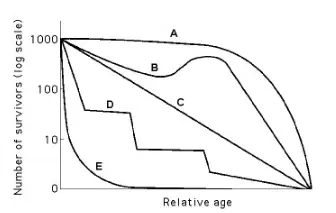
Use the survivorship curves in the figure below to answer the following questions.
Refer to the figure above. Which statement best explains survivorship curve B?
It is likely a species that provides little postnatal care, but lots of care for offspring during midlife as indicated by increased survivorship.
This curve is likely for a species that produces lots of offspring, only a few of which are expected to survive.
It is likely a species where no individuals in the cohort die when they are at 60-70% relative age
Survivorship can only decrease; therefore, this curve could not happen in nature.
Wetlands are standing bodies of freshwater, just like lakes and ponds. However, wetlands are different from lakes and ponds because wetlands have _____.
emergent vegetation
oxygen-poor water
shallow water and emergent vegetation
emergent vegetation and oxygen-poor water
What is the biggest problem with selecting a site for a preserve?
Making a proper selection is difficult because currently the environmental conditions of almost any site can change quickly.
Keystone species are difficult to identify in potential preserve sites.
Only lands that are not useful to human activities are available for preserves.
Most of the best sites are inaccessible by land transportation, so making roads to them is often prohibitively expensive.
What problem with red-cockaded woodpecker populations in the southeastern United States was addressed by habitat intervention?
The only habitat that can support their recovery is large tracts of mature oak forest.
The mature pine forests in which they live cannot ever be subjected to forest fire.
All of the appropriate red-cockaded woodpecker habitat has already been logged or converted to agricultural land.
The social organization of the red-cockaded woodpecker precluded the dispersal of reproductive individuals.
When climbing a mountain, we can observe transitions in biological communities that are analogous to the changes _____.
in biomes at different latitudes
in a community through different seasons
in an ecosystem as it evolves over time
across the United States from east to west
Which level of ecological study focuses the most on abiotic factors?
speciation ecology
population ecology
community ecology
ecosystem ecology
Which of the following can be said about light in aquatic environments?
Water selectively reflects and absorbs certain wavelengths of light.
Longer wavelengths penetrate to greater depths.
Light penetration seldom limits the distribution of photosynthetic species.
Most photosynthetic organisms avoid the surface where the light is too intense.
Which of the following causes populations to shift most quickly from exponential to a logistic population growth?
favorable climatic conditions
removal of predators
decreased death rate
competition for resources
Which of the following choices includes all of the others in creating global terrestrial climates?
differential heating of Earth's surface
ocean currents
global wind patterns
Earth's rotation on its axis
Which of the following ecological locations has the greatest species diversity?
deciduous forests
tropical rain forest
grasslands
islands
Which of the following graphs best illustrates the growth curve of a small population of rodents that has increased to a static carrying capacity?
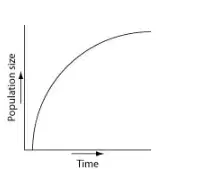
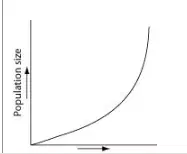
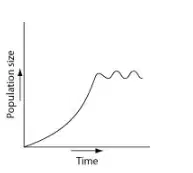
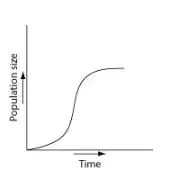
Which of the following groups would be most likely to exhibit uniform dispersion?
red squirrels, who actively defend territories
cattails, which grow primarily at edges of lakes and streams
dwarf mistletoes, which parasitize particular species of forest tree
lake trout, which seek out cold, deep water high in dissolved oxygen
Which of the following has the greatest effect on the rate of chemical cycling in an ecosystem?
the ecosystem's rate of primary production
the production efficiency of the ecosystem's consumers
the rate of decomposition in the ecosystem
the trophic efficiency of the ecosystem
Which of the following is primarily responsible for limiting the number of trophic levels in most ecosystems?
Many primary and higher-order consumers are opportunistic feeders.
Decomposers compete with higher-order consumers for nutrients and energy.
Nutrient cycling rates tend to be limited by decomposition.
Energy transfer between trophic levels is usually less than 20 percent efficient.
Which of the following is responsible for the differences in summer and winter temperature stratification of deep temperate zone lakes?
Water is densest at 4°C.
Oxygen is most abundant in deeper waters.
Winter ice sinks in the summer.
Stratification is caused by a thermocline.
Which of the following is the most direct threat to biodiversity?
increased levels of atmospheric carbon dioxide
the depletion of the ozone layer
overexploitation of selected species
habitat destruction
Which of the following organisms is INCORRECTLY paired with its trophic level?
cyanobacterium primary producer
grasshopper primary consumer
zooplankton primary producer
fungus detritivore
Which of the following provides the best evidence of a biodiversity crisis?
the incursion of a non-native species
increasing pollution levels
high rate of extinction
climate change
Which of the following statements best describes the effect of climate on biome distribution?
Average annual temperature and precipitation are sufficient to predict which biome will be found in an area.
Seasonal fluctuation of temperature is not a limiting factor in biome distribution if areas have the same annual temperature and precipitation means.
The average climate and pattern of climate are important in determining biome distribution.
Correlation of climate with biome distribution is sufficient to determine the cause of biome patterns.
Which of the following statements best describes the interaction between fire and ecosystems?
The likelihood of a wildfire occurring in a given ecosystem is highly predictable over the short term.
Many kinds of plants and plant communities have adapted to frequent fires.
The suppression of forest fires by man has prevented certain communities, such as grasslands, from reaching their climax stage.
Chaparral communities have evolved to the extent that they rarely burn.
Which of the following statements is correct about biogeochemical cycling?
The phosphorus cycle involves the recycling of atmospheric phosphorus.
The phosphorus cycle involves the weathering of rocks.
The carbon cycle has maintained a constant atmospheric concentration of carbon dioxide for the past million years.
The nitrogen cycle involves movement of diatomic nitrogen between the biotic and abiotic components of the ecosystem.
Which of the following statements regarding turnover in a lake is correct?
In fall turnover, dense water at 4°C sinks and disturbs sediments in the benthic zone.
In fall turnover, dense water at 4°C rises and disturbs sediments in the benthic zone.
The surface water gets to 4°C only by cooling.
Fall turnovers and spring turnovers are exactly the same.
Which of the following terms encompasses all of the others?
heterotrophs
herbivores
carnivores
primary consumers
Which of the following terms includes all of the others?
species diversity
biodiversity
genetic diversity
ecosystem diversity
Which of the following types of organisms is likely to have the widest geographic distribution?
bacteria
songbirds
bears
lizards
Which pair of terms most accurately describes life history traits for a stable population of wolves?
semelparous; r-selected
semelparous; K-selected
iteroparous; r-selected
iteroparous; K-selected

Which statements about dispersal are correct?
only I and III
only II and IV
only I, II, and IV
only II, III, and IV
Which trophic level is most vulnerable to extinction?
producer level
primary consumer level
secondary consumer level
tertiary consumer level

Why are changes in the global carbon cycle important?
only I and III
only II and IV
only II, III, and IV
only I, II, III, and IV
Why do logged tropical rain forest soils typically have nutrient-poor soils?
Tropical bedrock contains little phosphorous.
Logging results in soil temperatures that are lethal to nitrogen-fixing bacteria.
Most of the nutrients in the ecosystem are removed in the harvested timber.
The cation exchange capacity of the soil is reversed as a result of logging.
Only cycles on land and water (never in the atmosphere). It is a main component of amino acids
Water Cycle
Phosphorus Cycle
Nitrogen Cycle
Carbon Cycle
Process of moving water through the atmosphere and land by the process of evaporation, transpiration, condensation, precipitation, and runoff.
Water Cycle
Phosphorus Cycle
Nitrogen Cycle
Carbon Cycle
. This cycle is the larges element in all living organisms. Uses the processes of cellular respiration, photosynthesis , burning of fossil fuels and decomposition
Water Cycle
Phosphorus Cycle
Nitrogen Cycle
Carbon Cycle
Found largely in the atmosphere. Bacteria is used to move this gaseous compounds to the land to be used by living organisms
Water Cycle
Phosphorus Cycle
Nitrogen Cycle
Carbon Cycle

