
Font size
 Worksheets
Quiz Average Make-Up
Total questions: 108
Worksheet time: 1hrs 11mins
________ are small individual molecules that when linked together form a _______
polymers
monomer
carbohydrates
lipid
proteins
nucleic acid
monomers
polymer
Which biomolecule is involved in long term energy storage?
carbohydrates
lipids
proteins
nucleic acids
A mutation in DNA would initially start with which biomolecules?
carbohydrates
lipids
proteins
nucleic acids
Which type of biomolecule makes up cell membranes?
carbohydrates
lipids
proteins
nucleic acids
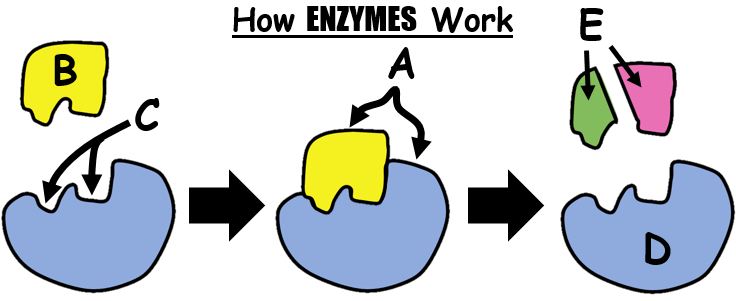
Enzymes are special _______ that speed up chemical reactions.
carbohydrates
lipids
proteins
nucleic acids
A thin, flexible layer that is found in all cells and separates the inside of the cell from the outside environment.
protein coat
protein membrane
cell membrane
nucleolus

What is the function of the vacuole?
Sac that stores water, nutrients, and waste products
Jelly-like substance within the plasma membrane
Sac filled with digestive chemicals
Stack of membranes that packages chemicals
What organelle helps with cell digestion?
lysosomes
golgi complex
ribosomes
endoplasmic reticulum
I make proteins for the cell. What am I?
ribosome
chloroplast
mitochondria
lysosome

A rigid layer that lies outside the cell's membrane is...
cytoskeleton
cilia
flagella
cell wall
Amino acids link together to form proteins. In which organelle does this process occur?
lysosome
centriole
ribosome
mitochondria

Nucleus control center of the cell
Selectively Permeable golgi apparatus
Non Permeable membrane

When the concentration of solutes on both sides of a membrane is the SAME, the solution is
What are the four nitrogenous bases found in DNA?
Adenine
Thymine
Glucose
Guanine
Cytosine
Which of the following will pair with Adenine?
Guanine
Thymine
Cytosine
During DNA replication, the DNA molecule produces (a) (how many?) new complementary strands.
What is the principal enzyme involved in DNA replication
glucose
fructose
DNA Polymerase
Lactase
The correct sequence of mitosis:
metaphase, anaphase, telophase, prophase
prophase, metaphase, anaphase, telophase
prophase, anaphase, metaphase, telophase
telophase, metaphase, prophase, anaphase
Identical halves of a chromosome are called?
Cousins
Chromatids
Centromere
Centrosome
Chromosomes are visible and spindle fibers start to appear
prophase
metaphase
telophase
anaphase
Sister Chromatids separate from each other
prophase
telophase
anaphase
metaphase
Having only one copy of each chromsome
haploid
diploid
triploid
octoploid
After mitosis the number of chromosomes in the newly created cells will be:
Half the number of the original cell
The same number as the original cell
Twice as much as the original cell
Uncontrolled growth can result in:
G0 phase
S phase
Replication
Cancer
What is the outcome of DNA transcription and translation?
Make muscles
Make protein
Make cells
Make DNA
What is the basic unit (monomer) of DNA?
Phosphate Group
Nucleotide
Amino Acid
Monosaccharide
DNA is found in the (a) . This is also where mRNA is created.
What is true of RNA? (select all that apply)
Single Strand
Contains uracil
Ribose Sugar
Deoxyribose Sugar
The m in mRNA stands for (a)

What is the amino acid sequence for the following mRNA strand:
UGG-ACU-CGA-GUG
(a)
What is the amino acid sequence for the following mRNA strand:
AUU-AAG-UGC-GGG
(a)

What is the amino acid sequence for the following mRNA strand:
UCG-GAA-CAC-AAU
(a)
Which of the following are differences in the structure between RNA and DNA
DNA uses deoxyribose sugar, RNA uses sugar ribose
DNA pairs Adenine with Uracil, RNA pairs Adenine with Thymine
DNA is a double helix, RNA is a single helix
DNA pairs Adenine with Thymine, RNA pairs Adenine with Uracil
During transcription, this type of ribonucleic acid is responsible for copying the DNA and brining it out of the nucleus.
tRNA
mRNA
rRNA
dRNA
When these bond together, they form a protein
Amino Acids
Peptide Bonds
Ribose
Nucleotides
A string of nucleotides that contain the information to make a specific protein
Ribose
Amino Acids
tRNA
Gene
The digestive and respiratory systems pair together to ...
bring carbon dioxide and wastes to cells for diffusion.
bring oxygen and wastes to cells for diffusion.
bring oxygen and nutrients to cells for cellular respiration.
bring carbon dioxide and nutrients to cells for cellular respiration.
The digestive and respiratory rely on the ___ systems to transport needed materials to the cells.
circlatory and excretory
circulatory and muscular
nervous and digestive
nervous and skeletal
The immune system fights diseases. The circulatory system pairs with the immune system because ___.
blood is made in the bones.
plasma carries nutrients.
red blood cells carry oxygen.
white blood cells fight infection.

In which structures would the occurrence of mutations have the greatest effect on human evolution?
1 & 3
3 & 6
2 & 5
1 & 4
What tissue type carries information from your brain to the heart telling it to pump blood.
nerve tissue
muscle tissue
epithelial tissue
connective tissue
Which statement is true
1. Xylem carries water while phloem carries food.
2. Xylem carries food while phloem carries water.
1.
2.
What is the main purpose of the flower?
To make our homes smell nice.
To look pretty.
To attract pollenators
To feed bees
Part of the plant that is long, transport nutrients, water and keep the plant stable in the ground.
Roots
Stem
Petals
Leaves
Guard cells and stomata are important because:
They are green pigments in the plant
They can't move.
They anchor the plant and absorb water
They let ingredients in and out of the leaf
Which of the following fields have provided evidence to support Darwin's theory of evolution?
Molecular Biology
Developmental Biology
Paleontology
Chemistry
All organsims share (a) as their genetic code.
The (a) percentage of the genome shared with another species, the (b) closely related the species are.
Evolution
The process of biological change by which descendants come to differ from their ancestors
Pseudogenes
Genes that no longer function but are still carried along with functional DNA
Homeobox Genes
Genes that guide formation of organs and arrangement of body parts
All invertebrates look (a) at early stages of development, suggesting evolutionary (b) .
Features found in different organisms that share structural similarities but may have very different functions (a)
Structures that are similar in function but are not similar in origin (a)
Remnants of once-important structures that have gradually lost all or most of their function over time. (a)

What type of structure does this image illustrate? (a)
The formation of new and distinct species in the course of evolution
artificial selection
speciation
breeding
non-random mating
In order for Evolution to happen you need
Genetic Variation, Selective Pressure, and Inheritance
Mutations, predators, inheritance
Predators
Selection
New traits (genetic variation) comes from
Random Mutations
The environment
Adaptations
Animals choosing new traits
If a new trait DOES NOT help an organism survive, what may happen to it?
Not survive or reproduce
Survive & reproduce
Survive
Die
What happens to new traits that HELP organisms survive over time?
Nothing
That trait becomes MORE COMMON in the population
That trait becomes LESS COMMON in a population
Equally common

Which traits were selected for in whale ancestors?
Traits that helped them walk on land
Traits that helped them move in water
Traits that helped them give birth

Mountains and now breeds on the Santa Rita Mountains with another established population.
Gene Flow
Genetic Drift

Select the best answer based on the image.
Gene Flow
Genetic Drift
SELECT ALL THAT APPLY: Which of the following must be true in order for organisms to be considered the same species?
They must be able to mate
They must be able to produce viable offspring
They must have structural similaries
They must have the same bone structure


Match the following terms to their definitions:
The alleles or genes of an organism
Genotype
The physical appearance or traits of an organism
Phenotype
Two alleles that are the same (AA)
Homozygous
Two alleles that are different (Aa)
Heterozygous
In dogs, pointy ears (P) are dominant to floppy (p). If two heterozygous dogs have puppies, (a) are expected to have pointy ears and (b) are expected to have floppy ears.
Match the following types of inheritance to their examples.
Red-green colorblindness is more common in biological males
Sex-linked
Huntington's disease can be inherited with just one allele from one parent
Dominant
Albinism can be hidden and skip generations
Recessive
In snapdragons, red and white flowers have pink offpsring
Incomplete dominance
Goldfish can be white, orange, or white & orange spots
Codominance
Which of the following describes Co-dominance?
Two traits create a third blended trait
Two traits appear simultaneously
One trait overpowers the other
Traits are linked on the X-chromosome

What is a population?
One individual member of a species
a group of individuals of the same species that live in the same area
a community of different species and their environment
Which is an example of an ecosystem?
An area of cold climate and communities of different species
one elk
a group of elks living together in the same area
elks, snow rabbits, and owls living in the same area
One species benefits, the other is unaffected
symbiosis
parasitism
mutualism
commensalism
Honey guide birds alert and direct badgers to bee hives. The badgers then expose the hives and feed on the honey first. Then, the honey guide birds eat as well.
symbiosis
parasitism
mutualism
commensalism
Tapeworms reside in human intestine and take nutrients from the human
symbiosis
parasitism
mutualism
commensalism

Primary succession

pioneer species

abiotic factor

secondary sucession

climax community
What is the main difference between primary and secondary ecological succession?
Primary begins WITHOUT soil; Secondary begins WITH soil
Primary is the first state and secondary is the second stage
Primary builds plant community; secondary builds animal community.
Primary begins WITH soil; Secondary begins WITHOUT soil
After a volcanic eruption, volcanic rock is present (but no soil). Which of the following states the most likely order of succession that would be seen?
Lichens → Shrubs → Grasses → Trees
Lichens → tree → shrubs→Grasses
Grasses → Lichens → Shrubs → Trees
Lichens → Grasses → Shrubs → Trees
What process converts nitrogen gas into a biologically useful (fixed) form?
Respiration
Assimilation
Denitrification
Nitrogen fixation
Which organisms play the largest role in converting nitrogen into various usable forms and back to a gas form?
rabbits
bacteria
plants
worms
What happens to carbon during the process of photosynthesis?
CO2 is released by plants
CO2 is taken up by plants
organic carbon is taken up through plant roots
carbon is lost through heat
Which of the following best describes the Greenhouse Effect?
when solar radiation reflects off the atmosphere
heat is retained in Earth's atmosphere by greenhouse gases
plants grow better when a greenhouse is filled with CO2
when solar radiation hits Earth's surface directly
Which gas is most abundant in the atmosphere?
carbon dioxide
methane
nitrous oxide
nitrogen gas
Which of the following does NOT release carbon dioxide into the atmosphere?
volcanic activity
respiration
photosynthesis
fossil fuel combustion
What does denitrification do?
converts fixed nitrogen into nitrogen gas
converts nitrogen gas into fixed nitrogen
makes nitrates
makes ammonia

