
 Worksheets
SCSHS Wk 6 Year 8 Science Revision
Total questions: 63
Worksheet time: 1hrs 3mins
The statement that "the energy within a system remains constant and cannot be created or destroyed, only transformed" best sums up _________.
Something Mr. Lance likes to say.
Life
Law of Conservation of Energy
The scientific method
Newton's Third Law
What is energy?
something that picks up things, like a magnet.
Motion of an object
ability to do work
magic rays of sunshine that come down when you're feeling blue.
Calculate the kinetic energy of a moving 4 kg object travelling at a velocity of 3 m/s Kinetic Energy=21×mass×velocity2
18 J
36 J
12 J
6 J
What is the kinetic energy of a 4kg shotput thrown with a velocity of 13m/s Kinetic Energy = 21 × mass × velocity2
676 J
52 J
17J
338 J

A mousetrap set and ready to spring

A marble rolling down the aisle of your science classroom

Which letter shows where is potential energy stored or at its maximum point?
Y
W
X
Z

Which letter shows where kinetic energy is at is highest point?
X
Y
W
Z

Where is kinetic energy at its minimum?
Z
W
X
Y

At what position does the cyclist have the least gravitational potential energy?

The pizza that you eat has ___ energy.

Potential energy that depends on the height of an object
elastic energy
gravitational energy
electrical energy
chemical energy

Identify the type of energy
Electrical Energy
Mechanical energy
Sound energy
Thermal energy

Identify the type of energy
Thermal energy
Sound energy
Mechanical energy
Electrical energy

Identify the type of energy
Thermal energy
Mechanical energy
Sound energy
Electrical energy

The _______________ is transformed into electrical energy inside the battery.
Chemical energy
Sound energy
Kinetic energy
Sun energy
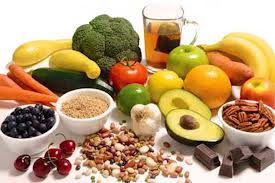
What kind of energy is represented in the picture?
Thermal
Chemical
Electrical
Radiant
Energy released from food after it is eaten
electrical
nuclear
chemical
radiant


At point 1, what is the gravitational potential energy (GPE)?
4 J
50 J
200 J
1960 J
At point 1, what is the kinetic energy (KE)?
0 J
400 J
200 J
1960 J
Using the equation for KE= 21mv2 , what is the energy of the 5-kg moving object moving at 4 m/ s2 ?
20 Joules
40 Joules
30 Joules
1.2 Joules

What happens to the to the KINETIC energy as the ball falls from point A to point C?
It decreases
It increases
It doesn't change
Which of the following is an example of chemical energy being changed into kinetic energy?
Digested food giving you energy to jump.
A battery giving a flashlight energy to light up.
A hand hitting a drum making music.
Two liquids mixed together and get hot.
________ energy is stored energy. Stored chemically in fuel, the nucleus of atom, and in foods.
Thermal
Mechanical
Kinetic
Potential
What energy is the energy of heat, which transfers from hotter objects to colder objects? This energy comes from the motion of atoms and molecules. The faster the particles in an object move, the more ________ energy is produced.
Kinetic
Radiant
Thermal
Chemical
_____________________ is energy that comes from the sun.
Nuclear Energy
Chemical Energy
Electrical Energy
Solar Energy


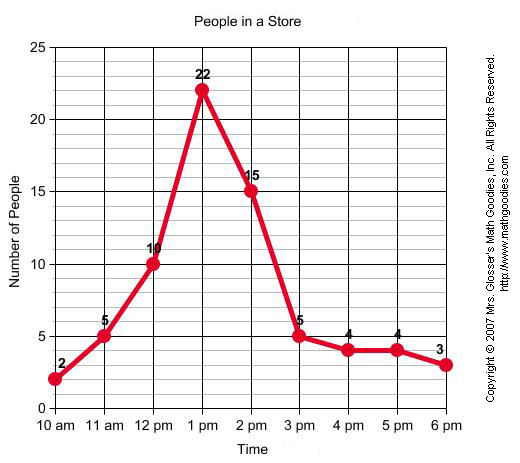

1. The graph shows how many pencils, erasers, and pens were sold on the first day of school at the school store.
Using the graph, what is the total number of pencils and pens sold on the first day of school at the school store?
30
40
70
90
How could you increase the gravitational potential energy of an object without changing its mass and gravity?
Make the object larger
Lower the object towards the ground
Raise the object farther off the ground
Allow the object to roll on the ground
How could you increase the object's gravitational potential energy (GPE) without changing its distance from the ground (height) and gravity?
Decrease the object's mass
Increase the object's height
Increase the object's mass
Decrease the object's height
Calculate the gravitational potential energy of a car with a mass of 1300kg at the top of a 52m high hill.
4.86 x 10⁵ J
6.56 N
6.62 x 10⁵ J
None of the answers are correct
Resources that are not able to be reproduced as quickly as they are used are called _____.
Renewable resources
Non-renewable resources

What are fossil fuels?
Solar, Wind, Hydro
Coal, Solar, Natural Gas
Coal, Oil, Natural Gas
Which of the following is a renewable resource?
Oil
Solar
Coal
Natural Gas
What is one DISADVANTAGE of using fossil fuels?
Fossil fuels will never run out.
Fossil fuels are very efficient forms of energy and are readily available, making them cheaper.
Burning fossil fuels contributes to the greenhouse effect which causes global warming.
Fossil fuels are better for the environment.

1911 J
195 J
2947 J
8017 J
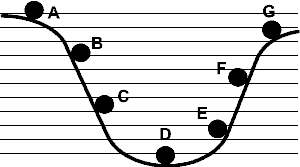
At which point does the ball has the greatest gravitational potential energy (GPE)?
A
G
D
C
G
How could you increase the gravitational potential energy of an object without changing its mass and gravity?
Make the object larger
Lower the object towards the ground
Raise the object farther off the ground
Allow the object to roll on the ground
What kind of energy is coal?
renewable
non renewable

All of the following are problems caused by burning coal, except
Creates smog
It is radioactive
Contributes to acid rain
Contributes to global warming
Which of the following is a source of non-renewable energy?
Solar
Methane
Hydroelectric
Coal
A 20 kg box is lifted 6 m above the ground. How much gravitational potential energy does it have? GravitationalPotentialEnergy=mass×gravity(9.8)×height
120 J
200 J
1200 J
60 J
A 50 kg jogger jumps 1.6 m off the ground. What was his GPE? Remember to keep height in meters and mass in kgs. GravitationalPotentialEnergy=mass×gravity(9.8)×height
80 J
500 J
160 J
800 J

A 6kg cat misjudges a jump and falls 5 meters. How much gravitational potential energy does the cat have? GravitationalPotentialEnergy=mass×gravity(9.8)×height
294 J
180000 J
1225 J
3920000 J

