
 Worksheets
Unit 10 Quiz Review
Total questions: 85
Worksheet time: 1hrs 25mins
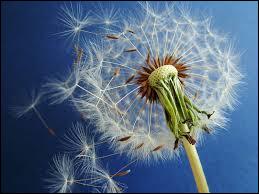
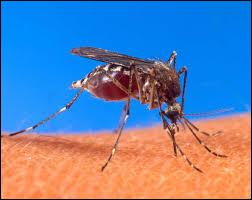

Heterotrophs- obtain food from other animals.
Observing the table above, Fungi and Animals are________?
Who created the most commonly used system of taxonomy?
Niels Bohr
Watson and Crick
Charles Darwin
Carl Linnaeus
Which is the correct order?
Kingdom Phylum Order Class
Class Order Family Genus
Domain Phylum Kingdom Species
Order Family Species Genus
Identify the one that is NOT an archaea.
Methanogen
Thermophile
Halophile
Virus
You find a species that seems to be unicellular and is eating smaller cells around it. It has organelles and a nucleus. Which kingdom is it MOST likely a part of?
Fungi
Bacteria
Protists
Plants
Which of the following is NOT a unicellular kingdom?
Prokaryotes
Protists
Archaea
Fungi
Which one is NOT a difference between plants and fungi?
Plants use cellulose but fungi use chitin
Plants are autotrophs but fungi are heterotrophs
Plants have cell walls but fungi don't
Plants make their own food and fungi decompose their food
Which is NOT a eukaryote?
Plants
Animals
Archaea
Protists
Which list of characteristics describes organisms classified as animals?
autotrophic, multicellular, prokaryotic
multicellular eukaryotic, heterotrophic
unicellular, eukaryotic, heterotrophic
multicellular, eukaryotic, autotrophic

Organisms in this smallest taxonomic group share many characteristics.
domain
kingdom
species
class

The science of describing, classifying, and naming living things is called:
Geology
Biology
Taxonomy
Chemistry

The scientific name for an organism is made from the:
class and family name
genus and species name
domain and kingdom name
kingdom and phylum name

An example of an unicellular organism would be:
monkey
bacteria
spider
human

Who first proposed binomial nomenclature as a way of classifying organisms?
Carolus Linnaeus
Aristotle
Charles Darwin
Louis Pasteur

What is the correct order of taxonomy?
Kingdom, pylum, class, species, genus, family, class
Species, genus, family, order, class, phylum, kingdom
Kingdom, phylum, class, order, family, genus, species
species, phylum, order, class, kingdom, family, genus
a category of classification below a phylum
Kingdon
Domain
Phylum
Class
the largest division used to classify living things
Class
Domain
Genus
Species
a group of related plant species or animal species
Family
Cousins
Genus
Species
a category of classification below an order
Domain
Family
Order
Class
a large category of classification. Animal, plant and fungus are examples
Genus
Kingdom
Family
Phylum
a category of classification below a class
Kingdon
Order
Phylum
Class
a category of classification below a kingdom
Phylum
Genus
Class
Order
a specific group of plants or animals that have some things in common
Order
Species
Family
Order
the system of classifying living things into categories
Species
Orginize
Kingdom
Taxonomy
Taxonomy is?
one of the three domains of life
the science of classifying and naming living things
organisms with spinal cords in their backs
one of the six kingdoms of life
True or False: An organism's scientific name tells you the family in which the organism belongs.
A
True
False
Organisms are classified based on ________.
the number of them that exists in a species
their Greek names
similarities and evolutionary relationships
the year their fossils are discovered
Humans are in the domain____?
Mammailia
Hominidae
Animalia
Eukarya
What characteristics do all organisms in the phylum Chordata have?
They grow in cocoons.
They have spinal cords.
They feed milk to their young.
They lay eggs.
What is binomial nomenclature?
system of 3 names
system of 2 names
the names of the kingdoms
the levels of classification
The 3 domains are Eukarya, Archaea, and
Fungi
Plantae
Animalia
Bacteria
What two levels make up a scientific name?
genus and order
genus and species
domain and kingdom
family and genus
All living things are made of
cells
prokaryotes
autotrophs
heterotrophs
Scientists place organisms into domains and kingdoms based on cell type, number of cells, and
if they are able to grow.
if they drink water.
if they have the ability to make food.
if they are able to move.
What is the study of classification?
taxonomy
biology
botany
microbiology
What is a prokaryote?
an organism that has nuclei in its cells
an autotroph
a heterotroph
an organism without a nucleus in its cells
A heterotroph
cannot make its own food.
is able to make its food.
Which of these is an autotroph?
mushroom
rose
seal
tiger
What is the genus name here:
Canis lupus
Canis
lupus
Biologist group living things based on ____.
Habitat
Size
Colors
Shared Characteristics
The proper writing of a scientific name includes ___.
Genus Capitalized
Species Lowercase
Underline or Italics
All of the above
What is the species name here:
Canis lupus
Canis
lupus
High biodiversity is a sign of a healthy ecosystem.
True
False
The prefix Bio means
life
birds
science
ecosystems
Biodiversity is the ____________ and variability of __________ on earth
variety
life
diversity
difference
A stable ecosystem typically has high biodiversity.
True
False
This refers to the total disappearance of all the members of a particular group of species.
Extinction
Biodiversity
Natural Selection
Disappearance
What does the root "diversity" mean...
living
nonliving
toxic
variety

How do biodiversity and stability work together?
The lower the biodiversity the greater the stability of an ecosystem.
The higher the biodiversity, the less stable the ecosystem
The higher the biodiversity, the greater the stability of the ecosystem.
Biodiversity has nothing to do with ecosystem stability.

Which ecosystem is more likely to survive a change in the environment?
One with High biodiversity
One with Low biodiversity

In this food web example you can see that rain forests have many producers consumer and predators. How would you describe the rain forest biome?
It has high biodiversity
It has low biodiversity.

Define genetic diversity
a variety of genes and traits within a species
a variety of ecosystems in a given area
system made up of all the living and nonliving things in a given area
a variety of species in an ecosystem
The level of biodiversity that involves a variety of habitats is _____ diversity.
ecosystem
population
genetic
species
Why is biodiversity important to ecosystems?
It helps populations adapt to ecological changes.
It increases at each level of the food chain.
What are the 3 types of biodiversity (SELECT 3)
Genetic
Species
Ecosystem
Size
Biotic
The more different types of organisms and the more relationships that can occur between organisms the greater the...
Species Diversity
Genetic Diversity
Ecosystem Diversity
Greater ____________________ means there are more habitats to support different types of organisms.
Ecosystem Diversity
Species Diversity
Genetic Diversity
The greater the ____________________, the more likely a species is to survive changes to their environment
Genetic Diversity
Species Diversity
Ecosystem Diversity
Define species diversity
a variety of genes and traits within a species
a variety of ecosystems in a given area
system made up of all the living and nonliving things in a given area
a variety of species in an ecosystem
What is an invasive species?
An organism that is new to an environment that has positive effects on the environment.
An organism that is native to an environment that has negative effects on the environment.
An organism that is new to an environment that has negative effects on the environment.
An organism that is native to an environment that has positive effects on the environment.
Invasive species can have a major impact on the ecosystem.
TRUE
FALSE
Invasive species can crowd out native species.
TRUE
FALSE
Invasive plants compete with native plants for --- [choose 3]
sunlight
water
oxygen
space
Kudzu has overgrown in many parts of Tennessee. What type of relationship does Kudzu have with the native ground plants?
Competition
Predator-Prey
Commensalism
Mutualsim
The field mice population has grown so fast that they eat an average of $4 billion of wheat every year. Their fast growth is caused by...
(Choose 2!)
The mice like to reproduce.
A lack of native species to eat the field mice.
Abundant food supply.

