
NEW
Font size
 Worksheets
Final Exam Review (without organic)
Total questions: 66
Worksheet time: 50mins
Which of the following atoms will bond ionically with Na
F
S
K
O
The atom Carbon has how many valence electrons?
6
12
8
4
Which chemical needs a 2 in front of it in the following reaction: Mg + HCl --> MgCl2 + H2
Mg
HCl
MgCl2
H2
A reaction has a change in enthalpy value of 253 kJ/mol. This is an example of
an endothermic reaction
an exothermic reaction
Electron pairs that do not take part in a covalent bond are referred to as
free electrons
floating electrons
electron pairs
lone pair electrons
What charge must X have in the ionic compound LiX
+1
-1
+2
+3

In this chemical equation, the elements in red are the_______.
Products
Reactants
Subscripts
Coefficients
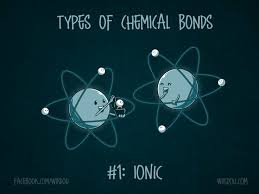
An ionic bond forms when
valence electrons are shared back and forth (move between) two atoms.
a sea of mobile electrons surround the cations and they then become negativly charged
valence electrons are transferred from one atom to another, forming charged ions that are then pulled together by attraction between opposite charges
none of the above
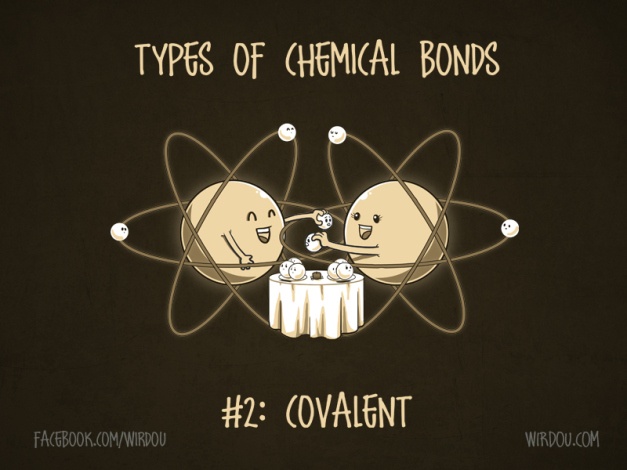
Covalent bonds form when
the electronegativity difference between two atoms is very large.
electrons are completely transferred between two atoms.
pairs of electrons are shared between two atoms.
ions are held together by opposite charges.
The pH Scale measures:
Positive or negative ions
Acids and Bases
Electricity
None of These
In saltwater, the water is the:
Solute
Solvent
Wet Stuff
None of these
Calcium carbonate has a pH of 9, it is a:
Acid
Base
Neutral
None of these
used to separate a solid substance from a fluid by passing a mixture through a porous material such as filter
filtration
decantation
distillation
evaporation
what is the common name of the compound dihydrogen monoxide?
table salt
water
table sugar
chalk

What is the vocab term for the quantity of heat needed to raise the temperature of 1g of a substance by 1°C?
Joule
Specific Heat
Heat Capacity
calorie
What is the standard unit for heat?
Calorie
calorie
Joule
How does energy flow?
It goes from hot to cold
It goes from cold to hot
It transfers without any particular means
It doesn't flow
How does energy change in a reaction?
It changes mass
It increases
It decreases
It transfers
Does the total energy change in a reaction?
NEVER
Yes, it increases
Yes, it decreases
Yes, but some increases and some decreases
How many calories of heat are required to raise the temperature of 225g of Al from 20°C to 100°C? (specific heat of Al = 0.21 cal/g°C)
590 calories
3800 calories
38000 calories
85000 calories
A 100 g piece of heated steel cools from 50°C to 20°C. How much heat is released to the surroundings?
300 J of heat are released
300 cal of heat are released
The amount cannot be calculated because the heat capacity isn't known
The amount cannot be calculated because the system isn't closed
During a phase change temperature...
may increase or decrease
increase
decreases
stays the same
The symbol for specific heat is .......
C
q
m
T
The specific heat of copper is 0.39 J/g °C. What is the temperature change when 100 Joules of heat is added to 20 grams?
12.82 °C
24.12°C
351 °C
Calculate the ∆H for the following reaction: 2H2O2 → 2H2O + 1 O2
You are given these two equations:
2H2 + O2 → 2H2O ∆H = -572 kJ
H2 + O2 → H2O2 ∆H = -188 kJ
∆H = -948 kJ
∆H = -196 kJ
∆H = -384 kJ
∆H = -188 kJ
Refer the the following question:
2N2 + 3H2 --> 2NH3 + 46 kJ
How much energy would be produced if only 14.0 g of nitrogen was reacted?
92 kJ
0.143 kJ
23 kJ
15 kJ
24 grams of CH4 was added to the above reaction. Calculate the theoretical yield of CO2.
This is what you call a reactant that you have enough of. The one that DOES NOT run out.
Limiting Reactant
Excess Reactant
Highly Reactant
Super Reactant
A limiting reactant is a reactant that.....
runs out during a chemical reaction
causes a reaction to stop
determines the amount of products that can be made
all of these
Using the following equation:
Fe2O3(s) + 3H2(g) → 2Fe(s) + 3H2O(l)
How many moles of iron can be made from 6 moles H2 and excess Fe2O3?
4 moles Fe
6 moles Fe
9 moles Fe
2 moles Fe
Fe2O3(s) + 3H2(g) → 2Fe(s) + 3H2O(l)
How many moles of iron can be made from 3 moles of Fe2O3?
Fe2O3(s) + 3H2(g) → 2Fe(s) + 3H2O(l)
How many moles of iron (Fe) can be made from 6 moles H2?
Li2SO3
What is the formula for potassium sulfite?
K2SO4
KSO3
KSO4
K2SO3
NH4F
What is the fomula of carbonic acid?
H2CO3
H2CrO4
H2C2O4
HCO3
What is the formula of chlorous acid?
HClO3
HClO2
HClO
HCl
The correct name of the acid with the chemical formula HI is ___.
iodic acid
hydroiodic acid
iodous acid
hypoiodous acid
The correct name of the acid with the formula H2SO3 is ____;
sulfuric acid
hydrosulfuric acid
sulfurous acid
persulfuric acid
State the name of the acid with the formula H2S
sulfuric acid
sulfurous acid
hydrosulfuric acid
hydrosulfurous acid
State the name of the acid with the formula HC2H3O2
acetic acid
acetous acid
hydrogen acetate
hydrogen dicarbon trihydrogen dioxygen


