
Font size
 Worksheets
Spring Semester '23 Review
Total questions: 100
Worksheet time: 1hrs 7mins
What type of reaction is represented?
If the reaction will not take place, then there is no reaction.
LiCl + Au → AuCl + Li
Combustion
No Reaction
Single Replacement
Synthesis
What type of reaction is represented?
If the reaction will not take place, then there is no reaction.
2Li + Cl2 → 2LiCl
Combustion
No Reaction
Single Replacement
Synthesis
What type of reaction is represented?
If the reaction will not take place, then there is no reaction.
2NaNO3 + MgSO4 ↔ Na2SO4 +Mg(NO3)2
Combustion
No Reaction
Single Replacement
Double Replacement
What type of reaction is represented?
If the reaction will not take place, then there is no reaction.
C3H8 + 5O2 → 3CO2 +4H2O
Combustion
No Reaction
Single Replacement
Double Replacement
What type of reaction is represented?
If the reaction will not take place, then there is no reaction.
6Na + Al2S3 → 2Al +3Na2S
Combustion
No Reaction
Single Replacement
Double Replacement
What type of reaction is represented?
If the reaction will not take place, then there is no reaction.
H2CO3 → H2O+CO2
Combustion
Decomposition
Single Replacement
Double Replacement
Losing electrons is
(a)
Gaining electrons is
(a)
Is this a redox reaction?
NaCl +LiF ↔ LiCl + NaF
Yes
No
Is this a redox reaction?
NaCl +Li → LiCl + Na
Yes
No
Which of the following best describes what a reducing agent is?
The reducing agent is the element that is being reduced.
The reducing agent is the element that is being oxidized.
The reducing agent is the element that is gaining electrons.
The reducing agent is the element that is doing the oxidization.
Which of the following best describes what an oxidizing agent is?
The reducing agent is the element that is being reduced.
The reducing agent is the element that is being oxidized.
The reducing agent is the element that is gaining electrons.
The reducing agent is the element that is doing the oxidization.
What is the reducing agent in the following equation?
NaCl + Li → LiCl + Na
Sodium
Lithium
Chlorine
What is the oxidizing agent in the following equation?
NaCl + Li → LiCl + Na
Sodium
Lithium
Chlorine
What is being oxidized in the following equation?
2H2O + Cl2 +SO2 → 2HCl +H2SO4
Hydrogen
Oxygen
Chlorine
Sulfur
What is being reduced in the following equation?
2H2O + Cl2 +SO2 → 2HCl +H2SO4
Hydrogen
Oxygen
Chlorine
Sulfur
What values for a, b, and c will make the equation balanced?
aP4O10 +bH2O → cH3PO4
a = 1
b = 3
c = 2
a = 5
b = 2
c = 5
a = 1
b = 6
c = 4
a = 3
b = 18
c = 12
What values for a, b, c, d, and e will make the equation balanced?
a(NH4)2S +bMgO → cNH3 + dH2O + eMgS
a = 1
b = 3
c = 2
d = 4
e = 1
a = 2
b = 3
c = 6
d = 1
e = 1
a = 1
b = 1
c = 2
d = 1
e = 1
a = 1
b = 1
c = 2
d = 2
e = 1
What values for a, b, c, and d will make the equation balanced? Assume 2y is a positive whole number and is even.
aCxHy +bO2 → cCO2 +dH2O
a = 1
b = 2(2y+2x)
c = x
d =2y
a=2
b=2y+2x
c = 2x
d = y
not enough information is provided
What is the empirical and molecular formulas for the compound containing 30.4% N and 69.6% O. The molar mass of the compound is 92.02 g/mol.
EF: NO2 MF: N2O4
EF: NO3 MF: NO3
EF: N2O4 MF: NO2
EF: N2O3 MF: N4O6
____ _____ refers to the ratio between the coefficients of any compound involved in a balanced chemical reaction
(a)
What is the mole ratio of hydrochloric acid and hydrogen gas in the equation?
2HCl +Zn → ZnCl2 + H2
2:1
1:2
1:1
2:2
What is the mole ratio of hydrochloric acid and zinc in the equation?
2HCl +Zn → ZnCl2 + H2
2:1
1:2
1:1
2:2
What is the mole ratio of zinc and hydrogen gas in the equation?
2HCl +Zn → ZnCl2 + H2
2:1
1:2
1:1
2:2
How many moles of oxygen are needed to react with 3 moles of phosphine?
PH3 +2O2 → H3PO4
6
3
1.5
5
How many grams of oxygen are needed to react with 3 moles of phosphine?
PH3 +2O2 → H3PO4
192 g
96 g
48 g
160 g
How many grams of mercury (II) chloride are produced from 45 mL of hydrochloric acid and excess mercury (I) nitrate? The density of hydrochloric acid is 1.2 g/mL.
Hg2(NO3)2 +4HCl → 2HgCl2 + 2H2O + 2NO2
201.1 g
167.5 g
135.8 g
4021 g
6 mg of lithium reacts with 6 mg of sulfur. Which one is the limiting reagent? 2Li +S → Li2S
Lithium
Sulfur
None of them.
Both of them.
6 mg of lithium reacts with 6 mg of sulfur. Which one is the excess reagent? 2Li +S → Li2S
Lithium
Sulfur
None of them.
Both of them.
425 g of arsenic were collect when 1.187 kg (di)arsenic trioxide reacts with excess graphite (carbon). What was the percent yield?
93.6%
50%
100%
36.5%
How many grams of NaCl are needed to make a 3 M solution in a 2 L flask?
350.66 g
435.66 g
123.66 g
256.66 g
Geo wants to make a 400 mM solution in a 450 mL flask. The stock solution is 6 M. How much of the stock solution should Geo take?
4.6 L
30 mL
30 kL
46 μL
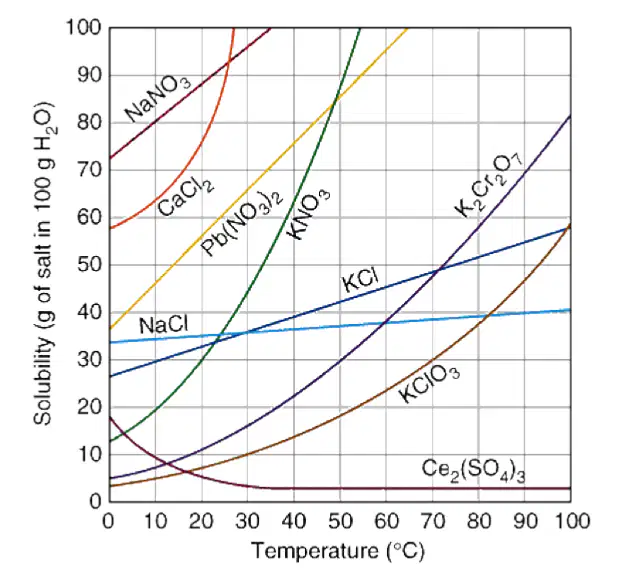
100 g of water was heated to 80 degrees C. About 57 g of potassium dichromate was dissolved in it. What best describes the solution?
Unsaturated
Supersaturated
Saturated
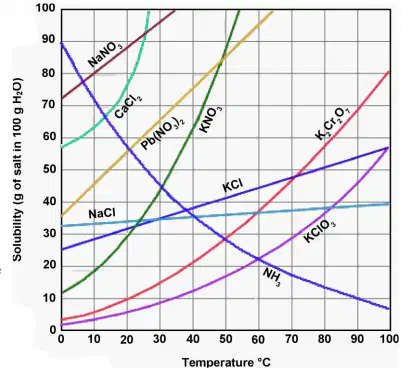
100 g of water was cooled to 10 degrees C. About 70 g of ammonia was dissolved in it. THe solution was allowed to slowly heat up to 25 degrees C. What best describes the solution?
Unsaturated
Supersaturated
Saturated
A solution was agitated and immediately began to crystalize. What best describes the solution?
Unsaturated
Supersaturated
Saturated
A more solute was placed into a solution and precipitated out. What best describes the solution?
Unsaturated
Supersaturated
Saturated
A solute completely dissolved in a solvent. What best describes the solution?
Unsaturated
Supersaturated
Saturated
(a) dissolve better in liquid solvents if the solvent is cold and under high pressure.
(a) dissolve better in liquid solvents if the solvent is hot and under low pressure.
Which of the following reactions will produce a precipitate?
Lithium chromate and Nitric acid
Sodium iodide and Calcium sulfide
Nickel (II) nitrate and Potassium carbonate
Silver iodide and Calcium fluoride
What is the volume ratio of hydrogen gas to water vapor in the equation?
2H2 + O2 → 2H2O
2:1
1:1
1:2
Gary blew up a 2 L balloon with hydrogen gas. The gas was held at 20 degrees C. 120 moles of hydrogen gas was released into the balloon. What was the pressure of the balloon in atm?
1443.3 atm
98.5 atm
17580 atm
146089.8 atm
A tire during the morning at a pressure of 0.987 atm. The temperature was recorded to be 20 degrees C in the morning and then 27 degrees C in the afternoon. What is the pressure of the tire in the afternoon?
1.01 atm
1.33 atm
2.68 atm
0.987 atm
A balloon contained 15.0 moles of ammonia held at a temperature of 15 degrees C, a pressure of 2.00 atm, and a volume of 1.00 L. More ammonia was added to the balloon and the new temperature was 27 degrees, new pressure was 2.50 atm, and new volume was 1.98 L. How many moles of ammonia are now present in the balloon?
35.6 mol
40.7 mol
26.8 mol
50.7 mol
How many liters of chlorine gas are needed to completely react with 3 moles of ammonia at STP?
8NH3 + 3Cl2 → N2 +6NH4Cl
25.2 L
7.46 L
1.125 L
201.6 L
How many liters of chlorine gas are needed to completely react with 3 moles of ammonia at 50 degrees C and 4 atm?
8NH3 + 3Cl2 → N2 +6NH4Cl
25.2 L
7.46 L
1.125 L
201.6 L
How many liters of chlorine gas are needed to completely react with 3 L of ammonia at 50 degrees C and 4 atm?
8NH3 + 3Cl2 → N2 +6NH4Cl
25.2 L
7.46 L
1.125 L
201.6 L
How many liters of chlorine gas are needed to completely react with 3 L of ammonia at 50 degrees C and 4 atm?
8NH3 + 3Cl2 → N2 +6NH4Cl
25.2 L
7.46 L
1.125 L
201.6 L
Which of the following is an Arrhenius base?
NaOH
NH3
HCl
NaCl
Which of the following is an Bronsted base?
NaOH
NH3
HCl
NaCl
According to Bronsted, acids are proton (a) .
According to Bronsted, bases are proton (a) .
What is the name of the compound?
H3PO3
Hydrophosphoric Acid
Phosphoric Acid
Hydrophosphorous Acid
Phosphorous Acid
What is the name of the compound?
HNO3
Hydronitric Acid
Nitric Acid
Hydronitrous Acid
Nitrous Acid
What is the name of the compound?
H2S
Hydrosulfuric Acid
Sulfuric Acid
Hydrosulfurous Acid
Sulfrous Acid
Acid base reactions always a (a)
What are the products of a hydroxide base and an acid?
Water and a Salt
Water, Carbon Dioxide, and a Salt
Hydrogen Gas and a Salt
a Salt
What are the products of a hydride base and an acid?
Water and a Salt
Water, Carbon Dioxide, and a Salt
Hydrogen Gas and a Salt
a Salt
What are the products of a carbonate or bicarbonate base and an acid?
Water and a Salt
Water, Carbon Dioxide, and a Salt
Hydrogen Gas and a Salt
a Salt
A solution was dipped into litmus paper and changed blue. The solution is a(n):
acid
base
neutral
A solution was dipped into litmus paper and changed red. The solution is a(n):
acid
base
neutral
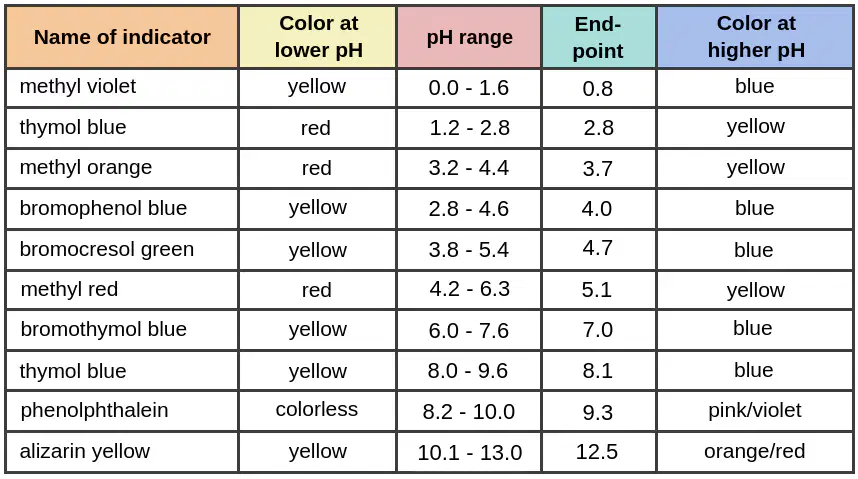
When phenolphthalein was added to a solution, the solution remained colorless. The solution is best described as a(n):
acid
base
neutral
1 g of sodium was placed into a solution and there was no reaction. The solution is best described as a(n):
acid
base
neutral
A solutions can donate and accept protons. The solution is best described as a(n):
acid
base
neutral
A solutions can donate and accept protons. The solution is best described as a(n):
acid
base
neutral
What is the concentration of protons if the pH is 4.51?
10−4.51 M
104.51 M
−4.5110 M
4.5110 M
What is the concentration of protons if the pOH is 4.51?
10−4.51 M
104.51 M
10−9.49 M
109.49 M
What is the neutral pH range?
7
6.5 - 7.5
6 - 8
5.5 - 8.5
The pH of a solution is read at 5.3. The solution is best described as a(n):
acid
base
neutral
The pH of a solution is read at 10.3. The solution is best described as a(n):
acid
base
neutral
The pH of a solution is read at 6.9. The solution is best described as a(n):
acid
base
neutral
The pOH of a solution is read at 7. The solution is best described as a(n):
acid
base
neutral
The pOH of a solution is read at 10.3. The solution is best described as a(n):
acid
base
neutral
The pOH of a solution is read at 5.3. The solution is best described as a(n):
acid
base
neutral
The concentration of protons in solution is 10−3.24 M . The solution is best described as a(n):
acid
base
neutral
The concentration of protons in solution is 10−8.24 M . The solution is best described as a(n):
acid
base
neutral
The concentration of protons in solution is 10−7.04 M . The solution is best described as a(n):
acid
base
neutral
What is the formula for hydrobromic acid?
HBr
HBrO3
HBrO2
HBrO4
What is the correct formula for nitrous acid?
NH3
HN3
HNO3
HNO2
What is the correct formula for chloric acid?
HCl
HClO3
HClO2
HClO4
How many Calories are in 2,686 J?
0.001 Cal = 1 cal = 4.18 J
0.6420 Cal
.2568 Cal
6420 Cal
2568 Cal
How much heat (in J) is required to raise the temperature of 50.7 g of water by 15°C
3180 J
761 J
.761 J
205 J
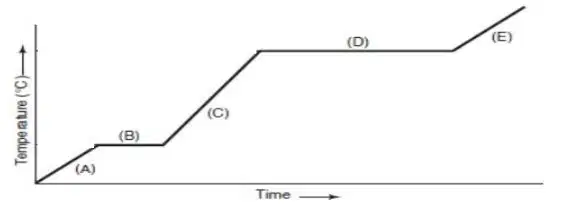
What is happening to the kinetic energy at point D?
It is decreasing.
It is increasing.
It is zero.
It is staying constant.
What is happening at D?
Sublimation
Gas Phase
Condensation
Evaporation
or
Vaporization
Is the equation below exothermic or endothermic? heat + CaCO3 → CaO + CO2
Exothermic
Endothermic
Not enough information is provided.

Does the graph show an exothermic or endothermic reaction?
Exothermic
Endothermic
Not enough information is provided.

Does the graph show an exothermic or endothermic reaction?
Exothermic
Endothermic
Not enough information is provided.
Is the equation below exothermic or endothermic? pressure + CH4 + 2O2 → CO2 + 2H2O + heat
Exothermic
Endothermic
Not enough information is provided.
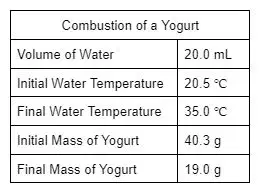
The graph shows the combustion of yogurt. How many Calories were in the yogurt?
5.80 Cal
0.309 Cal
0.584 Cal
0.276 Cal
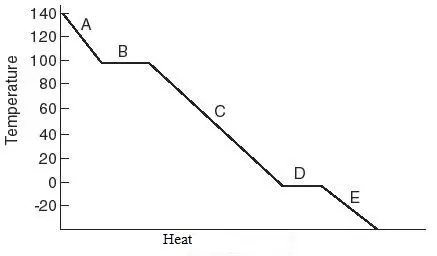
What is happening to the kinetic energy at point C?
It is decreasing.
It is increasing.
It is zero.
It is staying constant.
What is happening at point C?
Condensation.
Liquid Phase
Solid Phase
Gas Phase
What is happening to the potential energy at point C?
It is decreasing.
It is increasing.
It is zero.
It is staying constant.
What is happening to the potential energy at point D?
It is decreasing.
It is increasing.
It is zero.
It is staying constant.
What is happening to kinetic and potential energy during sublimation?
K.E.: Decreases
P.E.: Constant
K.E.: Increases
P.E.: Constant
K.E.: Constant
P.E.: Decreases
K.E.: Constant
P.E.: Increases
What is happening to kinetic and potential energy when hot water is cooled?
K.E.: Decreases
P.E.: Constant
K.E.: Increases
P.E.: Constant
K.E.: Constant
P.E.: Decreases
K.E.: Constant
P.E.: Increases
How are you feeling so far?
Draw a picture of your favorite thing you learned in chemistry this year.

Quick Question:
Cats or Dogs?
Cats! I love their indepence and sassiness.
Dogs! Goofy + loyal = the best companion.
I hate pets >:(
I like both!
What is one thing that you wished we (the chemistry team) did this year?
Draw a picture of your favorite music artist.

