
 Worksheets
PS Unit 6
Total questions: 111
Worksheet time: 2hrs 39mins
The 3 types of chemical bonds are ________, ________, and ______. (Choose 3)
ionic
valence
covalent
metallic
atomic
A bond between two nonmetal atoms is a __________ bond.
ionic
nuclear
metallic
covalent

Which of the following is NOT a covalent bond?
K2S
H2O
I2
CO2
Which of the following describes covalent bonds?
Bonds form because of opposite charges
electrons are shared to fill outer electron shells
Electrons are transferred between atoms
Covalent bonds are magical
Ionic bonds form between ---
nonmetals.
metals and nonmetals.
Which compound has high melting point?
Ionic
Covalent
The octet rules states that most elements want to have _____ valence electrons.
2
4
6
8

Which of the following is NOT an ionic bond?
NH3
KCl
K3N
NaCl
A bond between a metal atom and a nonmetal atom is a __________ bond.
ionic
atomic
metallic
covalent
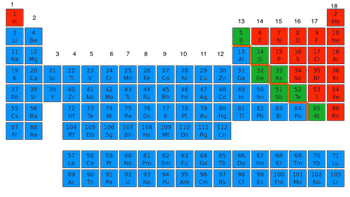

What happens when two oppositely charged ions are pushed together?
they will repel (move apart)
they will be attracted to each other (move together)
Which of the following is true about Ionic Bonds? (select ALL TRUE options)
High melting point
Low melting point
Can dissolve in water
Cannot dissolve in water
Can conduct electricity
For nonmetals, its easier to _____ electrons to have a full outer shell.
gain
lose
share

Anions
Gain electrons, has an overall positive charge
Lose electrons, has an overall positive charge
Lose electrons, has an overall negative charge
Gain electrons, has an overall negative charge
Cations
Gain electrons, has an overall positive charge
Lose electrons, has an overall positive charge
Lose electrons, has an overall negative charge
Gain electrons, has an overall negative charge
How many Aluminum atoms are in Al2O3?
3
5
2
1
Why do all bonds form?
so the number of protons equals the number of electrons
so an atom can become unstable
to fill the outermost energy level
Ionic bonds form between two ions that have...
Positive Chargers
negative charges
Same Charges
Opposite Charges
How does calcium become a calcium ion?
Lose 2 electrons
Gain 2 electrons
Lose 1 electron
Gain 1 electron
How does oxygen become an oxide ion?
Lose 2 electrons
Gain 2 electrons
Lose 1 electron
Gain 1 electron
What is the ionic compound that is formed when you combine Li+ and N-3 ions? LiN3
LiN
LiN3
Li3N2
Li3N
Electrons located on the outermost shell are called _________ electrons
Hybrid
Atomic
Neutral
Valence
Which of the following would be the correct formula for a compound of Aluminum and Fluorine?
AlF3
Al2F3
AlF2
AlFI
Which of these has five valence electrons?
Nitrogen
Oxygen
Hydrogen
Chlorine
Which of the following will become a positively charged cation?
An atom with 2 valence electrons
An atom with 7 valence electrons
An atom with 5 valence electrons
An atom with 8 valence electrons
Why are ions attracted to each other?
Cations and Anions have opposite charges.
Cations think Anions are cool.
The fact that both are metals allows them to mix.
The ions change their electrons again.
Na1+ F1-
What kind of Ion does Aluminum form?
Al+3
Al−3
Al−1
Al+2
Cr3+ O2-
K1+ S2-
Ionization energy __________ as you go across a period
stays the same
decreases
increases
Ionization energy __________ as you go down a group.
stays the same
decreases
increases
What properties does an ionic compound have?
A low boiling point and it conducts electricity when dissolved in water
A high melting point and it conducts electricity when molten or dissolved
A high boiling point and it conducts electricity when solid
LiBr is called
lithium bromine
lithium (I) bromine
lithium bromide
lithuim (I) bromide
Name the following ionic compound: BeCl2
beryllium chlorine
beryllium II chloride
beryllium chloride
beryllium dichloride
Why do atoms share electrons?
to increase their atomic number
to become ions
to obtain noble gas electron configuration
to become less polar
Which of the following can form diatomic molecules held by triple covalent bonds?
N2
O2
F2
C2
Which of the following diatomic molecules can be formed with a double covalent bond?
N2
O2
F2
C2
If two identical atoms bond covalently, the bond is:
a coordinate covalent bond
a dipole covalent bond
a nonpolar covalent bond
a polar covalent bond
What does a molecular formula tell you?
information about the molecule's structure
the number and kind of atoms bonded in the molecule
the whole-number ratio of atoms bonded in the molecule
the number and kind of atoms bonded by electron transfer
Which of the following covalent bonds is the most polar?
H-N
H-C
H-H
H-F
If the atoms that share electrons have an unequal attraction for the electrons, the bond is called
dipolar
nonpolar
ionic
polar
In covalent bonds electrons are:
shared
transferred
mobile
A neutral group of atoms held together by covalent bonds is a
chemical formula
molecular formula
molecule
polyatomic ion

When one atom in a covalent bond attracts the shared electron more strongly, that compound is called __________________.
polar
nonpolar

When both atoms in a covalent bond share the electron equally, it is called a ________________ compound.
polar
nonpolar

The lines indicate ____________________.
lone pairs
bond pairs
How many bond pairs are in a double covalent bond?
0
1
2
3
Diatomic molecules are more stable together than alone.
True
False
dichloride pentoxide
Cl2O5
ClO5
Cl5O2
Cl2O6

What type of bond is pictured?
Ionic bond
Single Covalent Bond
Double Covalent Bond
Triple Covalent Bond
Which bond type is more likely to be liquids or gases at room temperature?
ionic bonds
covalent bonds
metallic bonds
Name this compound
SeH3
triselenium trihydride
Selenium hydride
Trihydrogen monoselenide
Selenium trihydride
Which Lewis Dot Model drawing correctly shows an O2 molecule?


H2O has how many lone pairs?
0
1
2
3
The chemical name of P₄S₁₀ is:
phosphorous sulfide
phosphorus sulfide
tetraphosphorus decasulfide
phosphorus (X) sulfide
Disodium sulfide
Disodium sulfide
Name the compound: N2O5.
dinitrogen pentaoxide
binitrogen pentaoxide
nitrogen oxide
pentanitrogen dioxide
Name the compound: SO3
sulfur trioxide
sulfite ion
sulfur oxide
sodium trioxide
Name the compound: CF4
carbon tetrafluoride
monocarbon tetrafluoride
carbon fluoride
chlorine tetrafluoride
Name the compound: P4O8
tetraphosphorus octoxide
phosphorus oxide
tetrapotassium octoxide
potassium oxide
Name the compound: SF6
sulfur heptafluoride
sulfur hexafluoride
monosulfur hexafluoride
monosulfur heptafluoride
Write the formula: tetraarsenic decoxide
As4O10
As10O4
As6O9
AsO
Write the formula: iodine heptafluoride
IF7
I2F14
IHF7
IF6
Write the formula: nitrogen trichloride
NCl3
N1Cl3
N1Cl5
Cl3N
Write the formula: carbon monoxide
CO
CO2
OC
C2O4
Lithium nitride
Li3N
LiN
Li3(NO3)2
LiNO3
Write the formula: beryllium oxide
BO
BeO
BeO2
BO2
Brass is an alloy made of
copper and zinc
copper and tin
copper and nickel
copper and aluminum
Steel can become stainless when alloyed with _____.
chromium and nickel
copper and zinc
tin and lead
iron aand carbon
Which of the following are alloys? (choose 3)
Lead
Bronze
Brass
Aluminium
Stainless Steel
The most common element added to iron to create steel alloy is ...
tungsten
vanadium
chromium
carbon
Why do jewelers not create jewelry with pure gold, silver, or copper?
It is a soft metal, so it will rub or scratch away over time.
It will not be shiny.
It is impossible to find a pure form of these metals.
It is too hard to shape into a design.

