
 Worksheets
Spring Biology Review 2023
Total questions: 55
Worksheet time: 55mins

Which of the following is a trait that a virus shares with a living organism, like a plant or monarch butterfly?
Both have the ability to use oxygen (respiration)
Both contain genetic material
Both can grow & develop
Both can digest food using enzymes
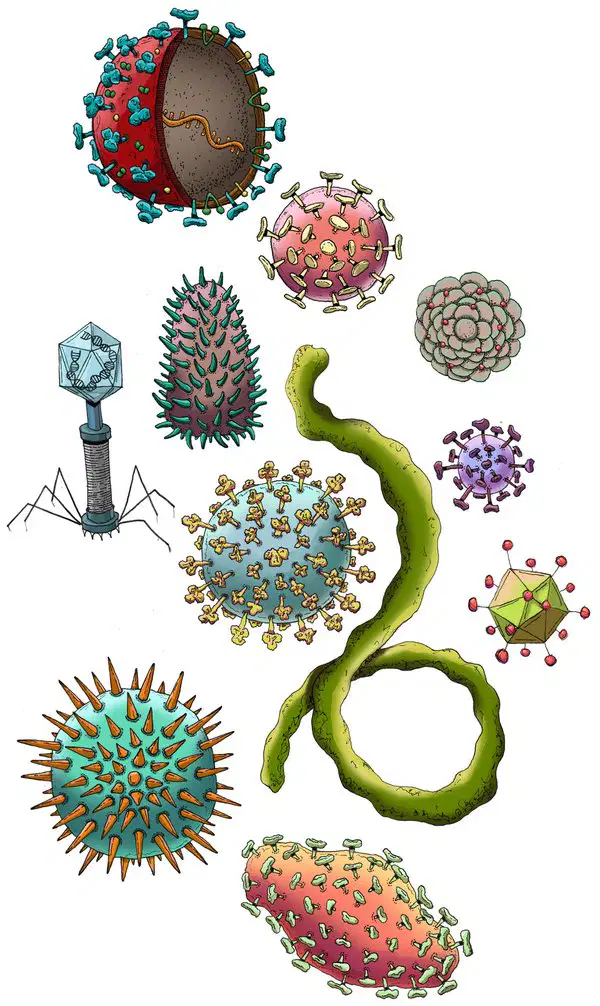
Viruses have played unique roles throughout history. Which of the following statements correctly describes viruses?
Viruses are non-living because they can grow and develop.
Viruses are living because they can use & obtain energy.
Viruses are non-living because they cannot reproduce on their own.
Viruses are living because they can maintain homeostasis.

What is required of a virus in order to replicate?
genetic material
host cell
anti-body
supply of ATP and ribosomes
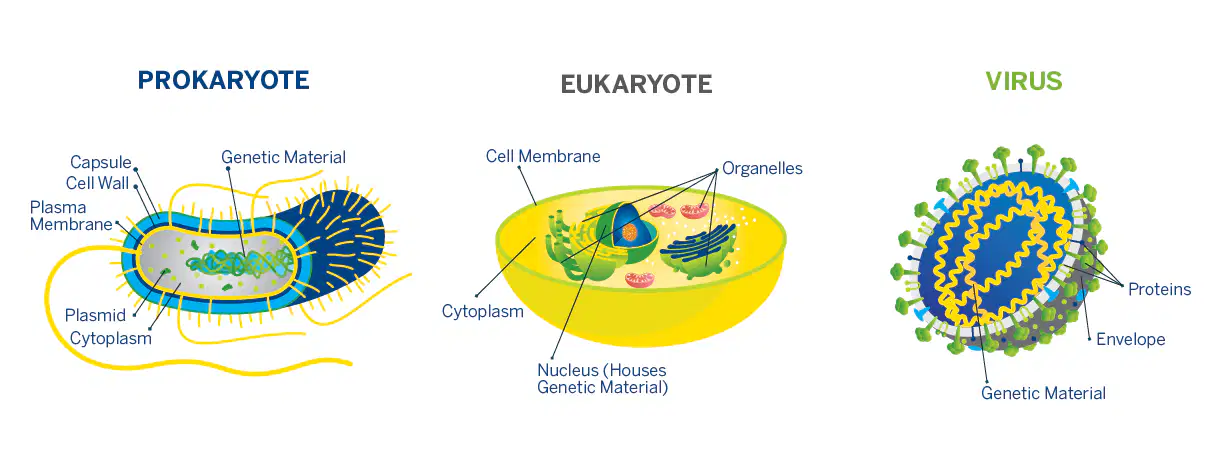
Which of the following statements is true?
All cells are prokaryotes.
All eukaryotic cells have a nucleus.
All viruses are either eukaryotic or prokaryotic.
All viruses are considered living organisms.

A weakened form of a virus used to prevent viral infection for a specific disease.
Antibalas
Antibiotic
Proviral
Vaccine
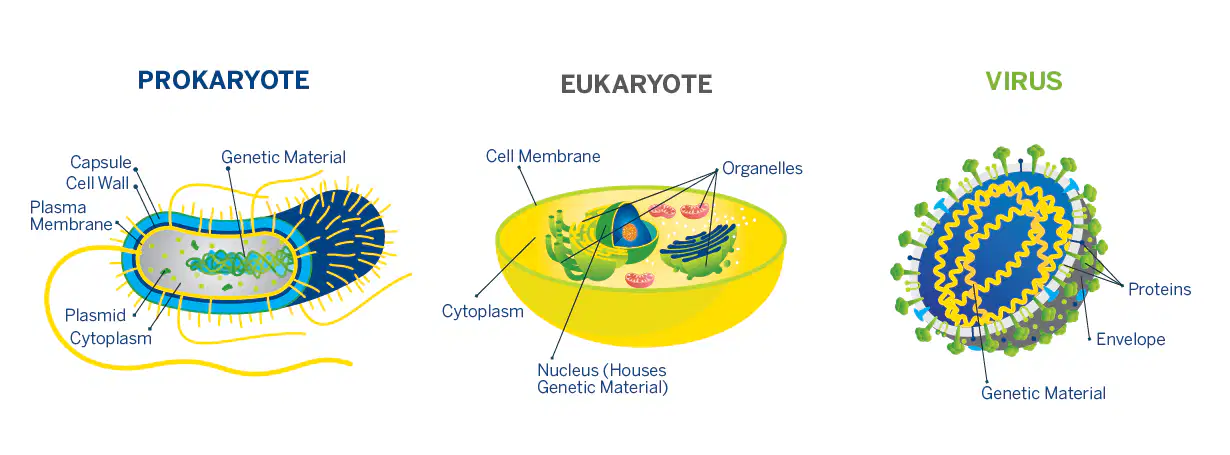
ability to form proteins at the ribosomes
existence of lipids in cell membranes
presence of genetic code in nucleic acid
production of energy by a mitochondrion

nucleic acid strand surrounded by a protein coat
a tail surrounded by a protein coat
a tail surrounded by a carbohydrate coat
nucleic acid strand surrounded by a carbohydrate coat

The genetic material of an organism is composed of:
lipids
proteins
nucleic acids
carbohydrates

base
codon
amine
serine

mitochondria
chloroplast
nucleus
ribosome

Which of the following is the site of mRNA translation?
vacuole
lysosome
nucleus
ribosome

The sequence of _______ in a DNA molecule determines the protein that will be produced.
amino acids
nucleotides
proteins
sugars & phosphates
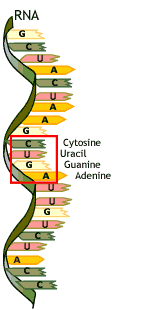
The nitrogen base Uracil in RNA pairs with ______ when constructing a mRNA molecule.
Cytosine
Adenine
Guanine
Thymine
A DNA sequence has the following bases ACCTG. Which of the following mRNA strands would be constructed?
UGGAC
TGGAC
GTCCA
ACCTG

Which cell organelle is the location where the DNA message is "read"?
Ribosome
Nucleus
Cytoplasm
Endoplasmic
Reticulum

How many nucleotides code for 1 amino acid?
1
2
3
4

A mutation is a(n) _______________ in the nucleotide base sequence of a gene.
amplification
change
minimization
feature

Amino acids connected to each other to form a chain, will make a ______________.
nucleotide
DNA molecule
protein
RNA molecule

Identify the amino acid produced by this codon sequence:
U A G
aspartic acid
stop
tyrosine
serine
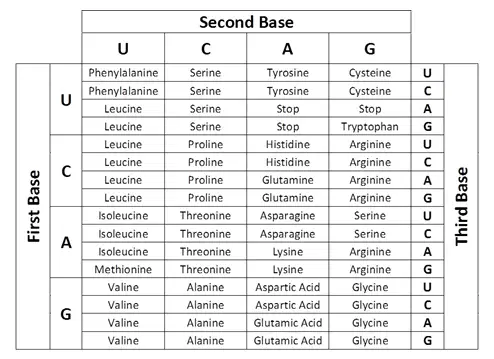
Identify the amino acid produced by this codon sequence:
A U G
Isoleucine
Methionine
Threonine
Valine
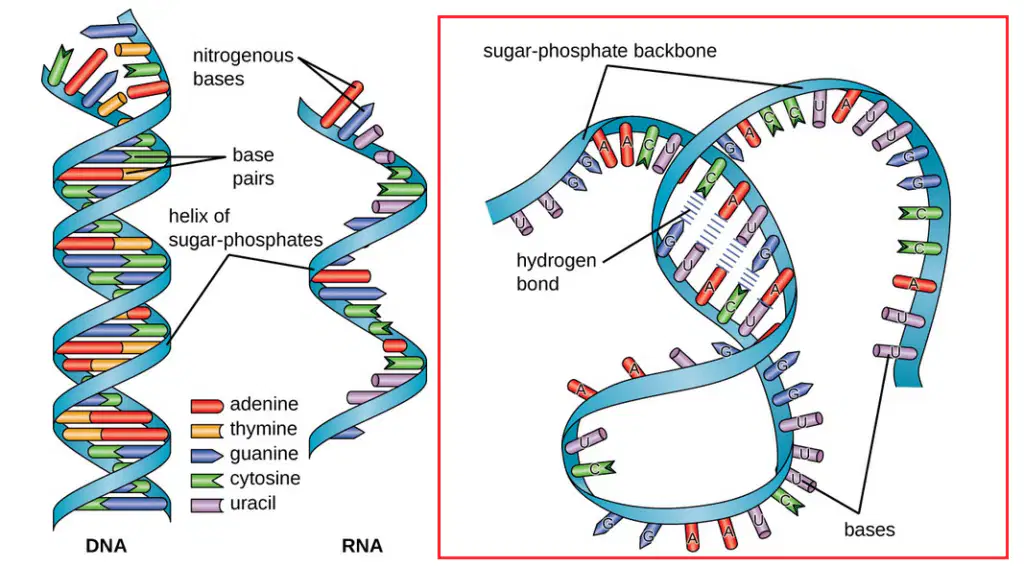
Which of the following are differences in the structure between RNA and DNA
DNA contains deoxyribose sugar, RNA contains sugar ribose
DNA pairs Adenine with Uracil, RNA pairs Adenine with Thymine
DNA is double stranded, RNA is single stranded
DNA pairs Adenine with Thymine, RNA pairs Adenine with Uracil

Why must the process of transcription occur in the nucleus?
DNA can not leave the nucleus.
Ribosomes are in the nucleus.
DNA polymerase only function in the nucleus.
Helicase unzips the DNA for transcription.
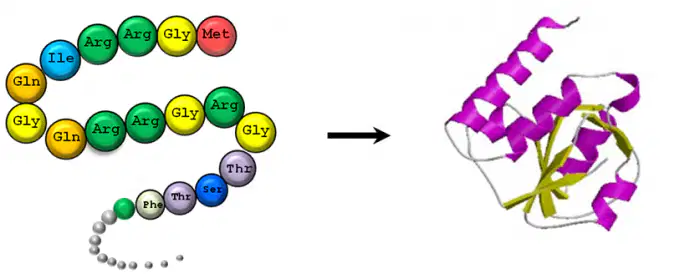
What determines the shape and function of a protein?
The sequence of amino acids.
The type of ribosome that assembles the protein.
The type of cell that manufactures the protein.
The rate at which translation occurs.

In the biological process known as mitosis, the two resulting cells are:
different from the starting cell and identical to each other.
different from the starting cell and different from each other.
identical to the starting cell and different from each other.
identical to the starting cell and identical to each other.

In general, cancer can be defined as:
controlled cell division
diminished cell division
uncontrolled cell division
simplified cell division

This is an onion root cell in the process of mitosis. Which phase is shown?
PROPHASE
METAPHASE
ANAPHASE
TELEOPHASE

This is an onion root cell in the process of mitosis. Look at the the cell identified by the pointer. Which phase of mitosis is this onion cell undergoing?
PROPHASE
METAPHASE
ANAPHASE
TELEOPHASE

Which of the following best describes the reason cells divide?
to improve genetic variation
to decrease genetic mutations
to replace worn out/dead cells
to amplify genome probability

What is the purpose of the cell cycle checkpoints?
to coordinate cell specialization for its role in particular tissues
to coordinate movement through the cell cycle for multiple cells
to identify chromosomes which are not made of DNA
to ensure that the cell cycle phases proceed only when the cell is ready

This image represents the cell cycle. In which phase of the cell cycle does the DNA replicate (make a copy)?
G1
S
G2
M
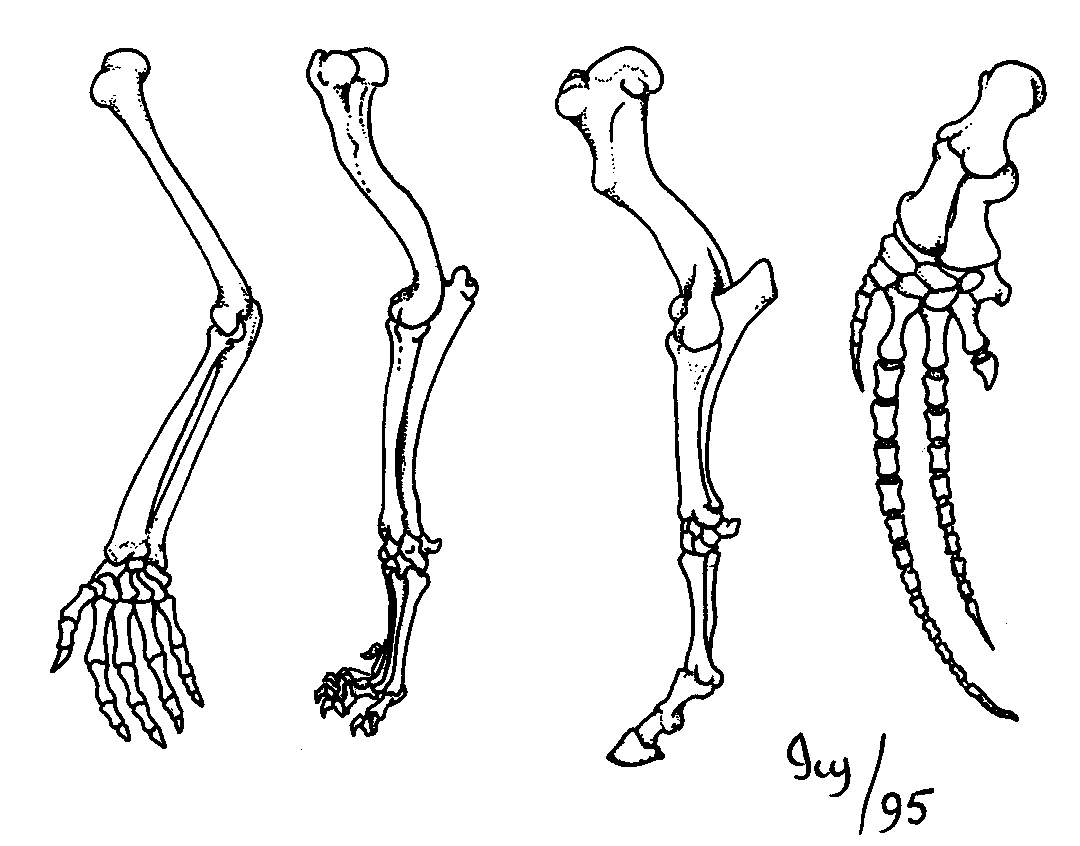

Charles Darwin observed that finches of different species on the Galápagos Islands have many similar physical characteristics, this supports the hypothesis that these finches
are twins
acquired traits through use and disuse.
all eat the same type of food.
descended from a common ancestor.

Fossils form when dead organisms are:
completely decomposed
rapidly buried under sediments
eaten by scavengers
reincarnated
Which of the following alleles is homozygous (purebred) recessive?
TT
Tt
tt
ts


What is the probability that the offspring will express the dominant trait?
25%
50%
75%
100%
The physical appearance of a trait is known as the-
genotype
phenotype
Homozygous
intelligence

What is the probability of heterozygous offspring?
25%
50%
0%
100%

According to the cladogram, which organism is most distantly related to the chimpanzee?
salmon
salamander
lizard
hamster

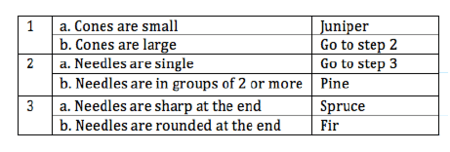
Which trait(s) do conifers have?
vascular tissue only
vascular tissue and seeds
vascular tissue, seeds and flowers
seeds only

The main difference between a prokaryotic cell and a eukaryotic cell is the presence of:
RIBOSOMES
NUCLEUS
MITOCHONDRIA
ENDOPLASMIC RETICULUM

Harambe
Forever
Forget about
Harambe
Who is this gorilla?
What are you talking about?

