
 Worksheets
ACP Spring 2023 Review
Total questions: 138
Worksheet time: 5hrs 50mins
In the equation E = mc2 what does the E stand for?
energy
efficiency
exertion
endurance
In the equation E = mc2 what does the variable C represent?
change
compression
speed of light
speed of sound
What is an example of mass converting to energy?
a car running on gasoline
a battery powering a flashlight
a person lifting a heavy object
nuclear power plant generating electricity
What is an important difference of classical and modern physics as it relates to mass and energy?
Classical physics is concerned only with macroscopic objects, while modern physics deals with subatomic particles
In classical physics, mass and energy are both measured in the same units, while in modern physics, they are measured in different units
In classical physics, mass is conserved while energy is not, but in modern physics, both mass and energy are conserved
Modern physicists think of mass as a type of energy. The total mass and energy of a system remains unchanged.
Who created the equation E = mc2?
Niels Bohr
Albert Einstein
Isaac Newton
Galileo Galilei
What is E = mc2 also known as?
Law of Conservation of Energy
Coulomb's Law
Mass-energy equivalence
Zeroth's Law
What is the energy in the equation E = mc2 also known as? rest-mass energy of any particle.
kinetic energy
potential energy
thermal energy
rest-mass energy
One gram of any substance has a rest-mass energy of _____?
9 x 10¹³ J
913 J
9000 J
9 x 10-13
Why can't we access the large rest-mass energy inherent in all particles?
only accessible in highly controlled laboratory conditions
too dangerous to harness
rest-mass energy of particles is a theoretical concept and cannot be observed in the real world
most of the atoms in the world around us are very stable
The difference between the mass of the atom and the sum of the masses of its parts is called the _______.
mass-defect
electron affinity
isotope
fission paradox
Light has both characteristics of a wave and a _____?
magnet
charge
force
particle
What is the type of force responsible for the difference between the mass of an atom and the sum of the masses of its individual protons, neutrons, and electrons or its mass-defect.
Strong Force
Weak Force
Gravitational Force
Electromagnetic Force
Albert Einstein proposed that light is composed of discrete, separate packets or quanta which later came to be called _______?
electrons
photons
quarks
particulates

Heinrich Hertz observed a property of light called the ________ effect. Under certain conditions, electromagnetic radiation causes materials to emit electrons. The electrons are emitted only if the frequency of the radiation is above a certain level.
tetragrammic
photoelectric
threshold
Hertz

The emission spectrum of an element depends upon the configuration of its ______.
protons
neturons
electrons
atomic mass

What kind(s) of energy is(are) in a person climbing a ladder?
Potential
Kinetic
Both
Need the mass of the person to determine.

As a pendulum swings from its highest to lowest position, what happens to its kinetic and potential energy?
The PE and KE increase and decrease together
The PE decreases while the KE increases
Impossible to know without knowing the mass
The PE and the KE decrease and increase together.

According to the Law of Conservation of energy, the amount of energy before and after a reaction must be the same. Which statement below is true?
The total amount of energy is conserved
The total amount of energy is less after a reaction
The total amount of energy is more after a reaction
Need the mass of the object to determine if energy is conserved.
When velocity triples, kinetic energy increases by ______ times. KE =1/2mv2
9
3
1.5
4.5

What is the Total Mechanical Energy at point A?
500,000 J
400,000 J
200,000 J
50,000 J
What is the Kinetic Energy at point B?
500,000 J
400,000 J
300,000 J
50,000 J
What is the Kinetic Energy at point C?
500,000 J
400,000 J
300,000 J
50,000 J
What is the Kinetic Energy at point D?
500,000 J
250,000 J
300,000 J
50,000 J
What is the GPE at point E?
500,000 J
250,000 J
300,000 J
100,000 J
What is the GPE at point F?
500,000 J
250,000 J
300,000 J
0 J
What is the KE at point F?
500,000 J
250,000 J
300,000 J
0 J
When something is dropped, what type of energy transfer takes place?
Kinetic -> Gravitational Potential
Gravitational Potential -> Kinetic -> Sound
Electrical -> Chemical
Heat -> Nuclear
If two marbles are rolled down a ramp from some height towards a container the _______ marble will move the container farther because it possess more _________ energy as it approaches the end of the ramp.
heavier, kinetic
heavier, potential
lighter, kinetic
lighter, potential
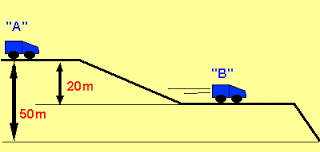
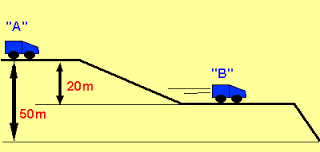
In diagram 2, if the mass of the car is 600 kg, what is the change in potential energy from point A to point B?
411,600 J
294,000
176,400 J
117,600 J
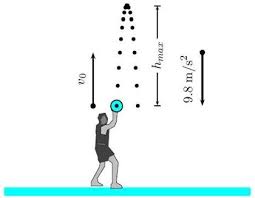
If a 0.5 kg ball is thrown up with 250 J of kinetic energy, how high will it go?
(HINT: At the ball's highest point it has stopped.)
KE = 1/2mv2 , PE = mgh
g = 9.8 m/s2
51 m
25.5 m
12.76 m
31.6 m
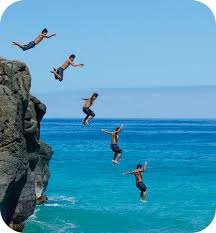
A cliff diver with a mass of 125 kg jumps off a 50m high cliff, how fast will he be traveling just before he hits the water? (His height at this point is 0m)
(HINT: Find PE first. then KE = 1/2mv2
g = 9.8 m/s2
61,250 m/s
980 m/s
31.3 m/s
247.5 m/s

A person with a mass of 60 kg jumps in the air. If the gravitational potential energy is 1,470 J at the highest point, how did they jump?
3.2 m
49 m
24.5 m
2.5 m

The rollercoaster has both PE and KE, but where will it have more PE than KE?
1
2
3
4
5
Where will the roller coaster have the most total mechanical energy? Check all that apply. Neglect friction and air resistance.
1
2
3
4
A book has 200J of potential energy and then it falls onto the floor. After it hits the floor and is sitting still, what happened to the energy?
It has disappeared.
It goes into the floor and book as thermal energy and sound.
It changes to chemical potential energy.
It turns into gravity.

The skateboarder shown above has a potential energy of 2,800 J and kinetic energy of 0J at a height of 4 meters. How much total mechanical energy will she have after 2 seconds? Neglect friction and air resistance.
2000J
1600J
1400J
2800J
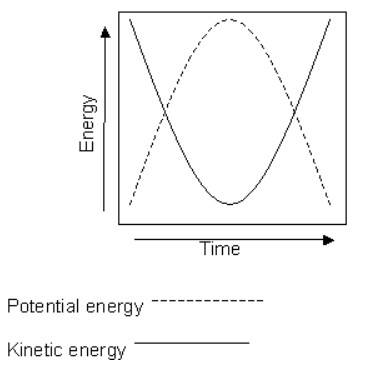
This graph depicts what type of relationship between kinetic and potential energy?
Non-Linear
Linear
Inverse
Poly-atomic

A 5.0 kg object is pushed across the floor and the attached force vs. displacement graph describes the forces and displacement. What is the change in KE of the object? (Hint: Net work = change in kinetic energy)
45 J
30 J
735 J
40 J
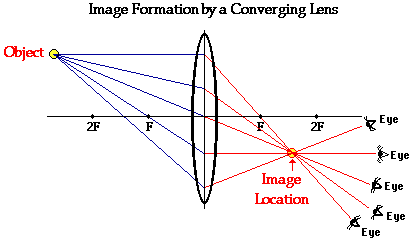

When an object is placed on the focal point in front of a convex lens, the image produced is ___.
real, reduced, and inverted
real, magnified, and inverted
real, true, and inverted
There is no image
When an object is placed between the focal point and the convex lens, the image produced is ___.
real, reduced, and inverted
real, magnified, and inverted
virtual, magnified, and upright
virtual, reduced, and upright


Which figure represents the path light takes through a convex lens?
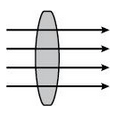
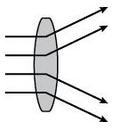
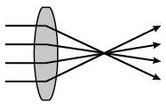
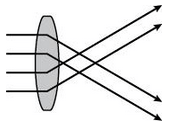


Convex lenses can produce...
Real, upright images
Virtual, inverted images
Real, inverted images
no images form
Which term describes lenses that are thinner at the center than at the edges?
converging lenses
diverging lenses
concave lenses
For a concave mirror, a light ray coming from the direction of the focal point will be reflected _____.
through the center of curvature
parallel to the optical axis
back through the focal point
Which of the following will always form an upright, reduced, virtual image? (multiple answers)
concave mirror
convex mirror
convex lens
concave lens
Which of the following diagrams shows the correct image formation for a concave lens?


The 0th Law of Thermodynamics states
Heat flows from hot to cold objects.
The universe tends toward disorder
Heat does not flow between objects with the same temperature
Absolute zero is the temperature where particles stop moving
Thermal equilibrium is
When substances that can exchange heat reach the same temperature.
When one object is hotter than another
When one object is colder than another
When substances have equal amounts of internal energy
Objects with higher temperatures have
particles with higher average kinetic energy
particles with lower average kinetic energy
particles with no kinetic energy
more thermal energy no matter what
Thermal energy can change form and location, but cannot be created or destroyed is
The 0th Law of Thermodynamics
The 1st Law of Thermodynamics
The 2nd Law of Thermodynamics
The 3rd Law of Thermodynamics
The 1st Law of Thermodynamics is most similar to
The Law of Conservation of Momentum
Newton's 3rd Law
The Law of Universal Gravitation
The Law of Conservation of Energy
Heat always flows from _____ to _____
more internal energy, less internal energy
less internal energy, more internal energy
lower temperatures, higher temperatures
higher temperatures, lower temperatures
Entropy states that a system tends towards (There are two correct answers, pick both of them)
order
disorder
concentrated energy
dispersed energy
What is the kinetic energy of all particles at absolute zero?
0 J
0 K
Infinite energy
Cannot be determined
How much energy is necessary to melt 1 kg of ice?
3.34 x 10⁵ J
6.68 x 10⁵ J
None, it just happens
1.67 x 10⁵ J
What are we doing tomorrow?
Worksheet
Video
Lab
Quiz


What is momentum?
The quantity of motion posessed by a system due to its mass and velocity
The rate at which a system is displaced from its equilibrium position over time
The vector sum of the forces acting on a system
The rate at which the velocity of a system changes over time
What is the formula for calculating the momentum of a particle?
F=ma
K=21mv2
p=mv
ρ=Vm
p
Momentum
m
Mass
v
Velocity
At the start of its motion, an object is traveling upwards with a velocity of +15 m/s. It goes on to experience a net of acceleration of -9.8 m/s/s. What is the direction of the object's momentum at the start of its motion? Implement a coordinate system in which upwards is the positive direction vertically and rightwards is the positive direction horizontally.
Upwards because the direction of the momentum vector depends on the direction of the velocity vector
Upwards because the direction of the momentum vector depends on the direction of the acceleration vector
Downwards because the direction of the momentum vector depends on the direction of the velocity vector
Downwards because the direction of the momentum vector depends on the direction of the acceleration vector
Consider two objects called A and B. Object A has a mass of 15 kg and a horizontal velocity of +7.6 m/s. Object B has a mass of 12 kg and a horizontal velocity of +7.6 m/s. How do the momenta of the two objects compare to each other? Implement a coordinate system in which rightwards is the positive direction.
Objects A and B have the exact same momentum
Objects A and B have momenta that are the same in magnitude but opposite in direction
Object A has more momentum than Object B because Object A has more mass
Object A has more momentum than Object B because Object A has a greater velocity
Object B has more momentum than Object A because Object B has less mass
Consider two objects called A and B. Object A has a mass of 15 kg and a horizontal velocity of +7.6 m/s. Object B has a mass of 15 kg and a horizontal velocity of +18.3 m/s. How do the momenta of the two objects compare to each other? Implement a coordinate system in which rightwards is the positive direction.
Objects A and B have the exact same momentum
Objects A and B have momenta that are the same in magnitude but opposite in direction
Object A has more momentum than Object B because Object A has more mass
Object B has more momentum than Object A because Object B has a greater velocity
Object B has more momentum than Object A because Object B has less mass
What are internal forces?
Forces that come from within yourself
The forces that occur within a system of particles
The forces that occur from outside the system
The forces that conserve the mechanical energy of a system
What are external forces?
Forces that come from within yourself
The forces that occur within a system of particles
The forces that occur from outside the system
The forces that conserve the mechanical energy of a system
Consider a system made up of two objects: Objects A and B. The objects are only moving along a single axis. If Object A has a momentum of 16 kg · m/s, Object B has a momentum of 28 kg · m/s, then what is the total momentum of the system?
16 kg · m/s
28 kg · m/s
12 kg · m/s
44 kg · m/s
If an isolated system of two particles has a total momentum of 37 kg · m/s and the two particles undergo an elastic collision, what is the total momentum of the isolated system after the elastic collision? Note: The two particles each have a mass of 5 kg.
37 kg · m/s
42 kg · m/s
5 kg · m/s
32 kg · m/s
If an isolated system of two particles has a total momentum of 30 kg · m/s and the two particles undergo an inelastic collision, what is the total momentum of the isolated system after the inelastic collision? Note: The two particles each have a mass of 7 kg.
37 kg · m/s
30 kg · m/s
23 kg · m/s
42 kg · m/s
Linear momentum
p
Impulse
J
Change in momentum
Δp
Average force
Favg
If the average force exerted on an object is +64 N and the change in momentum of the object occurs over the duration of 0.01 s, what is the impulse of the force on the object?
Formula: J=FavgΔt
+64.01 N · s
-64.01 N · s
+0.64 N · s
-0.64 N · s
-0.6401 N · s
If an object experiences a change in momentum equal to -34 kg · m/s over the course of 0.56 s, what was the average force exerted on the object?
Formula: Favg=ΔtΔp
-19.04 N
+19.04 N
-60.7 N
+60.7 N
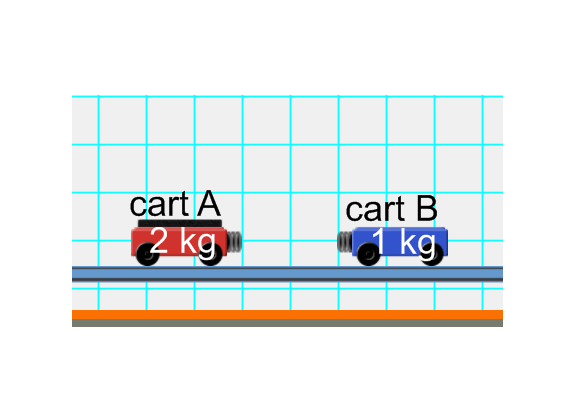
A constant force of 4.5 N acts on a 7.2-kg object for 10.0 s. What is the change in the object's momentum?
45 kg m/s
72 kg m/s
32.4 kg m/s
0.45 kg m/s
The momentum of an object depends upon the object's ___________&_____________.
size and shape
mass and speed
mass and veloctiy
mass and energy
Juan observed a collision in a lab where the kinetic energy after the collision was equal to the kinetic energy before the collision. This type of collision is
Perfectly Inelastic
Perfectly Elastic
Explosion
When is momentum conserved in a collision?
When the collision is inelastic.
When the collision is elastic.
When the collision is inelastic OR elastic but never an explosion.
All collisions.
Extending the time of a collision allows you to...
change the impulse of the collision.
diffuse the collision.
increase the force of impact.
decrease the force of impact.

Steve runs and jumps off of a diving board and lands on a tube (he stays in the tube). The collision between Steve and the tube is...
Elastic
Perfectly Elastic
Inelastic
Completely absurd

While playing pool, Emma notices that the pool balls bounce apart. What type of collision is this?
Elastic
Inelastic
Explosive
Force
As a 1.0-kilogram mass falls freely to the Earth, its momentum
Decreases
Increases
Remains the same
The 0th Law of Thermodynamics states
Heat flows from hot to cold objects.
The universe tends toward disorder
Heat does not flow between objects with the same temperature
Absolute zero is the temperature where particles stop moving
Thermal equilibrium is
When substances that can exchange heat reach the same temperature.
When one object is hotter than another
When one object is colder than another
When substances have equal amounts of internal energy
Objects with higher temperatures have
particles with higher average kinetic energy
particles with lower average kinetic energy
particles with no kinetic energy
more thermal energy no matter what
Thermal energy can change form and location, but cannot be created or destroyed is
The 0th Law of Thermodynamics
The 1st Law of Thermodynamics
The 2nd Law of Thermodynamics
The 3rd Law of Thermodynamics
The 1st Law of Thermodynamics is most similar to
The Law of Conservation of Momentum
Newton's 3rd Law
The Law of Universal Gravitation
The Law of Conservation of Energy
Heat always flows from _____ to _____
more internal energy, less internal energy
less internal energy, more internal energy
lower temperatures, higher temperatures
higher temperatures, lower temperatures
Entropy states that a system tends towards (There are two correct answers, pick both of them)
order
disorder
concentrated energy
dispersed energy
What is the kinetic energy of all particles at absolute zero?
0 J
0 K
Infinite energy
Cannot be determined
How much energy is necessary to melt 1 kg of ice?
3.34 x 10⁵ J
6.68 x 10⁵ J
None, it just happens
1.67 x 10⁵ J
What are we doing tomorrow?
Worksheet
Video
Lab
Quiz

