wayground logo

Free Printable Worksheets

NEW

Font size

S
M
L
XL
Worksheets

Finals Review

Total questions: 72

Worksheet time: 1hrs 5mins

Name
Class
Date
1.
G = green, g = yellow
The genotype for a yellow plant is...
a)
GG
b)
Gg
c)
gg
d)
all of the choices result in yellow
2.
Which of the following is homozygous dominant?
a)
Yy
b)
Y
c)
yy
d)
YY
3.

Which of the following alleles is homozygous (purebred) recessive?

a)

TT

b)

Tt

c)

tt

d)

ts

4.
Genotype refers to the ...
a)
physical expression of the genes
b)
the possible combination of alleles in a gene
c)
whether an allele is dominant or recessive
d)
how an organism will appear
5.
The exact genetic makeup of an organism, such as RR, Tt, PP is its?
a)
phenotype
b)
dominance
c)
genotype
d)
trait
6.
Tt is-
a)
homozygous dominant
b)
homozygous recessive
c)
heterozygous
d)
none of these
7.

Genotype or Phenotype: Black hair

a)

Phenotype

b)

Genotype

8.
If "T" is the allele for tall and "t" is the allele for short, then Tt would produce?
a)
tall
b)
short
c)
medium
d)
not enough info
9.
T - tall and t = short
In the punnett square below, what belongs in the missing square
a)
tt
b)
Tt
c)
Bb
d)
TT
10.
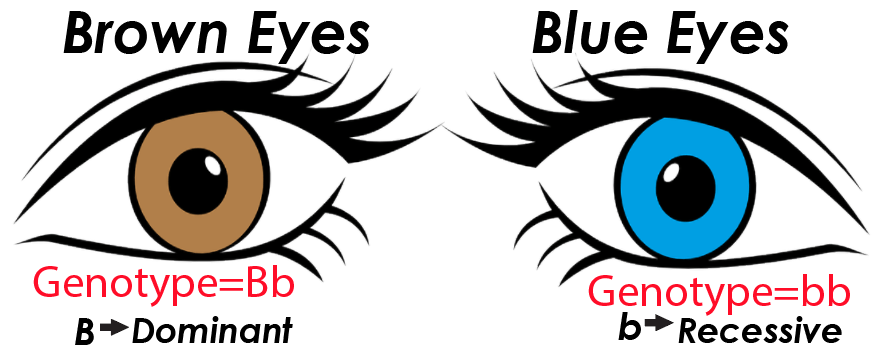
Two brown eyed parents (Bb) have a baby. What is the chance the baby is blue eyed?
a)
0 %
b)
25%
c)
50%
d)
75%
11.

What is the probability that the offspring will express the dominant trait?

a)

25%

b)

50%

c)

75%

d)

100%

12.
A physical characteristic that can be passed from parent to offspring.
a)
behavior
b)
trait
c)
strong muscles
d)
ability to fly a plane.
13.

The observable traits dictated by the genotype

a)

Phenotype

b)

Genotype

c)

Homozygous Recessive

d)

Homozygous Dominant

14.

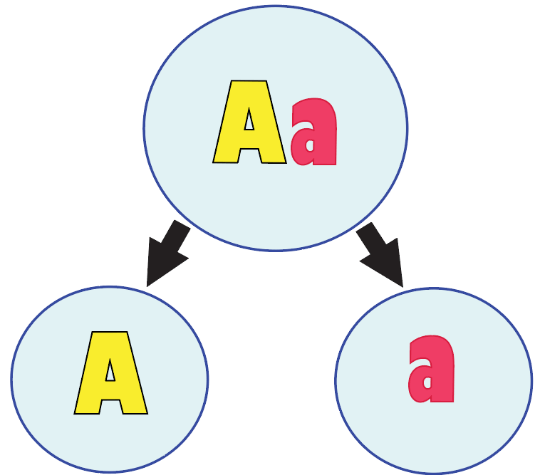
During meiosis and gamete formation, homologous (paired up) alleles split up

a)

Phenotype

b)

Law of Segregation

c)

Genotype

d)

Dihybrid Cross

15.

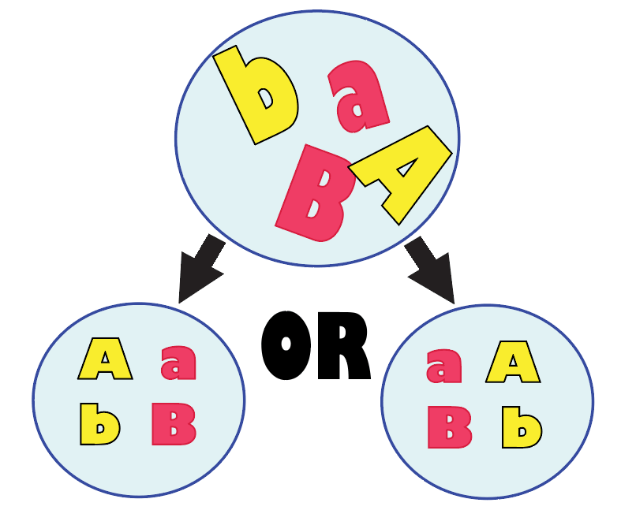
During meiosis, the homologous pairs of chromosomes and the matching alleles are lined up independently.

Offspring are a mix of maternal genes and paternal genes.

This increases genetic variation.

a)

Homozygous Dominant

b)

Law of Segregation

c)

Crossing Over

d)

Independent Assortment

16.

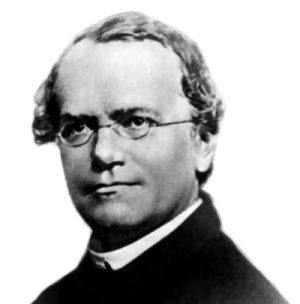
The Italian monk/scientist who first showed

the principles of genetics

a)

Watson and Crick

b)

Linnaeus

c)

Darwin

d)

Mendel

17.
Which of the following is a phenotype?
a)
Aa
b)
red hair
c)
heterozygous
d)
DNA
18.
Jabba the Hutt has finally decided to settle down and have a family. He has undergone genetic testing and learned that he is heterozygous for Hutt Fungal Syndrome, which is caused by recessive alleles. He is worried that his children might suffer from this syndrome. His Hutt mate has undergone genetic testing and discovered she is homozygous dominant for the syndrome. Should Jabba be worried?
a)
Yes
b)
No
19.
Chunks of three bases on the mRNA that code for a specific amino acids are called...
a)
Codons
b)
Snodocs
c)
Docons
d)
Nocods
20.
In eukaryotes, where does transcription occur?
a)
Nucleus
b)
Cytoplasm
c)
Outside of the cell
d)
Eukaryotes don't do transcription
21.
What is one easy way to tell RNA from DNA?
a)
RNA has uracil, DNA doesn't
b)
DNA doesn't have thymine, RNA does
c)
RNA is double stranded, DNA isn't
d)
RNA is made of up amino acids, DNA isn't
22.
In translation..
a)
A polypeptide is created
b)
mRNA is created
c)
The nucleus implodes
d)
RNA polymerase does all the work
23.
What is the anticodon if the codon is "AAA"?
a)
UUU
b)
TTT
c)
AAA
d)
GGG
24.
What is the name for those letters in DNA and RNA (A, T, C, and G)?
a)
Amino acids
b)
Monosaccharides
c)
Nitrogenous bases 
d)
Phosphate groups
25.
True/False: Bacteria do not use DNA to store their genetic information.
a)
True
b)
False
26.
Translation happens at the - 
a)
Nucleus
b)
Ribosome
c)
Chloroplast
d)
Mitochondria
27.
This scientist came up with the idea of natural selection.
a)
Jean Baptiste Lamarck
b)
Gregor Mendel
c)
Charles Darwin
d)
Thomas Malthus
28.
Inherited trait that helps an organism survive is a(n) __________.
a)
Fossil
b)
Adaptation
c)
Ancestor
d)
Natural selection
29.
Survival of the fittest or when favorable adaptations reproduce faster is called what?
a)
Evolution
b)
Adaptation
c)
Natural selection
d)
Fossilization
30.
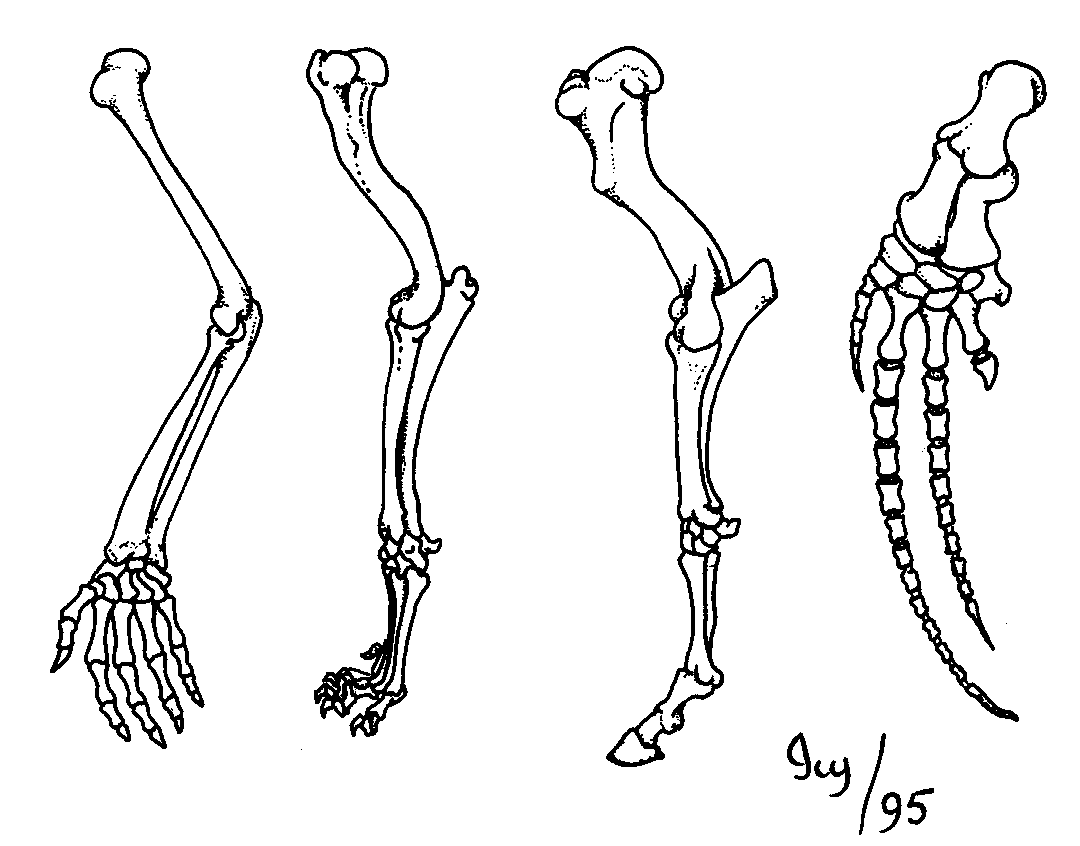
Structures with the same parts have different functions; suggests that organisms share a common ancestry
a)
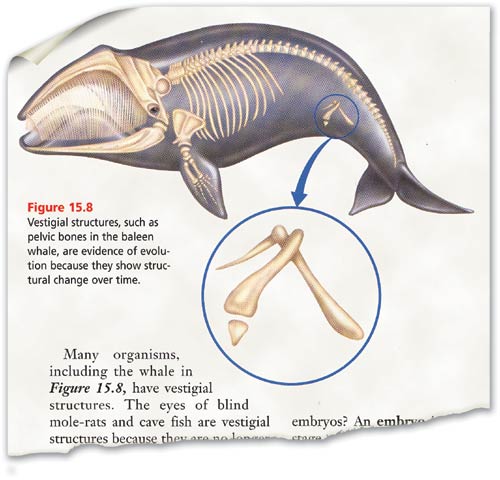
vestigial structures
b)
homologous structures
c)
adaptive radiation
d)
fossil
31.
Which of the following is an example of a vestigial structure?
a)
the wings of a red-tailed hawk
b)
the hind limbs of a house cat
c)
the fins of sharks
d)
the tailbone of a human
32.
The diagram shows fossils in different rock layers. Which of these statements about the age of these fossils is most likely correct?
a)
Fossil A and C are the same age
b)
Fossil B is older than fossil C
c)
Fossils A is older than fossil B
d)
Fossil D is older than fossil C
33.

What do we call a change in a species over time?

a)

Adaptation

b)

Evolution

c)

Extinction

d)

Environmental influences

34.
Ostrich wings are examples of
a)
homologous structures
b)
vestigial structures
c)
adaptations
d)
traits
35.
When an organism completely dies out, it is called.....
a)
Adaption
b)
Extinction
c)
Fossilization
d)
Mutation
36.
All the individuals of a species that live in a particular area are called a
a)
variation
b)
population
c)
fossil
d)
group
37.
Natural selection is when ____________ decides who survives and who doesn't
a)
nature
b)
humans
c)
animals
d)
years
38.
What does Darwin's theory of evolution suggest?
a)
species change over time
b)
extinct species are not related to living species
c)
different species can interbreed
d)
animals that look alike are most closely related
39.
A theory has significant evidence to support it.  True or False
a)
True
b)
False
40.
Where humans have bred organisms together based on traits we like.
a)
Evolution
b)
Natural Selection
c)
Extinction 
d)
Artificial Selection
41.
Genetic differences between organisms of the same species
a)
Variation
b)
Adaptation
c)
Behavior
d)
Environment
42.
The long and sharp beak of a woodpecker is an example of:
a)
Natural Selection
b)
Selective Breeding
43.
The ability of an organism to survive and reproduce in its specific environment 
a)
diversity.
b)
evolution
c)
adaptation
d)
 fitness
44.
Examples of a producer
a)
frog
b)
algae
c)
worm
d)
mouse
45.
In the energy pyramid here, which organisms have the most energy available?
a)
Producers
b)
Carnivores
c)
Herbivores
d)
Top Predator
46.
In the energy pyramid below, which organism has the least amount of energy available?
a)
Producers
b)
Herbivores
c)
Carnivores
d)
Top Predator
47.
If there is 1000 Kcal available in the producers in trophic level 1, how much energy is available in the herbivores in trophic level 2?
a)
10 Kcal
b)
1 Kcal
c)
100 Kcal
d)
1000 Kcal
48.
A third-level consumer has to be which type?
a)
Carnivore.
b)
Decomposer.
c)
Producer.
d)
Herbivore.
49.
A secondary consumer 
a)
eats primary consumers
b)
eats producers
c)
eats plants
50.

How does the energy flow in an energy pyramids?

a)

up the pyramid

b)

down the pyramid

51.
Biodiversity is 
a)
the variety of species within an ecosystem
b)
a large number of the same species in an ecosystem
c)
an abundant amount of the same primary consumers 
d)
the ability to have an abundant source from the same species
52.
Which is represented by all of the bullfrogs living around a pond?
a)
community
b)
habitat
c)
population
53.
An organism that needs to eat other organisms to obtain energy is known as a:
a)
Autotroph
b)
Producer
c)
Consumer
d)
Mutualist
54.
Consumer that eats plants
a)
heterotroph
b)
herbivore
c)
producer
d)
community
55.
What does a food web represent?
a)
All connections of energy flow throughout all organisms in a habitat.
b)
The specific ways that mutualism is carried out.
c)
A single pathway or energy flow between organisms. 
d)
How carnivores get their food. 
56.
The nonliving aspects of an ecosystem.
a)
Abiotic factors
b)
Biotic factors
57.
A collection of organisms that make up a community as well as all of the nonliving aspects of the environment.
a)
Population
b)
Community
c)
Habitat
d)
Ecosystem
58.
 plants that convert energy from the sun
a)
decomposer
b)
primary consumer
c)
secondary consumer
d)
producer
59.
Different populations living and interacting with each other in the same area
a)
Biome
b)
Ecosystem
c)
Community
d)
Niche
60.
What is the term for each step in the transfer of energy and matter within a biological community?
a)
energy path
b)
food web
c)
trophic level
d)
food pyramid
61.
The nonliving aspects of an ecosystem.
a)
Abiotic factors
b)
Biotic factors
62.
The living portions of the ecosystem.
a)
Biotic factors
b)
Abiotic factors
63.
The amount of energy that usually transfers from one trophic level to the next...
a)
10%
b)
20%
c)
80%
d)
50%
64.
Which of the following would be the definition of a detritivore?
a)
Animals that eat insects.
b)
Organisms that feed on rocks, recycling the nutrients back into the ground.
c)
Organisms that eat only pants
d)
Things that feed on dead organisms, recycling the nutrients back into the ground.
65.
In which direction should an arrow be drawn to represent energy flow between these two organisms?
a)
To the Left
b)
To the Right
66.

Who propose that animals arose from common ancestors and thought that the earth was older than 6,000 years old

a)

Louis Pasteur

b)

Georges-Louis Leclerc de Buffon

c)

Jean-Baptiste Lemark

d)

Carolos Linnaeus

67.

What scientist create a system to categorize all known animals?

a)

Carolous Linnaeus

b)

Jean-Baptiste Lemark

c)

Georges-Louis Leclerc de Buffon

d)

Erasmus Darwin

68.

Who proposed that complex beings came from simpler beings.

HINT: He could be called the grandfather of evolution

a)

Charles Lyell

b)

Jean-Baptiste Lamarck

c)

Erasmus Darwin

d)

Carolus Linnaeus

69.

This French naturalist believed that animals developed traits while they were alive through behaviors. For example a giraffe could make its neck longer by constantly stretching to reach the limbs of trees.

a)

Erasmus Darwin

b)

Carolus Linnaeus

c)

Georges-Louis Leclerc de Buffon

d)

Jean-Baptiste Lamarck

70.

In quadrat sampling how do you calculate N?

a)

Divide the total area sampled by the area of each quadrat

b)

Multiply area by number of individuals counted

c)

Divide number of individuals counted by the number of quadrats surveyed

71.

In quadrat sampling, how do you calculate A?

a)

Divide the total area surveyed by the area of each quadrat

b)

Multiply area by the number of individuals counted

c)

Divide the number of individuals counted by the number of quadrats sampled

72.

In quadrat sampling, to calculate T (total estimated population in an area) you need to:

a)

Divide N by A

b)

Multiply N and A together

c)

Divide A by N

d)

Add N and A together