
 Worksheets
Final Exam in Renewable Energy
Total questions: 75
Worksheet time: 50mins
Although we must have greenhouse gases to trap heat within the atmosphere, they pose an environmental problem. What is that problem?
Global Crisis
Global Cooling
Global Warming
Gobble Gobble!
Why is it safer to use alternative resources rather than fossil fuels?
Fossil fuels release hydrocarbons which contributes to global warming.
Fossil fuels release carbon dioxide which contributes to global warming.
Fossil fuels release uranium which contributes to global warming.
It isn't safer... the propaganda surrounding 'alternative energy resources' is a conspiracy theory.
Which alternative energy resource requires the splitting of the uranium atom?
nuclear fusion
nuclear confusion
nuclear fishing
nuclear fission
Where does the oil and gas go once it forms in the ground?
They get trapped in a layer of impermeable rock.
They seep through all layers of rock and become spread out.
They go into tanks and transported to gas stations.
To a underground pipeline that fills up the Federal Oil Reserve.
Choose an example of a renewable resource.
burning coal
nuclear energy
solar energy
crude oil
What greenhouse gas is emitted by fossil fuels?
oxygen
carbon dioxide
water vapor
steam
Why are fossil fuels nonrenewable?
Once they are used, they can be replaced in a human lifetime.
Once they are used, we have to ask the government for more.
Once they are used, we must go to other planets to get more.
Once they are used, they cannot be replace within a human lifetime.
How are fossil fuels formed?
they are from outer space brought from an Alien civilization
they come from the sun which burned up the trees and animals and when they died they decomposed into fuel
they are million year old plants and animals that have been covered in soil and mud and are pumped from the ground today
they are fuels that will never run out and we can continiuusly use them
Wind, Water, Sunlight, and Geothermal are what types of energy?
Fossil Fuels
Non-Renewable Energy
Renewable Energy
Reviewable Energy
What is an example of renewable energy?
oil
coal
dirt
ethanol
Nuclear power is the energy created from which element?
Helium
Hydrogen
Iron
Uranium
What is the main difference between renewable and non-renewable resources?
Where they are found on Earth
How they are used in their lives
How quickly they can generate
How long they can be stored
All are examples of non-renewable energy sources EXCEPT ________.
Coal
Petroleum
Hydropower
Uranium (Nuclear)
Energy that comes from solar or wind is called _______.
red
black
green
yellow

Which word/s correctly completes the statement about how solar farm works?
A solar farm includes arrays of ___ that focus sunlight onto a liquid that is heated and used to turn water into steam to drive the turbines in an electrical generator.
mirror
solar cells
electrical circuits
solar modules
Which kind of electricity production does not rely on a generator to turn mechanical energy into electrical energy?
Wind turbine
Solar cell (solar photovoltaic)
Geothermal
Tidal energy

According to the graph that compares the relative costs of various electricity generation technologies, which kind of electricity generation is least expensive?
micro hydro
wave and marine
solar photovoltaic
nuclear
Which of these electric generating plants is most responsible for global warming?
Thermonuclear
Hydroelectric
Tidal power
Coal-fueled thermoelectric
Which of the following is a drawback to wind energy?
Wind turbines can cause cancer among people.
There aren't enough suitable site in the US to build wind farms.
Wind turbines can hurt flying animals.
Wind turbines emit greenhouse gases.
Why is solar energy considered a renewable source?
You can get money back from the government if you put solar panels on your homes.
The sun's energy will not run out for billions of years.
Solar energy is cheaper than fossil fuels.
Solar energy can be used to recharge batteries.
Why are fossil fuels more widely used than solar energy?
Solar energy is harder to find.
Fossil fuels are more abundant.
Fossil fuels are much cheaper.
The sun's energy can never be harnessed.
______ comes from the intense heat beneath Earth's surface.
Hydropower
Geothermal
Biomass
Nuclear Fusion
Moving water, tides, and dams are examples of ______.
Hydropower
Geothermal
Biomass
Nuclear Fusion
Which of the following is a fossil fuel?
Coal
Wind Energy
Ethanol
Hydropower
For what reason do nuclear power plants use uranium as fuel?
Uranium atoms have nuclei that can be easily split.
Uranium is easier to obtain than most other metals.
Uranium is less expensive than most other metals.
Unlike most other metals, uranium is not radioactive.
__________ energy typically comes from wind turbines.
Nonrenewable
Wind
Geothermal
Hydropower

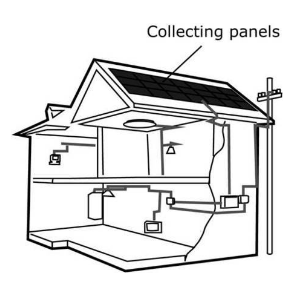
Which alternative energy source does this house use?
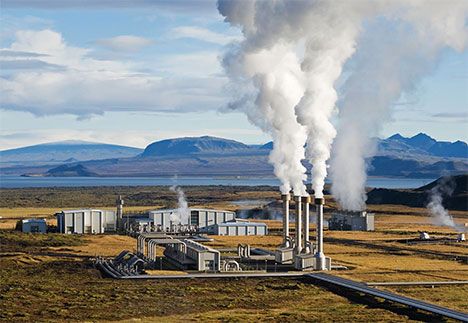
All of the following are considered renewable energy sources EXCEPT –
Wind
Coal
Biomass
Solar
Which one of these is NOT a type of renewable energy?
solar
wind
biomass
nuclear
A home is built with clear glass panels that allow sunlight to pass through. This is an example of
Active solar
Passive solar
Parabolic collector
Photovoltaic Cells
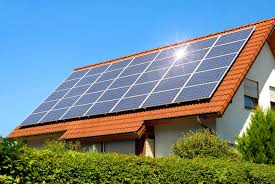
Why are not American's roofs crammed with more solar panels? (a)
Which renewable energy does not require spinning a turbine? (a)
(a) energy comes from underground pockets of hot water.
Solar, wind, and hydroelectric power all share this same benefit.
zero carbon emissions/air pollution
habitat loss
cheap to use
nonrenewable
Which of the following is not a negative to using hydroelectric power
siltation occurs behind the dam
fish are not able to migrate upstream
creates air pollution
reservoirs impact the surrounding environment
biomass is a main source of energy for heating homes and food in
developed nations only
developing nations mostly
both developed and developing nations
nowhere on earth
What is wind?
Air
Nothing
Air in motion
A fan
How is wind caused?
There's a giant fan in Afghanistan where it cools the earth
Unequal heating
When clouds cover a certain area
Hot air rises
How can wind become energy?
When a wind turbines changes the kinetic energy in wind to electric energy.
When a windmill goes fast enough
It just naturally is
The sun heats it so it becomes solar energy
What are wind farms and what do they do?
It's a power plant.
A bunch of wind turbines that generates power everywhere.
A bunch of windmills that generates power everywhere
A bunch of people that blow to create wind energy
True or False: Wind energy is a renewable source of energy.
True
False
It is partially both renewable and nonrenewable
It depends. It can be both renewable and ninrenewable
How is wind energy used today in the modern world?
In homes
Schools and businesses
All of the above
None of the above
How do wind turbines affect the environment.
Birds and bats may be injured.
Cuts the clouds which affects the water cycle.
Hits trees around them which blows up the wind turbine.
They are perfect for the environment.

What are the following devices called?
Mills
Converters
Weathervanes
Turbines
How can a biofuel be made?
By fermenting the sugar components of starch crops
By reacting vegetable oil or animal fat with hydrogen
All of the above
What were an example of biofuels?
Ethanol
petrol
Diesel
natural gas
What type of biomass gas i s produced when garbage rots?
Carbon Dioxide
Oxygen
Methane
Nitrogen
Which is NOT an example of FOSSIL FUELS?
Coal
Natural Gas
Ethanol
Petroleum
The biofuel made from corn is:
Ethanol
Biodiesel
Methanol
Butanol fuel
The biofuel made from soybeans is:
Ethanol
Biodiesel
Methanol
Butanol fuel
Select ALL of the BIOFUELS (there will be more than one answer):
Natural Gas
Biodiesel
Petroleum
Coal
Ethanol
What is one negative effect of producing more ethanol for use as fuel?
An increase in air pollution
People buying fewer cars
Rising prices of certain food
Having to import more oil from abroad
Plants take in radiant energy and turn it into what form of energy?
Chemical
Thermal
Electrical
Kinetic
Green energy is an alternative energy that can be replenished within the human life span. Examples of green energy are _______. SELECT ALL THAT APPLY.
geothermal energy
natural gas
biomass energy
solar energy

The photo shows a forestry activity. Which of the following is the application of Green Technology in addressing the socio-scientific issues of the forestry sector?
Enforcing the law
Issuing summons and confiscating the logs
Reducing the forestry license
Reforestation
What is green technology?
Development and application of product, equipment and systems used to conserve environment and nature
Development of green products
Increase transport for the country's economic development and people's livelihoods
Increased use of fossil fuel sources but attempts to minimise or reduce the negative impact of human activity
Which of the following is the main pillar of Green Technology?
Security
Politics
Energy
Research
Which of the following is not the importance of practicing energy efficiency through Green Technology?
Increase energy savings
Strengthen the country's economy
Increase use of fossil fuel
Waste is used as a form of renewable energy
Which of the following shows the effect of energy efficiency practices?
Improvement in energy saving
Increase in greenhouse gases
Increase in annual energy consumption
Increase cost of living
Which of the following is a non-renewable energy?
Solar
Hydro
Biomass
Coal
What is the effect of paper recycling on nature?
Preserves the habitat and sources of animal food in the forest
Causes soil erosion and mud floods
Disrupts the carbon cycle and oxygen cycle
Disrupts the continuity of life
What is the impact of green transportation branding on society
Noisy environment
Decrease in greenhouse gas
Increase in greenhouse gasses
The country's economy is affected
5R practice is one of those recommended practices in green technology. What are the elements in the 5R practice?
Refuse, retreat,reuse, recollect, recovery
Reuse, reduce, recycle, re-branding, refuse
Reuse, recycle, recovery. refuse, recollect
Refuse, reduce, reuse, recycle, recovery
What do wind turbines, hydro electric dams, and ethanol plants have in common
All produce electrical current without pollution
All use generators to produce electrical current
All convert gravitational potential energy to electric current
All convert thermal energy to electrical energy
According to the Department of Energy website, all of the following are factors below affect the amount of SOLAR RADIATION (light energy) entering the Earth EXCEPT for one, which is it?
Geographic Location
Time of the Day
Local Landscape
Wind Speed
Sunlight is made of bundles of radiant energy called
electrons
protons
neutrons
photons
The main material that is used in the production of photovoltaic cells is __________________
Carbon
Silicon
Uranium
Hydrogen
How does a wind turbine make electricity?
Robots inside do push-ups inside.
The spinning blades turn a shaft that connects to generator.
They raise water than then flows downhill.
Cells inside the turbine turns energy into electricty.

