Wayground logo

Free Printable Worksheets

Font size

S
M
L
XL
Worksheets

Chem Final

Total questions: 100

Worksheet time: 2hrs 14mins

Name
Class
Date
1.

Which of the following is a METRIC unit of measure for VOLUME?

a)

mL

b)

cups

c)

kg

d)

cm

2.

What is the volume of the liquid?

a)

18 mL

b)

19 mL

c)

8 mL

d)

20 mL

3.
What is this?
a)
Balance
b)
Triple beam balance
c)
Mass
d)
Graduated cylinder
4.
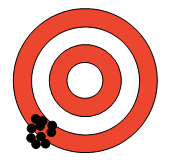
This bullseye demonstrates...
a)
High Accuracy & High Precision
b)
High Accuracy & Low Precision
c)
Low Accuracy & High Precision
d)
Low Accuracy & Low Precision
5.

The students measured length during a science experiment, they got 12 cm. But the actual measurement was 14.25 cm. What was the percent error?

a)

15.79%

b)

18.75%

c)

2.25%

d)

18%

6.
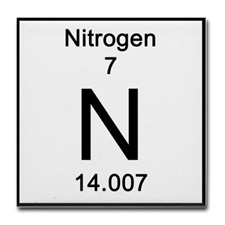
What is the number of protons that the element in this image contain?
a)
14
b)
7
c)
15
d)
18
7.
electrons have this type of charge?
a)
negative
b)
positive
c)
neutral
8.
What is the mass of an atom if it has 11 protons, 12 neutrons, and 11 electrons?
a)
22
b)
11
c)
34
d)
23
9.
How many neutrons does the isotope below have?     89 36Kr
a)
53
b)
36
c)
89
d)
125
10.
24.1% of all the isotopes of a an element have a mass of 75.23 amu, 48.7% have a mass of 74.61 amu, and 27.2% have a mass of 75.20 amu.
What is the average mass of this element?
a)
74.92 amu
b)
24.97 amu
c)
75.01 amu
d)
74.51 amu
11.
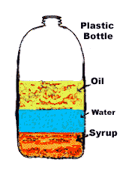
Which liquid is the least dense?
a)
oil
b)
water
c)
syrup 
d)
plastic bottle
12.
Jack has a rock. The rock has a mass of 14g and a volume of 2cm3. What is the density of the rock?
a)
7 mL
b)
7 g/cm3
c)
28 g/cm3
d)
1/7 g/cm3
13.
What is the volume of Object X?
a)
10.0 cm3
b)
15.0 cm3
c)
20.0 cm3
d)
25.0 cm3
14.
What is the measuring unit for mass?
a)
centimeter 
b)
millimeter 
c)
grams 
d)
pounds
15.

What group and period does this element belong in? *

a)

period 1 and group 3

b)

period 3 and group 1

c)

period 2 and group 3

d)

period 3 and group 2

16.

How many valence electrons does the element have?

a)

1

b)

2

c)

3

d)

4

17.

How many valence electrons and energy levels does (Pb) lead have?

a)

4 valence electrons and 6 energy levels (orbitals)

b)

6 valence electrons and 4 energy levels (orbitals)

c)

5 valence electrons and 5 energy levels (orbitals)

d)

5 valence electrons and 10 energy levels (orbitals)

18.

What group number are the halogens found?

a)

18 (8A)

b)

1

c)

2

d)

17 (7A)

19.

This is a Bohr Diagram of Aluminum. How many valence electrons does Aluminum have?

a)

3

b)

4

c)

5

20.
What atom matches this electron configuration?
1s22s22p63s23p64s23d10
a)
Zinc
b)
Copper
c)
Nickel
d)
Germanium
21.
What electron configuration matches an oxygen atom?
a)
1s22s22p63s2, 3p64s23d104p5
b)
1s22s22p4
c)
1s22s22p6
d)
1s22s22p63s23p64s23d1
22.
An ionic bond forms when atoms ___________ electrons.
a)
gain
b)
share
c)
increase
d)
transfer
23.
If an atom loses two electrons what charge will it have?
a)
+ 2
b)
 - 2
c)
+1
d)
-1
24.
When electrons are shared unequally a/an ___________ bond is formed 
a)
ionic 
b)
hydrogen
c)
polar covalent 
d)
nonpolar covalent
25.
What is Sulfur Trichloride?
a)
SCl3
b)
SiCl3
c)
SCl4
d)
Si3Cl
26.

How should you read the formula LiF?

a)

Lithiide Fluorine

b)

Lithium Monofluride

c)

Lithium Fluoride

d)

Lithium Phosphine

27.
Mg2+ and Cl- create...
a)
Mg2Cl
b)
MgCl2
c)
Mg2Cl2
d)
MgCl
28.
Ca2+ and N3- create...
a)
Ca2N3
b)
Ca3N2
c)
CaN3
d)
Ca2N
29.
What is the name of Al(NO3)3?
a)
Aluminum trinitrate
b)
Monoaluminum nitrate
c)
Aluminum (III) nitrate
d)
Aluminum Nitrate
30.
Ammonium
a)
NH4+
b)
NO3-
c)
NO2-
d)
MnO4-
31.
Which of the following is the correct Lewis dot structure for the molecule fluorine (F2)?
a)
A
b)
B
c)
C
d)
D
32.

What is the correct Lewis Dot Structure for ammonia NH3

a)
b)
c)
d)
33.
What is the measure of a tetrahedral bond angle?
a)
90 Degrees
b)
109.5 Degrees
c)
120 Degrees
d)
180 Degrees
34.
Consider the molecule below.  Determine the molecular geometry at each of the 2 labeled carbons.
a)
C1 = tetrahedral, C2 = linear
b)
C1 = trigonal planar, C2 = bent
c)
C1 = bent, C2 = trigonal planar
d)
C1 = trigonal planar, C2 = tetrahedral
35.
What molecular shape is the structure shown here? (H2O)
a)
tetrahedral
b)
trigonal planar
c)
bent
d)
trigonal pyramidal
36.

The electrons in a polar covalent molecule are shared...

a)

Evenly

b)

Unevenly

c)

Electrons are not shared

d)

None of the Above

37.

A diatomic molecule like O2 is always _____ because electrons are shared _____

a)

nonpolar; unequally

b)

polar; equally

c)

nonpolar; equally

d)

polar; unequally

38.
 Mg  +  ___ HCl  →   MgCl2  +   H2
a)
1
b)
2
c)
3
d)
4
39.
Balance this equation.
_SnO2 +_H2-->_Sn +_H2O
a)
1,1,2,1
b)
1,2,1,1
c)
1,2,1,2
d)
1,2,2,1
40.

A + B --> AB

a)

Synthesis

b)

Decomposition

c)

Single Replacement

d)

Double Replacement

41.

HCl + NaOH --> NaCl + H2O

a)

Synthesis

b)

Decomposition

c)

Single Replacement

d)

Double Replacement

42.
What are the products of this reaction?
Cu+ AgNO3--> 
a)
Cu(NO3)2+Ag
b)
CuNO3 + Ag
c)
CuAg+NO3
d)
Cu+ AgNO3
43.
Predict the products for the this reaction:
K + HCl --> 
a)
KCl + H2
b)
KHCl 
c)
KH + Cl2
d)
KCl + H
44.
K2CO3
a)
soluble
b)
insoluble
45.

What of these is always soluble?

a)

Nitrates

b)

Phosphates

c)

Carbonates

d)

Hydroxides

46.
What is the molar mass of table salt (NaCl)?
a)
116.886 g/mol
b)
35.453 g/mol
c)
22.990 g/mol
d)
58.443 g/mol
47.

What id the molar mass of UF6?

a)

101 g/mol

b)

238 g/mol

c)

257 g/mol

d)

352 g/mol

48.

What percentage of the total atomic mass of carbon monoxide (CO) is composed of carbon?

a)

29%

b)

43%

c)

57%

d)

73%

49.

2 C2H6 + 7 O2 → 4 CO2 + 6 H2O

Ethane (C2H6) combusts in the above reaction. What is the mole ratio of ethane to oxygen gas?

a)
b)
c)
d)
50.
Using the following equation:
Fe2O3(s) + 3H2(g) → 2Fe(s) + 3H2O(l)
How many moles of iron can be made from  6 moles H2? 
a)
4 moles Fe
b)
6 moles Fe
c)
9 moles Fe
d)
2 moles Fe
51.
B2H6 + 3O2 -->2 HBO2 + 2 H2O
 What mass of O2 will be needed to burn 36.1 g of B2H6?
a)
13.8 g O2
b)
3.86 mol of O2
c)
124 g O2
52.
What does it mean to be "Soluble" ?
a)
Capable of being a solid.
b)
To have soul.
c)
Capable of being dissolved.
d)
To sink.
53.
What is the unit for molarity?
a)
mass/liters
b)
moles
c)
liters
d)
moles/liter
54.
An unsaturated solution is one that....
a)
contains the maximum amount of dissolved solute.
b)
contains less solute than a saturated solution.
c)
contains more solute than a saturated solution.
d)
is the amount of a substance required to form a saturated solution.
55.
The dissolving medium in a solution is called ... 
a)
colloid
b)
solution
c)
solute
d)
solvent
56.
How many moles of NaCl are present in 6000. ml a 1.5 M NaCl solution?
a)
9 moles NaCl
b)
9000
c)
9
d)
4000  moles NaCl
57.
What is the molarity of a 2 liter solution containing 5 moles of NaCl?
a)
2.5
b)
0.4
c)
2.5 moles/liter
d)
10 moles/liter
58.

48.86 g of cobalt is equal to how many moles of cobalt?

a)

2879 moles

b)

8.291 moles

c)

.8291 moles

d)

.829 moles

59.

How many moles of sodium chloride are in a 321.8 g sample?

a)

18810 moles

b)

3.315 x 1024 moles

c)

5.507 moles

d)

4.767 moles

60.
What is the molarity of 4 g of NaCl (MM=58.45) in 3,800 mL of solution?
a)
0.018 M
b)
0.0011 M
c)
1.052 M
d)
0.062 M
61.
Find the molarity of 186.55 g of sucrose, C12H22O11 (MM = 342) in 250 mL of water.
a)
2.18 M
b)
0.746 M
c)
1.18 M
d)
0.545 M
62.

What is the purpose of creating a standard curve?

a)

It allows you to determine the concentration of an unknown solution.

b)

It allows you to estimate the absorbance of a substance with a known concentration.

c)

It provides you with the entire absorption spectrum of a substance.

d)

It allows you to determine what chemical elements are present in a solution.

63.

Which of these is a property of acidic solutions?

a)

they taste sour

b)

they feel slippery

c)

they are in many cleaning products

d)

they taste bitter

64.

What type of reation occurs between an acid and a base?

a)

Combustion

b)

Synthesis

c)

Neutralization

d)

Double Replacement

65.

Which of the following show an acid and its conjugate base pair (in that order)

a)

H2SO4, SO42-

b)

OH-, H2O

c)

NH4+, H2O

d)

H2CO3, HCO3-

66.

According to Arrhenius, what is the definition of an ACID?

a)

a substance that contains hydroxide and ionizes to produce OH-

b)

a substance that contains hydrogen and ionizes to produce H+

c)

a substance that contains hydrogen and ionizes to produce OH-

d)

a substance that contains hydroxide and ionizes to produce H+

67.

A bronsted lowry acid

a)

produces hydroxide ions in a solution

b)

is a proton donor

c)

produces hydrogen ions in a solution

d)

is a proton acceptor

68.
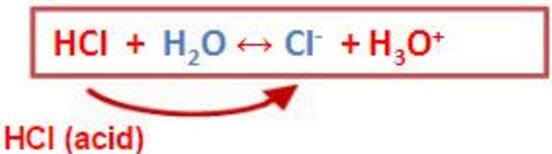
Which of the following shows the correct conjugate acid base pair?
a)
HCI (acid) / H3O+ (conjugate base)
b)
HCI (acid) / CI- (conjugate base)
c)
HCI (base) / CI- (conjugate acid)
d)
HCI (base) / H3O+ (conjugate acid)
69.
A(n) _______ is a substance with a pH greater than 7.
a)
Base
b)
Acid
c)
Buffer
d)
Water
70.

Water has a neutral because

a)

it has more H+ ions than OH-

b)

it has more OH- ions than H+

c)

it does not produce any ions

d)

it has an equal amount of H+ and OH- in solution

71.
A solution has a pH of 7.0.  What would happen to the pH if H ions were added?
a)
pH would go up
b)
pH would go down
c)
pH would stay the same
d)
None of these
72.

If the pH of a solution is 4.0, what is the pOH?

a)

4.0

b)

10.0

c)

1.0 x 10 -4

d)

cannot be determined from the information

73.

The pH of a solution is 8.43. What is the [H3O+]concentration?

a)

3.7 x 10 -9

b)

1.0 x 10-8.43

c)

2.7 x 10⁻⁶

d)

1.0 x 10⁻¹⁴

74.

If the [OH-] of a solution is 2.7 x 10⁻⁴ M, the pOH of the solution is

a)

10.44

b)

1.00

c)

3.57

d)

-4.43

75.

Oranges have a [H3O+] of 1.7 x 10⁻² M. Their pOH is

a)

1.77

b)

12.23

c)

10.91

d)

3.09

76.
what is the reading on this burette?
a)
4.40mL
b)
3.50mL
c)
3.60mL
d)
4.50mL
77.
Identify the products of the chemical equation
3 LiOH + H3PO4 →
a)
Li3PO4 + 3 H2O
b)
LiPO4 + 3 H2O
c)
Li(PO4)3 + 3 H2O
d)
BOY + La + N2
78.
A 50.0 mL sample of Ca(OH)2 is neutralized by 300.0 mL of HCl solution with a pH of 1.3. Calculate the molarity of the Ca(OH)2 solution.
a)
1.0 M
b)
0.50 M
c)
0.15 M 
d)
0.30 M
79.

Which indicator is blue in a solution that has a pH of 5.6?

a)

bromcresol green

b)

bromthymol blue

c)

thymol blue

d)

methyl orange

80.

According to reference table M, what is the color of the indicator methyl orange in a solution that has a pH of 2?

a)

blue

b)

yellow

c)

orange

d)

red

81.

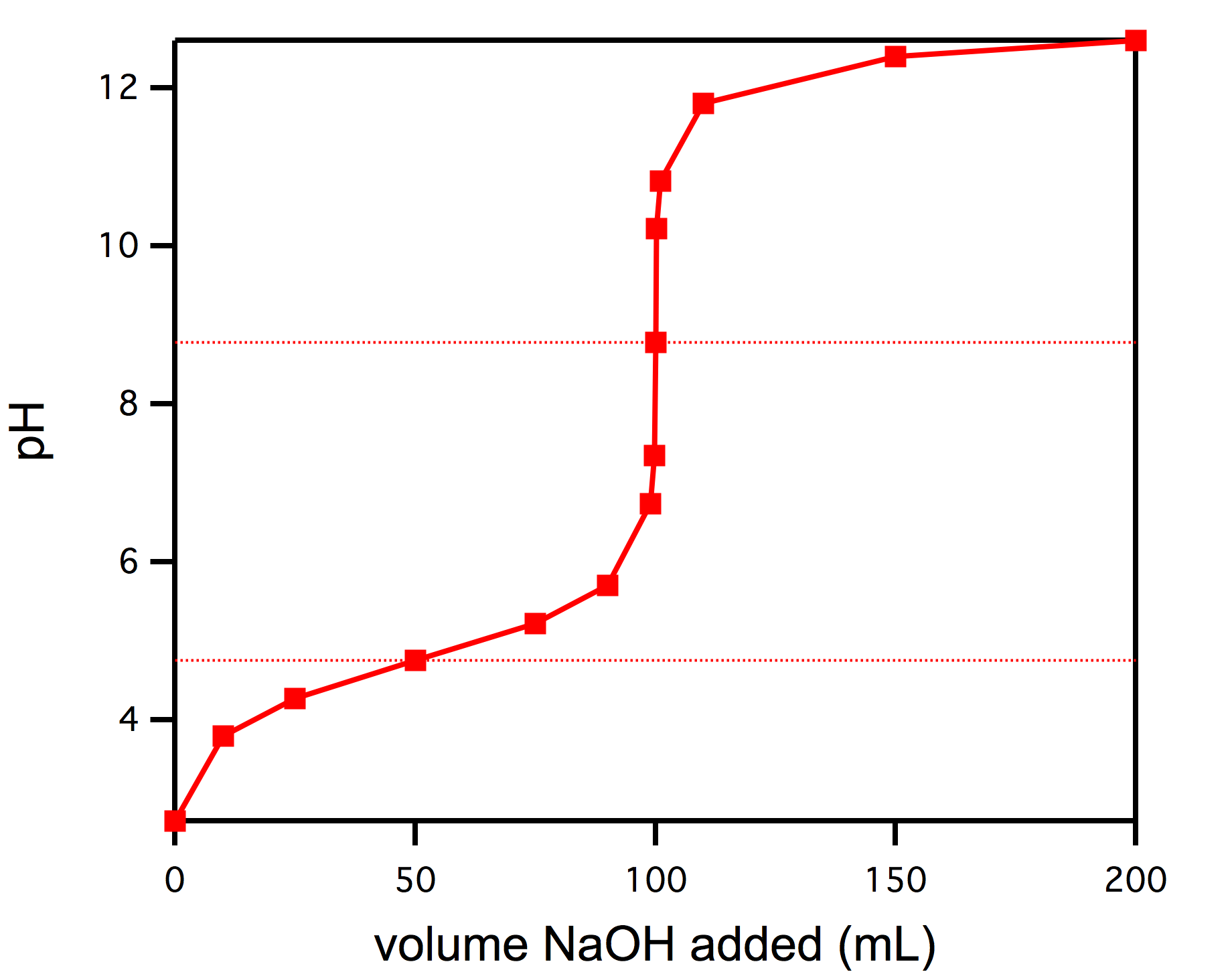
What is the pH at the equivalence point.

a)

The pH is approximately 5

b)

The pH is approximately 6

c)

The pH is approximately 8

d)

The pH is approximately 9

82.
What is the endpoint of a titration
a)
Where the amount of acid and base are equal as shown by a colour change 
b)
Where there is no base
c)
When the volume of base in the burette is used up 
d)
When there is no acid
83.
The pH at the equivalence point of the titration of a strong acid with a strong base is usually:
a)
acidic 3.9
b)
acidic 4.5
c)
neutral 7.0
d)
basic 8.2
84.

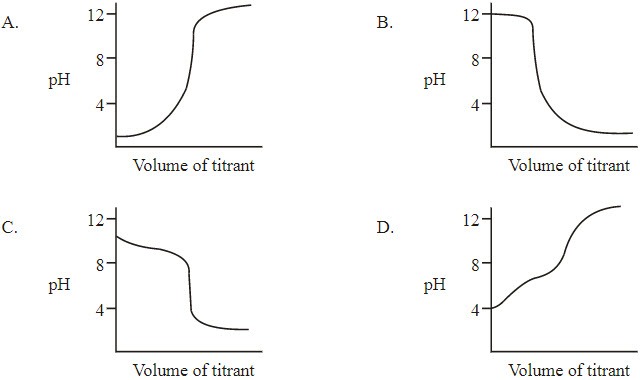
Which curve is produced by the addition of a 0.1 molL-1 strong acid to a 0.1 molL-1 weak base?

a)

A

b)

B

c)

C

d)

D

85.

Using the following equation:

Fe2O3(s) + 3H2(g) → 2Fe(s) + 3H2O(l)

How many moles of iron can be made from 6 moles H2 and excess Fe2O3?

a)

4 moles Fe

b)

6 moles Fe

c)

9 moles Fe

d)

2 moles Fe

86.
The limiting reactant
a)
slows the reaction down
b)
is used up first
c)
is the reactant that is left over
d)
controls the speed of the reaction
87.

A dilution is when

a)

solute is added to the volume of solution

b)

water is added to the volume of solution

c)

solute is removed from the volume of solution

d)

water is removed from the volume of solution

88.

What volume, in milliliters, of 10.0 M NaOH is needed to prepare 300.0 mL of 2.00 M NaOH by dilution?

a)

0.067 mL

b)

60.0 mL

c)

100 mL

d)

125 mL

89.
What is the molarity of a solution made by diluting 26.5 mL of 6.00M HNO3 to a volume of 250. mL?
a)
15.9 M
b)
0.636 M
c)
0.642 M
d)
1.59 M
90.
a)

beaker

b)

graduated cylinder

c)

Erlenmeyer flask

d)

test tube

91.
a)

crucible tongs

b)

beaker tongs

c)

forceps

d)

tweezers

92.

Which piece of equipment should be used to hold a hot test tube?

a)
b)
c)
d)
93.

How do you write 34,000 in scientific notation?

a)

3.4×1043.4\times10^4  

b)

34.0 ×10434.0\ \times10^4  

c)

341×10341\times10  

d)

.0034×108.0034\times10^8  

94.

The correct value based on reliable references is...

a)

experimental value

b)

value of error

c)

correct value

d)

accepted value

95.

Your lab has 3 digital balances and you periodically check them against a 50.00 gram mass standard to monitor their accuracy and precision.


You place the 50.00 g weight on each balance three times and record the masses they read.


Balance #1: 49.67 g ; 50.32 g ; 49.85 g


Balance #2: 47.83 g ; 58.35 g ; 36.87 g


Balance #3: 53.24 g ; 53.25 g ; 53.15 g


Which balance would be described as precise, but not accurate?

a)

1

b)

2

c)

3

96.
How many electrons can the first energy level hold?
a)
1
b)
2
c)
8
d)
0
97.
How many electrons can the d sublevel hold?
a)
8
b)
10
c)
2
d)
4
98.

When you have H-Cl, what is the polarity?

a)

nonpolar

b)

polar

c)

ionic

99.
What will allow more solute to be dissolved in a solvent.
a)
adding more solute
b)
stiring
c)
cooling solution
d)
heat
100.

Which Bohr model represents Neon?

a)
b)
c)
d)