
 Worksheets
Physical Science: Atom and Bonds Review
Total questions: 112
Worksheet time: 2hrs 40mins
Subatomic particles with a negative charge
Electrons
Neutrons
Protons
Quarks


What is the mass number?
the number of protons in the nucleus
the number of protons and neutrons in the nucleus
the number of neutrons in the nucleus
the number of protons and electrons in the atom

What does the 6 represent?
Atomic mass
atomic number
chemical symbol
element name
An atom has 10 protons, 15 neutrons and 10 electrons what is its mass number.
20
10
35
25

12 protons, 10 electrons, 12 neutrons
24Mg−2
24Cr+2
24Cr−2
24Mg+2
13 protons, 16 electrons, 13 neutrons
12 protons, 15 electrons, 14 neutrons
16 protons, 13 electrons, 13 neutrons


Which am I? (chicken soup)
Homogeneous mixture
Heterogenous mixture
A mixture in which its composition is the same throughout the mixture and it cannot easily be identified nor separated
Homogenous Mixture
Heterogenous Mixture
A mixture in which its composition is not the same throughout the mixture and particles or substances in the mixture can still be identified and separated
Homogenous Mixture
Heterogenous Mixture

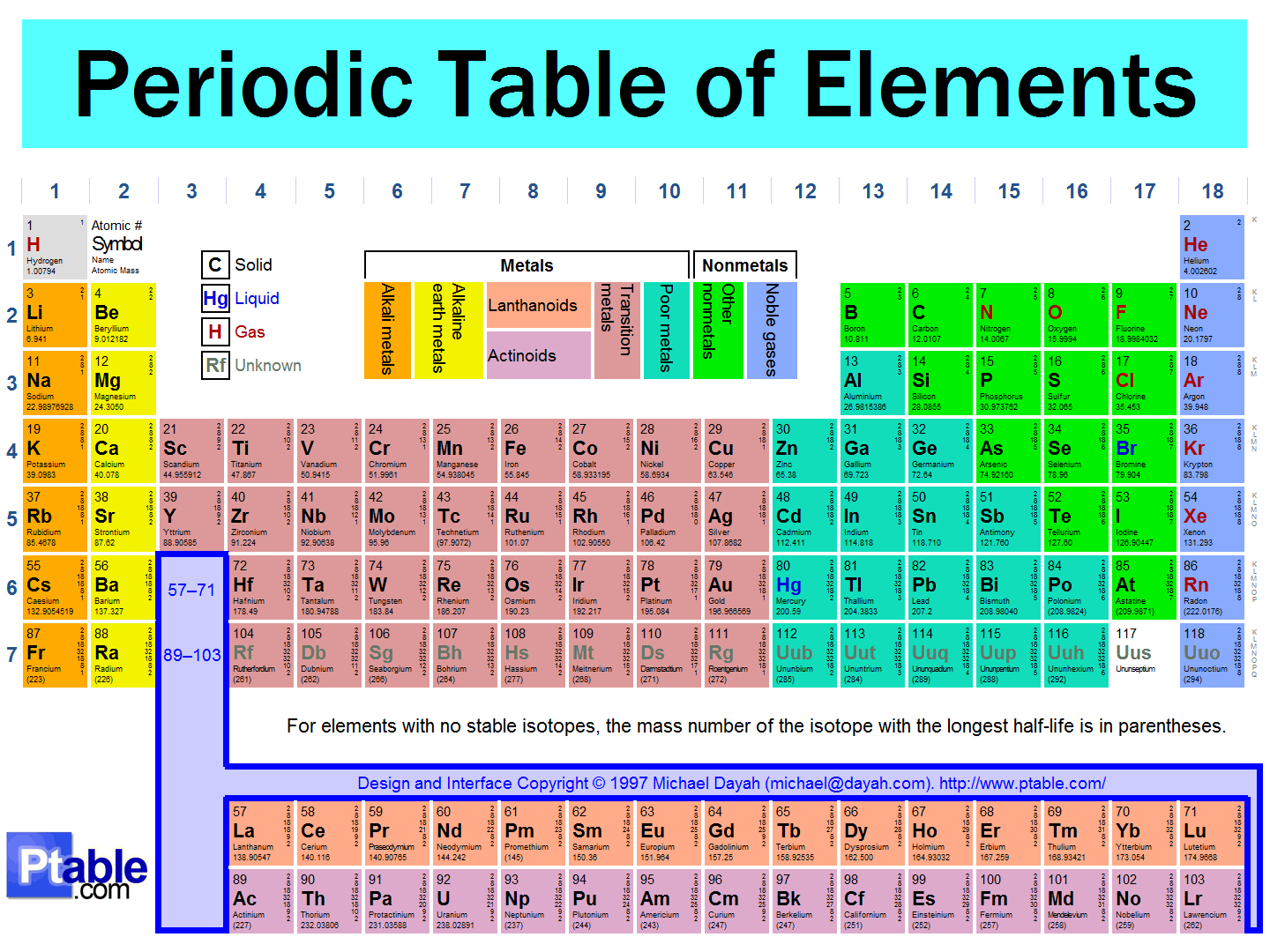
______________ refers to the way a metal can be hammered or rolled into thin sheets.
Luster
Malleable
Metalloids
Solid
This group of elements have properties that are opposite those of metals. ______________________
luster
nonmetals
metalloids
metals
Copper is a common metal. Which of the following properties does this metal most likely have?
High conductivity, high malleability, and low luster
Low conductivity, low malleability, and low luster
High conductivity, high malleability, and high luster
Low conductivity, high malleability, and high luster
the mass of an atom, calculated by adding the number of protons and neutrons in the nucleus of the atom
element name
element symbol
atomic number
atomic mass
a unique number for each element that equals the number of protons in an atom of that element
element name
element symbol
atomic number
atomic mass
an atom or group of atoms that has gained or lost one or more electrons and is now either positively or negatively charged
isotope
ion
orbital
nucleus
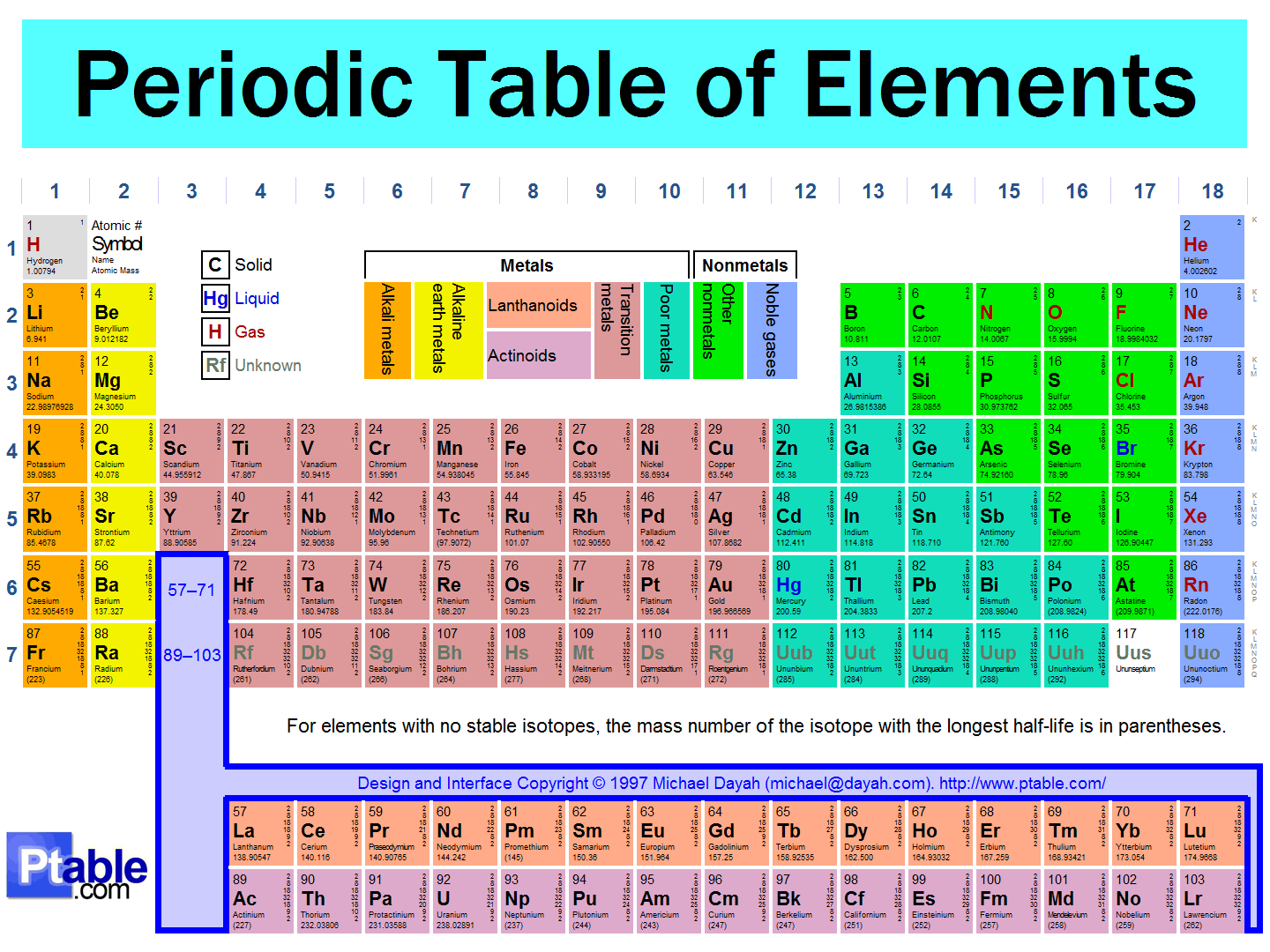
What are the three main groups of the periodic table?
groups
metal
nonmetals
metalloids
periods
What are the vertical columns on the periodic called?
groups
periods
nonmetals
metals
metalloids
What do the vertical columns on the periodic table tell us?
The number of orbitals
The number of valence electrons (electrons on the outer most shell)

What is the name of the element? (Periodic table will be needed)
sodium
magnesium
vanadium

What group and period does this element belong in? *
period 1 and group 3
period 3 and group 1
period 2 and group 3
period 3 and group 2
Which of the following is the most reactive in water?
Lithium
Sodium
Potassium
Iron
Which of the following is NOT an alkali metal?
Li
Mg
K
Cs
True or False: Alkali metals are so soft they can be cut with a knife?
True
False
What is the symbol for an aluminum ion?
Al3+
Al3–
Al+
Al
Alkali earth metals are found in which group of the periodic table?
Group 1
Group 2
Group 7
group 8
Which of these elements are Halogens?
Fluorine
Helium
Zinc
Bromine
What group are the Halogens?
6.9
7
8
3
As you move down the group, halogens' reactivity...
increases
decreases
doesn't change
shows no trend.
Are Halogens metallic?
True
False
6.15: Which of these is not a property of noble gases?
Colourless
Odourless
Flammable
Gas at room temperature

This is a correct dot diagram for nitrogen (N)
true
false

This is a correct dot diagram for neon (Ne)
true
false
Which of these is incorrect?


What are valence electrons?
The total number of electrons in an atom
The number of electrons in the outermost shell
The number of electrons in the second shell
The number of protons in the outermost shell
Which of these is correct?


How would you draw a Lewis dot diagram for Magnesium?


an element from Group 7
Why do ionic bonds form?
so the number of protons equals the number of electrons
to fill the outermost energy level to make the atom stable
so an atom can become unstable
if NONMETALS are more likely to GAIN electrons, they will form ...
anions
neutral atoms
cations
In the chemical formula for an ionic compound, which item is written first?
positive ion (cation)
negative ion (anion)
subscript
it's alphabetical
In an ionic bond, the ions are held together because...
the positive nucleus of each ion attracts the other ion's negatively charged electrons
the ions have opposite charges
as the electron moved from one atom to another it pulled the atom along with it
electrons are being shared
Which of the following pairs of elements could NOT react to form an ionic compound?
Carbon and Oxygen
Potassium and Fluorine
Silver and Oxygen
Aluminum and Chlorine
What is the oxidation state of H in H2?
+2
+1
0
None of the above
The name of FeCl₂ is
iron chloride
iron (II) chloride
iron (I) chloride
iron dichloride
LiBr is called
lithium bromine
lithium (I) bromine
lithium bromide
lithuim (I) bromide
Name the following ionic compound: BeCl2
beryllium chlorine
beryllium II chloride
beryllium chloride
beryllium dichloride
Name the following ionic compound: Cs2S
cesium sulfide
cesium sulfate
cesium II sulfate
cesium II sulfide
Which of the following combinations would need roman numerals in the name?
potassium + fluorine
beryllium + oxygen
boron + iodine
gold + oxygen
When naming a compound, which of these is written first?
Metal
Nonmetal
Anion
Cation
When naming a compound, what must the last part be?
the element with "ide" at the end
the element with the ending "ite"
the name of the element
the element with "ide" at the end, unless its a polyatomic ion
What is the name of the compound Na2(SO4)?
Sodium sulfate
Sodium sulfide
Sodium sulfite
Sodium sulfuroxide
The number that tells you if an ion has lost or gained electrons
atomic number
oxidation number
mass number
electron number
What is the name of the following compound: K2SO4
potassium sulfur
potassium sulfate
potassium (I) sulfate
potassium (II) sulfide
What is the name of CO?
carbon monoxide
copper oxide
carbon (I) oxide
copper monoxide

