
 Worksheets
Bio Final test second semester 2023
Total questions: 116
Worksheet time: 2hrs 56mins
Match the following:
Dominant Allele
A
Recessive Allele
a
Homozygous Dominant
BB
Homozygous Recessive
bb
Heterozygous
Bb
Which of the following are HOMOZYGOUS RECESSIVE?
AA
Aa
aa
Which of the following is HOMOZYGOUS DOMINANT
AA
Aa
aa
Which of the following is HETEROZYGOUS?
AA
Aa
aa
The genotype BB is...
Heterozygous
Homozygous Dominant
Homozygous Recessive
The genotype Bb is...
Heterozygous
Homozygous Dominant
Homozygous Recessive
Which is the correct key for the statement below?
In dogs, being large is dominant to being small.
KEY:
BB - large
Bb - small
bb - small
KEY:
BB - large
Bb - large
bb - large
KEY:
BB - large
Bb - large
bb -small
KEY:
BB - small
Bb - small
bb - large
Which is the correct key for the statement below?
In humans, brown hair is dominant to blonde hair.
KEY:
BB - brown
Bb - brown
bb - blonde
KEY:
BB - brown
Bb - blonde
bb - blonde
KEY:
BB - blonde
Bb - blonde
bb - brown
KEY:
BB - brown
Bb - brown
bb - brown
Which is the correct key for the statement below?
In plants, round peas are dominant to wrinkled peas.
KEY:
BB - wrinkled
Bb - round
bb - round
KEY:
BB - round
Bb - wrinkled
bb - round
KEY:
BB - round
Bb - round
bb - round
KEY:
BB - round
Bb - round
bb - wrinkled
Which is a dominant allele?
B
b
Which is a recessive allele?
B
b
In plants, being tall is dominant over being short.
What phenotype will be seen with the genotype: BB
Tall
Short
In plants, being tall is dominant over being short.
What phenotype will be seen with the genotype: Bb
Tall
Short
In plants, being tall is dominant over being short.
What phenotype will be seen with the genotype: bb
Tall
Short
An allele is
A different version of a gene
A genotype
a phenotype
a physical (observable) characteristic.
trait
personality
cell
DNA
Match the following:
Homozygous
SAME
Heterozygous
DIFFERENT
Dominant
BIG
Recessive
SMALL
Which is a genotype?
AA
Blue Eyes
Which is a phenotype?
AA
Blue Eyes

The end of mitosis results in ____ to each other.
2 cells that are identical
4 cells that are identical
2 cells that are not identical
4 cells that are not identical
Reorder the phases of mitosis
Prophase
Metaphase
Anaphase
Telophase
Reorder the phases of meiosis
Prophase I
Metaphase I
Anaphase I
Telophase I
Prophase II


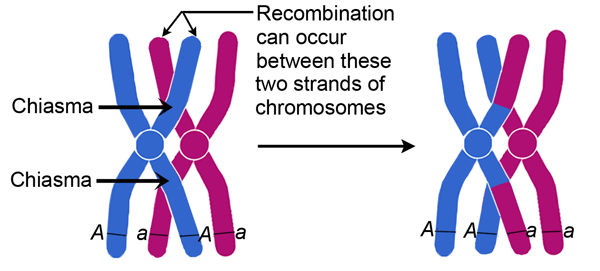
segregation of sister chromatids
condensation and segregation of alleles
mutationin which the DNA content of the gene is altered
crossing - over in which genes are exchanged
A chromosome is composed of two identical sister
centromeres
chromatids
autosomes
somatic cells
A pair of homologous chromosomes (a tetrad) is composed of (a) matching chromosomes, and (b) sister chromatids.
In which type of cell division does crossing over occur?
mitosis
meiosis
During meiosis, if an organism has 10 chromosomes, how many will the new daughter cells have?
10
8
5
2
During mitosis, if an organism has 10 chromosomes, how many will the new daughter cells have?
10
8
5
2
In mitosis the (a) daughter cells that are created are (b) . In meiosis the (c) daughter cells that are created are (d)
Which event is an important factor in increasing variety among sexually reproducing organisms?
crossing over
gene linkage
testcross
mitosis
In which phase of meiosis does the chromosome number change from diploid to haploid?
prophase I
anaphase I
prophase II
anaphase II
Select the image that represents meiosis:


Small grain-shaped organelles that produce proteins for the cell
Cytoplasm
Ribosomes
Lysosomes
Mitochondria
Rigid layer that surrounds the cell of plants and some other organisms such as fungi
Cell Wall
Golgi Apparatus
Chloroplast
Cell Membrane
Large oval structure that acts as the control center of the cell, directing all of the cells’ activities
Vacuole
Ribosome
Golgi Apparatus
Nucleus
Thick, clear, gel-like fluid that fills the region between the cell membrane and the nucleus
Mitochondria
Cytoplasm
Chloroplast
Nucleus
Rod-shaped organelles that convert energy in food molecules to energy the cell can use to carry out its functions
Mitochondria
Golgi Apparatus
Ribosomes
Endoplasmic Reticulum
An organelle that forms a maze of passageways in which proteins and other materials are carried from one part of the cell to another
Cell Wall
Endoplasmic Reticulum
Golgi Appartus
Cytoplasm
Organelle in a cell that receives proteins and other newly formed materials from the endoplasmic reticulum, packages them, and distributes them to other parts of the cell
Golgi Apparatus
Lysosome
Endoplasmic Reticulum
Chloroplast
Sac-like organelle that stores water, food, and other materials.
Cell Wall
Nucleus
Ribosome
Vacuole
Organelle in the cells of plants and some other organisms that captures energy from sunlight and changes it to an energy form that cells can use in making food
Cell Wall
Chloroplast
Cell organelle which contains chemicals that break down large food particles into smaller ones that can be used by the rest of the cell
Lysosome
Ribosome
Nucleus
Cytoplasm
Semipermeable membrane, surrounding a cell that controls what goes into and out of the cell
Cell Wall
Lysosome
Nucleus
Cell Membrane
Why is the sensation of thirst important to maintaining homeostasis?
Water removed by the kidneys must be replaced
Oxygen cannot diffuse into cells if a person is dehydrated
Water molecules are needed to carry carbon dioxide waste to the kidneys

Why does pulse rate increase during exercise?
Oxygen and carbon dioxide must be removed from the body ASAP
Gas exchange must happen more quickly than when a person is at rest
Oxygen must be moved to the lungs and carbon dioxide must be moved to cells more quickly
Carbon dioxide must be moved to the kidneys to be excreted
The group of organisms that use the process of homeostasis includes
mammals, only
animals, only
plants and animals
all living things


If a person's blood cells shrivel (shrink) their blood is likely
isotonic
hypotonic
hypertonic

Which of the following is most likely to cause a person's blood cells to burst?
eating many salty foods
eating many greasy foods
drinking small amounts of water
drinking very large amounts of water
Which of the following is NOT an example of homeostasis?
A human producing gametes
A plant bending toward sunlight
A bird drinking water when thirsty
A dog stealing chicken off the kitchen counter when hungry
Which kingdoms are made up of prokaryotes?
Eubacteria and Archaebacteria
Protists and Fungi
Plantae and Animalia
Prokaryotic and Eukaryotic
How many times larger is a eukaryotic cell than a prokaryotic cell?
5 times
10 times
50 times
100 times
Which type of cell appeared first on Earth?
Prokaryotic Cells
Eukaryotic Cells
Animal Cells
Plant Cells
Which of these is not a Eukaryotic Kingdom?
Protists
Fungi
Bacteria
Animalia
Which of these organisms are not eukaryotes?
Yeast
Algae
Fungi
Bacteria
Which of these organisms are not prokaryotes?
Fungi
E-coli
Streptococcus
Bacteria
These cells have genetic material that is 50% from one parent and 50% from the other parent.
Prokaryotic
Eukaryotic
Prokaryotic cells reproduce
Sexually
Asexually
Prokaryotic cells do not have
DNA
Cell membrane
Cytoplasm
Nucleus
Which type of cell has membrane bound organelles?
Prokaryotic Cells
Bacteria Cells
Eukaryotic Cells
E-coli bacterium
Which of these structures do prokaryotes and eukaryotes share?
Nucleus
Cell Wall
Organelles
Ribosomes
Prokaryotes were the first type of organism to evolve.
True
False
What kinds of organisms contain prokaryotic cells?
Fungi
Animals
Plants
Bacteria
The prefix "Eu" and suffix "kary" indicate that prokaryotic cells have
No nucleus
A true nucleus
Before nucleus
No kernel
This type of cell can be unicellular or multicellular
Bacteria
Prokaryotic
Amoeba
Eukaryotic
One single chromosome of DNA attached to the cell membrane is found in this type of cell.
Animal
Plant
Prokaryotic
Eukaryotic
Which kingdoms are made up of prokaryotes?
Eubacteria and Archaebacteria
Protists and Fungi
Plantae and Animalia
Prokaryotic and Eukaryotic
How many times larger is a eukaryotic cell than a prokaryotic cell?
5 times
10 times
50 times
100 times
Which type of cell appeared first on Earth?
Prokaryotic Cells
Eukaryotic Cells
Animal Cells
Plant Cells
Which of these is not a Eukaryotic Kingdom?
Protists
Fungi
Bacteria
Animalia
Which of these organisms are not eukaryotes?
Yeast
Algae
Fungi
Bacteria
Which of these organisms are not prokaryotes?
Fungi
E-coli
Streptococcus
Bacteria
These cells have genetic material that is 50% from one parent and 50% from the other parent.
Prokaryotic
Eukaryotic
Prokaryotic cells reproduce
Sexually
Asexually
Prokaryotic cells do not have
DNA
Cell membrane
Cytoplasm
Nucleus
Which type of cell has membrane bound organelles?
Prokaryotic Cells
Bacteria Cells
Eukaryotic Cells
E-coli bacterium
Which of these structures do prokaryotes and eukaryotes share?
Nucleus
Cell Wall
Organelles
Ribosomes
Prokaryotes were the first type of organism to evolve.
True
False
What kinds of organisms contain prokaryotic cells?
Fungi
Animals
Plants
Bacteria
The prefix "Eu" and suffix "kary" indicate that prokaryotic cells have
No nucleus
A true nucleus
Before nucleus
No kernel
This type of cell can be unicellular or multicellular
Bacteria
Prokaryotic
Amoeba
Eukaryotic
One single chromosome of DNA attached to the cell membrane is found in this type of cell.
Animal
Plant
Prokaryotic
Eukaryotic
Which statement was NOT included in cell theory?
All living things are composed of cells.
Living cells come only from other living cells.
Each cell contains a cell membrane, cytoplasm, nucleus, mitochondria, and endoplasmic reticulum.
Cells are the smallest structure of living things that can perform the functions necessary for life.
Which instrument is credited for helping scientists develop cell theory?


This early cell theory scientist looked in a microscope and discovered "animalcules" in the gunk from his teeth and pond water.
Schleiden
Leeowenhoek
Hooke
Virchow
Schwann
Who discovered and named cells while looking at cork?
Captain Hook
Robert Hooke
Matthais Schleiden
Rudolf Virchow
What was Schleiden convinced of?
All plants are made of cells
All animals are made of cells
All cells are prokaryotic
None of the above
Who noted that all animals are made of cells and helped write the first two parts of cell theory?
Rudolf Virchow
Anton van Leeuwenhoek
Theodor Schwann
Robert Hooke
Who discovered that all cells come from other living cells and had research that lead to the last major principle of cell theory?
Matthias Schleiden
Theodore Schwann
Robert Hooke
Rudolf Virchow
These three scientists together helped come up with the second part of the cell theory (all living things are made of one or more cells). CHOOSE 3 ANSWERS
Schleiden
Leeowenhoek
Hooke
Virchow
Schwann

Robert Hooke, Anton van Leeuwenhoek, Theodor Schwann, Rudolf Virchow, and Matthias Schliden were all responsible for what theory?
The Theory of Gravity
The Theory of Relativity
The Cell Theory
The Theory of Continental Drift
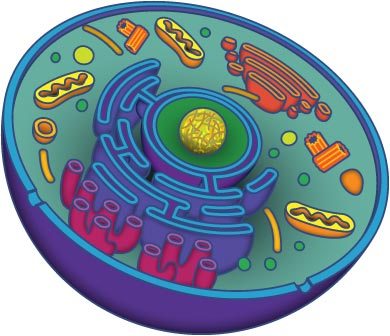
All living things are made up of...
cells
tissues
organ
organ systems
What is the basic structural and functional unit of all living things?
atom
cell
bacteria
animalcules
All cells -----
come from other dead cells
come from other living cells
crystallize out of the air

