
 Worksheets
Final Test
Total questions: 60
Worksheet time: 35mins
A living individual
organism
cell
response
stimulus
The basic unit of structure and function in living things.
organism
cell
response
stimulus
__________ organisms consist of many cells. Humans are __________ organisms with trillions of cells specialized to do certain tasks.
single celled
multicellular
The most common chemical in cells is ___________, which is essential for life.
carbohydrates
water
protein
lipids
All organisms need ________ to power their cells.
stimuli
energy
sunlight
to eat
All cells need energy (ATP) to function. Which cell organelle is responsible for producing energy in the cell? "The Powerhouse"
chloroplasts
mitochondria
nucleus
vacuoles


What is evidence ?
Answers a question
Anything you see, hear or read or experience that causes you to believe something is true.
Long and detailed paragraph
What is an example of evidence?
Football players are 33% more likely to get injured than baseball players.
Football is more dangerous than baseball.
Baseball is a fun sport.
Which system is the control center of the body?
immune
circulatory
nervous
muscular
Which system enables movement of the body?
skeletal
nervous
muscular
respiratory
Which system breaks down food?
excretory
circulatory
respiratory
digestive
What is the ultimate source of energy in any food chain?
the sun
producers
consumers
decomposers
Weather (such as rain) and soil conditions are considered to be part of the ____________ factors of an ecosystem.
biotic
antibiotic
abiotic
biomass
What is an example of a biotic factor?
water
grass
soil
unicellular
an organism that has to get its energy/nourishment from eating DIFFERENT organisms
organisms that do not have a nucleus. they came BEFORE eukaryotic cells
an organism made of MANY cells (animals for example)
an organism made of only ONE cell (bacteria for example)
multicellular
organisms that do not have a nucleus. they came BEFORE eukaryotic cells
the smallest unit of living things
an organism made of MANY cells (animals for example)
organisms with a TRUE nucleus!
When you smell food, your mouth waters.
When you smell food, your mouth waters.
Biology is best defined as the study of;
The human body
Living organisms
The environment
Botany
The human body is made up of approx.;
100 thousand cells
100 million cells
100 billion cells
100 trillion cells


The effect of temperature on the relative rate of enzyme activity is shown.
Which statement is a valid conclusion based on the information in the graph?
The maximum rate of human respiration occurs at about 57°C.
The maximum rate of human digestion occurs at about 45°C.
Growth can be controlled by the action of an enzyme.
Temperature can influence the action of an enzyme.

Hydrogen and carbon
Oxygen and carbon

What does a major extinction mean?
Significant drops in biodiversity.
When everything on earth (plants & animals) are destroyed and never to be seen again.
When all the animals leave to go to another continent.
When abiotic factors start to die.
What do you breath out?
Oxygen (O2)
Carbon Monoxide (CO)
Carbon Dioxide (CO2)
Nitrous Oxide (N2O)
What is the correct equation for cellular respiration?
6O2 + C6H12O6 -> 6CO2 + 6H2O + Energy
6CO2 + 6H2O -> 6O2 + C6H12O6 + Energy
6O2 + C6H12O6 + Energy -> 6CO2 + 6H2O
6CO2 + 6H2O + Energy -> 6O2 + C6H12O6
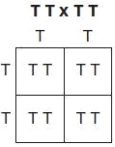
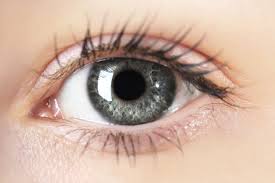
b = blue eyes
What is true about these two brothers that have brown eyes?
One has genotype BB the other Bb.
G = green, g = yellow
The genotype for a yellow plant is...
GG
Gg
gg
all of the choices result in yellow
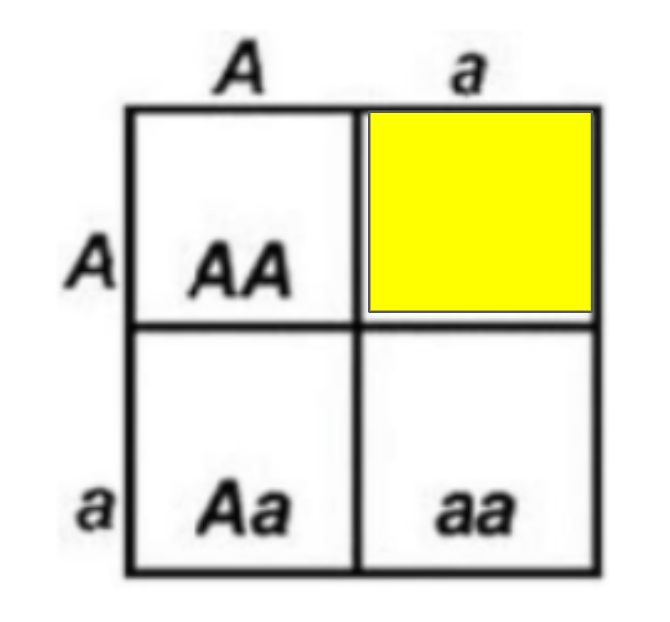
Fill in the Yellow Box
AA
Aa
aa
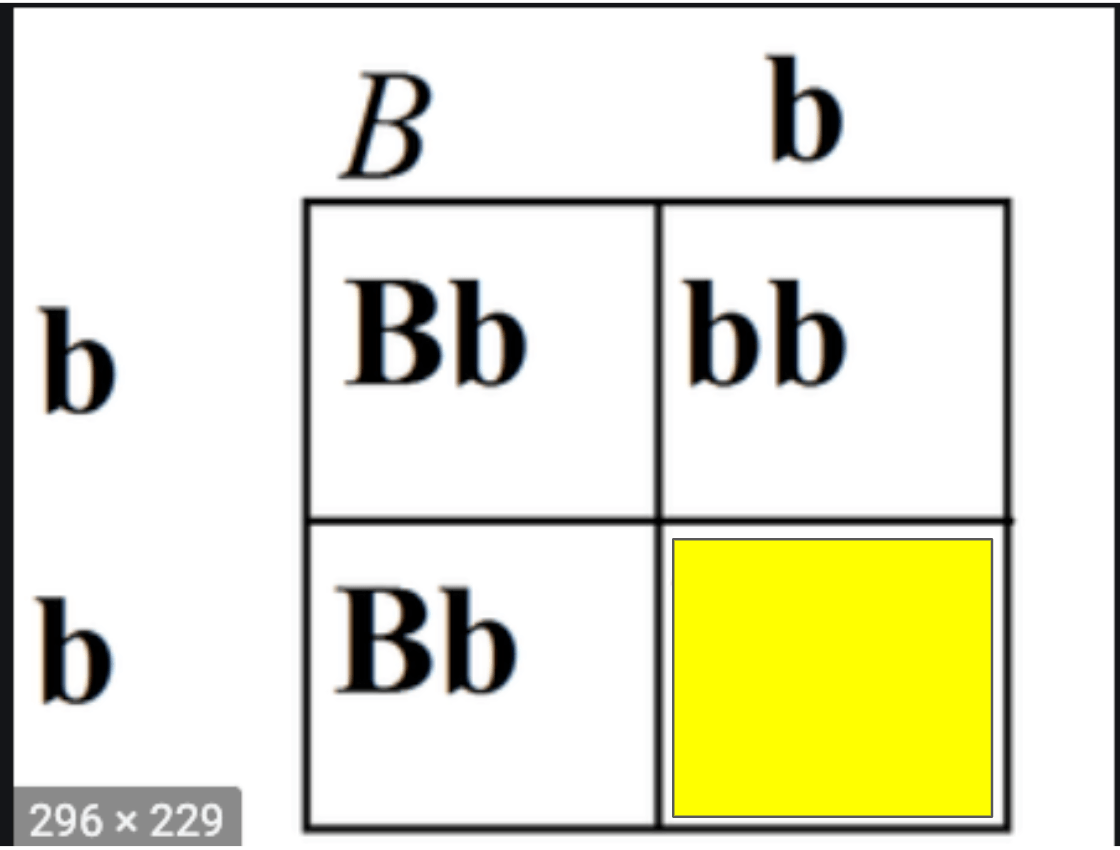
Fill in the Yellow Box
Bb
BB
bb
A student noticed that the freshwater plant, Elodea, produced bubbles when placed in direct light. What could the student most likely conclude?
Bubbles of carbon dioxide were produced as a result of photosynthesis.
Bubbles of oxygen were produced as a result of photosynthesis.
Bubbles of carbon dioxide were produced as a result of cellular respiration
Bubbles of oxygen were produced as a a result of cellular respiration
When the carrying capacity for a species in a habitat is reached, the population of the species levels off. This slowing of the rate of growth is most likely due to
limited resources
renewable energy
an increase in decomposers
a lack of competition
During a woman’s menstrual cycle, ovulation occurs and an egg is released. This process is important because it allows for
eggs to be produced by mitosis and be fertilized by a sperm
sperm to fertilize the egg in the uterus
multiple sperm to fertilize one egg, which then forms the placenta
the egg to leave the ovary and be fertilized by a sperm
Which characteristic is common to most types of cancer?
production of low levels of ATP
inadequate levels of antigens
rapid and uncontrolled cell division
destruction of red blood cells

"X" most likely represents
molecules
organelles
tissues
ribosomes

The diagram represents an energy pyramid. In this pyramid, the greatest amount of stored energy is found at level
Level A
Level B
Level C
Level D
A certain species of plant serves as the only food for the young larvae of a particular species of butterfly. In a large field, a disease kills all the members of this plant species. As a result of the plant disease, the butterfly population will most likely
quickly adapt to eat other plants
disappear from the area
evolve to form a new species
enter the adult stage more quickly
The hair colors of the members of a family are listed below.
mother – brown hair
father – blond hair
older son – brown hair
younger son – blond hair
The hair colors of the sons are most likely a direct result of
natural selection in males
heredity
evolution
environmental influences
An example of recycling is
using a paper cup instead of a mug
turning off the lights when leaving a room
using plastic from a soda bottle to make a certain type of clothing
using two paper towels rather than five to clean up a spill

The diagram represents a food web in a pond ecosystem. Two carnivores in the food web are
bass and small invertebrates
small vertebrates and crabs
water plants and clams
crabs and crayfish
Organisms that live on land rarely compete for
food
space
water
oxygen
Two kittens in a litter are genetically different from each other and from their parents. These genetic differences are most directly due to
sexual reproduction
asexual reproduction
cloning
evolution
In which cell structure is energy extracted from nutrients?
chloroplast
ribsome
mitochondrion
vacuole


What do limiting factors do to a population?
Slows or stops population growth
Speeds up or increases the population
_____________ refers to all the different kinds of living organisms within a given area.
Biodiversity
Biology
Biome
Ecology

What is this diagram know as?
Food Web
Energy Pyramid
Biomass Chart
Biome

Which organism has the most energy stored in their cells?
Grass and Wildflowers
Mouse
Snake
Hawk
A park is home to a large number of robins, squirrels, and rabbits. The robins and squirrels live in the park’s trees. The robins feed on earthworms and insects that live on the ground. The squirrels eat the acorns produced by the park’s oak trees. The rabbits hide in the bushes and feed on the grass. Which factor would directly limit the number of robins and squirrels that could live in this park?
number of acorns
number of robins
number of squirrels
number of trees

