
 Worksheets
All the subject (22/23)
Total questions: 117
Worksheet time: 2hrs 27mins

Cells are...
groups of tissues that together carry out a particular function.
groups of organs that together carry out a particular function.
the structural and functional units of all living things.
only found in animals.

Tissues are...
groups of cells that together carry out a particular function.
groups of organs that together carry out a particular function.
the smallest functional units of all living things.
only found in animals.

When it comes to biological organisation, the highest level is...
cells.
organs.
body systems.
organisms.

Organs are...
groups of cells that together carry out a particular function.
groups of tissues that together carry out a particular function.
groups of body systems that make up an organism..
unicellular.
The nuclear membrane encloses a jelly-like fluid called the ____________
Nucleopasm
Cytoplasm
Lysosome
Rybosome
What are a stacked, flattened, membrane bound vesicles?
Golgi bodies
Mitochondria
Plastid
Rybosomes
Which of the following does NOT have rybosomes attached to it?
Rough endoplasmic reticulum(RER)
Smooth endoplasmic reticulum(SER)

Where are proteins made?
Golgi body
Mitochondria
Chromosomes
Ribosomes
The gym
How many chromosomes are there in each cell?
47
48
46
50
This question is about an animal cell.
How do you describe a cell that has a nucleus?
Eukaryotic
Prokaryotic
Archaea
Bacteria
Muscles are located in all the following EXCEPT
in the digestive tract
in the heart
attached to bones
inside bones
The two ways to classify epithelium cells are
number and size
shape and color
shape and number of layers
color and number
Connective tissue are the most abundant tissue in the body.
True
False
The four types of tissue are
muscle, transitional, epithelial, connective
muscle, nervous, epithelial, connective
muscle, epithelial, connective, squamous
cardiac, transitional, epithelial, connective


The type of type that includes blood
epithelial
muscle
connective
nervous
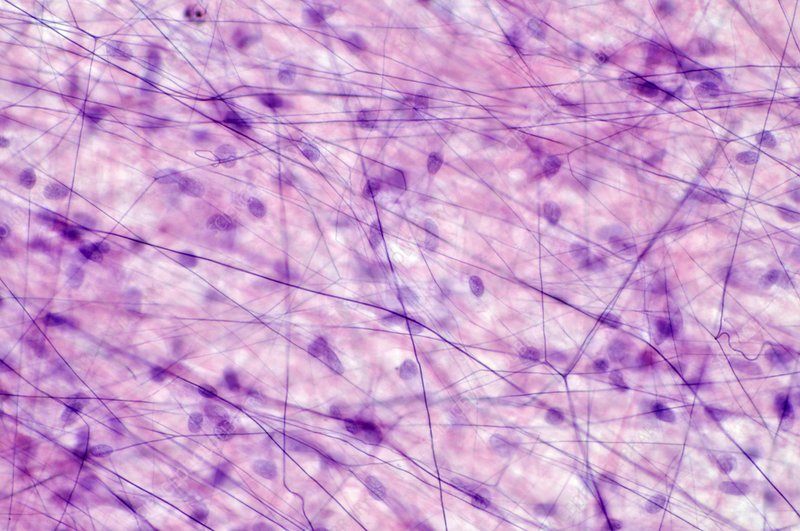
What type of tissue is this?
Loose connective tissue
Dense connective tissue
Elastic connective tissue
Hyaline connective tissue
Nerve tissue is made up of:
neurons and neuroglial cells
connective and muscle tissue
neurons and epithelial cells
muscle tissue and neuroglial
What type of digestion takes place in the stomach?
mechanical
chemical
both mechanical and chemical
What enzyme is found in saliva that starts digesting carbohydrates?
amylase
chyme
pepsin
bile
Where does the absorption of nutrients from food take place?
stomach
liver
small intestine
large intestine
What makes the small intestine have such a large surface area?
21 feet long
villi
microvilli
all answers contribute
What chemically breaks down food into smaller molecules?
teeth
muscles of the stomach
enzymes
What are the rhythmic muscular contractions of your esophagus called to help food move along?
swallowing
peristalsis
inertia contractions
paralysis
What does the pancreas do?
produces digestive enzymes to break down proteins and fats
produces sodium bicarbonate to neutralize stomach acid
regulates our blood sugar levels
all answers are correct
Which shows the correct order of digestion?
mouth, pharynx, stomach, small intestines, esophagus
pharynx, esophagus, stomach, small intestines, large intestines
mouth, esophagus, large intestines, stomach, small intestines,
stomach, large intestines, esophagus, small intestines
Where is the bile stored?
Liver
Gall bladder
Pancreas
Small intestine
At the end of the digestion process, fat will be broken down into
fatty acid and glycerol
glucose
amino acid
fatty acid
These nutrients supply your body with energy, form your cells, maintain body temperature, and protect your nerves.
Carbohydrates
Proteins
Fats
Vitamins and Minerals
These nutrients supply your body with energy and aid in the growth and repair of your body's tissues.
Carbohydrates
Proteins
Fats
Vitamins and Minerals
The role of fibre is to
Strengthen teeth and bones
Keep the digestive system healthy
Provides the body with energy
Repairs muscle and tissues
Vitamin C is important because...
It keeps the immune system healthy
Provides the body with energy
Improves eye health and vision
Reduces the risk of brittle bones
Which of the following two statements define a macro and micro nutrient.
A macro nutrient is a nutrient needed in large quantities.
A macro nutrient is a nutrient needed in small quantities.
A micro nutrient is a nutrient needed in large quantities.
A micro nutrient is a nutrient needed in small quantities.


Name structure A
Collecting duct
Proximal convoluted tubule
Distal convoluted tubule
Glomerulus

Name Structure B
Bowmans Capsule
Loop of Henle
proximal Convoluted tubule
Collecting duct
Which 3 molecules compose the glomerular filtrate
Salt
Proteins
Glucose
Water
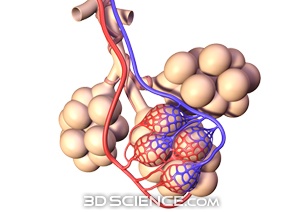
1. larynx
2. nasal cavity
3. pharynx
4. trachea
Which of the following is the correct order that air would flow during inhalation.

What keeps your bronchi and bronchiole tubes open?
cartilage rings
ligament squares
ciliated cells
muscle
Gaseous exchange happens because of...
Osmosis
Respiration
Diffusion
Semi-permeable membranes
An inflammation or infection of the lungs characterized by exudate in the alveoli.
pneumonia
tuberculosis
asthma
emphysema

What is a natural sugar found in milk?
Gluten
Histamine
Lactose
A medical term referring to the Inflammation of the GI tract, usually the stomach and the intestines
Gastroenteritis
Colic
Foreign Body
Intussusception
What transports lymph fluid back to the circulatory system?
Lymph
Lymph Vessels
Lymph Nodes
Lymph Glands
Which is not an organ of the Lymphatic system?
Spleen
Thymus
Tonsils
Liver
Interstitial fluid is collected by.........
Blood capillaries
Lymphatic capillaries
Nerve cells
The thymus
Fatima has blood pressure 183/81, what is Fatima's systolic pressure?
81
183
183/81
81/183
What is "normal" blood pressure
120/110 mmHg
120/80 mmHg
100/80 mmHg
140/80 mmHg
The largest veins in the body
Vena cava
Aortas
Ventricles
Atriums
What is the main function of the endocrine system?
It creates chemicals, or hormones, that are sent around the body to maintain homeostasis.
It creates electrical messages that are sent around the body to maintain homeostasis.
It maintains the correct level of oxygen in the body to maintain homeostasis.
It releases waste from the body to maintain homeostasis.

When you get cut, your skin cells release hormones that signal platelets to come and stop the bleeding. Platelets then release more hormones that signal even more platelets to help stop bleeding. The hormone signals continue until the cut is closed. This is an example of what type of feedback?
Positive Feedback Response
Negative Feedback Loop
Hormones travel through the blood and encounter many cells. How do they affect ONLY target cells?
Target cells have receptors that match up with the hormone
Target cells send out signals that attach to hormones and draw them to the cell
Target cells have cell membranes with a different composition
Magic!

Indicate what of the following parts of the nervous system are part of the Peripheral Nervous System (PNS).
Brain
Autonomic nervous system
Spinal nerves
Spinal cord
Cranial nerves

Choose the correct answer
1.Axon terminal 2.Dendrite 3.Axon 4. Cell body 5. Nucleus 6. Schwann cell 7. Node of Ranvier.
1.Dendrite 2. Cell body 3.Nucleus 4. Node of Ranvier 5. Axon 6.Schwann cell 7.Axon terminal
1.Dendrite 2.Cell body 3.Nucleus 4.Schwann cell 5. Axon 6. Node of Ranvier 7. Axon terminal.
1.Axon terminal 2.Cell body 3.Nucleus 4.Schwann cell 5.Axon 6.Node of Ranvier 7.Dendrite.
What part of the nervous system is responsible for slowing down breathing and pulse?
Spinal Nerves
Sympathetic
Parasympathetic
Spinal Nerves
What do the motor neurons do?
carry messages from the brain and spinal cord to muscles and glands
carry impulses from skin and sends to organs the to spinal cord and brain
carry impulses from sensory neurons to motor neurons
store messages
Muscle is connected to bone by ________.
El músculo está conectado al hueso por ________.
(a)
Bone is connected to other bones by _____.
El hueso está conectado a otros huesos por _____.
tendon
ligament
duct tape
bungee cords

This muscle flexes the trunk (4)
rectus abdominus
pectoralis major
sartorius
trapezius

What are the three functions of the muscular system?
Movement, digestion, blood circulation
support, makes new blood cells, provides homeostasis
storage, movement, blood circulation
digestion, movement, provides homeostasis
Where is marrow found?
In the cartilage
In compact bone
in spongy bone
in the periosteum


The green arrow is pointing towards what?
Lens
Retina
Cataract
Iris
The five basic tastes the tongue can detect
Sweet, Spicy, Sour, Salty, Umami
Sweet, Bitter, Sour, Salty, Umami
Sweet, Bitter, Sour, Salty, Spicy
Sweet, Bitter, Spicy, Salty, Umami

The semicircular canals help you to
Hear
Maintain balance
See
Smell
What is the main reproductive organ in females? What hormone does it secrete?
Testes: Estrogen
Testes: Testosterone
Ovaries: Estrogen
Ovaries: Testosterone
What is designed to cushion and protect the growing fetus?
fallopian tubes
amniotic fluid
overaries
placenta
LH and FSH are produced only in the ovaries.
True
False
The mature egg cell goes into the fallopian tube where it waits for a sperm cell. Thus, the fallopian tube serves as the site of fertilization.
True
False
What is the periodic shedding of tissues and blood from the inner lining of the
uterus?
menopause
ovulation
pregnancy
menstruation
It stimulates the production of sperm cells in seminiferous tubules in males, and stimulates the egg maturation in the female ovaries.
GnRH
LH
FSH
hCG
It is the hormone released by the ovaries which regulates the condition of the endometrium or the inner lining of the uterus.
estrogen
progesterone
oxcytoxin
inhibin
It stimulates the secretion of steroids from the reproductive glands. In males, it stimulates the secretion of testosterone while in female it stimulates ovulation.
luteinizing hormone
luitenizing hormone
lutenizing hormone
lotinising hormone
What is considered as the ovulation day for regular menstrual cycle?
1st day
7th day
14th day
28th day
The menstrual cycle temporarily stops during _____.
adolescence
puberty
pregnancy
ovulation
Which of the following doesn’t happen during ovulation?
A mature egg is released from the ovary.
A slight increase in body temperature can be observed.
Cervical mucus increases in volume and becomes thicker.
Menstrual periods are irregular and can be late for up to 10 days or more.
In males, which is the correct pathway of sperms release?
Seminiferous tubules - Vas deferens - Epididymis - Urethra
Vas deferens - Seminiferous tubules - Epididymis - Urethra
Epididymis - Vas deferens - Seminiferous tubules - Urethra
Seminiferous tubules - Epididymis - Vas deferens - Urethra
hCG is the hormone detected by pregnancy tests.
TRUE
FALSE

