wayground logo

Free Printable Worksheets

NEW

Font size

S
M
L
XL
Worksheets

Physical Science Pre-Test

Total questions: 65

Worksheet time: 2hrs 47mins

Name
Class
Date
1.

The number of protons in the nucleus of an atom; used to determine an element's position in the Periodic Table.

a)

subatomic particle

b)

electrical charge

c)

atomic number

d)

electron cloud

2.

The positively charged center of an atom containing the protons and neutrons

a)

period

b)

electron cloud

c)

subatomic particle

d)

nucleus

3.

The horizontal rows on the Periodic Table.

a)

periods

b)

families

c)

groups

d)

neutrons

4.

A positively charged particle within the atomic nucleus; used to identify an element.

a)

element

b)

proton

c)

neutron

d)

electron

5.

In the periodic table shown, what is the GREEN section (staircase)?

a)

Metals

b)

Nonmetals

c)

Metalloids

d)

Gasses

6.

What is the ATOMIC NUMBER in this element tile?

a)

28

b)

Ni

c)

Nickel

d)

58.693

7.
What is a valence electron?
a)
an electron that is found in the outermost shell of an atom. 
b)
an electron found in the innermost shell of an atom.
c)
an electron found in the middle shell.
8.

Which type of bond is formed from the sharing of electrons?

a)

ionic bond

b)

covalent bond

9.

Which set of elements is most likely to form an ionic compound?

a)

Na and O

b)

C and O

c)

Na and K

10.

KBr

a)

Potassium Bromide

b)

Potassium bromine

c)

Bromine Potassium

d)

Bromide Potassium

11.
phosphorus trichloride
a)
KCl3
b)
PCl3
c)
K3Cl
d)
P3Cl
12.
What is the Law of Conservation of mass?
a)
Mass is created in a chemical reaction
b)
Mass is created in a physical change
c)
New chemicals formed from a chemical reaction have a larger overall mass than the original reactants
d)
Mass is never created or destroyed
13.

How many oxygen atoms are in this chemical formula?

a)

6 oxygen atoms

b)

2 oxygen atoms

c)

3 oxygen atoms

d)

4 oxygen atoms

14.
Which side of a chemical equation os the product side?
a)
Left (before the yields sign)
b)
Right (after the yields sign)
15.

__ Al + __ FeO → Al2O2 + __ Fe

a)

1, 1, 2

b)

2,1,2

c)

2, 2, 2

d)

2,4,2

16.
What is the type of reaction shown at the top?
a)
Synthesis
b)
Decomposition
c)
Single Replacement
d)
Double Replacement
17.

Identify the type of reaction:

ZnCl2 + Mg --> Zn + MgCl2

a)

Precipitate

b)

Single Replacement

c)

Double Replacement

d)

Decomposition

18.

A substance doing the dissolving, usually the part of a solution present in the larger amount

a)

solvent

b)

solute

c)

solution

d)

solubility

19.

a substance being dissolved, usually the part of the solution in the lesser amount

a)

solvent

b)

solute

c)

solubility

d)

concentration

20.

a substance that vigorously reacts with most metals to produce hydrogen; it readily conducts electricity; it turns litmus red and has a pH of less than 7; it typically is corrosive or sour-tasting

a)

acid

b)

base

c)

neutral

d)

solution

21.

a substance that does not react with most metals or readily conduct electricity; it turns litmus blue and has a pH of greater than 7; it typically feels slippery and is bitter-tasting

a)

acid

b)

base

c)

neutral

d)

solution

22.

describes how much solute has been dissolved in a solution and is expressed in some kind of ratio

a)

conductivity

b)

solute

c)

concentration

d)

solubility curve

23.

The Law of the Conservation of Energy states:

a)

Energy can be trapped and stored

b)

Energy can be created as needed

c)

Energy cannot be created or destroyed

d)

Energy can be created and modified

24.

Molecule

a)

a particle made of two or more atoms.

b)

temperature scale on which water freezes at 32 degrees and boils at 212 degrees

c)

two or more atoms held together- a water molecule is two hydrogens atoms and one oxygen atom

d)

A molecule composed of one kind of atom; cannot be broken into simpler units- ex hydrogen, helium, gold

25.

During A to B what phase of matter is the substance?

a)

Solid

b)

Liquid

c)

Gas

d)

Plasma

26.

Where is melting occurring?

a)

A

b)

B

c)

D

d)

E

27.
When Volume increases then Pressure must...
a)
Increase
b)
Decrease
28.
If a balloon is cooled what will happen to the volume?
a)
Volume will increase
b)
Volume will decrease
c)
Volume will not change
29.
What energy transformations take place when a battery-operated radio is in use?
a)
Electrical to chemical to light
b)
Sound to chemical to mechanical
c)
Chemical to electrical to sound
d)
Light to electrical to thermal
30.
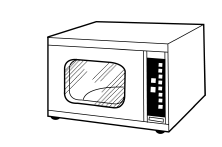
The picture shows a microwave oven. As a microwave oven is operated, electrical energy is transformed into all of the following types of energy EXCEPT —
a)
solar
b)
light
c)
thermal
d)
mechanical
31.
What is produced during ALL energy transformations?
a)

Sound Energy

b)

Mechanical Energy

c)

Thermal (Heat) Energy

d)

Chemical Energy

32.
The nuclear process occurring at a nuclear power plant.
a)

Nuclear fusion

b)

Nuclear fission

c)

Combustion

d)

Multiplication

33.
The technetium-99 isotope has a half-life of 6.0 hours. If 100.0 mg were injected into a patient how much remains after 18 hours?
a)

33.0 mg

b)

12.5 mg

c)

.33 mg

d)

15.8 mg

34.
Two or more nuclei combine to form one larger nucleus in the process of nuclear _____.
a)
Fusion
b)
Fission
c)
Tracing
d)
Decay
35.
What is the speed of a car that travels 400 m in 20 minutes?
a)
20 mi/hr
b)
20 m/min
c)
800 m/min
d)
200 mi/hr
36.
Mrs. Starnes drove 60 mph toward Chic-fil-A.
a)
Speed
b)
Velocity
c)
Acceleration
37.
a)
Object not moving
b)
Object accelerating
c)
Object slowing down
d)
Object at a constant speed
38.

When two equal forces act in opposite directions on an object, they are called ______________________.

a)

frictional force

b)

balanced force

c)

centripetal force

d)

gravitational force

39.

The resistance of an object to any change in its motion is called ______________________.

a)

inertia

b)

friction

c)

gravity

d)

weight

40.

According to Newton’s second law of motion, force is equal to mass times ______________________.

a)

inertia

b)

weight

c)

acceleration

d)

direction

41.
What law is best described by inertia?
a)
1st
b)
2nd
c)
3rd
42.

The picture is an example of Newton's...

a)

1st Law

b)

2nd Law

c)

3rd Law

43.
Using a lever, Joe is able to lift a 10,000 N car off of the ground with a force of 1000 N. What is the mechanical advantage of the lever?
a)
1
b)
10
c)
100
d)
1000
44.

This 2000 N weight is raised 1 meter by pulling 4 meters of rope. What force was required to pull the rope?
a)
500 N
b)
1000 N
c)
2000 N
d)
8000 N
45.

What is effort (input) force?

a)

the force one exerts on a machine

b)

the force which an effort force must overcome in order to do work on an object via a simple machine.

c)

the force the machine exerts on a object

d)

the output work times the input distance

46.
Identify this simple machine
a)
Lever
b)
Wheel & Axle
c)
Inclined Plane
d)
Screw
47.
Which is not a type of simple machine?
a)
spring
b)
screw
c)
pulley
d)
wedge
48.

How much gravity an object has depends on its _________.

a)

Weight

b)

Speed

c)

Momentum

d)

Mass

49.

What do we call the force of gravity on an object?

a)

Weight

b)

Mass

c)

Speed

d)

Acceleration

50.

As distance increases, gravity:

a)

increases

b)

decreases

c)

stays the same

d)

increases and then decreases

51.

Which of the following is a unit of mass?

a)

mL

b)

g

c)

N

d)

J/s

52.
According to Ohm’s law, resistance is equal to voltage divided by
a)
time
b)
conduction
c)
current
d)
potential
53.
A complete, unbroken path through which electric charges can flow is a(n)
a)
electric circuit
b)
electrical resistance
c)
magnetic field line
d)
magnetic pole
54.
The unit for resistance is the 
a)
ohm
b)
amp
c)
volt
d)
cenitmeter
55.
Every magnet, regardless of its shape, has two.....
a)
magnetic poles.
b)
magnetic fields.
c)
magnetic charges
d)
magnetic needles
56.
Magnetic poles that are unlike......
a)
attract each other.
b)
repel each other.
c)
do not interact.
d)
point in the same direction.
57.

Which electromagnet is stronger?

a)

A

b)

B

58.
What number represents the wavelength?
a)
1
b)
2
c)
3
d)
4
59.
What number represents the amplitude?
a)
1
b)
2
c)
3
d)
4
60.

Sound waves travel fastest through a _______________.

a)

gas

b)

liquid

c)

solid

61.

Which wave has the highest frequency?

a)

gamma rays

b)

infrared

c)

ultraviolet

d)

microwaves

62.

What is the doppler effect?

a)

a change in the frequency of sound, light or other waves to cause a change in pitch

b)

A change in pitch that causes frequency, sound, light and other waves to disappear

c)

I have no idea

d)

A change in sound that alters frequency

63.
A student placed a pencil in a cup of water.  The pencil appears broken because light-
a)
always travels in a straight line
b)
bends when it passes through water
c)
makes the water in the glass evaporate
d)
reflects the pencil on the water's surface
64.
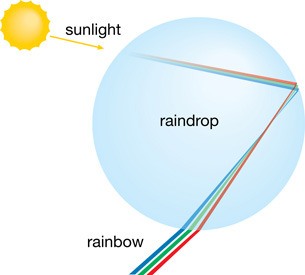
Light bending as it passes through a rain drop is an example of...
a)
Refraction
b)
Reflection
65.

This is the last question

a)

True

b)

False