
 Worksheets
Cell structures, cross membrane transport, & cell theory
Total questions: 98
Worksheet time: 2hrs 30mins
Passive Transport of molecules and nutrients across a membrane includes the following (more than one answer)
Diffusion
Osmosis
Active Tranport
Facilitated Diffusion

The red dots are a solute, and the arrow is depicting its movent. This movement is from a _______concentration to a _____concentration, known as ___________.
Low to High, diffusion
High to Low, diffusion
High to Low, Osmosis
Low to high, Osmosis

When you placed your egg from the water (vinegar) in to the corn syrup, after 24 hours, the egg________mass, meaning water moved ________of the egg.
gained, in
lost, out
Some molecules can move in and out of the cell freely through the cell membrane, others are too large and cannot. The membrane is said to be ________________
ridig
transparent
selectively permeable
a rubberband
In an isotonic solution, _____________is reached because the cell remains and movement of water remain constant.
water
equilibrium
the same
hypertonic
In a hypertonic solution, the water moves________ the cell because the concentration of solute is greater on the outside of the cell than on the inside.
into
out of
up
around
The head of a phospholipid molecules is
a phosphate
a lipid
hydrophobic
hydrophilic
Diffusion of water is known as
diffusion
osmosis
endocytosis
exocytosis
The cell membrane is also called a
mosaic
patchwork quilt
phospholipid bilayer
cell shield
(a) describes the movement of a substance across a cell membrane against its concentration gradient. This process requires ATP.
The tail of a phospholipid molecule is
hydrophilic
hydrophobic
amphoteric
amphipathic
The cell structure that controls which substances can enter or leave the cell is the
cell wall
cholesterol
cell membrane
integral protein
Type of active transport where the cell membrane forms a sac around a macromolecule.
diffusion
osmosis
exocytosis
endocytosis
Type of passive transport where special proteins in the cell membrane help move molecules.
passive transport
facilitated diffusion
diffusion
osmosis
This gets rid of waste
lysosome
nucleus
nucleolus
golgi body
this is the control center of the cell and holds DNA
lysosome
nucleus
nucleolus
golgi body
this packages and ships proteins
lysosome
nucleus
nucleolus
golgi body
this is the transport system
Endoplasmic Reticulum
cell membrane
centrioles
ribosome
these are involved in animal cell division
endoplasmic reticulum
cell membrane
centrioles
ribosome
this controls what gets in or out of the cell
endoplasmic reticulum
cell membrane
centrioles
ribosomes
this makes proteins
endoplasmic reticulum
cell membrane
centrioles
ribosomes
this gives shape and structure to a cell
microtubules
cytoplasm
mitochondria
plasmodesmata
this is the jelly like stuff around all organelles
microtubules
cytoplasm
mitochondria
plasmodesmata
this is where sugar is broken down to release energy
microtubule
cytoplasm
mitochondria
plasmodesmata
this is the outside of plant cells and is very rigid
cell wall
central vacuole
chloroplast
plasmodesmata
this is where water is stored in plant cells
cell wall
central vacuole
chloroplast
plasmodesmata
this is where photosynthesis happens in plant cells
cell wall
central vacuole
chloroplast
plasmodesmata
Which cell type tends to be smaller?
Prokaryote
Eukaryote
there is not a size difference
The presence of which of the following characteristics differentiates prokaryotic and eukaryotic cells?
DNA
Ribosomes
Nucleus
Cytoplasm
Plant and animal cells are examples of
prokaryotic cells
eukaryotic cells
Bacteria is an example of a(n)
prokaryotic cell.
eukaryotic cell.
What is NOT apart of the Cell Theory?
all cells come from existing cells
all cells have a nucleus
all living things are made of cells
cells are basic unit of structure and function in living things
Which do BOTH prokaryotes and eukaryotes contain?
nucleus
mitochondria
ribosomes
cell wall
Prokaryotes do NOT have....
membrane bound organelles
DNA or RNA
Cell membrane
Life
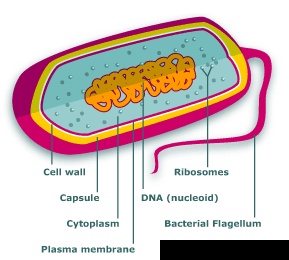


This type of cell has no nucleus, no organelles, smaller less complex
Prokaryotes
Eukaryotes
This type of cell has a nucleus, organelles, multi-cellular, complex
Prokaryotes
Eukaryotes

A table with characteristics of three different cells is shown. Cell 1 is a _____.
prokaryote
eukaryote

Euglena are unicelled organisms that live in pond water. They move around using a flagella and can perform photosynthesis when needed. They contain many organelles . What type of cells are they?
Animal Cell
Prokaryotic Cell
Eukaryotic Cell
Plant Cell
You can distinguish a prokaryote apart from a eukaryote by--
The presence of a ribosome
The presence of a cell membrane
The presence of DNA
The presence of a nuclear membrane
What is the difference the key difference between prokaryotic and eukaryotic cells?
Prokaryotes have a nucleus, Eukaryotes do not
Eukaryotes have a nucleus, Prokaryotes do not
Prokaryotes have a cell membrane, Eukaryotes do not
Eukaryotes have ribosomes, Prokaryotes do not
Surrounds the plant cell and maintains the cell shape and structure.
Cell wall
Cell membrane
Nucleus
Ribosome
Makes food for the plant cell.
Ribosome
nucleus
chloroplast
cytoplasm
Controls what goes in and out of the cell.
cell membrane
cell wall
organelle
cell
The "garbage can" of the cell; digestion and waste removal.
cell wall
cell membrane
lysosome
nucleus
Houses gel-like fluids that support cell organelles and holds them in place.
cytoplasm
endoplasmic reticulum (e.r.)
golgi bodies
nucleus
The control center for the cell.
ribosome
cytoplasm
nucleus
cell membrane
Place where materials are processed and moved around inside the cell.
endoplasmic reticulum (e.r.)
mitochondria
cytoplasm
chloroplast
Storage space for water, wastes, food, and other cellular material
mitochondria
cell membrane
cell wall
vacuoles
The "powerhouse" of the cell; breaks down food to make energy for the cell.
organelles
cell
mitochondria
cytoplasm
The basic unit of structure and function in living things.
cell
cell wall
plant cell
cell membrane
How many chromosomes do humans have?
9
90
46
72
Active transport requires cellular energy and moves substances from area of ________________ concentration to ______________ concentration.
low, low
low, high
high, low
high, high

Endocytosis is a process of a cell bringing things into the cell. This is a(n) ____________ process.
active
passive
hypotonic
isotonic
Endocytosis and exocytosis both use energy to engulf substances with the cell membrane. However, _____________ brings substances into the cell, while ____________ takes substances out of the cell.
endocytosis, exocytosis
exocytosis, endocytosis
endocytosis, endocytosis
exocytosis, exocytosis
An example of pump transport is
glucose transport
osmosis
Na+/K+ Pump
CO2 + O2 Transport
The movement of large quantity of solutes or liquid into the cell
exocytosis
facilitated diffusion
pinocytosis
phagocytosis
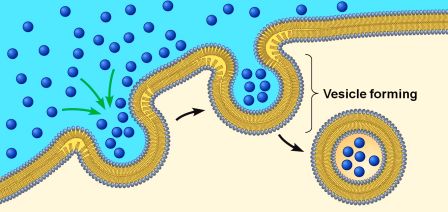
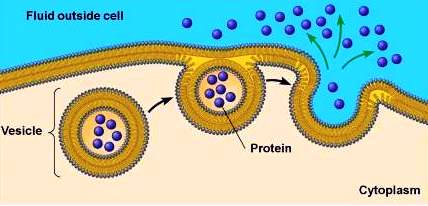


What type of Endocytosis occurs when a Solid particle enters the cell
Pinocytosis
Receptor Mediated
Phagocytosis

Exocytosis is when large molecules are ______________ the cell.
removed from
taken into
exploded inside
stored in

Endocytosis is when large molecules are ______________ the cell.
removed from
taken into
exploded inside
stored in

Examples of particles that can diffuse across through the phospholipid bilayer include:
oxygen and carbon dioxide
sugar
water
calcium ions
when some molecules can cross the membrane while others cannot.
Which factor does not affect the rate of diffusion
molecule size
molecule color
molecule concentration
temperature
Which of the following are passive transport there are more than 1
facilitated diffusion
Pinocytosis
endocytosis
ion pump
During active transport molecules move
with the concentration gradient
against the concentration gradient
they are in equilibrium
only out of the cell
A cell wall...
is very soft and flexible
is very rigid, and supports the plant cell, giving it its shape
is the part that is inside the plant's nucleus
What type of carbohydrate is found in plant cell walls?
Cellulose
Starch
Peptidoglycan
Glycogen
This kingdom of life has cells WITH NO cell wall...
Plants
Animals
Protists
Fungi
The cell wall of organisms from this kingdom is made up of chitin.
Plants
Animals
Fungi
Protists
The cell wall of organisms from this kingdom is made up of cellulose..
Animals
Plants
Fungi
Protists
These types of cells often have a cell wall made of peptidoglycan
Plants
Animals
Archaea
Bacteria

Robert Hooke, Anton van Leeuwenhoek, Theodor Schwann, Rudolf Virchow, and Matthias Schleiden were all responsible for what theory?
The Theory of Gravity
The Theory of Relativity
The Cell Theory
The Theory of Continental Drift

Which of the following is NOT a part of the cell theory.
All non-living things are made of cells
All cells come from pre-existing cells
Cells are the basic unit of structure and function of all living things
What happened that allowed cells to be studied?
Cells increased in size.
Scientists began to work together.
Scientists became smarter.
The microscope was invented and improved.
Who discovered and named cells while looking at cork?
Gregor Mendel
Robert Hooke
Matthias Schleiden
Rudolf Virchow

What is one way in which all living things on Earth are alike?
All living things have hair.
All living things are made of cells and come from other cells.
The cells of all living things have chloroplast.
All living things can move.
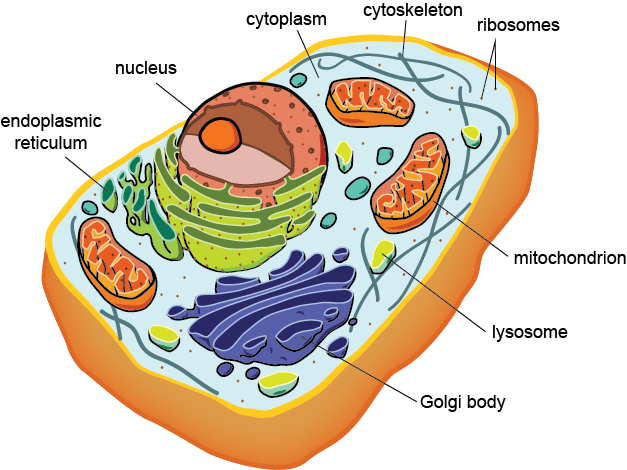
Which of the following statements is not part of the cell theory?
Cells are the basic unit of structure and function in all living things.
All cells are produced from other cells.
Only animal cells are composed of cells.
All living things are composed of cells.
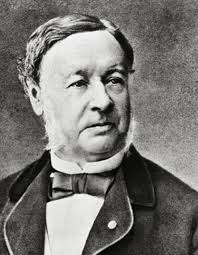
Which of the following scientists concluded that all animals are made of cells?
Rudolf Virchow
Matthias Schleiden
Robert Hooke
Theodor Schwann
This early scientist looked in a microscope and discovered "animalcules" in the gunk from his teeth and pond water.
Schleiden
Leeuwenhoek
Hooke
Virchow
Schwann
What was Schleiden convinced of?
All plants are made of cells
All animals are made of cells
All cells appear from nowhere
None of the above
Who discovered that all cells come from other living cells and had research that lead to the last major principle of cell theory?
Matthias Schleiden
Theodore Schwann
Robert Hooke
Rudolf Virchow
What is the basic structural and functional unit of all living things?
atom
cell
bacteria
animalcules
Which choice is NOT part of the cell theory.
All organisms are composed of cells.
Cells are the basic unit of life.
All cells come from previous cells.
Cells are always the same size and shape.

