Worksheets
Biology A Exam Review
Total questions: 100
Worksheet time: 2hrs 43mins

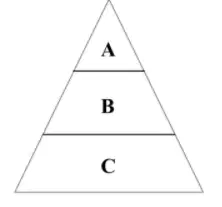
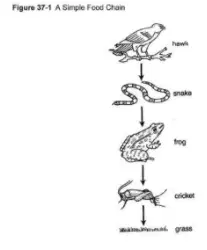
Which of the following organisms is part of the trophic level with the greatest amount of stored energy?
Mouse
Owl
Hawk
Grasses
What are limiting factors?
The number of living organisms that the environment can support
The nonliving components of an ecosystem
The environmental conditions that limit population growth in an ecosystem
None of the above
An example of a biotic factor is
Temperature
Bird
Rock
Water
Example(s) of a abiotic factor is
Temperature
Bird
Rock
Water
the variety of life in the world or in a particular habitat or ecosystem
biodiversity
demography
carrying capacity
poaching



What subatomic particle found in an atom has a positive charge?
proton
neutron
electron
What subatomic particle found in an atom has a negative charge?
proton
neutron
electron
What subatomic particle found in an atom has a no charge?
proton
neutron
electron
What subatomic particles are found in the nucleus of an atom?
protons and neutrons
protons and electrons
neutrons and electrons
Name the monomers that make up carbohydrates.
Monosaccharides
Fatty Acids and Glycerol
Amino Acids
Nucleotides
Name the monomers that make up proteins.
Monosaccharides
Fatty Acids and Glycerol
Amino Acids
Nucleotides
Name the monomers that make up lipids.
Monosaccharides
Fatty Acids and Glycerol
Amino Acids
Nucleotides
Name the monomers that make up nucleic acids.
Monosaccharides
Fatty Acids and Glycerol
Amino Acids
Nucleotides
Name the macromolecules that are responsible for short term energy storage.
Carbohydrates
Lipids
Proteins
Nucleic Acids
Name the macromolecules that are responsible for long term energy storage.
Carbohydrates
Lipids
Proteins
Nucleic Acids
Name the macromolecules that are responsible for providing structure and speed up chemical reactions.
Carbohydrates
Lipids
Proteins
Nucleic Acids
Name the macromolecules that are responsible for our genetic information.
Carbohydrates
Lipids
Proteins
Nucleic Acids
Water has a positive end and a negative end which makes it a _____ molecule.
polar
non-polar
-Amount of water
-Height of Ice cube
-Temperature the ice cube was at its highest height
-Temperature of the water
-Size of the ice cube
-3mm holes
-Distant water traveled out of carton
-Different heights of the holes in the container
-Ice water from Iceland
If the amount of nitrogen marsh grass receives is increased, then the height of the grass will increase, because nitrogen is an essential nutrient needed for marsh grass to grow.
What is the independent variable of the statement above?
cells with a nucleus and membrane bound organelles
eukaryotic
prokaryotic
cells without a nucleus and no membrane bound organelles
prokaryotic
eukaryotic
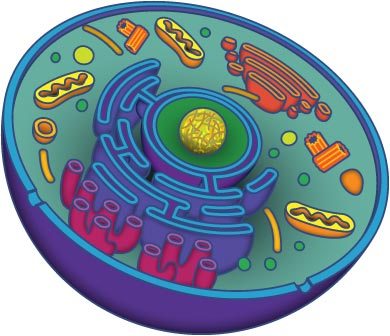
the control center of the cell; it stores the DNA
golgi body
endoplasmic reticulum
cytoplasm
nucleus
photosynthesis occurs here; this organelle stores energy
golgi body
chloroplast
mitochondria
endoplasmic reticulum
powerhouse of the cell; respiration occurs here
chlorophyll
golgi body
endoplasmic reticulum
mitochondria
makes proteins
ribosomes
mitochondria
endoplasmic reticulum
these package proteins to be shipped out of the cell
proteins
ribosomes
golgi bodies
endoplasmic reticulum
Which structure is NOT present in animal cells?
Cell Wall
Cell membrane
Nucleus
Mitochondrion
What is the definition of cytoplasm?
Gel-like fluid that organelles float in inside the cell
Stiff outer layer
Gives energy to the cell

_________________ is the process by which cells maintain a constant internal balance.
natural selection
evolution
homeostasis
differentiation
Atoms share pairs of Electrons in what kind of bond
Covalent
Ionic
Hydrogen
Cohesive
A substance that cannot be further broken down into other substances
Element
water
Molecule
cells

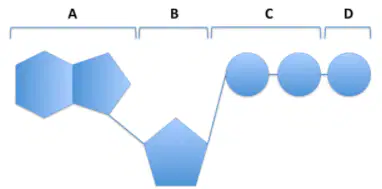
The 4 molecules under a are probably representing ____ and the 1 molecule under b is probably representing ______.
polymers; a monomer
monomers; a polymer
an inorganic molecule; an organic molecule
an organic molecule; an inorganic molecule

Enzymes are ________ that act as ________.
proteins, catalysts
amino acids, proteins
proteins, amino acids
catalysts, carbohydrates
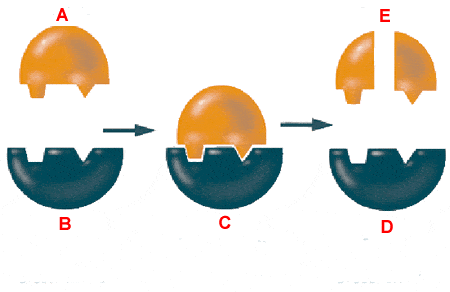
The enzyme is represented by
A only
C only
A and E
B, C and D
A reactant that is acted upon by an enzyme is called a(n)?
non competitor inhibitor
When one atom transfers electrons to another atom and then they bond, it is called....
an ionic bond
a covalent bond
A: sugar and water
B: water and oxygen
C: carbon dioxide and water
D: oxygen and carbon dioxide
What are the 2 products of photosynthesis? The products are the things made in the process of photosynthesis.
water, sunlight
glucose, carbon dioxide
oxygen, glucose
sunlight, oxygen
What is the main purpose of photosynthesis?
To make food
To create energy
To release oxygen
To absorb sunlight
Water (H2O) is:
Inorganic
Organic
Both