Wayground logo

Free Printable Worksheets

Font size

S
M
L
XL
Worksheets

Review CFA #2 water and atomic structure

Total questions: 89

Worksheet time: 1hrs 20mins

Name
Class
Date
1.

What are the subatomic particles of an atom

a)

proton

b)

neutron

c)

electron

d)

nucleus

2.

Which subatomic particle has a positive charge

a)

proton

b)

electron

c)

neutron

d)

all particles are positive

3.

Which particle(s) make up the mass of an atom

a)

proton

b)

neutron

c)

electron

d)

all add to the mass equally

4.

(a)   How many protons does this element should have

5.

An isotope is an atom of the same element but with different (a)  

6.

Mass - protons = (a)  

7.

In an electrically neutral atoms, what two particles must be the same (choose all that apply)

a)

protons

b)

neutrons

c)

electrons

d)

None of them have to be the same

e)

all particles must be equal

8.

How many electrons does O-2 contain

(a)  

9.

How many protons does Na+1 contain

(a)  

10.

If an element has an atomic number of 17 and a mass number of 37, how many neutrons does the element contain?

(a)  

11.

Match the following:

a)

protons

1.

+1 charge

b)

neutrons

2.

0 charge

c)

electrons

3.

-1 charge

12.

Label the parts of the atom:

13.

​ (a)   + ​ (b)   = mass number

Choose from the below words
protons
neutrons
electrons
14.

Where would the protons be located?

15.

Where would the neutrons be located?

16.

​ (a)   are in the ​ (b)   and contribute to the overall mass of an atom. They are the ​ (c)   particles inside the atom. the ​ (d)   are in the ​ (e)   and DO NOT contribute to the overall mass of an atom.

Choose from the below words
Protons and neutrons
electrons
nucleus
heaviest
cloud
protons and electrons
protons
neutrons
lightest
17.
the central region of an atom where its neutrons and protons are is its 
a)
nucleus 
b)
electron cloud
c)
core 
d)
center 
18.
an atom with atomic number 6 would have how many protons 
a)
6
b)
12
c)
3
d)
cannot be determined 
19.
What is the atomic number for an element with three protons?
a)
2
b)
1
c)
3
d)
6
20.
How many neutrons in C-14?
a)
6
b)
7
c)
14
d)
8
21.

What is an isotope?

a)

A charged atom

b)

Two atoms of the same element with different amounts of neutrons

c)

Two atoms of the same element with different amounts of protons

d)

A neutral atom

22.

Which two components of an atom contribute to the mass?

a)

Protons and neutrons

b)

Protons and electrons

c)

neutrons and electrons

23.

Which part of an atom is used to identify it?

a)

number of protons

b)

number of neutrons

c)

number of electrons

24.

Subatomic particles with a negative charge

a)

Electrons

b)

Neutrons

c)

Protons

d)

Quarks

25.

How does an atom become an ion?

a)

gaining or losing electrons

b)

gaining or losing protons

c)

gaining or losing neutrons

26.

Which of the following ions have a +1 charge?

a)

Potassium (K)

b)

Helium (He)

c)

Calcium (Ca)

d)

Lithium (Li)

27.

Ions have the same number of protons but different number of _________________

a)

neutrons

b)

electrons

c)

protons

d)

toes

28.

______________ electrons are found in the outermost energy level of an atom.

a)

neutral

b)

valence

c)

purple

d)

proton

29.

Which of the following ions have a +2 charge? (pick 2)

a)

Hydrogen (H)

b)

Magnesium (Mg)

c)

Calcium (Ca)

d)

Lithium (Li)

30.

How many valence electrons does Hydrogen (H) have?

a)

1

b)

2

c)

3

d)

4

31.

How many valence electrons do Group 2 atoms have?

a)

1

b)

2

c)

3

d)

4

32.

How many valence electrons are needed to fulfill the octet rule?

a)

2

b)

4

c)

6

d)

8

33.

How many valence electrons does Oxygen (O) contain?

a)

6

b)

5

c)

8

d)

2

34.

All atoms are most stable with (or would "prefer") how many electrons in their valence shell?

a)

1

b)

2

c)

8

d)

18

35.

How many valence electrons are found in atoms of group 14?

a)

4

b)

3

c)

14

d)

16

36.
Which group has the greatest number of valence electrons?
a)
1
b)
14
c)
18
d)
16
37.
How many valence electrons are found in atoms of group 15?
a)
4
b)
5
c)
2
d)
3
38.

Which particles change the charge in atoms when ions are formed?

a)

Protons

b)

Electrons

c)

Neutrons

39.

Which particles change the mass in atoms?

a)

Protons

b)

Electrons

c)

Neutrons

40.

An atom becomes _________ when it gains electrons.

a)

Positive

b)

Negative

c)

Neutral

41.

An atom becomes _______ when it loses electrons.

a)

Positive

b)

Negative

c)

Neutral

42.
What is the charge of an atom that has lost one electron?
a)
-1
b)
-2
c)
+1
d)
+2
43.
What is the charge of an atom that has gained one electron?
a)
-1
b)
-2
c)
+1
d)
+2
44.
an atom with atomic number 6 would have how many protons 
a)
6
b)
12
c)
3
d)
cannot be determined 
45.
If an element has 3 valence electrons, what charge will likely form on its ion ?  Hint:  It will lose those electrons.  What happens to the charge when it loses 3 electrons?
a)
+3
b)
+5
c)
-3
d)
-5
46.
Group 17 always has ions with a charge of 
a)
+1
b)
+2
c)
-1
d)
-2
47.

catagorize the following

Categorize the following

positively charged

no charge

negatively charged

same as atomic number

changes the mass of an atom

changes the charge of an atom

never changes

makes up the volume of an atom

isotope has is same element but different number of these

Protons
neutrons
electrons
48.

Match the following property to its definition:

a)

adhesion

1.

the attraction among molecules that are not alike 

b)

cohesion

2.

the attraction among molecules that are alike 

c)

surface tension 

3.

tightness on water surface caused by polar molecules pulling on each other

d)

universal solvent 

4.

a substance capable of dissolving all or a large variety of substances

49.
What word describes when water is attracted to other substances?
a)
cohesion
b)
adhesion
c)
capillary action
d)
surface tension
50.

Why does ice float?

a)

As water freezes, the molecules spread out decreasing its density.

b)

As water freezes, it takes up more hydrogen from the atmosphere, causing it to have a greater buoyancy.

c)

As water freezes, air gets trapped making it more dense

d)

As water freezes, it takes up more oxygen from the atmosphere, causing it to be more dense

51.

Which of the following is LEAST likely to dissolve in water?

a)

nonpolar fats and oils

b)

polar sugar molecules

c)

salt made of a positive sodium ion and a negative chloride ion

d)

all of the substances will dissolve easily in water

52.

Why does water move from the roots to the leaves of plants?

a)

Water is pushed by solutes

b)

Capillary action pulls the water molecules up like a chain

c)

Water is pulled by gravity

d)

Water cannot move up roots to leaves

53.
Water is essential for life. Its special properties make water the single most important molecule in plant life. Which of the following properties of water enables it to move from the roots to the leaves of plants?
a)
Water expands as it freezes.
b)
Water is an excellent solvent.
c)
Water exhibits cohesive behavior.
d)
Water is able to moderate temperature.
54.
A florist places a bouquet of white carnations in water containing blue dye. After a time, the flowers turn blue. What process helped the carnations to change color?
a)
Specific heat 
b)
Surface tension
c)
Cohesion and adhesion of water molecules 
d)
Formation of covalent bonds between hydrogen and oxygen molecules
55.

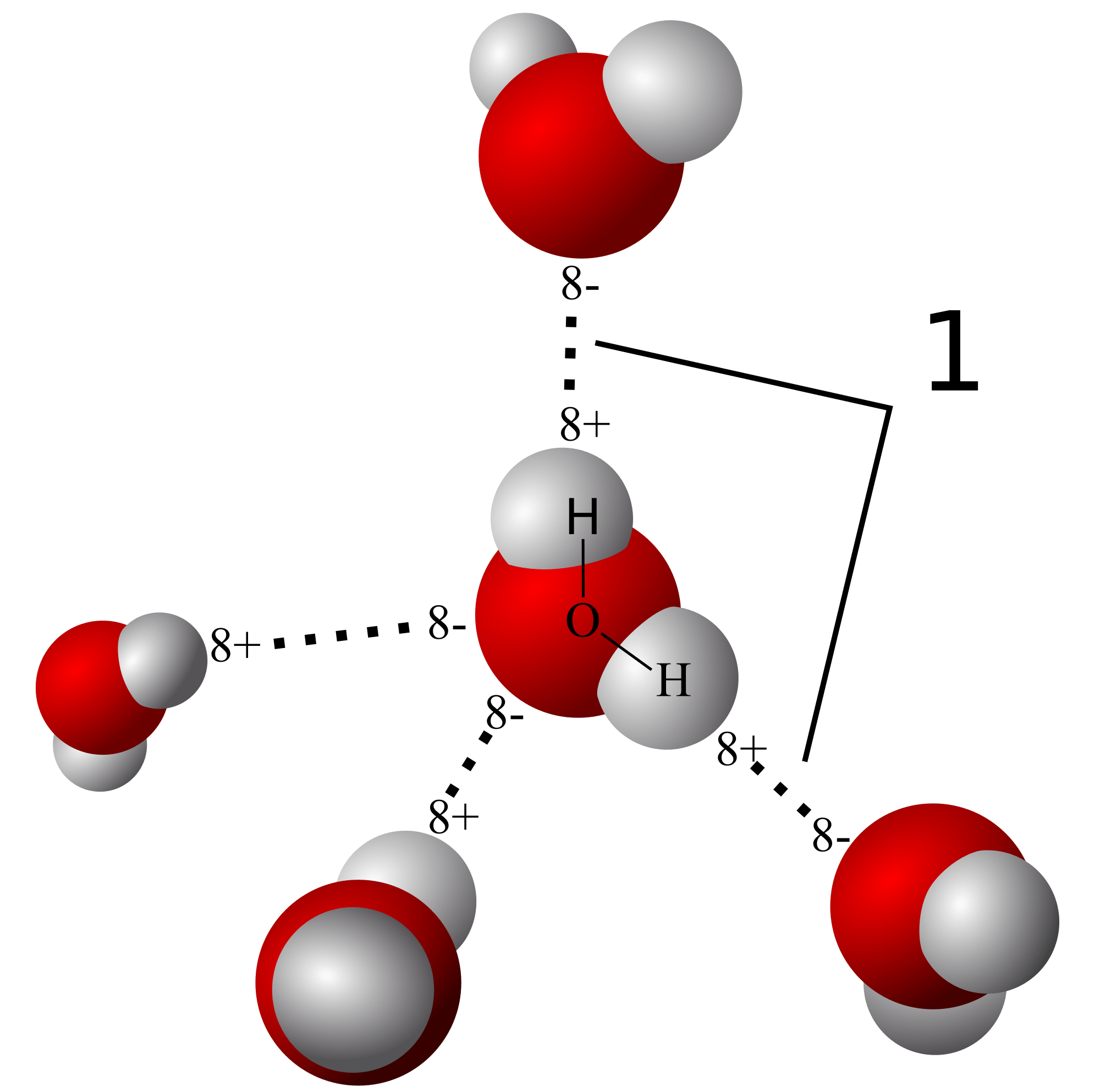
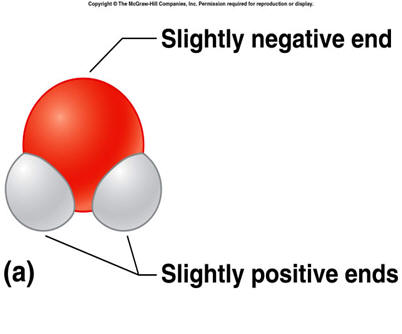
Which term refers to water having a slightly positive and a slighty negative charge on its ends?

a)

cohesion

b)

surface tension

c)

polar

d)

adhesion

56.
Surface tension is caused by ...
a)
strong cohesion between water molecules
b)
strong adhesion between the water molecules
c)
condensation
d)
water cycle
57.

The hydrogen atoms in a water molecule are ________________ charged.

a)

not

b)

negatively

c)

neutrally

d)

positively

58.

A paperclip floating on water is an example of what property of water?

a)

capillary action

b)

surface tension

c)

universal solvent

d)

specific heat index

59.

Water drops being attracted to each other is an example of ____________.

a)

capillary action

b)

adhesion

c)

specific heat index

d)

cohesion

60.

In a water molecule, oxygen has what kind of charge?

a)

Positive

b)

Negative

c)

Neutral

d)

Super Charged

61.

What type of bond holds 2 or more water molecules together?

a)

Covalent

b)

Hydrogen

c)

Emotional

d)

Family

62.

Hydrogen bonds are?

a)

Strong

b)

Weak

c)

Indestructible

d)

Non-existant

63.

The attraction of water molecules to one another is because of? (Positive end and a negative end)

a)

Water loneliness

b)

Polarity

c)

Peer Pressure

d)

Capillary action

64.

Cohesion of water molecules produces a "skin" that allows insects to walk on water

a)

Buoyancy

b)

Universal Solvent

c)

Surface Tension

d)

Salinity

65.

This is when Adhesion and Cohesion work together to allow water molecules to up through narrow tubes against gravity

a)

Specific Heat

b)

Buoyancy

c)

Salinity

d)

Capillary Action

66.

This is the ability of your body to keep everything normal in the face of changing conditions

a)

Adhesion

b)

Cohesion

c)

Polarity

d)

Homeostasis

67.
Water is a universal solvent because it...
a)
It can be found anywhere
b)
It freezes when it gets cold
c)
floats when frozen
d)
Dissolves most substances
68.
Large bodies of water, such as lakes and oceans, do not quickly fluctuate in temperature. What is the reason for this phenomenon?
a)
Water is an acid.
b)
Water is a versatile solvent.
c)
Water has a high heat capacity.
d)
 Water acts as a buffer.
69.
 Small insects can walk across the surface of calm water. Their feet push the surface of the water down slightly, somewhat like a person walking across a trampoline, but they do not break the surface. What is the best explanation for why this happens?
a)
The insects are light enough so that they do not break the hydrogen bonds holding the water molecules together
b)
The insects actually use their wings to hover slightly above the water's surface and they only skim it with their feet
c)
The insects' feet are non-polar, so they are repelled by the polar water molecules and are pushed away from the water's surface
d)
The insects are small enough to see the individual water molecules, so they are able to step carefully from one molecule to the next
70.
Which statement explains why water molecules stick together?
a)
both sides are negative
b)
one side has a positive charge and the other side has a negative charge
c)
one side has a negative charge adn the other side has a neutral charge
d)
both sides are positive
71.
When a molecule has an opposite electrical charge on each end, it is known as what?
a)
cohesion
b)
polar molecule
c)
hydrogen bond
d)
solution
72.

What property of water allows for water to act as a temperature regulator for the world?

a)

Cohesive Behavior

b)

Expansion Upon Freezing

c)

High Specific Heat

d)

Universal Solvent

73.

What is this an example of?

a)

How light paper clips are

b)

bouyancy

c)

surface tension

d)

cohesion

74.

What is an important role of ice in aquatic habitats?

a)

Insulation

b)

Shade

c)

Plant growth

d)

Ice skating

75.
Why can water have no net charge but have slight charges in different parts of the molecule?
a)
The oxygen end is slightly negative and the hydrogen end is slightly positive
b)
The hydrogen end is slightly negative and the oxygen end is slightly positive
c)
The hydrogen and oxygen ends change in polarity
d)
Because it is hydrophobic
76.
Attractions between water molecules are called
a)
Covalent bonds
b)
Ionic bonds
c)
Polar bonds
d)
Hydrogen bonds
77.
Which is NOT a unique property of water?
a)
Frozen water floats on liquid water.
b)
Water covers most of the Earth’s surface and retains a large amount of heat.
c)
Water molecules stick to each other through hydrogen bonds.
d)
Water cools very rapidly.
78.
Water is polar because...
a)
The unequal sharing of electrons gives the water molecule a slight negative charge near its oxygen atom and a slight positive charge near its hydrogen atoms.
b)
The molecule has two poles, at which the it is colder than other regions of the molecule.
c)
The unequal sharing of electrons gives the water molecule a slight negative charge near its hydrogen atoms and a slight positive charge near its oxygen atom.
d)
The water molecule is neutral.
79.
molecule in which opposite ends have opposite electric charges
a)
cohesion
b)
polar molecule
c)
hydrogen bond
d)
solution
80.
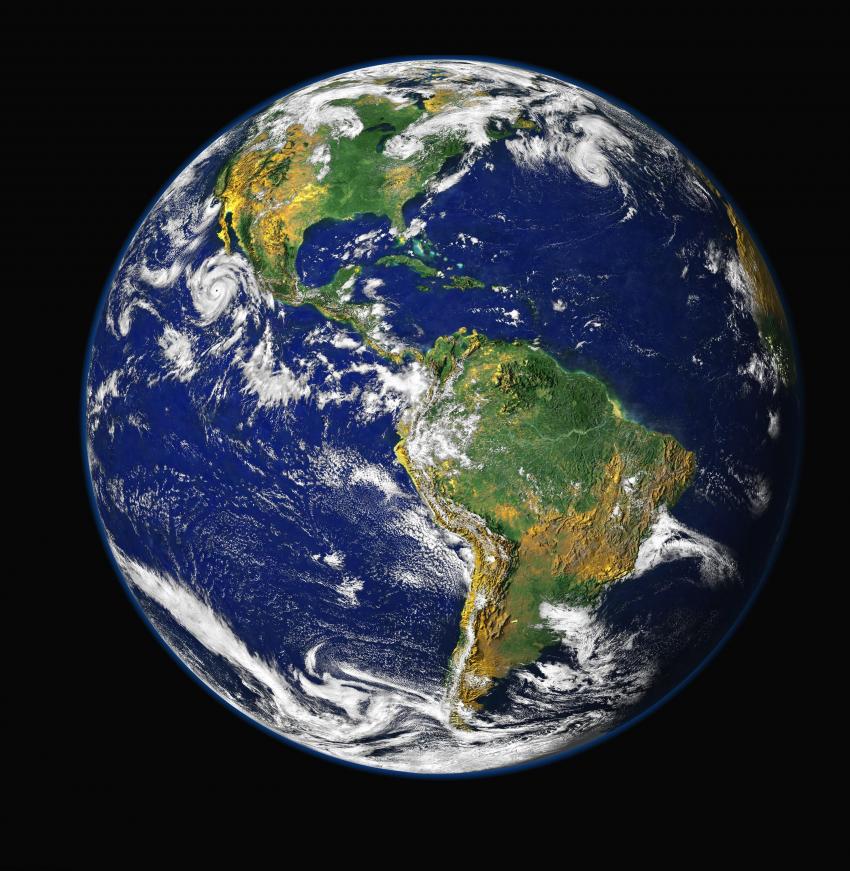
What property of water helps to moderate earth's temperature?
a)
adhesion
b)
chohesion
c)
Specific heat capacity
d)
Latent heat of vaporization
81.

Which will heat up slower?

a)

water

b)

lead

c)

granite

d)

iron

82.
In an oxygen atom, one atom will have slightly different charge than the other atoms in the molecule. These molecules are called _____.
a)
Polar
b)
Covalent
c)
Ionic
d)
Ions
83.
Which is the advantage of water being a good solvent?
a)
It keeps the temperature regulated
b)
It helps transport dissolved materials
c)
It helps organisms float in the water
d)
It enables organisms to live under glaciers
84.
What type of bond holds the oxygen and hydrogen atoms together to make a water molecule?
a)
covalent bond
b)
ionic bond
c)
hydrogen bond
d)
nonpolar bond
85.
Which of the following is the correct explanation for water being polar?
a)
The equal sharing of electrons between oxygen and hydrogen atoms
b)
The unequal sharing of electrons between oxygen and hydrogens
c)
The equal sharing of protons between oxygen and hydrogens
d)
The unequal sharing of protons between oxygen and hydrogens
86.
When the thin glass tube was touched to the surface of the blue water in the beaker, the water climbed the tube, overcoming gravity.  Which of the following terms apply?
a)
cohesion and surface tension only
b)
capillary action and surface tension only
c)
cohesion and adhesion only
d)
capillary action, cohesion, and adhesion
87.
The balloon station demonstrated which concept?
a)
cohesion
b)
surface tension
c)
polarity
d)
capillary action
88.

During the winter when lakes freeze over the fish and other animals living in it survive. Which property of water?

a)

high specific heat

b)

capillary action

c)

greatest density at 4 oC

d)

surface tension

89.
Large bodies of water do not quickly fluctuate in temperature. Why?
a)
Water is a solvent.
b)
Water has a high heat capacity.
c)
Water acts as a buffer.
d)
Water is non-polar.